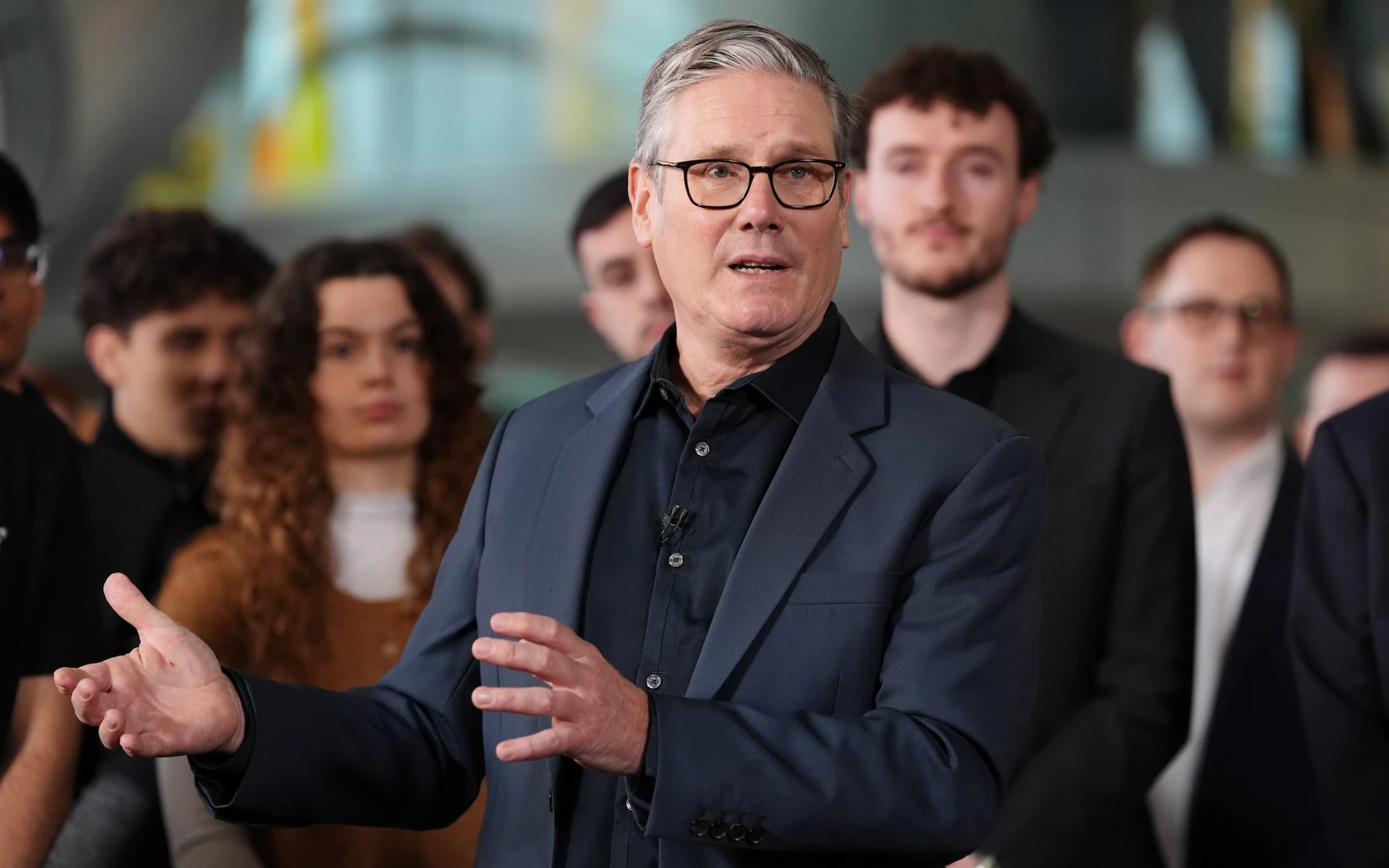
Britain has recorded the weakest investment performance among the world’s leading economies, with UK investment G7 Starmer figures showing the country at the bottom of the group, dealing a major blow to Prime Minister Sir Keir Starmer’s plans to revive economic growth and restore long-term investor confidence.
According to data released by the Office for National Statistics, total investment by government and businesses stood at just 18.6 per cent of gross domestic product in the three months to September. This figure places the UK at the bottom of the G7 league table, trailing behind all comparable economies, including Germany, which is currently experiencing its longest period of economic stagnation since the end of the Second World War. For a government that has repeatedly framed investment as the foundation of future prosperity, the figures are deeply uncomfortable.
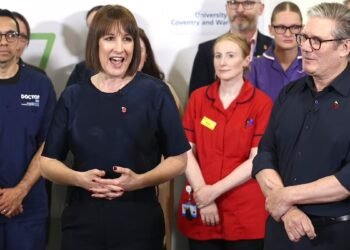
Sir Keir Starmer and Chancellor Rachel Reeves have made boosting capital inflows central to Labour’s economic strategy, arguing that years of underinvestment have eroded productivity, wages and living standards. Since taking office, they have promised to cut planning red tape, streamline regulation and provide greater certainty to investors. However, the latest data suggests these efforts have yet to translate into a meaningful turnaround.
Economists warn that the implications of weak investment extend far beyond short-term growth figures. Tera Allas, chair of the advisory board at The Productivity Institute, has described low investment as the single biggest economic problem facing the country. She argues that without sustained capital spending on infrastructure, technology and skills, Britain will struggle to improve productivity or compete effectively with its peers.

The context makes the figures even more stark. Official data shows that the UK economy has either contracted or flatlined in nine of the 16 months since Labour came to power. While global conditions have been challenging, critics argue that Britain’s poor investment performance reflects deep-rooted domestic problems rather than temporary external shocks. The UK has trailed the G7 average for investment for more than two decades, suggesting that the issue transcends individual governments.
International comparisons underline the scale of the challenge. Italy, long regarded as Europe’s economic weak link, has emerged as the best-performing G7 country in Europe this year in investment terms. Under Prime Minister Giorgia Meloni, the Italian government has pursued policies aimed at stimulating growth, including tax incentives to attract wealthy expatriates and reforms to welfare that have encouraged higher labour market participation. Japan, meanwhile, has achieved the highest investment-to-GDP ratio in the G7 at 27.4 per cent, driven by sustained public spending on infrastructure and industrial capacity.
By contrast, Britain’s investment environment is increasingly seen as unpredictable and slow-moving. Ms Allas points to the country’s complex and often opaque planning system as a major deterrent to large-scale projects. She argues that prolonged approval processes and regulatory uncertainty can make investment decisions appear unattractive, even when underlying fundamentals are strong. For businesses weighing where to deploy capital, delays and the risk of policy reversals can be enough to tip the balance elsewhere.
Concerns about policy instability have been echoed by prominent investors. Jonathan Oppenheimer, the billionaire heir to the De Beers diamond empire, recently described Britain as “uninvestable”, citing slow decision-making and restrictive planning rules. Such comments, while controversial, reflect a growing frustration among parts of the business community that the UK struggles to convert ambition into delivery.
The consequences are already visible. Several high-profile companies have scaled back or abandoned major investment plans in recent months. In September alone, US pharmaceutical giant Eli Lilly halted construction of a £279 million laboratory at London Gateway. Merck scrapped proposals for a £1 billion research centre in the capital, while AstraZeneca paused plans for a £200 million research facility in Cambridge. Together, these decisions represent not just lost capital but also missed opportunities for skilled jobs, innovation and regional development.
The Productivity Institute has warned that even a substantial improvement in Britain’s investment rate would not be enough to close the gap quickly. Its analysis suggests that if the UK were to increase investment by around four percentage points of GDP, it would still take nearly a century to catch up with countries such as the United States, Germany, France and the Netherlands. This sobering assessment highlights how entrenched the problem has become.
Beyond policy and regulation, some analysts point to deeper cultural factors. Ms Allas argues that Britain has long suffered from a historical tendency towards short-termism and risk aversion, both in business and government. She suggests that too often decisions are driven by immediate pressures rather than long-term value creation, leading to underinvestment in infrastructure and future capacity. In contrast, countries with higher investment rates often benefit from stronger institutional frameworks that encourage patient capital and long-term planning.

The government, however, disputes the notion that Britain is failing to attract investment. A spokesperson said the UK is forecast to be the second-fastest-growing G7 economy in 2025 and argued that recent budget measures would help reduce inflation, paving the way for lower interest rates and cheaper borrowing costs. Ministers also point to commitments made during a recent US state visit, during which companies reportedly pledged a record £150 billion in investment into the UK.
Critics counter that headline pledges do not always translate into actual projects, particularly when faced with planning delays or shifting policy priorities. They argue that restoring credibility will require not just announcements but visible progress on the ground, including faster approvals, clearer long-term strategies and greater political stability.
As the government enters its second year in office, the investment challenge is fast becoming a defining test of its economic agenda. Without a decisive improvement, Britain risks remaining stuck in a cycle of low growth and underperformance, undermining promises to raise living standards and rebuild public services. For now, the latest figures serve as a stark reminder that reversing decades of underinvestment will require more than rhetoric, demanding sustained reform, consistency and a willingness to confront uncomfortable structural realities.
Read More Posts
Related News:
 Bank of England Poised to Cut Interest Rates Amid Rising Unemployment and Global Trade Pressures
 Non-Dom Tax Crackdown Risks Backfiring as Exodus Threatens UK Revenue and Investment
 Inflation Latest: Cost of Living Expected to Rise Again in Key Figures Released Today
 Energy Users Could Save £5bn Annually if Gas Power Plants Are Removed from Market
 Retail Sales See Uptick Amid Errors and Delays as ONS Faces Scrutiny
 UK House Prices Hit Record £299,331 as Market Shows Steady Growth
Shein UK Faces Allegations of Shifting Majority of Profits to Singapore to Reduce UK Tax
UK House Prices Hit Record £299,331 as Market Shows Steady Growth
Shein UK Faces Allegations of Shifting Majority of Profits to Singapore to Reduce UK Tax
 UK Retail Sales Rise in August, but Tax Concerns Loom Over Festive Period
 Vodafone Faces Fourth Probe into Franchising Division Amid £120m Legal Battle
 John Lewis Partnership Posts £88m Loss as Costs and Restructuring Bite
 UK Economy Flatlines in July, Raising Pressure on Rachel Reeves Ahead of Autumn Budget
Business Rates Hike Could Threaten Hundreds of UK Retailers, Putting 100,000 Jobs at Risk
UK Economy Flatlines in July, Raising Pressure on Rachel Reeves Ahead of Autumn Budget
Business Rates Hike Could Threaten Hundreds of UK Retailers, Putting 100,000 Jobs at Risk
 Rachel Reeves Hosts Top UK and US Financial Executives as Trump’s State Visit Begins
 UK Labour Market Shows Signs of Cooling as Wage Growth Slows and Redundancies Rise
 UK Wage Growth Remains High, But Cost of Living Pressures Bite
UK Inflation Holds Steady at 3.8% as Rising Fuel Costs Offset Falling Air Fares
UK Wage Growth Remains High, But Cost of Living Pressures Bite
UK Inflation Holds Steady at 3.8% as Rising Fuel Costs Offset Falling Air Fares
 Ben & Jerry’s Co-Founder Resigns, Accusing Unilever of Silencing Brand’s Social Mission
 UK Borrowing Surges to £18bn in August, Exceeding Forecasts
 Farage’s Reform UK Receives £100,000 from Design Firm with Past Tax Issues
Rachel Reeves Faces Criticism Over Appearance at Gambling Industry Event Amid Tax Review
Farage’s Reform UK Receives £100,000 from Design Firm with Past Tax Issues
Rachel Reeves Faces Criticism Over Appearance at Gambling Industry Event Amid Tax Review
 Dagenham Left in Limbo After Smithfield and Billingsgate Market Relocation Cancelled
 Gatwick Secures Approval for £2.2bn Second Runway Expansion
 Retailers Warn Tax Rises Could Prolong Inflation as Shop Prices Climb
UK Housing Market Returns to Growth Amid Signs of Stability and Regional Variation
Retailers Warn Tax Rises Could Prolong Inflation as Shop Prices Climb
UK Housing Market Returns to Growth Amid Signs of Stability and Regional Variation
 Richard Desmond Begins High Court Battle Over National Lottery Licence
 Delivery Apps Could Double the Cost of Your Groceries, Warns Consumer Watchdog
 Jaguar Land Rover to Resume Production After Cyber-Attack, Launches Supplier Support Scheme
 Kemi Badenoch Unveils ‘Golden Rule’ to Halve Spending Cuts for Deficit Reduction at Tory Conference
 Gold Hits Historic $4,000 Amid Global Uncertainty
 UK GDP edges up 0.1% in August as Reeves faces budget pressure
 Rachel Reeves urged to consider welfare cuts to boost fiscal credibility
 UK inflation update: New rate expected as Budget approaches
 Real living wage set to rise nearly 7% for UK workers in 2026
 Co-op Urged Staff to Promote Vapes After Cyber-Attack Hit Sales
 Rachel Reeves to lead UK trade push in Saudi Arabia amid rights debate
 UK Small Business Owner to Challenge L’Oréal in Tribunal
 Court Hears Challenge Over Water Bills Funding Sewage Fixes
 Thinktanks Urge Rachel Reeves to Reform UK Tax System
 Tony Blair think tank warns Rachel Reeves must cut taxes if manifesto broken
MPs Press Rachel Reeves to Hike Gambling Taxes
Tony Blair think tank warns Rachel Reeves must cut taxes if manifesto broken
MPs Press Rachel Reeves to Hike Gambling Taxes
 Warning as Britons prepare to spend £4 billion this Black Friday
 Troubled drinks giant Diageo names former Tesco boss to lead turnaround push
 Global markets drop amid tech sell-off and China slowdown
 UK Government Borrowing Higher Than Expected
 Minister Denies Budget Leaks Have Harmed UK Economy
 Budget 2025: Reeves Drops Economic Growth Reference
 Expanded Version – Black Friday Shoppers Warned Over ‘Dud Deals’
 Black Friday Footfall Falls as UK Shoppers Hold Back Amid Economic Concerns
 Rising Water Bills Lift Troubled Thames Back to Profit
 HSBC Chief Warns Bank Tax Hike Could Undermine UK Growth Prospects
 UK Jobs Market Faces Strain as Employers Cut Bonuses and Hiring Amid Economic Slowdown
 China’s crackdown on civil servant perks sparks economic concerns
 Labour Members Push for Wealth Tax as Public Finance Crisis Deepens
 Next Shares Slide Amid Warning on Weak UK Growth and Jobs
 Resolution Foundation Chief Urges Chancellor Reeves to Rethink Budget Before November
 King Charles Earns Over £1 Million from Duchy Land Linked to Scrapped HS2 Project
 Vodafone Franchisees Sound Alarm: Mental Health Toll of Commission Cuts Revealed Years Before £120m Court Battle
 Public Skepticism Over AI Poses Challenge to UK’s Superpower Ambitions, Says Tony Blair Institute
 UK Government Backs Return of International Rail Travel to Kent Stations
 GSK Chief Executive Emma Walmsley to Step Down After Eight Years at the Helm
 AstraZeneca to List on New York Stock Exchange While Retaining London Ties
 Marks & Spencer Staff to Work on Boxing Day for First Time in Five Years Amid Cost-Cutting Measures
 UK Government Secures £122m Win Against Michelle Mone-Linked Firm Over Defective PPE
 UK households brace for October benefit payments and rising energy costs amid cost-of-living pressures
 Massive Vodafone Outage Disrupts Internet and Mobile Services Across the UK
 Lotto result jackpot draw halted due to technical glitch
 Trump’s UK Ambassador Urges North Sea Drilling to Strengthen US Ties
 Millions of Brits Adjust Lifestyle to Afford Essentials
Rachel Reeves Set to Break Labour Pledge and Raise Income Tax
Millions of Brits Adjust Lifestyle to Afford Essentials
Rachel Reeves Set to Break Labour Pledge and Raise Income Tax
 M&S Profits More Than Halve After Cyber-Attack
 Millionaires group urge Reeves to introduce wealth tax to ‘lift kids out of poverty’
 Reeves’s Tax U-Turn Triggers Fresh Jitters in UK Markets
 PM Highlights UK Business at G20 in South Africa
 Mossmorran Plant Closure Hits Cowdenbeath Hard
 Steel billionaire Lakshmi Mittal reportedly leaves UK
 Starmer Says Labour’s Economic Plan Needs Years to Deliver
 Tesla Warns UK That Weak EV Rules Could Threaten Sales
 Young People Hit Hardest by UK Jobs Downturn, Thinktank Finds
 UK unemployment rises to four-year high of 5.1% before budget
 Gold price silver fall: Precious metals hit by volatility