Published: 10 January 2025
The English Chronicle Desk
The English Chronicle Online
The death toll from the ongoing nationwide protests in Iran continues to rise as authorities intensify their crackdown on demonstrators, with human rights organisations and international monitors reporting that dozens — and possibly hundreds — of people have been killed since unrest erupted in late December 2025.
The protests began on December 28, initially sparked by deepening economic hardship marked by soaring inflation, the sharp collapse of the Iranian rial, and growing unemployment. What started as scattered demonstrations over living costs has rapidly evolved into one of the most significant waves of unrest Iran has witnessed in recent years, transforming into a broad movement demanding political accountability, social freedoms, and systemic reform.
As security forces confront demonstrators across the country, the true scale of fatalities remains difficult to verify. Iran’s strict media controls, repeated internet shutdowns, and limitations on foreign journalists have created an opaque information environment, leading to widely differing estimates of how many people have been killed.

According to the Human Rights Activists News Agency (HRANA), which closely tracks protest-related casualties, at least 65 people have been killed so far in clashes between demonstrators and security forces. This figure includes civilians as well as at least 14 members of Iran’s security forces, underscoring the intensity of confrontations that have erupted in cities including Tehran, Isfahan, Shiraz, Mashhad, and several provincial capitals.
However, other reports suggest that the death toll may be substantially higher. A Tehran-based doctor quoted by international media outlets has claimed that more than 200 people may have died in the capital alone from gunshot wounds and severe injuries sustained during clashes. While such figures have not been independently verified, rights groups warn that official tallies likely understate the true human cost.
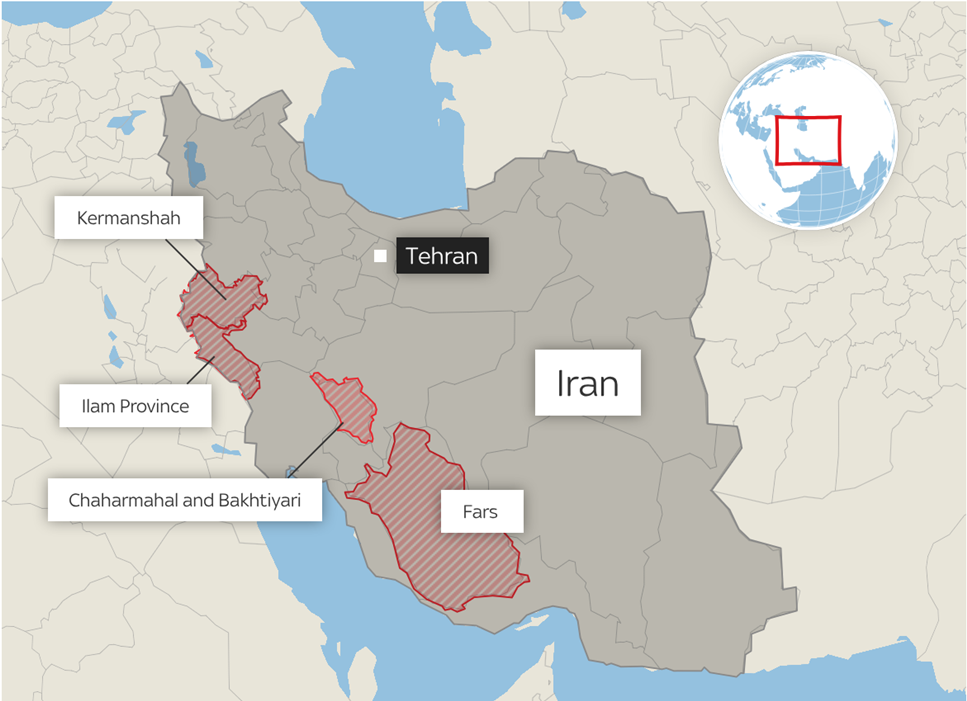
The protests have now spread to more than 180 cities across all 31 provinces, reflecting deep-rooted frustration with economic mismanagement and long-standing political repression. Despite warnings from authorities and the visible presence of security forces, demonstrators continue to gather, chanting slogans critical of Iran’s leadership and calling for fundamental change.
Diverging Accounts and Verification Challenges
The disparity between casualty figures highlights the difficulty of determining an accurate death toll. Internet blackouts have severely limited the ability of activists to upload footage, while hospitals and morgues are reportedly under pressure to withhold information about fatalities. Families of victims often face intimidation and are discouraged from holding public funerals, further obscuring the scale of deaths.
International human rights organisations caution that many fatalities may go unrecorded, particularly in smaller cities and rural areas where monitoring is limited. Amnesty International and Human Rights Watch have both warned that Iran has a history of suppressing casualty data during periods of unrest.
Who Has Been Killed?
Victims of the crackdown include young protesters, workers, students, and, in some confirmed cases, minors. Rights organisations have documented the deaths of at least three children under the age of 18, triggering widespread condemnation from the international community.
In addition to civilian casualties, Iranian authorities have confirmed that members of the security forces, including personnel from the Basij militia and law enforcement units, have also been killed. The government has cited these deaths as justification for its aggressive response, framing the unrest as violent and externally orchestrated.
Government Crackdown Intensifies
Iranian officials have consistently blamed the protests on foreign interference, accusing Western governments and regional rivals of attempting to destabilise the country. Senior leaders have warned that those involved in demonstrations could face severe legal consequences, including charges that carry life sentences or the death penalty.
Security forces have employed a range of measures to suppress protests, including tear gas, water cannons, baton charges, and live ammunition. Videos shared online — often before internet access is cut — show heavily armed units dispersing crowds, detaining protesters, and sealing off neighbourhoods.
State media has largely downplayed reports of deaths, portraying the demonstrations as isolated disturbances and claiming that order is being restored. Officials insist that most fatalities resulted from “riots” rather than the actions of security forces.
International Reaction and Condemnation
The rising death toll has prompted strong reactions from international human rights groups and foreign governments. Amnesty International has documented at least 28 deaths in a coordinated crackdown across multiple provinces during the early days of the protests, stating that many victims were killed by live ammunition fired at close range.
Several Western governments, including the United Kingdom and the United States, have expressed grave concern over the use of lethal force against protesters and have called on Tehran to respect human rights and allow peaceful assembly. Diplomatic pressure has increased, though concrete action remains limited.
Iran, for its part, has rejected international criticism, arguing that it is facing an organised campaign of unrest aimed at undermining national sovereignty. Officials have dismissed casualty figures reported by foreign groups as exaggerated and politically motivated.
The Wider Human Cost
Beyond those killed, the protests have resulted in a wave of arrests. Activist networks estimate that more than 2,300 people have been detained, including students, journalists, labour activists, and ordinary citizens. Many detainees are believed to be held without formal charges, raising concerns about mistreatment and due process.
Families of the deceased and detained face immense emotional and psychological strain. With communications restricted, many struggle to locate missing relatives or confirm whether loved ones are alive, injured, or imprisoned.

What Lies Ahead
As demonstrations continue into their third week, analysts warn that the death toll could rise further if security forces maintain their hardline approach. Iran’s underlying economic crisis, combined with political discontent, suggests that unrest is unlikely to subside quickly.
The international community remains divided over how to respond, balancing calls for accountability with concerns about escalating tensions in an already volatile region. For Iranians on the streets, however, the focus remains on survival, justice, and the hope that their demands will not be silenced by force.
Each confirmed death represents more than a statistic — it is a life lost amid a struggle that has captured global attention and raised urgent questions about human rights, governance, and accountability in Iran.
Related News:
 Kinnock’s Rebuke Echoes Loudly as Corbyn Allies Launch Left-Wing Breakaway: “A Gift to Farage”
 UK and Norway Forge Stronger Ties Through Joint Sanctions and Enhanced Defence Cooperation
 Trump Administration Dismisses 17 Immigration Judges, Sparking Debate Over Judicial Independence
 Lammy Condemns Israel’s Targeting of Starving Palestinians: Sanctions Threatened Amid Global Outrage
 Modi’s London Visit Seals Historic UK-India Trade Pact Amid Global Tensions
 UK Must Act with Courage and Clarity on Israel-Palestine Conflict, Says Foreign Affairs Committee Report
 Philippine Supreme Court Halts Impeachment of Sara Duterte, Fuelling 2028 Election Speculation
 New Missile, New Balance: US Precision Strike Weapons Redefine Taiwan’s Defence Horizon
 Trump Threatens 100% Tariff on Nations Importing Russian Oil Amid India Standoff Over Ukraine War
 MPs Call on UK Government to Delay Biometric Visa Checks for Gaza Students Amid Humanitarian Crisis
 Netanyahu Announces Plan to Take Over Gaza City, Escalating Conflict Further
 Radioactive Leak at UK’s Nuclear Warhead Base Sparks Outcry Over Safety and Secrecy
 Lammy and Vance Meet in Britain to Advance US-Brokered Ukraine Peace Talks
 Mutual Inconvenience: Why Alaska Was Chosen for the Trump-Putin Summit on Ukraine
 Prominent Al Jazeera Journalist Anas al-Sharif Among Five Reporters Killed in Israeli Airstrike on Gaza
 Hong Kong Summons UK and Australian Envoys Following Asylum Grants to Democracy Activists
 Is the UK Ready to Put Boots on the Ground in Ukraine? Assessing Military Capacity and Challenges
 Ukraine-Russia War Latest: Trump Suggests Putin Avoiding Zelensky Summit Due to ‘Personal Dislike’
 Protests Expected as Israeli Arms Firms Join Global Defence Trade Fair in London
 Trump Appears Sidelined as Israel’s Unprecedented Strikes Hit Qatar
 Conservative Influencer Charlie Kirk Fatally Shot During University Debate
 UK Imposes 100 New Sanctions Targeting Russia’s Revenues and Military Supplies
 Thousands Gather in London to Protest Donald Trump’s Second UK State Visit
Trump Urges UK to “Call Out the Military” to Secure Borders Amid State Visit
Thousands Gather in London to Protest Donald Trump’s Second UK State Visit
Trump Urges UK to “Call Out the Military” to Secure Borders Amid State Visit
 Channel Crossings Surge: Over 1,000 People Arrive in the UK in Small Boats in a Single Day
 Widow of Charlie Kirk Forgives Killer at Emotional Memorial Service
Trump’s UN Speech Criticises London and UK Policies, Draws Far-Right Attention
Widow of Charlie Kirk Forgives Killer at Emotional Memorial Service
Trump’s UN Speech Criticises London and UK Policies, Draws Far-Right Attention
 Denmark Investigates Professional Drone Incursions Across Multiple Airports, No Evidence of Russian Involvement
 UK Fighter Jet Purchase Could Breach Nuclear Treaty, Warns CND
 Yvette Cooper Signals Global Momentum Towards Gaza Peace Deal Amid Humanitarian Crisis
 A Third of EU Citizens in UK Report Discrimination by Public Bodies Post-Brexit
 Jailed Georgian Opposition Leaders Warn UK of Iranian Links to Ruling Party
 Russia repeatedly targets UK military satellites, warns Space Command chief
 Pro-Palestine March to Proceed in London Despite Calls to Cancel After Manchester Attack
 Misinformation and Political Pressure Force Weston-super-Mare to Abandon Refugee Sanctuary Plan
 Public Trust in SNP Hits Historic Low Amid NHS Concerns
 Johnson Suggests Mandelson Linked to China Spy Controversy
 Witness statements reveal the CPS China spy row collapse in the UK
 Nigel Farage Calls Vladimir Putin ‘A Very Bad Dude’
 Rachel Reeves signals welfare reform ahead of key budget
 Kosovo agrees to host Britain’s refused asylum seekers
 Ireland Votes as Two Women Compete for Presidency
 Russia’s Latest Push to Win US Favors Shows Deep Desperation
 Experts Warn Russia’s Burevestnik Missile Could Destabilise Arms Control
 British Woman in Iran ‘Losing Hope’ Amid Ongoing Detention
 Johnson Approved China’s London ‘Super-Embassy’ in 2018
 BBC Journalist Held and Interrogated in Vietnam
 UK University Suspends Human Rights Research Following Pressure from China
 UK University Faces Counter-Terror Probe Over China Pressure
 BBC to Apologise Over Edited Trump Speech Amid Backlash
 Britain deploys RAF specialists to assist Belgium with drone threats
 Ukraine-Russia war latest: Putin’s troops exploit bad weather to force Kyiv withdrawal from multiple towns
 Trump Urges Herzog to Grant Netanyahu Full Pardon
 New review urges UK to repatriate Shamima Begum, others from Syria
 US Justice Department Files Lawsuit Against California Over Partisan Voting Maps
 Indian authorities demolish Kashmir home linked to Red Fort blast
 Greene Pushes Epstein Files Amid Trump Fallout
 Trump Deploys DHS to Charlotte in Major Arrest Operation
 December Run-Off in Chile as Election Produces No Winner
 Canada Passes Carney’s First Budget in Tight Parliamentary Vote
 Shadow Fleet at Sea: Europe’s Battle Against Illicit Oil Shipping
 Rama Rebukes Mahmood for Targeting Albanian Families
 Pentagon Officials in Ukraine to Discuss War End
 India’s COP30 Delay Raises Global Climate Concerns
 Venezuela Threatens Nobel Winner Machado with Fugitive Status
 Trump Envoy to Discuss Ukraine Peace at Kremlin
 Georgians Defy Government Crackdown After Year of Protests
 India’s Labour Law Overhaul Sparks Fierce Debate
 Video shows Israeli troops kill Palestinians after surrender
 Chinese & Japanese Boats Clash Near Disputed Islands
 EU plans $105bn Ukraine aid using frozen Russian assets
 Global campaign launched to free Palestinian leader Barghouti
 Libya’s Army Chief Killed in Plane Crash in Turkey
 Russia losses Ukraine war peace talks intensify amid rising deaths
 Zelenskyy Accuses Russia of Sabotaging Peace Talks
 Trump ‘Not Worried’ as China Conducts Massive Taiwan Wargame
 Khaleda Zia Laid to Rest with State Honour in Dhaka
 Maduro Faces Court in New York Over Drugs and Weapons Case
 Albanese Opens Door to Bondi Royal Commission Amid Rising Pressure
 Trump Escalates Minnesota Immigration Surge Amid Rising Tensions