Published: 20 January 2026. The English Chronicle Desk. The English Chronicle Online.
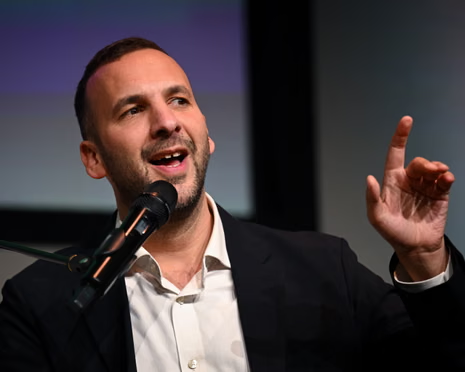
The debate over UK military strategy has intensified as Zack Polanski, Green party leader, said the country must reassess its dependence on American forces. Polanski stressed that Britain should consider expelling US troops from its bases and reducing reliance on American military aid. He argued that such steps would strengthen UK sovereignty and ensure defence decisions reflect national, not foreign, interests. The focus on US bases has ignited discussion about Nato membership and long-term military spending priorities, highlighting growing unease over transatlantic defence arrangements.
Polanski told the Guardian that Britain’s reliance on US military cooperation leaves it vulnerable to unpredictable political dynamics in Washington. “It’s worrying that UK security depends heavily on American interests, which can shift based on a leader’s mood,” he said. He emphasised the importance of a strategic defence review and evaluating the future of US bases across British territory. Polanski’s position suggests the UK could pursue independent defence capabilities, potentially replacing imported American weapons and reconsidering Nato commitments.

The Green party leader’s comments come amid heightened tensions between the UK and the US, as President Trump threatened to invade Greenland and impose tariffs on European nations resisting his economic demands. Polanski criticised the UK government for overreliance on Trump, describing him as an unpredictable and dangerous actor. “We need to ensure our allies are dependable. Donald Trump is certainly not,” he said, highlighting concerns about placing UK security at the mercy of volatile foreign policies.
Polanski also criticised Prime Minister Keir Starmer, arguing that his government overly prioritises maintaining favourable relations with the US. “Starmer seems focused on being on Trump’s good side rather than pursuing genuine UK security interests,” Polanski said. The Green party leader suggested the UK should reconsider its £331bn trade reliance on America if it conflicts with national defence objectives.
The discussion around US bases and Nato membership ties into wider debates about the UK’s nuclear capabilities. Polanski urged Britain to abandon nuclear weapons and encourage other countries, including Russia, to follow suit. He framed denuclearisation as central to global peace efforts and questioned the effectiveness of maintaining nuclear arsenals without diplomatic engagement.
Economic and political consequences of withdrawing US forces could be significant. European leaders have hinted at imposing €93bn in tariffs on American goods if Trump enacts threats against resistant countries. Polanski acknowledged that pursuing independent defence could strain trade relations but insisted that national security should take priority over economic convenience.
Polanski also spoke in favour of social policy measures, including a proposed wealth tax targeting assets above £10m and £1bn. He defended the tax’s purpose as tackling inequality rather than solely raising revenue. “Even if some money is lost due to avoidance, it’s about fairness and ensuring wealth is not hoarded by the few,” he said.
Public reaction to Polanski’s proposals has been mixed. Supporters argue that reducing reliance on US military resources would enhance the UK’s autonomy, while critics warn that withdrawing from Nato or expelling US forces could leave Britain vulnerable in a volatile global security environment. Analysts suggest that Polanski’s proposals reflect a broader debate about the future of Western alliances and national defence strategies in the 21st century.
Experts note that the UK’s military interdependence with the US has historically provided deterrence against global threats, but growing scrutiny over Trump-era unpredictability has led to calls for reevaluating bilateral agreements. Polanski’s stance signals potential shifts in the political landscape, as debates over Nato membership, US bases, and nuclear disarmament intersect with discussions about national sovereignty and defence independence.
The Guardian reported that Polanski emphasised diplomacy and strategic review as essential tools to secure the UK’s future. He urged policymakers to consider long-term defence planning that does not leave Britain reliant on foreign leaders’ whims. Observers indicate that a careful, measured approach would be necessary to balance security, international relations, and economic interests.
Polanski’s emphasis on US bases also reflects a broader trend among European nations reassessing defence partnerships. Countries across the continent face similar questions about dependence on American military presence and the implications for national sovereignty. The Green leader’s proposals, while controversial, have sparked debate in Parliament and among defence strategists, with attention on potential operational and geopolitical consequences.

In addition to security concerns, Polanski connected his stance on US bases with ethical foreign policy, citing American complicity in international conflicts. He suggested that reassessing military collaboration could enable Britain to take a more principled stance in global affairs, advocating peace and fairness over automatic alignment with US objectives.
As discussions continue, the Green party leader maintains that strategic independence is crucial. Whether this translates into legislative action or influences mainstream party policy remains uncertain, but Polanski has clearly placed US bases and Nato reliance at the forefront of UK defence debates. The discourse he has ignited underscores tensions between traditional transatlantic alliances and emerging calls for autonomous national defence planning.
Polanski concluded that Britain must prioritise reliable allies, consider military autonomy, and ensure national security aligns with public interest. By scrutinising US bases and questioning Nato membership, he aims to stimulate long-term debate over Britain’s military strategy and international alignment. His proposals challenge conventional wisdom and provoke critical reflection on the future direction of UK defence policy.
Related News:
 Army Officers Orders to Cut Ties with Men-Only Clubs
 Trump’s UK Ambassador Urges North Sea Drilling to Strengthen US Ties
BBC to Apologise Over Edited Trump Speech Amid Backlash
Trump’s UK Ambassador Urges North Sea Drilling to Strengthen US Ties
BBC to Apologise Over Edited Trump Speech Amid Backlash
 Britain deploys RAF specialists to assist Belgium with drone threats
 Millionaires group urge Reeves to introduce wealth tax to ‘lift kids out of poverty’
 Reeves rejects £1bn plea for NHS redundancy payouts
 PM Condemns Leaks, Vows Loyalty to Ministers and Stability
 Major Rent Reform Ends No-Fault Evictions in England
 Greene Pushes Epstein Files Amid Trump Fallout
 December Run-Off in Chile as Election Produces No Winner
 Shadow Fleet at Sea: Europe’s Battle Against Illicit Oil Shipping
 Georgians Defy Government Crackdown After Year of Protests
 ICC to Rule on Duterte’s Provisional Release
 Starmer Says Labour’s Economic Plan Needs Years to Deliver
 Ley Triumphs in Royal Commission Debate, Paving Way for Unity
 Mandelson apologises over Epstein ties after public scrutiny
 Australia grants Asio powers to designate hate groups under new laws
 Trump press secretary attacks reporter over ICE question
 Starmer Challenges US Over Controversial Greenland Deal
 Spoof “Make America Go Away” Caps Rally Denmark Over Greenland
 Starmer Resists Matching Trump Amid Greenland Tensions
 UK Government Borrowing Drops to £11.6bn in December
 Andy Burnham and the Labour Rift Over Power and Leadership
 Huge mistake: Labour blocks Burnham from byelection bid
 Labour targets Greens on drugs in Gorton Denton byelection
 Greens nominate Hannah Spencer for Gorton and Denton byelection
 Thousands Protest ICE Operations in Nationwide US Day of Action
 EU Signals Open Mind on UK Customs Union Talks
 Labour Thinktank Row Deepens Over Journalist Probe Claims
 Cabinet Secretary Shake-Up Triggers Due Diligence Warning
 Starmer Faces Inquiry Calls Over Thinktank Probe
 Royal Mail Delivery Crisis Deepens Amid Weather Chaos
 UK shelves £110m border project amid trade strain
 AFP Reviews Pauline Hanson Comments
 California Democrats Vow Trump Reckoning
 Trump Tariffs Threat Spark UK and EU Alarm
 Trump’s Surgeon General Pick Evades Vaccine Questions
 The Dangerous Rise of Remigration Across Modern Europe
 US to offer passport services in West Bank settlements
 Green Party Stuns Labour in Gorton and Denton Byelection
 Labour Together scandal sparks clean break vow
 Iran Defiance Grows Amid US-Israel War Pressure
 Starmer Praised for Stance on Trump and Iran Conflict
 NHS Plans to Cut Overseas Workers Labeled Overambitious
 Danish Election Deadlock Shakes Frederiksen’s Grip
 Pope Rebukes Leaders for War as Middle East Tensions Rise
 Army Probes Apache Flyover at Kid Rock’s Nashville Estate
 Farage Shuns Truss as US Right-Wing Roadshow Hits London
 Chancellor Meets Supermarket Chiefs Over Living Costs
 Italian Town Buys Mussolini Villa to Keep Away Fascist Fans
 Report Says Pezzullo Acted ‘Recklessly’ in Dealings
 Suspected Plot Targets Pipeline Before Hungary Vote
 Trump Defiant After Washington Hotel Shooting
 Starmer Survives Mandelson Rebellion
 Trump approval plunges amid Iran war fears
 Tough Fiscal Realities Await Next Scottish Government
 US ‘Narco Boat’ Strikes Draw Global Outcry
 One Nation Candidate’s Surprising Ties to Independents
 Labour Members Doubt Starmer Future as Burnham Leads Poll
 Reform UK Faces Crisis as Newly Elected Councillors Resign
 Tony Abbott Returns as New Liberal Party President
 Discontent grows around Putin amid war strain
 Secret Role of UK Security Services in Troubles Amnesty Law
 Starmer Leadership Under Pressure After Setbacks
 The Hidden Crisis Eroding Trust in British Communities
 Deepfake Abuse on X Sparks Safety Concerns for Dissidents
 UK Ministers Lobby Trump Over Under-16s Social Media Ban
 Starmer Resolves to Fight Burnham in Leadership Battle
 US Courts Back Trump on Park Signage Removals
 Hollie Ridley to Step Down as Labour General Secretary
 Trump’s Mount Rushmore Speech: A Divisive Anniversary
 Jarvis Urges Burnham to Secure 3.5% Defence Spending
 Trump’s Red-Card Intervention Hurts the US World Cup
 Farage Warns Sky News Following Financial Inquiry
 Le Pen to Run for President Despite Embezzlement Conviction
 Reform UK Finances Face Deep NCA Probe
 Trump Swaps Planes Amid Iran Tensions
 Ann Widdecombe, Formidable Political Figure, Dies at 78
 Houthis Strike Saudi Arabia as Middle East Tensions Rise
 Former Diplomats Urge UK and France to Act on Palestine