Published: 24 February 2026
The English Chronicle Desk
The English Chronicle Online
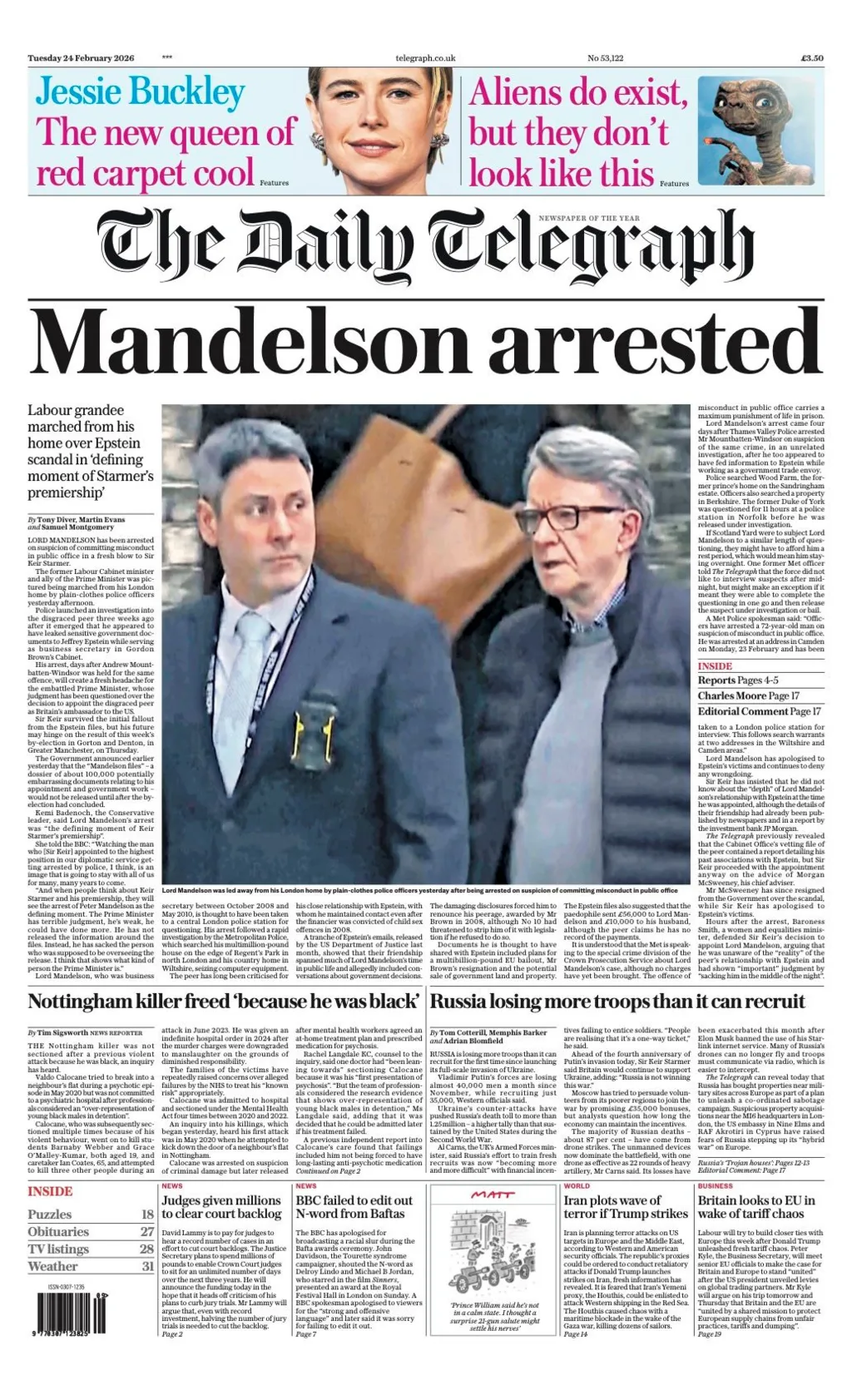
Two significant developments have captured international attention today: the arrest of former British politician Peter Mandelson in London over allegations linked to undisclosed lobbying activities, and solemn commemorations in Ukraine marking four years since the outbreak of full-scale conflict.

In London, Mandelson, a veteran Labour figure and former European Commissioner, was taken into custody following a police investigation into claims of improper influence in the promotion of corporate interests. The arrest, which sources indicate was conducted quietly early Monday morning, represents a major moment in UK political history, raising questions about transparency and accountability in post-ministerial business dealings. A spokesperson for the Metropolitan Police confirmed that Mandelson is being questioned but emphasised that no charges had yet been filed. Legal experts suggest that proceedings could extend for months due to the complex international elements involved.
Meanwhile, in Ukraine, towns across the country held vigils and memorials as citizens reflected on four years of ongoing war. Streets in Kyiv, Kharkiv, and Mariupol were lit with candles, while survivors and families of victims shared their stories of displacement, loss, and perseverance. The commemorations coincided with official statements from Ukrainian leaders who reiterated calls for continued international support and peace negotiations. Public sentiment remains heavily focused on the humanitarian toll of the conflict, including the displacement of millions and the destruction of infrastructure across contested regions.
Observers note the stark contrast between the high-profile political drama in London and the enduring, human-centered tragedy in Ukraine. While Mandelson’s arrest has dominated UK media headlines, the four-year mark in Ukraine serves as a reminder of persistent global crises that continue to shape regional security, migration patterns, and international diplomacy.
Political analysts highlight that the arrest could have implications for domestic policy debates in the UK, particularly regarding lobbying reform, oversight of former ministers, and corporate governance. Meanwhile, humanitarian organisations in Ukraine have called for sustained international attention, noting that despite significant aid and relief efforts, civilians continue to face shortages of food, healthcare, and basic services in war-affected zones.
Vigils in Ukraine included participation from local government officials, volunteer groups, and international observers. Many commemorants emphasized resilience and hope, underscoring the need for dialogue and reconciliation, while also acknowledging the continuing challenges posed by ongoing military engagements. The day’s events serve both as mourning and as a call to action, highlighting the intersection of international policy, human rights, and the enduring impact of prolonged conflict.

Together, these stories illustrate how political accountability and global crises intersect in contemporary news cycles, offering a dual perspective on governance, public accountability, and the human cost of conflict.
Related News:
 UK Home Office to Launch French Beach Signage to Warn Asylum Seekers of Risks
 Father’s Tip Leads to Arrest in Charlie Kirk Murder Case
 Charlie Kirk Killing Used to Mobilise UK’s Largest Far-Right Rally in Decades
 UK and Ireland Set to Unveil New Proposals to Address Northern Ireland’s Troubles Legacy
Channel Crossings Surge: Over 1,000 People Arrive in the UK in Small Boats in a Single Day
UK and Ireland Set to Unveil New Proposals to Address Northern Ireland’s Troubles Legacy
Channel Crossings Surge: Over 1,000 People Arrive in the UK in Small Boats in a Single Day
 UK Recognises State of Palestine in Push to Preserve Hope for Peace
 Jailed Georgian Opposition Leaders Warn UK of Iranian Links to Ruling Party
 China’s Mega Embassy in London Faces Further Delay
 Prince Andrew met alleged Chinese spies during Pitch@Palace China trips
 Kosovo agrees to host Britain’s refused asylum seekers
 UK University Faces Counter-Terror Probe Over China Pressure
 Second world war veterans honoured as King leads Remembrance Sunday
 Ukraine-Russia war latest: Putin’s troops exploit bad weather to force Kyiv withdrawal from multiple towns
 New Epstein Files Spark Political Clash in Washington
 Ukraine Energy Corruption Scandal Hits Zelensky’s Inner Circle
 New review urges UK to repatriate Shamima Begum, others from Syria
 Hasina Rejects Allegations Ahead of Bangladesh Tribunal Verdict
 Indian authorities demolish Kashmir home linked to Red Fort blast
 Greene Pushes Epstein Files Amid Trump Fallout
 UN Security Council Approves Trump’s Gaza Peace Plan
 WhatsApp Messages Expose Nathan Gill’s Bribery
 Venezuela Threatens Nobel Winner Machado with Fugitive Status
 Trump Envoy to Discuss Ukraine Peace at Kremlin
 Video shows Israeli troops kill Palestinians after surrender
 Guinea-Bissau President Flees After Military Coup
 Emails Show Epstein Funded Mandelson’s Husband After Jail
 Saif al-Islam Gaddafi Reportedly Killed in Libya Shooting
 UK Wants Action on Russia After Navalny Frog Poisoning, Cooper Says
 Nine Arrested in France Over Death of Far‑Right Student
 South Korea’s Ex-President Faces Death Penalty in Insurrection Trial
 How Much Could Andrew’s Arrest Hurt the Royal Family?
 New Mexico Reopens Criminal Inquiry into Jeffrey Epstein’s Zorro Ranch
 Ukraine Negotiator Reveals What It Feels Like Facing Russia
 Kinnock’s Rebuke Echoes Loudly as Corbyn Allies Launch Left-Wing Breakaway: “A Gift to Farage”
 Trump Administration Dismisses 17 Immigration Judges, Sparking Debate Over Judicial Independence
 UK Must Act with Courage and Clarity on Israel-Palestine Conflict, Says Foreign Affairs Committee Report
 Northern Ireland Family of Three Shot Dead in Maguiresbridge Home Incident
 Seventeen Dead as Russia Targets Ukrainian Prison in Devastating Airstrike
 Trump Threatens 100% Tariff on Nations Importing Russian Oil Amid India Standoff Over Ukraine War
 Radioactive Leak at UK’s Nuclear Warhead Base Sparks Outcry Over Safety and Secrecy
 Mutual Inconvenience: Why Alaska Was Chosen for the Trump-Putin Summit on Ukraine
 Hong Kong Summons UK and Australian Envoys Following Asylum Grants to Democracy Activists
 Is the UK Ready to Put Boots on the Ground in Ukraine? Assessing Military Capacity and Challenges
 Urgent Action Needed on Windrush Compensation as Survivors Speak of “Waiting to Die”
 Conservative Influencer Charlie Kirk Fatally Shot During University Debate
 Zarah Sultana Seeks Legal Action After Bitter Clash with Jeremy Corbyn Over Party Membership Funds
 Widow of Charlie Kirk Forgives Killer at Emotional Memorial Service
 Yvette Cooper Signals Global Momentum Towards Gaza Peace Deal Amid Humanitarian Crisis
 Public Trust in SNP Hits Historic Low Amid NHS Concerns
 Johnson Suggests Mandelson Linked to China Spy Controversy
 Russia’s Latest Push to Win US Favors Shows Deep Desperation
 French Taxi Driver Cleared in David Lammy Theft Case After Fare Dispute
 BBC to Apologise Over Edited Trump Speech Amid Backlash
 Britain deploys RAF specialists to assist Belgium with drone threats
 Trump Urges Herzog to Grant Netanyahu Full Pardon
 December Run-Off in Chile as Election Produces No Winner
 Canada Passes Carney’s First Budget in Tight Parliamentary Vote
 Shadow Fleet at Sea: Europe’s Battle Against Illicit Oil Shipping
 Deadly Russian Strikes Hit Western Ukraine, 20 Killed in Ternopil
 India’s COP30 Delay Raises Global Climate Concerns
 Georgians Defy Government Crackdown After Year of Protests
 American Mother Extradited From UK to U.S. on Murder Charges
 Albanese Opens Door to Bondi Royal Commission Amid Rising Pressure
 Iran Protesters Defy Crackdown as Violent Clashes Intensify
 EU weighs response amid Greenland tariff crisis with Trump
 EU Says US Ties Have Suffered ‘Big Blow’ After Greenland Crisis
 Police response times face strict new national limits
 Israel Moves to Bar MSF From Gaza Operations
 After the Landslide: Can India Reset Ties with BNP Bangladesh?
 Australian Families Leave Syrian Camp for Home
 SA Police Intensify Search in Gus Lamont Case
 Starmer Weighs Fast-Tracking Defence Boost
 Trump Attacks UK-California Energy Pact
 Eight Skiers Found Dead After California Avalanche
 Andrew Arrest Sparks Republic Debate in Australia
 Epstein Eyed Record Label Investment to Access Women, Files Suggest
 Australian PM Says Former Prince Andrew Has Suffered ‘Extraordinary Fall’ but That Won’t Prompt Republic Referendum
 Musk Cuts Starlink Access for Russian Forces – Giving Ukraine an Edge at the Front
 Farage Chagos Islands Row Sparks Fury
 Chad Shuts Border With Sudan in Bid to Stop Conflict Spreading