Published: 26 February 2026. The English Chronicle Desk. The English Chronicle Online.
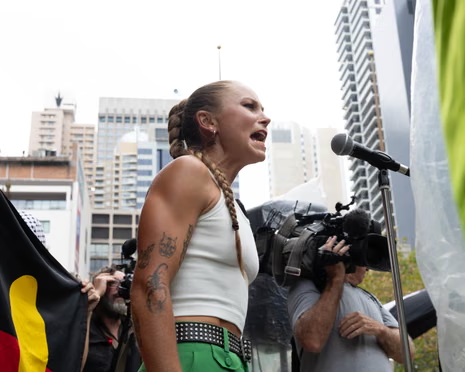
Australian politics was thrust into another heated moment this week after Prime Minister Anthony Albanese described Grace Tame as “difficult” during a rapid‑fire word association question at a conference in Melbourne, sparking backlash from activists, politicians and commentators alike. Grace Tame, the 2021 Australian of the Year and a prominent advocate for survivors of sexual assault, publicly challenged Albanese’s remarks, suggesting the term was a coded dismissal of women who refuse to comply with expectations placed upon them. The prime minister later sought to clarify his words, saying he had meant to refer to the “difficult life” Tame had endured rather than her character, but the controversy has since underscored broader tensions over language, gender and political discourse in Australia.
When Albanese was asked at the Future Victoria forum to give one‑word descriptions of well‑known figures, he replied “difficult” when Grace Tame’s name was mentioned, prompting an immediate social media storm and sharp responses from both supporters and critics. The prime minister’s office later emphasised that his intention was to highlight the challenging experiences Tame has survived and the strength she has shown in transforming her trauma into advocacy for others. Albanese told reporters that it was impossible to capture the complexity of Tame’s life in just one word and that he deeply respected her contributions, while apologising for any misinterpretation of his initial choice of word.

Tame’s response, however, was swift and pointed. Rather than accepting the clarification at face value, she reclaimed the term “difficult” in a social media post, framing it as a reflection of societal bias toward women who assert themselves or challenge entrenched power structures. In her commentary, she described the label as “the misogynist’s code for a woman who won’t comply,” adding that history often remembers such women as courageous rather than troublesome. Tame’s supporters echoed this sentiment online, suggesting that being seen as “difficult” can, in fact, serve as a badge of honour for those who disrupt the status quo.
The incident has opened up a wider conversation about how female figures in public life are talked about and the language used by leaders when discussing women who resist norms or criticise entrenched systems of power. Greens leader Larissa Waters weighed in on social media, urging the prime minister to choose words like “unbreakable,” “warrior” or “fierce” when describing Tame, and stressing that labelling women as difficult will not silence them nor deter their advocacy. Her comments underline a growing perception among some political voices that gendered language can reflect deeper biases in public discourse.
Other members of the political sphere were equally vocal. Greens Senator Sarah Hanson‑Young took to social platforms to express solidarity with women described as difficult, celebrating how such women have historically fought for rights like voting, representation and financial independence. The passionate support from figures across the political spectrum illustrates how this moment has tapped into longstanding discussions about the role of women in leadership and the persistent challenge of misogyny in society.
The controversy was compounded by the context of more contentious issues in which Tame has been involved in recent weeks. The outspoken activist drew criticism earlier in February for her participation in protests against the visit of Israeli President Isaac Herzog, during which she was filmed leading chants including “from Gadigal to Gaza, globalise the intifada.” While Albanese reiterated that he respects Tame’s advocacy, he also made clear that he did not agree with the language she used at that demonstration, signifying a delicate balance he is attempting to maintain between supporting her work and distancing himself from her more polarising statements.
This broader backdrop illustrates why political commentators have suggested that Albanese’s attempt to clarify his remarks was more than a simple linguistic misstep. Some observers argue that the prime minister is navigating a complex political landscape, attempting to appeal to diverse constituencies while managing internal and external pressures. Online commentary describes the situation as emblematic of a leader who must be careful not to alienate certain voters while also striving to uphold values of respect and inclusivity. Critics on social platforms have accused Albanese of trying to appeal to more conservative voices, casting his remarks as a calculated pivot rather than a genuine description.

In contrast, many commentators and supporters of Tame hailed her resilience and her ability to turn personal adversity into meaningful advocacy. As a survivor of child sexual abuse, Tame has dedicated her public life to championing the rights of others who have faced trauma, and her prominence in Australia stems from both her courage and her unwavering commitment to social justice. For many, the controversy over a single word has highlighted just how polarising public figures can be when they stand firmly by their principles, whether in advocating for survivors’ rights or in engaging with international issues that spark strong opinions.
Nevertheless, Albanese’s clarification aimed to balance respect for Tame’s work with acknowledgement of the complexity of her public positions. By stressing that he was referring to the hardships she has endured rather than her personality, the prime minister sought to defuse the immediate backlash, while also indicating that leadership requires careful communication and nuance. His statement that “it’s impossible to describe people in one word” was intended as an admission that public figures, especially those as multifaceted as Tame, deserve more considered language than what a quick, unscripted response can provide.
The debate shows little sign of abating, with discussions continuing across social media and political circles about the intersection of gender, language, and leadership. Whether this moment will lead to deeper reflection on the ways politicians address women’s advocacy or whether it will become another fleeting political skirmish remains to be seen. For now, the exchange over the word “difficult” has underscored the power of language in public life and reminded Australians that even brief remarks can ignite wide‑ranging conversations about respect, representation and the persistent challenges faced by women in public roles.
Related News:
 British Woman in Iran ‘Losing Hope’ Amid Ongoing Detention
 BBC to Apologise Over Edited Trump Speech Amid Backlash
 Britain deploys RAF specialists to assist Belgium with drone threats
 US Justice Department Files Lawsuit Against California Over Partisan Voting Maps
 Greene Pushes Epstein Files Amid Trump Fallout
 Trump Deploys DHS to Charlotte in Major Arrest Operation
 December Run-Off in Chile as Election Produces No Winner
 Canada Passes Carney’s First Budget in Tight Parliamentary Vote
 Shadow Fleet at Sea: Europe’s Battle Against Illicit Oil Shipping
 Pentagon Officials in Ukraine to Discuss War End
 Venezuela Threatens Nobel Winner Machado with Fugitive Status
 Georgians Defy Government Crackdown After Year of Protests
 India’s Labour Law Overhaul Sparks Fierce Debate
 EU plans $105bn Ukraine aid using frozen Russian assets
 Global campaign launched to free Palestinian leader Barghouti
 Trump Policies Boost China’s Global Rise, Survey Finds
 Iran unrest slows under brutal crackdown and global tensions
 Pentagon Signals Reduced Role in Deterring North Korea
 Thousands Protest ICE Operations in Nationwide US Day of Action
 Epstein Files Reveal Trump Officials’ Emails with Financier
 Starmer Condemns ‘Depraved’ Russian Strikes on Ukraine
 Herzog visit sparks protests across Australian cities
 UK and US Drop in Global Corruption Index Rankings
 Sydney Protest Escalates and Elderly Woman Suffers Severe Injury
 Tarique Rahman’s Rise Toward Bangladesh’s Top Job
 Glass Cliff Debate After Ley’s Ouster
 Canberra Poster Seizure Sparks Free Speech Row
 Evo Morales Returns After Mysterious Absence
 AFP Reviews Pauline Hanson Comments
 Duterte ICC Hearing Begins Amid Defiance
 Trump Tariffs Threat Spark UK and EU Alarm
 The Dangerous Rise of Remigration Across Modern Europe
 Trump’s Marathon Speech Fails to Mask a Growing National Disconnect
 US to offer passport services in West Bank settlements
 Health Funding Row Rocks US‑Africa Relations
 New UK-EU Reset Faces Criticism from Parliament
 Cuba charges six exiles for terrorism after speedboat raid
 Mojtaba Khamenei Chosen as Iran’s New Supreme Leader
 Iran Defiance Grows Amid US-Israel War Pressure
 US Strikes on Iran Set for Most Intense Day Yet
 Iran Nuclear Stockpile Sparks US Special Forces Debate
 China’s Ethnic Unity Law Set to Reshape Minority Schools
 Moscow Internet Blackouts Raise Censorship Fears
 Republicans Rebuke FCC Threat Over Iran War Coverage
 Oil Prices Surge as IEA Weighs Emergency Release
 Trump Nato threats expose Iran strategy vacuum
 UK Minister Denies Iran Missile Threat to Britain
 Danish Election Deadlock Shakes Frederiksen’s Grip
 Trump to Visit China in May After Iran War Delay
 Pope Rebukes Leaders for War as Middle East Tensions Rise
 Trump to Deploy “God Squad” Over Gulf Wildlife Protections
 Army Probes Apache Flyover at Kid Rock’s Nashville Estate
 Italian Town Buys Mussolini Villa to Keep Away Fascist Fans
 Report Says Pezzullo Acted ‘Recklessly’ in Dealings
 Trump Employs Nixon’s Madman Theory Amid Iran Crisis
 Trump Voices Frustration Over Nato Role in Iran Conflict
 Hungary election: Orbán faces biggest test amid scandal
 Suspected Plot Targets Pipeline Before Hungary Vote
 Trump Slams UK Ties and Threatens To Rewrite Trade Deal
 Southeast Asia Turns to Russia Amid Energy Crisis
 Capitalism ‘Suicidal’, Warns Petro at Climate Summit
 Judge halts deportation of Yemeni refugees in US
 Activists allege abuse after Gaza flotilla seizure
 Trump approval plunges amid Iran war fears
 Ohio’s Battle for Trust: Democrats Vying to Flip the Buckeye State
 US ‘Narco Boat’ Strikes Draw Global Outcry
 Ohio Primaries Set Stage for Crucial Midterms
 Afghan Families Left in Limbo Face Risk of Deportation
 Tensions Emerge in Netanyahu-Trump Alliance
 US Awaits Iran Reply on New Ceasefire Proposal
 Hormuz Talks Near Critical Stage
 Discontent grows around Putin amid war strain
 Starmer Leadership Under Pressure After Setbacks
 House Curbs Trump’s War Powers in Rare Rebellion
 Germany Summons Chinese Envoy Over Russian Troop Training
 New South Wales Premier Chris Minns Signals Tough Road Ahead for Labor
 Le Pen to Run for President Despite Embezzlement Conviction
 Ukraine Creates Long-Range Strike Command
 Le Pen’s Popularity Holds Despite Conviction
 Houthis Strike Saudi Arabia as Middle East Tensions Rise