Published: March 30, 2026. The English Chronicle Desk. The English Chronicle Online—Providing trusted news and professional analysis for the UK.
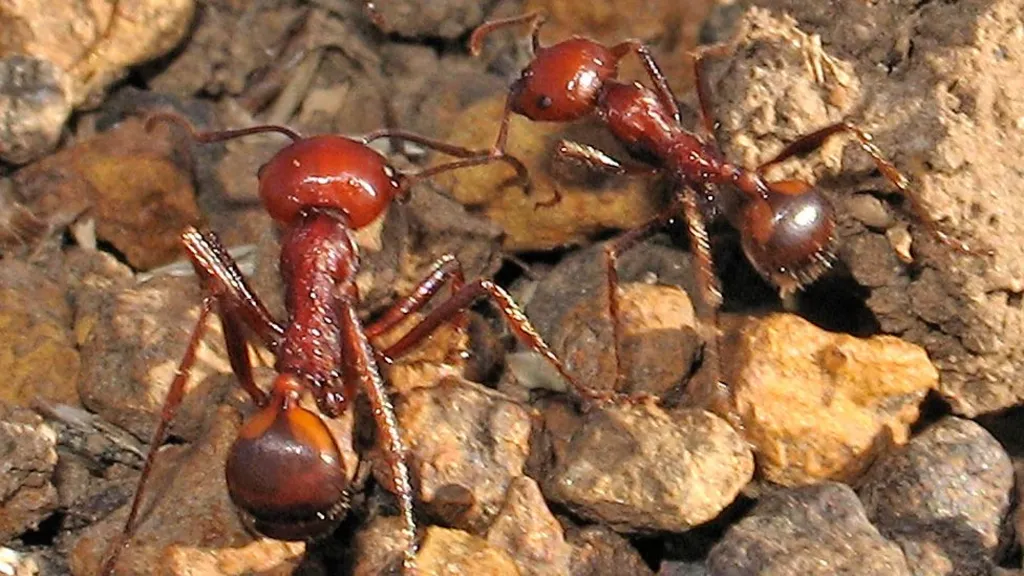
The dark underbelly of the global wildlife trade has found a new, unlikely protagonist: the humble ant. Once the niche domain of dedicated hobbyists, the trade in exotic ants has exploded into a multi-million-pound illicit market, with individual queen ants of rare species now fetching prices as high as $220 (£175) on unregulated digital marketplaces. Law enforcement agencies and conservationists are warning that this “insect gold rush” is no longer just a hobbyist’s quirk but a significant threat to global biodiversity and biosecurity. Recent seizures at international borders, including a massive haul of over 5,000 endemic ants in Kenya and a series of intercepted packages in Melbourne, have exposed a sophisticated network of traffickers who utilize the postal system to move “living cargo” across continents with alarming ease.

The demand is largely driven by a surge in the popularity of ant-keeping, fueled by social media influencers who showcase elaborate “formicariums” or glass-contained colonies. While many keepers operate within the law, the hunger for “visually striking” or “aggressive” species has pushed prices for rare specimens into the stratosphere. Australia’s legendary bull ants—famous for their painful stings and prehistoric appearance—are among the most sought-after. Despite strict export bans, these insects are being smuggled in plastic test tubes, often mislabeled as “beads” or “craft supplies.” Expert biologists note that the removal of even a few hundred queen ants from a specific localized habitat can cause an ecological collapse, as ants serve as vital “ecosystem engineers” responsible for soil aeration and seed dispersal.
The dangers of this trade extend far beyond the loss of individual insects. The introduction of non-native species into new environments carries the risk of creating “biological nightmares.” Invasive ants, such as the red imported fire ant or the yellow crazy ant, already cost the global economy billions of dollars each year in damage to agriculture and infrastructure. Conservationists, led by groups such as the Invasive Species Council, are now calling for urgent international action to list all ant species under the Convention on International Trade in Endangered Species (CITES). Currently, ants occupy a legal “grey area,” receiving far less protection than charismatic megafauna like elephants or rhinos, despite their potential to cause equivalent environmental havoc.

As the market moves deeper into the encrypted shadows of the dark web and private messaging groups, the battle to protect the world’s smallest wildlife is intensifying. The Kenyan “landmark case,” which saw traffickers fined nearly $8,000 for smuggling harvester ants, has set a new legal precedent for treating insect poaching with the same severity as traditional wildlife crime. However, with the ease of transport and the sheer scale of the digital marketplace, officials admit that they are likely only seeing the tip of the iceberg. For $220, a buyer might secure a rare pet, but the true cost—measured in ecological degradation and the spread of invasive pests—is a price that entire nations may eventually have to pay.
Related News:
 Anthropic Boss Rejects Pentagon Demand to Drop AI Safeguards
 Boy George Says He’s Using ChatGPT to Help Write New Songs
 India and US Collaborate to Launch Groundbreaking Satellite for Earth Observation
 British AI Startup Outshines Human Forecasters in Global Prediction Contest
 History Will Remember Who Showed Up: Pressure Mounts on Keir Starmer to Attend Cop30 Summit
 UK Fighter Jet Purchase Could Breach Nuclear Treaty, Warns CND
 Google at 27: The Untold Story of Ruth Kedar, the Woman Behind the Iconic Logo
 Russia repeatedly targets UK military satellites, warns Space Command chief
 Cooper Unveils £4m Cyber Plan Against Russian Hackers
 Experts Warn Russia’s Burevestnik Missile Could Destabilise Arms Control
 Britain deploys RAF specialists to assist Belgium with drone threats
 Night after night, Belgium is on high alert.
 Hitler’s DNA Confirms He Truly Had Only One Testicle
 Pokémon to open world’s first theme park in Japan next year
 Ukraine to Get 100 French Rafale Jets in Historic Deal
 Poll Reveals China Leads World in Trusting AI Technology
 US Clears Nvidia AI Chip Sales to China in Policy Shift
 Iran Signals Permanent Break From Global Internet, Activists Warn
 UK New Car Discounts Near £6,000 as Prices Are Slashed
 Musk Wants City on the Moon Within 10 Years
 Indian University Kicked Out of AI Summit for Claiming Chinese Robot Dog as Its Own Invention
 China Shows Off Nunchuck‑Wielding Humanoid Robots for Lunar New Year
 The Chinese AI App Sending Hollywood Into a Panic
 How Do You Modernise Mango Farming? India’s Growers Urged to Innovate as Climate Change Hits
 Bill Gates Pulls Out of India’s AI Summit Over Epstein Files Controversy
 Zuckerberg Defends Meta in Landmark Social Media Addiction Trial
 Etsy Sells Second‑Hand Fashion App Depop to eBay for $1.2bn
 Musk Cuts Starlink Access for Russian Forces – Giving Ukraine an Edge at the Front
 Urgent AI Threat Research Needed, Says Google Boss
 Met Police Using AI Tools Supplied by Palantir to Flag Officer Misconduct
 Anthropic AI Refuses Pentagon’s Safety Demand
 Social Media Trial: Woman Says Addiction Began at Six
Instagram Investigating AI Profiles ‘Fetishising’ Disabled People
Social Media Trial: Woman Says Addiction Began at Six
Instagram Investigating AI Profiles ‘Fetishising’ Disabled People
 Jack Dorsey’s Block Cuts Thousands of Jobs as It Embraces AI
 Brady Tkachuk Denies AI Video Claims After Olympic Gold
 Orbital Space Race Heats Up in Arctic North
 How AI Can Read Our Scrambled Inner Thoughts
 The Sad, Strange Story of the World’s Most Radioactive Paradise
 Why Russia Controls Its People With a Flick of a Switch
 Wellness Peptide Craze: Why People Are Injecting Drugs ‘Not for Human Consumption’
 The US Now Has the Medicine for Cheap Swarming Drone Attacks
 Satellite Images Show Iranian Navy and Nuclear Sites Hit by US‑Israeli Strikes
 Protesters Rally in San Francisco Against OpenAI Deal With Pentagon
 We Have More Privacy Controls Yet Less Privacy Than Ever — The Paradox of Digital Life
 Regulator Contacts Meta Over Workers Watching Intimate AI Glasses Videos
 Study Says Only Two Nations May Survive Nuclear War
 Baba Vanga’s Chilling World War 3 Prediction and Russia’s New Leader
 Tiny Possum and Glider Thought Extinct for 6,000 Years Found in Remote West Papua
 Ukraine’s Anti-Drone Bullet Could Shield Gulf Skies
 Musk’s xAI Permit Sparks Fury Over Power Plant Expansion
 GPS Jamming: The Invisible Battle in the Middle East
 The Kill Line: A Shifting Vision of the American Dream
 India’s $300bn Outsourcing Industry Faces AI Test
 Iran Social Media Strategy Shifts to Information War
 ABC Staff Strike Over Pay and AI Concerns
 Cluster Strikes Test Israel’s Missile Defences
 Zelensky Visits Saudi Arabia After Offering Drone Expertise
 Councils Pressed to Use Universal Parking App to Cut ‘Unfair’ Fines
 China’s Tech Giants Race to Hong Kong as Global “Staging Post”
 Yvette Cooper Signals Global Momentum Towards Gaza Peace Deal Amid Humanitarian Crisis
 Chaos at Ibrox as Martin’s Rangers Era Comes to an End
 Russia’s Latest Push to Win US Favors Shows Deep Desperation
 UK Bans Fake Numbers: Scammers Lose Their Trick
 Vibe coding’ named Collins dictionary’s word of the year
 BBC to Apologise Over Edited Trump Speech Amid Backlash
 AI Coding Firm’s ‘Pride’ at Business Award Win
 Ukraine Negotiator Reveals What It Feels Like Facing Russia
 Drugs, Denial, Stigma: Fiji’s HIV Crisis Hits Children
 Stewart Brand on Musk, Bezos and a Life of Long Thinking
 Hilary Knight speaks out on Trump’s recent hockey remarks
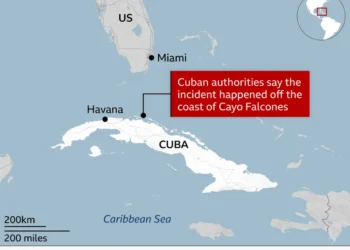 American Citizen Killed in Cuba Boat Shooting, U.S. Officials Say
 Iran’s Regime Still Intact — Coming Days Will Test Its Survival
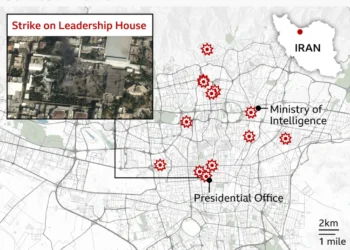 In Maps: Strikes Across Iran and the Middle East
 Brit ‘in Good Spirits’ Amid Dubai Missile Attacks, Stranded but Safe
 Civilian Deaths in Iran Pass 700 Amid Fear of Bombs and Regime Clampdown
 ‘Every Day Feels Like a Month’: Iranians Describe Life Under ‘Constant’ US‑Israeli Strikes
 Penny Wong silent on Australian crew in sub strike
 Finland Plans to Lift Decades‑Old Ban on Hosting Nuclear Weapons
 Trump Pressures Congress Over Save America Act
 Iran War Puts Trump at Political Risk Amid Rising Prices