Published: 06 April 2026. The English Chronicle Desk. The English Chronicle Online.
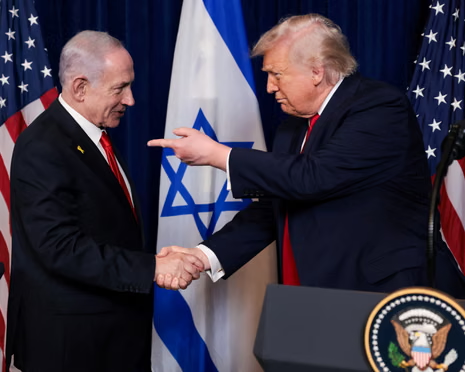
The meeting at Mar-a-Lago last December now seems like a distant memory of misplaced confidence. Benjamin Netanyahu arrived at the Florida club with a very specific appeal for Donald Trump. He brought an inducement that was designed to appeal to the president’s transactional nature. Israel had spent months restocking its advanced air defence systems and various missile batteries. This followed the brief but intense twelve-day conflict in June of last year. During that June skirmish, the United States joined Israel in bombing Tehran’s nuclear sites. Netanyahu signaled that Israel was finally ready to go back into the fight. This time, the objectives were described as being far more substantial and permanent.
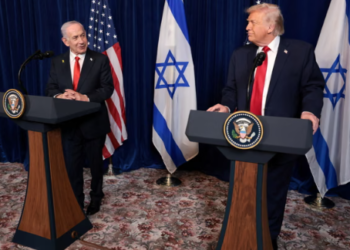
At the joint press conference, Trump appeared to echo the familiar talking points. He noted that Iran was trying to build up its military power again. Trump told reporters that they would have to knock the hell out of them. He expressed hope that such a confrontation would not actually be necessary in reality. The Israeli leader had also come armed with a boost for Trump’s ego. He awarded the president the Israel Prize for his contributions to the Jewish people. This is a top honour that is rarely given to any non-Israeli citizen. According to reports in the Atlantic, Netanyahu suggested a final benefit to the president. He claimed that defeating Iran would end Israel’s reliance on American military aid.
That meeting was one of many contacts between the two leaders in weeks. Netanyahu sought to lock in American participation for a truly comprehensive regional conflict. The goal was much grander than the previous limited rounds of aerial fighting. They believed a fragile and unpopular Iranian regime was finally ripe for toppling. Internal protests had shaken the Islamic Republic following years of lethal state repression. An assessment prepared by the Mossad suggested the regime was at a breaking point. It was presented as a historic opportunity that would only require a short campaign. Some accounts suggest Netanyahu even dangled the prospect of revenge for the president. He reminded Trump of alleged Iranian plots that targeted the president during the election.

Netanyahu has long styled himself as the preeminent global expert on Iranian affairs. He and the wider Israeli military establishment were fully invested in this pitch. They sold the idea of an easy war to the new American administration. On the first day of the war, officials briefed the Haaretz newspaper. They claimed the Iranian threat would taper off in just a few days. They believed the last of Iran’s missile launchers would be eliminated very quickly. Another article suggested that military planners had only stockpiled enough interceptors for weeks. They assumed the entire conflict would last three weeks at the very most. This was viewed as a discrete conflict that the United States owned. However, it was always part of a much larger and older strategy.
This war is the latest front in Netanyahu’s state of permanent conflict. This cycle has raged since the Hamas attacks of October seven, twenty-three. That initial attack fundamentally altered the strategic calculations of the entire Israeli state. Expanding regional conflicts followed in Gaza, Lebanon, and now directly within Iran itself. A common theme has emerged across all these different and bloody battlefronts. Netanyahu has consistently promised and declared victories that eventually prove to be ephemeral. In Gaza, a diminished Hamas still persists among the ruins of the strip. The campaign of death and destruction has not fully removed the group’s presence. In Lebanon, Hezbollah was declared defeated several times by the Israeli military.
Yet the organisation retains its capacity to fire rockets across the northern border. Israel has plunged back into the policy of occupying southern parts of Lebanon. This same policy failed once before and led to Hezbollah’s initial emergence. In Iran, the strategy of decapitation has also seen very mixed results. The supreme leader and other senior officials have been killed in recent strikes. This has not led to the quick regime change promised by Netanyahu. Instead, there has been an apparent consolidation of power around the Guards Corps. Even senior Trump administration officials now feel that Netanyahu may have overpromised. Reports have emerged of a testy conversation between JD Vance and Netanyahu.
Axios quoted a United States source using the prime minister’s famous nickname. The source said Bibi sold the war as being extremely easy work. He claimed that regime change was a lot likelier than it was. The vice president was reportedly very clear-eyed about some of those false statements. Others in the diplomatic community are much more cautious about this narrative. Daniel C Kurtzer wrote that Trump was a willing and full partner. He argued that Trump was risk-ready and caught up in his power. The president felt invincible after taking on the Maduro regime in Venezuela. While Netanyahu determined the timing, Trump was already on his way to war. The conflict has now entered its second month with no end.
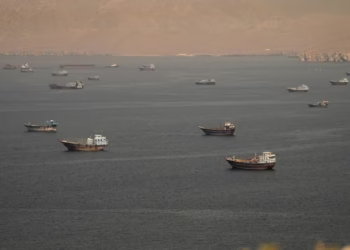
The global economy is reeling from the closure of the Strait of Hormuz. This vital waterway remains a flashpoint for international trade and energy prices. The detrimental consequences of this promised easy war are now spreading very far. The perception of Netanyahu’s role matters as much as Trump’s own willing involvement. Security experts have noted the massive direct expenditures of the first few weeks. Support for Ukraine has been reduced as resources are diverted to the East. Dangerous strains have been put on inventories of the most advanced weapons. This has shocked the global economy and undermined the strength of Nato. Potential rivals like China and Russia may find themselves emboldened by this.

Netanyahu has boasted in biblical terms of hitting Iran with ten plagues. However, Iranian and Hezbollah missiles are still landing on major Israeli cities. Many citizens will spend their upcoming holidays with one eye on shelters. There are likely to be very long-term consequences for Israeli foreign diplomacy. Netanyahu’s war threatens the detente with the Gulf states and the accords. Some Arab states may blame Israel for being thrust into this war. The geopolitical landscape of the Middle East may look very different very soon. It may not be the landscape that Trump and Netanyahu originally envisioned. Outside the Gulf, the French president has also reflected a very widespread view.
Emmanuel Macron stated that strikes would not provide a durable nuclear solution. He described the military operation to open the strait as being unrealistic. Without a framework for negotiations, the situation will only deteriorate further later. It is also difficult to quantify the impact on global domestic politics. Widespread opposition to the tactics of the Israeli government is growing daily. In the US, polls show that support has declined across the spectrum. A recent survey showed Americans are now more sympathetic to the Palestinians. This is the first time such a shift has been recorded. The downward trend is even visible among many American Jewish voters today.
A majority of these voters reportedly oppose the military action against Iran. They believe that the war actually weakens the security of the US. Rahm Emanuel suggested that Israel may lose its status as a beneficiary. In the future, they may face the same restrictions as others. The United States taxpayers may not foot the bill forever for this. This shift represents a fundamental change in the relationship between the nations. The promise of an easy war has become a very difficult reality. Both leaders must now face the consequences of their shared strategic gamble. The world watches as the conflict continues to expand without a plan.
Related News:
 Ukraine war briefing: Zelenskyy offers help to Saudi Crown prince on combatting Iranian drones
 Ukraine Sends Drone Experts to Defend US Bases in Jordan
 Saudi Arabia Urging US to Keep Up Iran Attacks
 Diplomacy on the Brink: Pakistan’s Risky Peace Mission
 Trump Slams Europe as Transatlantic Tensions Boil Over
 High-Value Target: Iranian Strike Destroys US Radar Plane
 UN Warns Israeli Death Penalty Bill Could Be a War Crime
 Pakistan and China Propose Five-Part Peace Plan
 Trump Issues Stark Warning After Strike On Iran’s Largest Bridge
 Hope and Fear as Iranians Flee Across the Turkish Border
 Israel Defies Ceasefire as Lebanon Operations Persist
 Middle East Peace Crisis: Ceasefire Strained by New Violence
 Pakistan Brokers Historic Peace Deal Amid Rising Tensions
 Netanyahu Vows Continued Lebanon Strikes Amid Peace Talks
 Islamabad Hosts Historic Peace Talks Between Iran and USA
 US and Iran Pursue Extension of Ceasefire via Pakistan
 Trump’s Islamabad Gamble: The High Stakes of a New Iran Deal
 The General’s Gambit: Pakistan’s New Role in Global Peace
 Can Trump’s Ceasefire Hold in Lebanon?
 Global order shifts amid Trump-era turmoil
 Middle East Crisis Escalates as Oil Routes Shake Markets
 Saudi Arabia Blocks Trump’s Naval Plan for Hormuz Strait
 Tensions Emerge in Netanyahu-Trump Alliance
 UAE’s Secret Strike on Iran Risks Wider Gulf Conflict
 Netanyahu Claims Secret UAE Visit Amid Regional Conflict
 Netanyahu Calls Early Election Amid Coalition Turmoil
 Plea for Mercy: The Battle to Bring Ahmed al-Doush Home
 Trump Issues New Threat of Strikes Amid Iran Standback
 Global Outrage After Israeli Minister Mocks Bound Activists
 Israeli Strikes in Lebanon Kill 10 Amid Ceasefire Strain
 Hunger increasingly weaponised in global conflicts
 Former ICC prosecutor condemns US sanctions
 Trump and Netanyahu Clash Over Crucial US and Iran Peace Deal
 Washington Brokerage Sparking Hope Amid Regional Firestorms
 Israel Defies Trump in Direct Strikes on Targets Across Iran
 US and Iran Agree Historic Framework to End 15-Week War
 Global Powers Navigate Fragile Peace as Hormuz Reopens
 Trump Signs Landmark Iran Accord in Versailles
 Uncertainty Prevails as Landmark Peace Talks Abruptly Conclude Before Commencement
 Iran To Propose New Shipping Fees In Strait Of Hormuz
 Grief and Devotion Amidst the Rubble of Nabatieh
 High Drama in Tehran Over Secret Nuclear Letters
 Iran Prepares for Massive Six-Day Funeral for Khamenei
 Iran Prepares for Massive Funeral for Supreme Leader
 Iran Bids Farewell to Fallen Leader in Massive Procession
 Iran Mourns: Millions at Khamenei’s Final Procession
 Hamas Proposes Handing Over Control of Gaza Strip
 Israeli Officer Investigated for Car Grenade Attack
 Yemen Accuses Iran of Violating National Sovereignty
 Trump Threatens Iran Power Strikes Over Hormuz Impasse
 Houthis Strike Saudi Arabia as Middle East Tensions Rise
 Friedman Uninvited From 2024 Adelaide Writers’ Week
 New Zealand Covid Response Praised Despite Lingering Scars
 Injured Mojtaba Khamenei Elevated as Iran Leader
 Trump’s Six-Week Iranian War: The High Cost of Ignorance
 Trump and Tehran Find Common Ground in Landmark Ceasefire
 Kyiv and Odesa Mourn After Deadly Wave of Russian Strikes
 US Forces Seize Iranian Ship Near Hormuz Blockade
 Investigation: Offshore Loans and Sanctions
 Cross-Border Crisis Shatters Fragile Afghan Peace
 The Burning Lens: An Iranian Artist’s Visual Resistance
 One Nation Candidate’s Surprising Ties to Independents
 Putin Signals War End as Russian Momentum Stalls
 Romania’s Judicial Crisis: A System Under Siege
 Scepticism and tight security as Beijing braces for Trump
 Philippine Senator Flees After Days Under Senate Siege
 Tensions Flare as Israeli Nationalists March in Jerusalem
 Secrecy Down Under: Albanese Faces FoI Scandal
 Tony Abbott Returns as New Liberal Party President
 Discontent grows around Putin amid war strain
 Teaching Machines Right From Wrong in the Digital Age
 Oman Defies US Pressure Over Strategic Strait of Hormuz
 Ex-CIA Agent Accused of $40m Gold Theft and Fake Spy Unit
 Aukus Deal Facing Fierce Backing and Historic Criticism
 Tragic Loss of Australian Sprinter Jemma Stapleton
 Trump Urged to Condemn UFC Fighter Over Obama Slurs
 Russian Tanker Captain Remanded in UK Court After Channel Seizure
 US Military Pacific Boat Strike Kills Three People
 Trump’s Mount Rushmore Speech: A Divisive Anniversary
 Trump Swaps Planes Amid Iran Tensions