Published: 24 May 2026. The English Chronicle Desk. The English Chronicle Online.
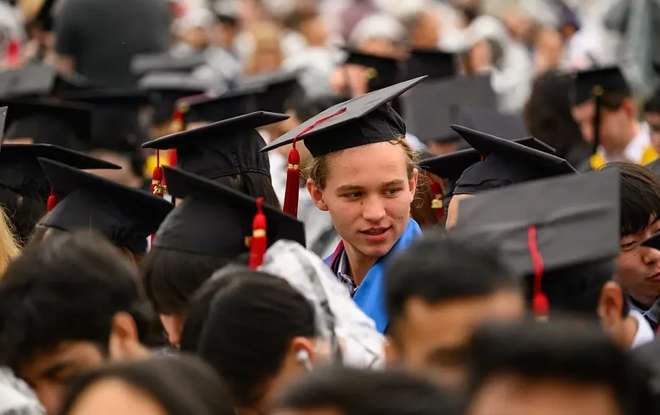
For decades, the American dream was tethered to a clear, linear path: graduate from high school, secure a college degree, and enter a career that provided the foundation for a stable, middle-class life. However, for many members of Generation Z, that once-reliable blueprint is failing to deliver on its promises. Despite a growing economy and low unemployment rates, young college graduates across the United States are reporting deep economic instability, a pervasive sense of being “stuck,” and a troubling erosion of confidence in both the country’s leadership and their own financial futures.
The struggle is not merely anecdotal. Jes Vesconte, a 29-year-old with a master’s degree from Columbia University, exemplifies the disconnect between high-level academic credentials and basic financial security. Despite their elite education, Vesconte finds themself balancing freelance work with service-industry jobs, struggling to clear $3,000 a month while facing the looming weight of student loan repayments. This experience aligns with recent reports from the Economic Policy Institute, which indicate that the “edge” of a college degree is rapidly diminishing. While a degree still offers advantages, the premium has narrowed significantly as the cost of education—averaging nearly $30,000 in debt for the class of 2024—continues to soar, leaving millions of Americans burdened by federal loan debt that exceeds $1.8 trillion.
Economists and researchers suggest that this generation is confronting a set of challenges unprecedented in the modern era. Janelle Jones, a former chief economist at the Department of Labor, notes that the problem is not just about the labor market; it is about young people living through multiple, intersecting existential crises. Confidence indices from the University of Michigan bear this out, showing a sharp decline in sentiment among adults aged 18 to 34, a demographic that historically maintained higher optimism than their older counterparts. Today, that index has nosedived, remaining consistently lower than that of Americans over the age of 55.
The deterioration of wellbeing among young workers is broad, extending beyond paychecks and hiring prospects. Dartmouth College professor David G. Blanchflower has observed a complex puzzle of declining social engagement, with fewer young Americans obtaining driver’s licenses, dating, or pursuing traditional social milestones. This shift is compounded by the harsh reality that the “idealized life” of adulthood, often portrayed in popular media, feels increasingly unattainable. The financial barrier to simply existing in major urban centers has forced many in Generation Z to rethink their personal trajectories, with roughly one-fifth of young adults choosing to live with their parents to stay afloat financially.
This migration back to the family home is a pragmatic solution, yet it brings its own set of social challenges. Ragini Subramanian, a 23-year-old journalism graduate, found that a low-paying contract role in public relations was unsustainable, leaving them unable to afford rent and basic living expenses. After moving back to the Bay Area to live with their parents, Subramanian has gained the breathing room to pursue freelance work, but they also highlight the social isolation that can accompany this shift, particularly for those in creative industries seeking community and self-actualization.

Despite the prevailing narrative of struggle, there remains a resilient undercurrent of determination among Gen Z. Many are choosing to redefine success on their own terms, rejecting the rigid career paths that left previous generations burned out. For individuals like Subramanian, the transition out of a stagnant, low-wage role was not a defeat, but a pivot toward a future they intend to build themselves. As the systemic fractures of the modern economy continue to widen, the narrative of this generation is increasingly defined not by the degree they hold, but by their ability to adapt to a landscape where the old rules no longer apply.
Related News:
 City & Guilds pay surge sparks backlash amid £22m cuts
 Wealthy Britons Flee Gulf War but Avoid UK Taxes
 UK Wage Growth Slows as Jobs Market Holds Firm
 UK Doubles Steel Tariffs to 50% to Protect Domestic Plants
 Student Loan Interest May Rise Despite 6% Cap
 City & Guilds Sale Sparks Fees and Pay Uproar
 Albanese Rejects Gas Export Tax Push
 BBC News Faces Deep Cuts in 2,000 Job Plan
 New UK advice scheme to boost savings and investing
 City & Guilds Faces Governance Crisis Over Sale
 Kevin Warsh sworn in as Fed chair amid economic backlash
 UK Pushes for New EU Goods Trade Deal
 Reeves Fights to Keep Treasury Role Amid Labour Turmoil
 Albanese Defends Tax Reforms Amid Emotional Speech
 Victoria Labor Launches Apprenticeship Expansion Plan
 UK rejects EV charging VAT cut amid Treasury clash
 Essex valley emerges as rising English wine hub
 Public Confidence in University Degrees Plummets in the UK
 New V-Level qualification to transform post-16 education
 Reeves Faces Setback as Labour May Miss Homes Target
 Virgin Trains Moves Closer to Challenging Eurostar Monopoly
 Trump’s UK Ambassador Urges North Sea Drilling to Strengthen US Ties
 Children to Learn Local History in Major Curriculum Overhaul
 Ryanair Chief UK Economy ‘Doomed’ Under Labour
 M&S Profits More Than Halve After Cyber-Attack
 Labour immigration crackdown could cost UK £4.4bn
 Millionaires group urge Reeves to introduce wealth tax to ‘lift kids out of poverty’
 From Lego to Pokémon: How Adults Are Driving UK Toy Market Growth
 Phillipson Accused of Appeasing Unions by Diluting EBacc
 Canada Passes Carney’s First Budget in Tight Parliamentary Vote
 Scottish Families Take Legal Action Over School CO Leak
 Starmer Says Labour’s Economic Plan Needs Years to Deliver
 Starmer Faces Parliamentary Battles Over UK-EU ‘Reset’ Plan
 ScottishPower Tops List of Worst UK Energy Suppliers
 Trump Fed bid heads to Supreme Court
 BT Names New Openreach Chief Amid Major Fibre Expansion
 Send spending gap leaves deprived areas behind
 UK Banks Plot Payment Backup Amid Trump Fears
 UK Unemployment Rate Climbs to 5.2% Peak
 New Era for UK Special Needs Support
 Rachel Reeves Faces Middle East Conflict Test
 Adelaide University Faces Backlash Over Event Cancellation
 Rising Costs Force Families to Rethink Days Out
 Oil Slides, Stocks Jump on Trump Peace Signals
 UK inflation held at 3% before global energy price hit
 Ticketmaster Fees Rise Despite Recent US Junk Fee Crackdown
 M&S Demands Urgent Action on Rising Violent Retail Crime
 Unions Raise Concerns Over Doctors’ Pay Dispute
 New Era for Sick Pay as Millions Gain Critical Rights
 US and Iran Agree to Two-Week Provisional Ceasefire
 Stefano Gabbana Resigns as Chair of Italian Luxury Giant
 Rolls-Royce SMR Secures £600m Boost for Nuclear Future
 Aegon Sells Historic UK Arm to Standard Life for £2bn
 Central Bank Chiefs Hold Crisis Simulation in Washington
 UK Staycations Rise as Travel Fears Grow
 Schools Struggling to Support SEN Pupils Amid Crisis
 Former Brexit Chief Calls for Rejoining the EU
 Oil Prices Surge Above $120 Amid Iran Blockade Fears
 Silent Tracks: Rail Line Without Passengers
 Tough Fiscal Realities Await Next Scottish Government
 DeepMind Staff Vote to Unionize Over US Military Contract
 Global Conflict Hits Home As Bullock Warns Of Economic Pain
 STV Election Coverage Disrupted Amid Bitter Pay Dispute
 Aramco Surges as East-West Pipeline Counters Gulf Tensions
 High Stakes in Beijing as Trump and Xi Meet Amid Global Turmoil
 Lotus Boss Pledges Future to Norfolk and Seeks State Support
 Trump and Xi Convene in Beijing for Historic High-Stakes Summit
 UK Firms Freeze Spending as Iran Conflict Bites
 Rubles and Resilience: How Russia-China Border Towns Thrive
 UK Eases Russian Oil Sanctions as Fuel Costs Soar
 Tube Strike Brings Capital to a Standstill Over Shift Disputes
 BP Stands Firm on Amanda Blanc Amid Boardroom Storm
 UK House Prices Drop For Third Month Due To War Fears
 GSK Secures Landmark $10.6bn Deal for Nuvalent
 AI Scams Push UK Investment Fraud Past £220m
 The Hybrid School Revolution Defying the Social Media Ban
 Sainsbury’s Boss Optimistic As Grocery Inflation Eases
 Ukraine Creates Long-Range Strike Command
 UK Schools Struggle as Classrooms Top 40C
 Thames Water Future Remains Uncertain Amid Funding Crunch