
Published: 08 May 2026. The English Chronicle Desk. The English Chronicle Online.
The safety of children within the British education system faces a significant and modern challenge. Experts now warn that the simple school portrait has become a tool for online criminals. UK schools are being urged to remove pupil images from their official public websites immediately. This urgent advice follows a rise in blackmail attempts using advanced artificial intelligence software programs. Criminals are harvesting faces from social media and school galleries to create very realistic fakes. These manipulated images often depict children in explicit situations that never actually happened in reality. The National Crime Agency is now working closely with schools to combat this digital menace. Safeguarding leads believe that removing identifiable photos is the most effective way to protect pupils.
The Internet Watch Foundation recently handled a very serious case involving a prominent secondary school. Blackmailers targeted this institution by stealing photographs of students directly from their public online gallery. Using generative AI tools, the criminals transformed these innocent pictures into illegal and explicit material. The gang then demanded a large sum of money to keep the images private. This incident has sent shockwaves through the education sector and prompted immediate government policy reviews. The school in question has not been named to protect the privacy of the victims. However, the severity of the threat is being felt by headteachers across the entire country. Law enforcement agencies are now tracking the digital fingerprints of these harmful AI-generated files.

Jess Phillips serves as the minister for safeguarding and has labeled this a worrying threat. She stated that the government will update laws to keep pace with these evolving technologies. The possession of AI models designed to create such harmful content is now strictly illegal. This legislative shift aims to provide the police with better tools to prosecute online predators. Ministers are prepared to go even further if these blackmail attempts continue to escalate rapidly. The priority remains the physical and emotional well-being of young people across the United Kingdom. Protecting the digital identity of a child is now as vital as physical site security. Government officials are working with tech firms to block the spread of this illicit content.
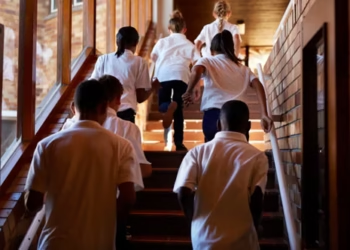
The Early Warning Working Group has issued new guidance to help schools navigate this crisis. This advisory body suggests that schools should avoid using front-facing portraits on any public platforms. Instead, they recommend using photos taken from behind or images that are artistically blurred out. Such techniques allow schools to showcase their vibrant community without exposing individual children to risk. Identifiable information like full names should never be attached to any images posted online today. Schools must also consider if they truly need to use pupil photography for marketing purposes. Many institutions are now opting for stock photography or images of the school grounds instead. These small changes can create a much safer environment for every student and teacher.
Regular audits of existing social media content are now a vital part of school administration. Schools are encouraged to review every photo posted over the last several years for safety. Parental consent forms are also being updated to reflect the dangers posed by artificial intelligence. Many parents are now expressing deep concerns about their children appearing on public school websites. The Confederation of School Trusts acknowledges the difficult balance that headteachers must now strike daily. Educators naturally want to celebrate the many achievements and milestones of their talented young pupils. Sharing photos of sports days and awards ceremonies is a long-standing tradition in British culture. However, the rise of digital extortion makes these traditional practices much more dangerous than before.
Leora Cruddas leads the Confederation of School Trusts and finds the current situation deeply depressing. She noted that scammers are forcing schools to change how they communicate with their communities. The joy of sharing school life is being overshadowed by the dark reality of sextortion. This crime involves using intimate images to trap victims into paying large sums of money. While it often involves real images, AI allows criminals to manufacture evidence from thin air. The psychological impact on a young person seeing a fake image of themselves is devastating. Tragically, this form of harassment has been linked to several teenage suicides in recent years. The scale of the problem is growing as AI tools become easier for anyone to use.
Reports of sextortion attempts against minors have risen by over thirty percent in one year. The Report Remove service allows children to flag and delete harmful content before it spreads. This service is seeing a record number of requests from worried teenagers and their parents. Many of these criminal operations are based in international hubs located far outside UK borders. Investigators have identified specific regions in West Africa as centers for these sophisticated extortion gangs. These groups use pre-written scripts to manipulate their victims and maximize the financial payout earned. They often target schools because they provide a rich source of high-quality images of children. By removing these photos, schools can effectively cut off the supply for these criminal networks.
Some proactive educational foundations have already started to overhaul their entire digital presence and design. The Loughborough Schools Foundation recently removed all recognizable images of pupils from its main public website. This bold move was praised by child safety advocates as a necessary step for modern protection. Other private and state schools are expected to follow this example in the coming months. The goal is to make it as difficult as possible for predators to find targets. Even private social media accounts are not entirely safe from determined and tech-savvy criminal groups. Experts suggest that total removal is the only way to ensure complete safety for students. This shift marks a significant change in how schools will interact with the public online.

The National Crime Agency continues to monitor the dark web for any leaked school data. They are working with international partners to shut down the platforms where these images reside. Technology is moving faster than ever, creating a constant race between criminals and the police. Schools are at the frontline of this battle to protect the innocence of the next generation. Training for staff and students on the risks of AI is becoming a standard requirement. Understanding how images can be manipulated is the first step toward staying safe in 2026. Education remains the most powerful tool against those who wish to cause harm to children. By working together, schools and parents can build a safer digital future for everyone involved.
Ultimately, the responsibility for child safety lies with the entire community and every local institution. While the threat is evolving, the commitment to protecting pupils remains stronger than ever before. Schools must be brave enough to change their traditions to meet these new digital challenges. Protecting a child’s future is far more important than any promotional photograph or social media post. The English Chronicle will continue to report on these vital issues affecting schools and families. As we move further into the age of AI, vigilance will be our best defense. The safety of our children is a priority that should never be compromised for convenience. We must ensure that the internet remains a space for learning rather than a playground for predators.
Related News:
 Six-Figure Tutors Teach Toddlers to ‘Be British’
 How Bringing Forests Into Preschools Boosts Children’s Health
 Is a two-week half-term a good deal? Some parents in England aren’t so sure
 Posthumous books are messy and fraught – but Virginia Giuffre’s gives her a voice
 The upcoming book-to-screen adaptations I’m most excited about
 Children to Learn Local History in Major Curriculum Overhaul
 UK University Suspends Human Rights Research Following Pressure from China
 My standout favourite book of 2025: The Names
 UK University Faces Counter-Terror Probe Over China Pressure
 Top Christmas Books Reads: Classics to Cozy Romcoms
 England Curriculum Review Recommends Major Changes
 Greta Thunberg Backs Student Facing UK Visa Revocation
 Audio Books deals and promo codes to explore in November 2025
China-critical UK academics face ‘extremely heavy’ pressure from Beijing
Audio Books deals and promo codes to explore in November 2025
China-critical UK academics face ‘extremely heavy’ pressure from Beijing
 Labour immigration crackdown could cost UK £4.4bn
 London’s Childlessness Crisis: Schools Closing as Families Shrink
 No link found between paracetamol in pregnancy and autism
 Government urges schools to ban phones to curb classroom disruption
 Stephen Fry backs SafeCall to protect missing children
 Nigeria’s $25m Museum Faces Political Storm Amid Benin Bronzes Debate
 Algeria Pardons French-Algerian Novelist Sansal After Year in Jail
 South Korea’s College Exam Tests Perseverance of Blind Students
 Phillipson Accused of Appeasing Unions by Diluting EBacc
‘I’ve Read 38 Books, but This Is My Standout Favourite’
Phillipson Accused of Appeasing Unions by Diluting EBacc
‘I’ve Read 38 Books, but This Is My Standout Favourite’
 England’s Special Needs Support Faces Breaking Point
 Nigerian Education Reversal: Mother-Tongue Teaching Scrapped
 Higgs Donates Nobel Medal to His Beloved University
 UK Schools Face Staff Exodus Amid Wellbeing Crash
 Ex-Harvard President Pauses Teaching Over Epstein Emails
 Scottish Families Take Legal Action Over School CO Leak
 Men Aren’t Vanishing From Fiction, But Misconceptions Persist
 Schools urged to trial four-day week to ease pressure on teachers in England and Wales
 Oxford Names ‘Rage Bait’ Word of the Year
 Cambridge College Faces Backlash Over Private School Recruitment
 Glasgow rector cleared by watchdog in antisemitism case
 Ban Social Media for Under-16s, Teachers Demand Action
 Pressure mounts on No 10 over under-16s social media ban
 UK Launches First Town of Culture Competition
 Guildford resignation sparks public trust debate in West Midlands
 UK Ministers Drop Foreign Student Targets for Global Education Push
 City & Guilds pay surge sparks backlash amid £22m cuts
 ‘Crunch time’ on rising Send costs in England, says thinktank
 Parents Fear Losing Support Amid England’s Send Reforms
 School Suspensions Now Reserved for Only Severe Misbehaviour
 Cambridge Faces Scrutiny Over Arms Investment Transparency
 Harvey Willgoose School Stabbing Red Flags Missed
 Kingsbury stabbing probe led by counter-terror police
 School phone policies drain English staff resources, study finds
 English secondary schools urged to expand Send inclusion bases
 Send spending gap leaves deprived areas behind
 Children’s vocabulary shrinking amid rising screen time concerns
 Councils Urge Means Testing for Send School Transport
 SEND overhaul gives schools new support funds
 NSW to Introduce Minimum Age for Ebike Riders
 Student Loan Crisis Sparks Outrage Among Graduates in England
 Larry Summers Resigns From Harvard Amid Epstein Files
 New Era for UK Special Needs Support
 London Pupils Warned Against ‘School Wars’ Posts
 Adelaide University Faces Backlash Over Event Cancellation
 New Survey Reveals Troubling Rise in Campus Antisemitism
 Sydney Teacher Arrested in Teenage Grooming Investigation
 Keir Starmer Vows Strong Action Against Online Tech Giants
 Is AI Eroding the Foundations of Learning in England?
 Exhibition Revisits Life of 18th-Century Black Court Figure
 Student Loan Interest May Rise Despite 6% Cap
 School Plate Revolution: England Bans Fried Menu Classics
 City & Guilds Sale Sparks Fees and Pay Uproar
 Canadian astronaut French words ease language row
 UK Universities Face Fines for Speech Failures
 Schools Struggling to Support SEN Pupils Amid Crisis
 NHS Safety Fears as Nurses Cover Doctor Gaps
 Urgent Calls for a New 16-19 Student Premium Funding
 Elite School Teacher Claims Misogynistic Culture Fuels Abuse
 Ability Grouping Boosts High-Flyers Without Harming Others
 Older Than Dinosaurs: Secrets of Mayfly Dance Revealed
 Teacher Alleges Misogyny at Elite School
 Sussex Wins Landmark High Court Battle Against OfS Fine
 FBI Links Brown University Shooting to Long-Term Grievances
 Germany to Return Rare Irritator Dinosaur Skull to Brazil
 London Schools Harness VR to Tackle Pupil Stress