Published: 11 August 2025. The English Chronicle Desk
In the face of mounting international condemnation, Israeli Prime Minister Benjamin Netanyahu sought to clarify and defend his government’s controversial strategy for escalating military operations in Gaza during a press briefing with foreign media on Sunday. This came shortly after an emergency session of the United Nations Security Council urged Israel to reconsider its approach, reflecting deep concerns over the humanitarian toll of the ongoing conflict.
Netanyahu outlined a “fairly short timetable” for the creation of designated “safe zones” intended to accommodate the approximately one million Palestinians expected to be displaced from Gaza City due to intensified military action. He emphasized his administration’s commitment to dismantling what he described as Hamas’s last remaining strongholds, particularly in the central refugee camps and the al Mawasi area along Gaza’s southwestern coastline.

According to Netanyahu, these measures are vital to eliminate Hamas — which he accused of “subjugating Gazans, stealing their food, and shooting at civilians attempting to seek safety.” However, al Mawasi itself is already heavily populated by displaced residents living in precarious conditions within tents clustered against the Mediterranean Sea, officially designated as a humanitarian zone. The presence of Hamas militants reportedly embedded among these civilians complicates any military operations, raising serious concerns about potential civilian casualties.
The prime minister asserted that his government’s policy does not amount to enforced starvation of Gaza’s population. He dismissed widely circulated images depicting starving children as “fake news” and accused the media of misrepresenting the situation. “The only ones who are being deliberately starved in Gaza are our hostages,” Netanyahu claimed, reiterating Israel’s narrative of targeting Hamas rather than the civilian population.
Addressing the frequent attacks at aid distribution points within Gaza, an issue repeatedly documented by humanitarian groups such as Doctors Without Borders—which labeled these attacks as deliberate—Netanyahu argued that increasing the volume of aid shipments was the solution. He suggested that many of the attacks were instigated by Hamas militants to provoke Israeli military responses, adding that, on numerous occasions, Hamas fighters had exercised restraint to avoid endangering their own personnel.

Netanyahu’s remarks, made amid escalating violence and an intensifying blockade, underscore Israel’s determination to pursue a military campaign aimed at weakening Hamas’s grip on Gaza, despite growing international pressure and concerns about the severe humanitarian consequences for Gaza’s civilian population.
The unfolding situation continues to present a complex and urgent challenge for global diplomacy, as calls for restraint and renewed dialogue grow louder amidst fears of further devastation in the besieged region.
Related News:
 Kinnock’s Rebuke Echoes Loudly as Corbyn Allies Launch Left-Wing Breakaway: “A Gift to Farage”
 UK and Norway Forge Stronger Ties Through Joint Sanctions and Enhanced Defence Cooperation
 Trump Administration Dismisses 17 Immigration Judges, Sparking Debate Over Judicial Independence
 Lammy Condemns Israel’s Targeting of Starving Palestinians: Sanctions Threatened Amid Global Outrage
 Modi’s London Visit Seals Historic UK-India Trade Pact Amid Global Tensions
 UK Must Act with Courage and Clarity on Israel-Palestine Conflict, Says Foreign Affairs Committee Report
 Philippine Supreme Court Halts Impeachment of Sara Duterte, Fuelling 2028 Election Speculation
 New Missile, New Balance: US Precision Strike Weapons Redefine Taiwan’s Defence Horizon
 Trump Threatens 100% Tariff on Nations Importing Russian Oil Amid India Standoff Over Ukraine War
 MPs Call on UK Government to Delay Biometric Visa Checks for Gaza Students Amid Humanitarian Crisis
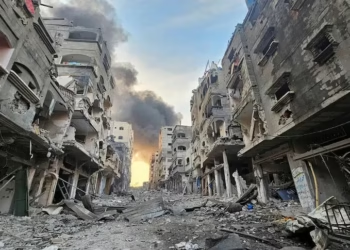 Netanyahu Announces Plan to Take Over Gaza City, Escalating Conflict Further
 Radioactive Leak at UK’s Nuclear Warhead Base Sparks Outcry Over Safety and Secrecy
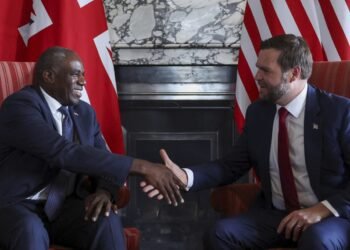 Lammy and Vance Meet in Britain to Advance US-Brokered Ukraine Peace Talks
 Mutual Inconvenience: Why Alaska Was Chosen for the Trump-Putin Summit on Ukraine
 Prominent Al Jazeera Journalist Anas al-Sharif Among Five Reporters Killed in Israeli Airstrike on Gaza
 Xi Jinping Becomes First Chinese President to Attend Controversial Anniversary Celebrations in Tibet
 Ukraine-Russia War Latest: Trump Suggests Putin Avoiding Zelensky Summit Due to ‘Personal Dislike’
 CDC Plunged Into Turmoil as Ousted Chief Susan Monarez Refuses to Step Down
 Protests Expected as Israeli Arms Firms Join Global Defence Trade Fair in London
 Trump Appears Sidelined as Israel’s Unprecedented Strikes Hit Qatar
 Meeting Between Keir Starmer and Israeli President Marked by Tense Exchanges Over Gaza Aid
 Conservative Influencer Charlie Kirk Fatally Shot During University Debate
 UK Imposes 100 New Sanctions Targeting Russia’s Revenues and Military Supplies
 UK Immigration Figures: Separating Facts from Perceptions
 Jimmy Kimmel Live! Suspended Indefinitely Following Controversial Comments on Charlie Kirk Killing
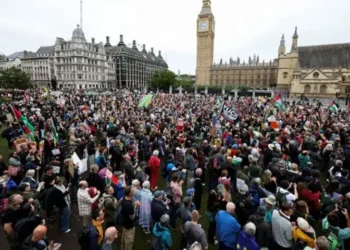 Thousands Gather in London to Protest Donald Trump’s Second UK State Visit
Trump Urges UK to “Call Out the Military” to Secure Borders Amid State Visit
Trump’s UN Speech Criticises London and UK Policies, Draws Far-Right Attention
Thousands Gather in London to Protest Donald Trump’s Second UK State Visit
Trump Urges UK to “Call Out the Military” to Secure Borders Amid State Visit
Trump’s UN Speech Criticises London and UK Policies, Draws Far-Right Attention
 Denmark Investigates Professional Drone Incursions Across Multiple Airports, No Evidence of Russian Involvement
 Sir Sadiq Khan Accuses Trump of Racism and Islamophobia Following UN Remarks
 UK Fighter Jet Purchase Could Breach Nuclear Treaty, Warns CND
 Tony Blair Considered for Leadership Role in Transitional Gaza Authority
 Moldova’s Pro-European Party Secures Election Victory
 A Third of EU Citizens in UK Report Discrimination by Public Bodies Post-Brexit
 Jailed Georgian Opposition Leaders Warn UK of Iranian Links to Ruling Party
 Russia repeatedly targets UK military satellites, warns Space Command chief
 Pro-Palestine March to Proceed in London Despite Calls to Cancel After Manchester Attack
 Japan’s First Female Governing-Party Leader Emerges Amid Ultra-Conservative Politics
 Misinformation and Political Pressure Force Weston-super-Mare to Abandon Refugee Sanctuary Plan
 UK Universities Warn Students Ahead of 7 October Pro-Palestine Protests
 Public Trust in SNP Hits Historic Low Amid NHS Concerns
 Johnson Suggests Mandelson Linked to China Spy Controversy
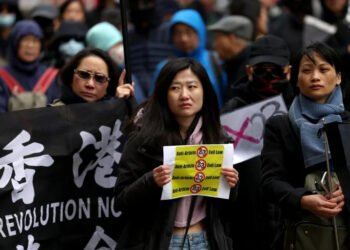 UK Extradition Law Change Sparks Fears Among Hong Kong Dissidents
 Witness statements reveal the CPS China spy row collapse in the UK
 Nigel Farage Calls Vladimir Putin ‘A Very Bad Dude’
 Rachel Reeves signals welfare reform ahead of key budget
 Kosovo agrees to host Britain’s refused asylum seekers
 Ireland Votes as Two Women Compete for Presidency
 Rachel Reeves to lead UK trade push in Saudi Arabia amid rights debate
 Experts Warn Russia’s Burevestnik Missile Could Destabilise Arms Control
 British Woman in Iran ‘Losing Hope’ Amid Ongoing Detention
 Johnson Approved China’s London ‘Super-Embassy’ in 2018
 BBC Journalist Held and Interrogated in Vietnam
 UK University Suspends Human Rights Research Following Pressure from China
 UK University Faces Counter-Terror Probe Over China Pressure
 Abigail Spanberger Elected Virginia’s First Female Governor
China-critical UK academics face ‘extremely heavy’ pressure from Beijing
Abigail Spanberger Elected Virginia’s First Female Governor
China-critical UK academics face ‘extremely heavy’ pressure from Beijing
 British military receives first Ajax armoured vehicles – eight years late
 Hannibal Gaddafi Freed After Nearly a Decade in Lebanon
 Ukraine-Russia war latest: Putin’s troops exploit bad weather to force Kyiv withdrawal from multiple towns
 Trump Claims Victory as Longest Shutdown Ends
 Hamas Fighters in Gaza Tunnels Stall Ceasefire Progress
 New review urges UK to repatriate Shamima Begum, others from Syria
 US Justice Department Files Lawsuit Against California Over Partisan Voting Maps
 Trump Deploys DHS to Charlotte in Major Arrest Operation
 Why Russian Liberals Push Strongly Pro-Israel Narratives
 Congress Approves Release of Epstein Files, Trump Expected to Sign
 Rama Rebukes Mahmood for Targeting Albanian Families
 Russian Vessel Used Lasers on RAF Pilots, UK Claims
 Pentagon Officials in Ukraine to Discuss War End
 US Military Team Visits Kyiv Amid War Talks
 Venezuela Threatens Nobel Winner Machado with Fugitive Status
 Texas Governor Faces Lawsuit From CAIR
 Trump Envoy to Discuss Ukraine Peace at Kremlin
 Pope Leo XIV Begins Historic Trip to Turkey and Lebanon
 India’s Labour Law Overhaul Sparks Fierce Debate
 Video shows Israeli troops kill Palestinians after surrender
 Trump to Recheck Green Cards from 19 Nations After DC Attack
 Chinese & Japanese Boats Clash Near Disputed Islands
 Global campaign launched to free Palestinian leader Barghouti