Published: 29 April 2026. The English Chronicle Desk. The English Chronicle Online
A pivotal legal battle over immigration policy in the United States has reached the country’s highest court, as the US Supreme Court prepares to hear arguments that could determine the future of hundreds of thousands of immigrants. At the centre of the case is whether the administration of Donald Trump has the authority to revoke Temporary Protected Status, widely known as TPS, for nationals from countries such as Haiti and Syria.
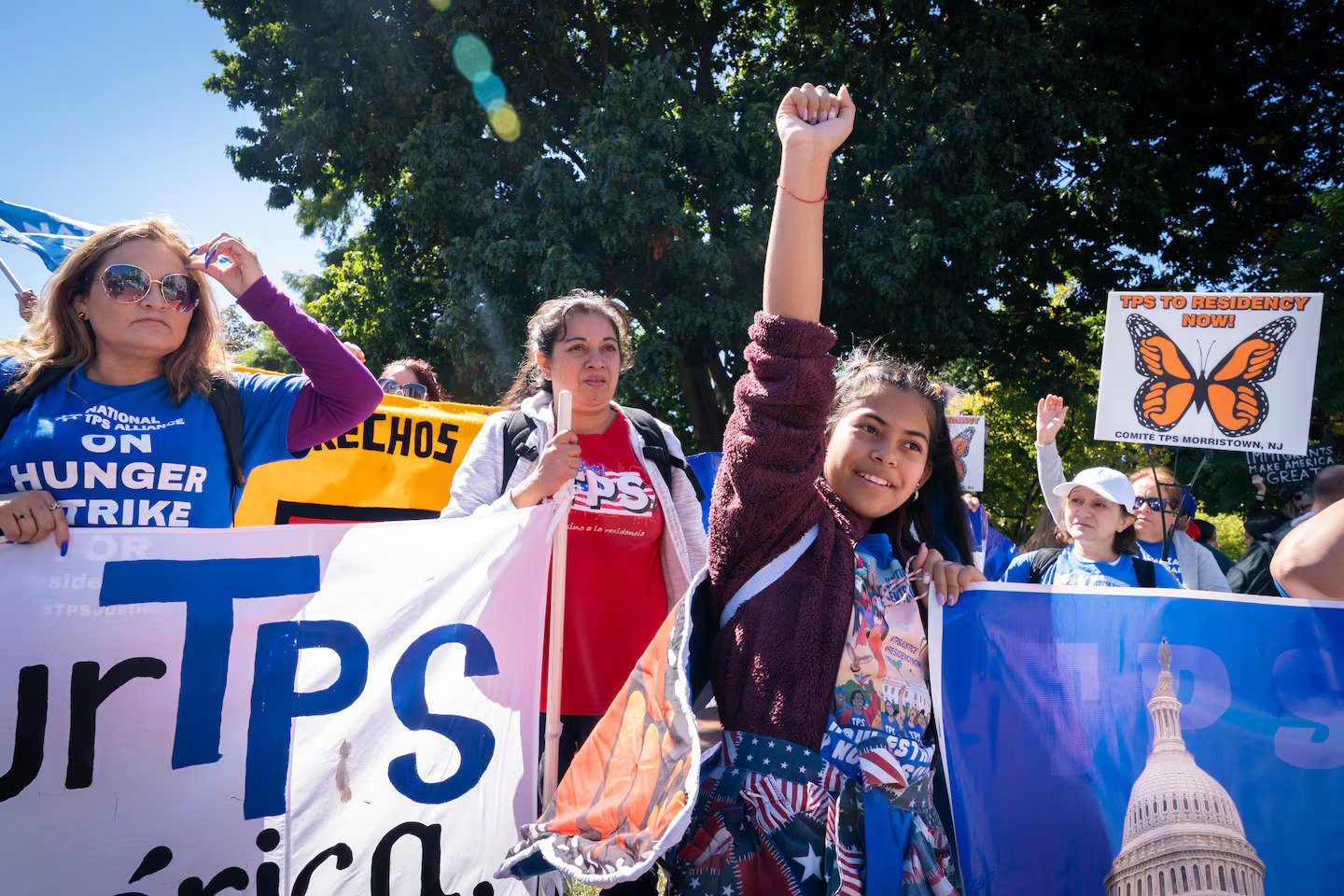
The outcome of the case carries profound implications not only for those directly affected, but also for the broader direction of US immigration policy. TPS has long been viewed as a humanitarian safeguard, offering temporary refuge to individuals unable to safely return to their home countries due to war, political instability or natural disasters. For many, it has meant years, even decades, of stability, employment and community integration in the United States.
Established in 1990, the TPS program allows eligible individuals from designated countries to live and work legally in the US for renewable periods. However, it does not provide a direct pathway to permanent residency or citizenship. Instead, it functions as a temporary shield, dependent on periodic review by the government, particularly the Department of Homeland Security.

Haitian nationals have been protected under TPS since 2010, following a devastating earthquake that left the country in ruins and triggered long-term humanitarian challenges. Syrians, meanwhile, have been under TPS protection since 2012, as their country descended into a prolonged and destructive civil war. Over time, these protections have been extended multiple times, reflecting ongoing instability in both regions.
The current legal dispute stems from efforts by the Trump administration to terminate TPS designations for several countries. Officials have argued that conditions in certain nations have improved sufficiently to justify ending the program, thereby requiring affected individuals to return home or seek alternative legal status.
Critics, however, strongly contest this assessment. They argue that both Haiti and Syria continue to face severe crises that make safe return unrealistic. Haiti remains plagued by widespread gang violence, political instability and economic hardship, while Syria is still recovering from years of conflict, displacement and infrastructure collapse.
The case before the Supreme Court consolidates lawsuits filed by TPS holders from both countries. Haitian immigrants initiated legal action in a federal court in Washington DC, while Syrian nationals filed a separate case in New York. Both groups argue that the administration’s decision to terminate TPS is not only factually flawed but also exceeds its legal authority.
At the heart of the legal debate is the extent of executive power. The administration maintains that it has broad discretion to determine whether conditions in a country warrant continued TPS designation. Opponents counter that such decisions must be grounded in objective assessments and cannot ignore clear evidence of ongoing danger.
Legal analysts suggest that the Supreme Court’s ruling could set a far-reaching precedent. If the court sides with the administration, it may pave the way for the termination of TPS for multiple countries beyond Haiti and Syria. At the beginning of Trump’s second term, approximately 1.3 million individuals were living in the United States under TPS protections.
This is not the first time the court has been involved in such matters. In the previous year, it allowed the administration to revoke TPS for more than 300,000 Venezuelans through its emergency docket. That decision signalled a willingness to grant significant leeway to executive authority in immigration matters, raising concerns among advocates about the future of humanitarian protections.
The broader pattern of policy changes has also drawn attention. Over the past year, the administration has attempted to end TPS designations for individuals from at least 13 countries, including Afghanistan, Honduras, Yemen and Venezuela. Several of these actions have faced legal challenges, with mixed outcomes in lower courts.
Supporters of the administration’s approach argue that TPS was never intended to become a long-term residency solution. They contend that maintaining the program indefinitely undermines its temporary nature and places strain on immigration systems. Some policymakers have also suggested that ending TPS could encourage legislative action to create more permanent immigration solutions.
Opponents, however, view the move as part of a broader effort to restrict immigration, even for those legally residing in the United States. They warn that mass revocation of TPS could lead to widespread family separation, economic disruption and humanitarian crises, both within the US and in the affected countries.
The human impact of the decision cannot be overstated. Many TPS holders have lived in the United States for years, building careers, raising families and contributing to their communities. For them, the prospect of losing legal status brings uncertainty and fear, particularly given the ongoing dangers in their home countries.
In Haiti, for instance, escalating violence has led to the collapse of basic public services in some areas, making daily life increasingly precarious. In Syria, although active conflict has subsided in certain regions, large parts of the country remain unstable, with millions still displaced and infrastructure severely damaged.

The case also intersects with political developments in Washington. Earlier this month, the House of Representatives passed legislation aimed at extending TPS protections for Haitian immigrants for an additional three years. While this indicates some level of bipartisan concern, it remains unclear whether such measures will ultimately influence the court’s decision or broader policy direction.
As oral arguments begin, the Supreme Court faces a complex and highly consequential question: how to balance executive authority with humanitarian obligations in an increasingly polarised political landscape. The decision will not only determine the immediate future of hundreds of thousands of individuals but could also redefine the scope of immigration protections in the United States for years to come.
Whatever the outcome, the ruling is expected to reverberate far beyond the courtroom, shaping debates on immigration, human rights and the responsibilities of governments in responding to global crises. For now, TPS holders from Haiti, Syria and beyond await a decision that could alter the course of their lives in profound and lasting ways.
Related News:
 Judge Blocks Trump Bid for Arizona Voter Data
 Immigration Judges Fear Pressure in Trump Era
 Trump’s Revenge Drive Deepens GOP Divide
 Trump Orders Signs Criticising Smithsonian Museum
 US National Guard Member Killed in DC Shooting
 Trump to pause migration from ‘third-world countries’
 Franklin Turtle, Sabrina Carpenter Slam US Social Media Use
 Trump officials continue false claims after Alex Pretti shooting
 Partial US Government Shutdown Hits Homeland Security Funding
 Thousands Protest ICE Operations in Nationwide US Day of Action
 Melania Trump Epstein remarks spark survivor backlash
 Swalwell Faces Pressure to Quit Governor Race
 Harmeet Dhillon Faces Scrutiny in DOJ Role Debate
 Trump at Press Dinner Sparks Tension
 US Labor Department in turmoil after secretary resigns
 Trump DOJ Targets James Comey Again
 Florida Redistricting Map Sparks Major US Political Battle
 US Voting Rights Ruling Sparks Celebration and Outcry
 US Court Ruling Reshapes Voting Rights Landscape
 US states redraw maps after voting rights ruling
 Judge halts deportation of Yemeni refugees in US
 UK may ban protests amid rising antisemitism fears
 White House Security Case Sparks Political Firestorm
 Trump warns Iran as Middle East tensions surge again
 US Supreme Court fast-tracks Voting Rights ruling
 US Court Restores Abortion Pill Access Temporarily
 Florida Surgeon ‘Devastated’ Over Fatal Surgery Error
 FDA Chaos Deepens as Trump Eyes Makary Exit
 US judge dismisses Kilmar Abrego Garcia indictment
 US green card applicants must apply from abroad, DHS says
 Tulsi Gabbard exits after turbulent intelligence tenure
 Former ICC prosecutor condemns US sanctions
 Gunman Killed After White House Security Shootout
 Prosecutor Proposes Law to Combat Election Deceit
 Trump Weighs Retreat from Controversial $1.8bn Slush Fund
 Trump’s Mount Rushmore Speech: A Divisive Anniversary
 Le Pen’s Popularity Holds Despite Conviction
 Mystery Grows Over Mitch McConnell’s Health
 Trump Refuses to Sign Housing Bill, But Law Takes Effect
 Is America Ready for an AOC Presidential Run?
 French Taxi Driver Cleared in David Lammy Theft Case After Fare Dispute
 Major Rent Reform Ends No-Fault Evictions in England
 Peers Flood Assisted Dying Bill with 942 Amendments
 US Justice Department Files Lawsuit Against California Over Partisan Voting Maps
 Trump Deploys DHS to Charlotte in Major Arrest Operation
 ICC to Rule on Duterte’s Provisional Release
 Australia grants Asio powers to designate hate groups under new laws
 Trump press secretary attacks reporter over ICE question
 Kyrsten Sinema Faces High-Profile Lawsuit Over Marriage Interference
 Trump Fed bid heads to Supreme Court
 Tim Walz urges Trump to withdraw federal agents immediately
 Sinema payment row deepens after $9,000 transfer claim
 Nurses’ families fear breakup under UK immigration crackdown
 California Democrats Vow Trump Reckoning
 Trump’s Surgeon General Pick Evades Vaccine Questions
 Adelaide University Faces Backlash Over Event Cancellation
 Proposed Law Leaves Gap for Children of Convicted Paedophiles
 Report Says Pezzullo Acted ‘Recklessly’ in Dealings
 Hungary election: Orbán faces biggest test amid scandal
 Suspected Plot Targets Pipeline Before Hungary Vote
 Trump Signals Hope for New Iran Talks as Ceasefire Fades
 Kezia Dugdale Warns of Possible Reversal of Equal Rights Gains
 UK Stands Firm on Falklands Amid US Rift
 Crackdown Backfires on UK Climate Protesters
 Investigation Into Anti-Trump Motives After Gala Shooting
 Trump Defiant After Washington Hotel Shooting
 Identity Revealed: Suspected Washington Gunman Named
 Greens Face Internal Row Over Antisemitism Claims
 Trump approval plunges amid Iran war fears
 Ohio’s Battle for Trust: Democrats Vying to Flip the Buckeye State
 US ‘Narco Boat’ Strikes Draw Global Outcry
 Afghan Families Left in Limbo Face Risk of Deportation
 US Awaits Iran Reply on New Ceasefire Proposal
 DeSantis’s ‘Alligator Alcatraz’ Faces Final Shutdown
 Starmer Leadership Under Pressure After Setbacks
 House Curbs Trump’s War Powers in Rare Rebellion
 US Courts Back Trump on Park Signage Removals
 Houthis Strike Saudi Arabia as Middle East Tensions Rise
 Westminster Council Threatens Charing Cross Soup Kitchen
 BBC Warned About Missing Clothes of Murder Victim