Published: 30 April 2026. The English Chronicle Desk. The English Chronicle Online
In a week defined by national security emergencies and political accountability rows, a quieter but equally lethal crisis is unfolding in the corridors of the NHS. A series of harrowing patient testimonies has exposed a persistent “weekend gap” in emergency stroke care, where life-altering procedures—specifically mechanical thrombectomies—remain unavailable in many parts of the country outside of Monday-to-Friday office hours.

“I had a stroke at the weekend, so I didn’t get a thrombectomy,” said one survivor, whose story has become the face of a growing campaign for 24/7 parity. For this patient, and hundreds like them, the day of the week they fell ill has become the difference between a full recovery and a lifetime of profound disability.
A mechanical thrombectomy is a revolutionary surgical intervention that physically removes large blood clots from the brain.
The “3 to 1” Ratio: Studies show that for every three people who receive a thrombectomy, one will be significantly less disabled as a result.
The Cost Benefit: Beyond the human impact, the procedure saves the NHS an estimated £47,000 per patient over five years by reducing the need for long-term social care.
The “Time is Brain” Rule: While new 2026 clinical guidelines have expanded the window for treatment to 24 hours in some cases, the best outcomes still occur when the clot is removed within the first six hours.
The government and NHS England had previously pledged that 24/7 access to thrombectomies would be available across all of England by April 2026. However, as we reach that deadline, the “postcode lottery” remains stark.
Staffing Shortfalls: Despite a doubling of interventional neuroradiologists (the specialists who perform the surgery), a shortage of support staff—including specialized nurses and radiographers—means many “Comprehensive Stroke Centres” still operate on a restricted 9-to-5 basis.
Geographical Disparity: Rates of thrombectomy vary wildly, from 10% of patients in London to as little as 1% in the East of England.
The “Weekend Shutdown”: For patients in regions without 24/7 cover, a stroke occurring on a Saturday night currently leads to “conservative management” (medication only), even if they are perfect candidates for the clot-retrieval surgery.
The Stroke Association has labeled the failure to meet the April 2026 target a “national disgrace,” arguing that the current system effectively “discriminates based on the calendar.”
“We wouldn’t accept a fire service that only operated on weekdays,” said a spokesperson for the charity. “Why are we accepting a stroke service that effectively switches off on Friday evening? Every hour we wait for Monday morning is another hour of brain tissue dying.”
The crisis comes as the government is already under fire for “accountability rot.” Conservative Leader Kemi Badenoch used her BBC local radio “hotseat” today to criticize the Prime Minister’s focus on “process over people,” a sentiment echoed by stroke families who feel the 24/7 pledge has become another “hollow promise.”

With the King’s Speech scheduled for May 13, health campaigners are demanding a “Stroke Bill” that legally mandates 24/7 access to advanced treatments. They point to the success of cardiac services, which achieved near-universal 24/7 coverage for heart attacks after a massive capital injection in the 2010s.
As the WW2 bomb in Plymouth is cleared and the Southbank Centre celebrates 75 years of British resilience, the “weekend gap” serves as a reminder that for some, the most dangerous thing in Britain today isn’t a vintage explosive or a foreign threat—it’s a stroke that happens on a Sunday.
Related News:
 Ed Davey Urges UK to Attract US Cancer Scientists Amid Funding Cuts Under Trump
 Streeting Criticises SNP Over NHS App Dispute
 UK Launches World-First Gonorrhoea Vaccine Amid Record Infection Surge
 AI Tools Used by English Councils Found to Downplay Women’s Health Issues, Raising Concerns Over Gender Bias in Care
 Breakthrough Clinical Trial Lets 12-Year-Old Boy with Rare Skin Disorder Play Football
 Shocking Rise in Children’s Exposure to Violent Online Pornography Raises Alarm
 Norfolk Hospital Ranked Worst in England as NHS League Tables Return
 UK Fighter Jet Purchase Could Breach Nuclear Treaty, Warns CND
 Omeprazole Alert: NHS Issues Guidance on Safe Use for Heartburn and Indigestion
 Labour Announces Pay Boost and New Negotiating Body to Address England’s Care Sector Crisis
 Russia repeatedly targets UK military satellites, warns Space Command chief
 Eligibility Confusion Over COVID Vaccination Leaves Pharmacies Struggling Across the UK
 Majority of UK Men Would Opt for Prostate Cancer Screening, Survey Finds
 Scientists Announce First Potentially Accurate Blood Test for Chronic Fatigue Syndrome
 NHS May Pay 25% More for Medicines Amid US Drug Talks
 Survey Shows Most GPs Rushing Appointments
 NHS Staff Strike Over £30m Pay Discrimination Claim
 Yvette Cooper Backs Digital ID Plan for UK Teens
 Genetic Tests May Predict Return of Blood Cancer
 UK Woman Becomes Longest Survivor of Heart-Lung Transplant
 Thousands in the UK sue Johnson & Johnson over alleged talcum powder, linked to cancer
 ‘Game-Changing’ HIV Prevention Jab Set for NHS Approval
 UK to Test Digital ID Scheme with Veteran Card
 Reform UK candidate fined £19,000 after using AI-generated cases to challenge election
 UK Health Leaders Push for Urgent Tobacco & Vape Bill
 How Bringing Forests Into Preschools Boosts Children’s Health
 Celebrities and Charities Demand UK Government Act on Child Poverty
 Lancashire council plans to close care homes and day centres
 Experts Urge Legal Right to Timely Cancer Care
 Patients to Test Health at Home to Ease NHS Winter Pressure
 North Sea oil workers must lose weight or face job loss
 No link found between paracetamol in pregnancy and autism
 Reeves rejects £1bn plea for NHS redundancy payouts
 UK launches major AI drive to fight deadly superbugs
 Welsh Government Christmas 2020 Lockdown Criticised
 Coffins Now Too Large to Cremate Amid Rising Obesity Crisis
 NHS paediatric leave parents waiting months for answers
 “Enough is Enough”: Local MP Vows to Fight Rainham Quarry Plans
 Robo-Vaccination Could Transform Fight Against Bovine TB
 MPs warn AI financial risks threaten UK stability
 MPs warn AI financial risks threaten UK stability
 Reform UK Health Plan ‘Would Cost £1.7bn’, Streeting Says
 NHS Negligence Ruling Raises Payout Costs
 NHS Maternity Units Cover Up Harmful Childbirth Errors
 UK Social Media Ban for Under-16s Gains Momentum
 UK Teen Social Media Ban Trials Begin
 Ex‑MP Jonathan Ashworth Recovering After Stroke
 Water Cremation Introduced in UK First
 Surgeon’s op on patient 1,500 miles away a UK first
 Cancer Death Rate in Britain Falls by Nearly a Third
 MPs Reject Under‑16s Social Media Ban, Opt for Flexible Powers
 Ministers Urged to Act Faster on Deepfakes Threat
 MPs Reject Ban on Social Media for Under-16s
 SNP Health Secretary Criticised Over NHS Failures Locally
 Scotland Combines Alcohol and Drug Strategy to Cut Addiction Deaths
 ‘A Living Nightmare’: Parents of Vaccinated Teenager Speak Out After Rare Meningitis B Battle
 Safety Alarms as City Hospital Emergency Services Downgraded
 NHS Enlists AI in Major Push to Slash Hospital Waiting Lists
 ‘My Daughter is Under the Rubble’: The Human Cost of the Tehran Strikes
 NHS to Mandate ‘Advice and Guidance’ as Referral Rationing Row Deepens
 ‘Zoom Dysmorphia’ Explosion: BDD Patients Quadruple in Post-Pandemic UK
 Six-Day Strike Confirmed as BMA Rejects “Training and Jobs” Package
 NHS Staff Shortages Stifling Recovery for Stroke Survivors
 ‘It’s Heartbreaking’: NHS Training Freeze Leaves Resident Doctors in Limbo
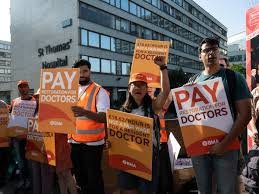 Wes Streeting Accuses Doctors of Torpedoing Pay Deal
 ‘The Best Decision I Ever Made’: A Mother’s Viral Plea After a Near-Miss with Lung Disease
 The Friendship Friction: Would You Call Out Your Friend’s Toxic Behaviour?
 OpenAI Halts Stargate UK Project Amid Energy Crisis
 The Sofa Sanctuary: Llantwit Major Family Living in ‘Disgusting’ Rat Infestation
 Southern Skies: High Turnout and Surprise Visitors in Birdwatch 2026
 GSK cancer drug shows early promise in trials
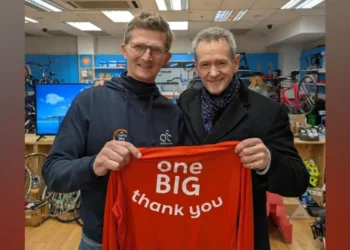 The Wheels of Hope: Charity Delivers ‘Seismic’ Joy Through Specialized Bikes for Children with Cancer
 Policy Stand-Off: Streeting Denies Any ‘System Update’ to Resident Doctor Pay Deal
 Breakthrough in Women’s Health: ‘Non-Invasive’ Womb Cancer Test Nears National Rollout
 Global Readiness: First mRNA Bird Flu Vaccine Trial Enters Phase 3
 NHS Safety Fears as Nurses Cover Doctor Gaps
 Reform UK funding: mystery billionaire revealed
 A Nation in Flux: UK Healthy Life Expectancy Plummets to Record Lows
 “It Felt Like Normal Life Just Dissolved”: Teenage Girls Invent Drug-Detecting Straw After Spiking Ordeal
 “Don’t Ignore Us”: Bereaved Families Demand Urgent Summit as PM Meets Tech Giants