Published: 30 April 2026. The English Chronicle Desk. The English Chronicle Online
Mexico’s renewed offensive against organised crime has delivered a series of high-profile blows to the leadership of one of the country’s most powerful drug cartels, yet it has also reignited a long-standing question at the heart of national security policy: does removing cartel leaders weaken criminal networks, or does it risk unleashing new waves of violence?
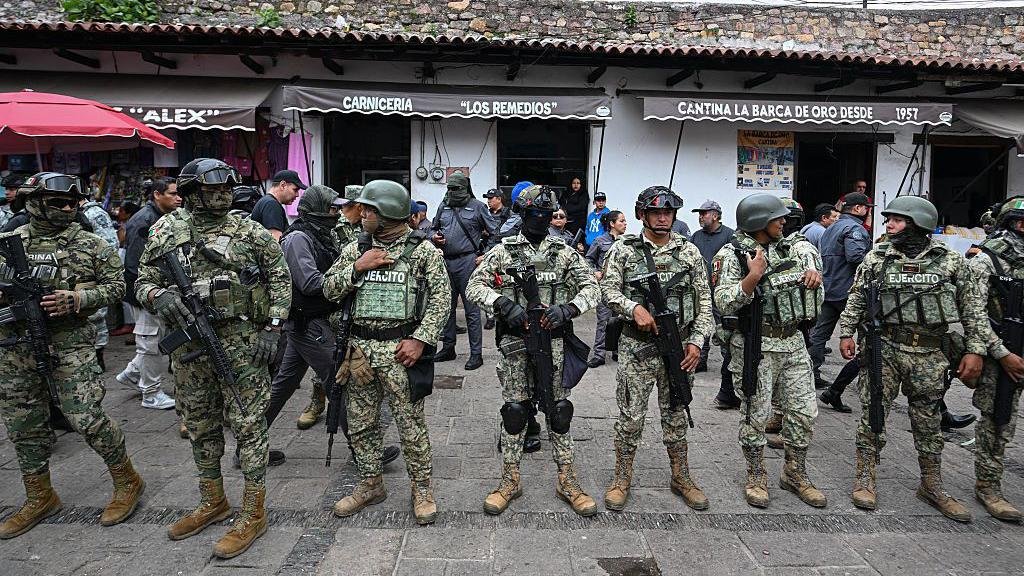
The latest development came in the western state of Nayarit, where Mexican special forces arrested Audias Flores, widely known as “El Jardinero,” a figure believed to be a potential successor to the late cartel leader Nemesio Oseguera Cervantes, also known as “El Mencho.” The operation, captured in drone footage, showed Flores being pulled from a drainage pipe where he had attempted to hide, marking a dramatic but bloodless conclusion to a carefully coordinated raid.
The arrest followed closely on the heels of another major development: the reported death of El Mencho earlier this year. Together, these events represent one of the most significant disruptions to the leadership structure of the Jalisco New Generation Cartel (CJNG) in recent years. Yet despite these setbacks, the organisation has so far shown little visible sign of fragmentation, raising both hope and uncertainty among security analysts.

The government of President Claudia Sheinbaum, who assumed office in 2024, has taken a more aggressive stance on organised crime than her predecessor, Andrés Manuel López Obrador. Her administration has prioritised intelligence-led operations and targeted actions against high-value figures within criminal networks, resulting in a noticeable increase in arrests and drug seizures. Officials present these efforts as evidence of a more assertive and strategic approach to public security.
However, the strategy also echoes earlier phases of Mexico’s long-running drug war, when “kingpin” tactics were widely used to dismantle cartels by removing their leaders. While such operations often produce immediate symbolic victories, their long-term impact has been far more uncertain. In many cases, the arrest or killing of top figures has led to internal conflicts, splinter groups and increased violence as rival factions compete for control.
That historical pattern continues to shape public expectations. In recent years, the fragmentation of the Sinaloa Cartel has demonstrated how leadership disputes can escalate into sustained violence. The fallout from the alleged betrayal of Ismael ‘El Mayo’ Zambada and tensions involving the network once led by Joaquín ‘El Chapo’ Guzmán have fuelled ongoing conflict in parts of northern Mexico, reinforcing fears that a similar scenario could unfold within the CJNG.
So far, those fears have not materialised. Although the immediate aftermath of El Mencho’s reported death saw a spike in attacks against security forces, the violence quickly subsided, and no clear succession battle has emerged. Analysts suggest that the CJNG’s relatively centralised structure and internal discipline may be helping to maintain stability, at least in the short term.
Even so, the arrest of El Jardinero introduces a new level of uncertainty. Flores was considered one of the leading contenders for leadership and reportedly controlled significant operations in Nayarit and the tourist hub of Puerto Vallarta. His removal not only eliminates a key figure but may also alter the internal balance of power within the organisation.
Speculation has already begun to circulate around other possible successors, including Juan Carlos Valencia González, a California-born relative of El Mencho who is believed to hold considerable influence within the cartel. Mexican authorities have indicated that Flores had been gathering personnel and resources in preparation for a potential leadership bid, suggesting that tensions may have existed even before his arrest.
For the Mexican government, the timing of these operations is particularly significant. With the country preparing to host matches during the upcoming FIFA World Cup, there is increased pressure to demonstrate control over security and project an image of stability to the international community. Officials appear determined to show that they can strike at the core of criminal organisations without triggering widespread unrest.
There are also broader geopolitical dynamics at play. The United States has intensified its demands for stronger action against drug trafficking, with figures such as Donald Trump previously applying pressure through threats of tariffs and unilateral measures. Cooperation between the two countries remains a key component of enforcement efforts, and the arrest of El Jardinero reportedly involved support from US intelligence agencies.
At the same time, American authorities are signalling that their focus may soon expand beyond cartel leaders to include political figures suspected of corruption. Recent legal actions by the US Department of Justice targeting officials in Sinaloa highlight a growing willingness to pursue cases that connect organised crime with political structures. This evolving approach adds another layer of complexity to Mexico’s internal security challenges.
Experts caution that while high-profile arrests can shift public perception, they do not necessarily disrupt the underlying economic foundations of organised crime. Cartels such as the CJNG operate as sophisticated enterprises, with diversified income streams that extend beyond drug trafficking to include extortion, illegal mining and other illicit activities. Removing individual leaders may change the hierarchy, but it rarely dismantles the broader system.
Some analysts argue that criminal groups may even seek to avoid large-scale violence in the short term, particularly in the context of major international events. The influx of visitors during the World Cup presents lucrative opportunities, and maintaining stability could align with the cartels’ financial interests. This pragmatic calculation may help explain the relative calm that has followed recent operations.
Nevertheless, the situation remains inherently fragile. The opaque nature of cartel politics makes it difficult to predict how internal dynamics will evolve, and even minor shifts in leadership can have significant consequences. Local communities, often caught in the crossfire, remain acutely aware of how quickly conditions can deteriorate.

For President Sheinbaum’s administration, the challenge lies in balancing immediate security gains with long-term stability. The current strategy reflects a belief that targeted enforcement can weaken criminal organisations without triggering the widespread violence seen in the past. Whether that assumption will hold true remains uncertain.
As Mexico navigates this critical moment, the stakes extend far beyond the fate of any single cartel. The country is grappling with the broader challenge of redefining its approach to security, governance and the rule of law. The outcomes of these efforts will shape not only the safety of its citizens but also its reputation on the global stage.
In the end, the arrest of El Jardinero may be remembered either as a decisive step toward weakening one of Mexico’s most powerful criminal networks or as the beginning of a new period of instability. For now, it stands as a vivid illustration of both the potential and the limits of a strategy focused on targeting the top ranks of organised crime.
Related News:
 Ben Roberts-Smith Denies War Crime Allegations in First Statement
 US states redraw maps after voting rights ruling
 US ‘Narco Boat’ Strikes Draw Global Outcry
 Gunman Killed After White House Security Shootout
 Irish Gangland Figure Fails in Dublin Election Bid
 Murder Probe Continues After Arrest Release
 New Footage Revives Peter Falconio Mystery
 Israeli Strike in Southern Lebanon Kills Seven
 Father’s Tip Leads to Arrest in Charlie Kirk Murder Case
 Jailed Georgian Opposition Leaders Warn UK of Iranian Links to Ruling Party
 It’s time to come clean on the China spy case
 French Taxi Driver Cleared in David Lammy Theft Case After Fare Dispute
 UK University Faces Counter-Terror Probe Over China Pressure
 Just Stop Oil Protesters Convicted Amid Climate Defence Row
China-critical UK academics face ‘extremely heavy’ pressure from Beijing
Just Stop Oil Protesters Convicted Amid Climate Defence Row
China-critical UK academics face ‘extremely heavy’ pressure from Beijing
 Met Police Culture Makes Racial Harm ‘Inevitable’
 British Grandmother to Return Home After Death Sentence in Bali
 Remaining rebel Labour MPs have whip restored
 Ukraine-Russia war latest: Putin’s troops exploit bad weather to force Kyiv withdrawal from multiple towns
 New Epstein Files Spark Political Clash in Washington
 Ukraine Energy Corruption Scandal Hits Zelensky’s Inner Circle
 US Justice Department Files Lawsuit Against California Over Partisan Voting Maps
 Oklahoma Governor Grants Last-Minute Clemency to Death Row Inmate
 Greene Pushes Epstein Files Amid Trump Fallout
 Trump Deploys DHS to Charlotte in Major Arrest Operation
 UN Security Council Approves Trump’s Gaza Peace Plan
 South African Detained After Neo-Nazi Rally in Australia
 Congress Approves Release of Epstein Files, Trump Expected to Sign
 Teens ‘Ran Amok’ at Ex-MP’s Covid Testing Firm
 Trump Signs Bill Releasing Justice Department Files on Epstein
 Trump Slams Democrats With ‘Seditious’ Death Claim
 WhatsApp Messages Expose Nathan Gill’s Bribery
 Venezuela Threatens Nobel Winner Machado with Fugitive Status
 Texas Governor Faces Lawsuit From CAIR
 Trump Envoy to Discuss Ukraine Peace at Kremlin
 Video shows Israeli troops kill Palestinians after surrender
 Guinea-Bissau President Flees After Military Coup
 Chinese & Japanese Boats Clash Near Disputed Islands
 Putin Meets US Envoy Amid Key Ukraine Peace Talks
 UK and EU Signal Fresh Push for Defence Cooperation Talks
 Files Link Andrew to Epstein Dinner After Prison Release
 Emails Show Epstein Funded Mandelson’s Husband After Jail
 Thousands Protest ICE Operations in Nationwide US Day of Action
 Sydney Protest Clash Triggers Police Probe
 Queensland Protest Laws Spark Free Speech Backlash
 Report Says Pezzullo Acted ‘Recklessly’ in Dealings
 Hungary election: Orbán faces biggest test amid scandal
 California fireworks blast: murder charges filed in case
 Suspected Plot Targets Pipeline Before Hungary Vote
 Iran Crisis Tests Trump’s Global Leadership
 Prevent Failings Exposed After Southport Attack
 Mass Arrests at London Palestine Protest Spark Debate
 Learner Driver Charged After Expo Tragedy
 Harmeet Dhillon Faces Scrutiny in DOJ Role Debate
 OpenAI CEO Apologizes After Canada Shooting Case
 Police Suspect Help in Missing Alice Springs Girl Case
 FBI Links Brown University Shooting to Long-Term Grievances
 US Charges Sinaloa Governor in Major Cartel Case
 US Court Ruling Reshapes Voting Rights Landscape
 Judge halts deportation of Yemeni refugees in US
 Trump warns Iran as Middle East tensions surge again
 US Court Restores Abortion Pill Access Temporarily
 Search Intensifies for Missing Hiker on WA Bibbulmun Track
 Immigration Judges Fear Pressure in Trump Era
 US judge dismisses Kilmar Abrego Garcia indictment
 China mine blast death toll rises to 90
 Ebola outbreak in DRC overwhelms health system as cases surge
 Trump’s Revenge Drive Deepens GOP Divide
 Former ICC prosecutor condemns US sanctions
 Ukraine Creates Long-Range Strike Command
 Le Pen’s Popularity Holds Despite Conviction
 Dreyfus Statue Finally Gets Permanent Paris Home
 Mystery Grows Over Mitch McConnell’s Health
 Teen Charged After Layla Jeffery Found Dead
 Pradhan Resigns Amid Protests
 Westminster Council Threatens Charing Cross Soup Kitchen
 BBC Warned About Missing Clothes of Murder Victim
 Is America Ready for an AOC Presidential Run?
 Cambridge Professor Jason Arday Found Dead at Home
 Five Years of Taliban Rule Leave Afghanistan in Crisis