Published: 04 May 2026. The English Chronicle Desk. The English Chronicle Online.
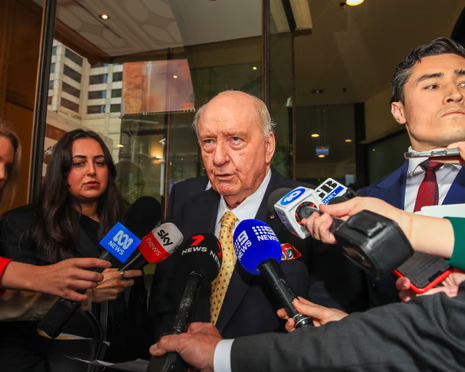
The legal landscape surrounding the veteran Australian broadcaster Alan Jones has taken a dramatic and complex turn this week. Recent courtroom developments in Sydney have introduced a series of high-stakes allegations regarding the conduct of law enforcement officials. Lawyers representing the former radio titan now claim that police officers acted with significant impropriety during their raids. These accusations center on the initial investigation into reports of historical sexual abuse involving the eighty-five-year-old figure. The defense team argues that the search warrants used during the November 2024 raid were inherently flawed. They suggest that the subsequent handling of digital evidence was conducted in a disorganized or reckless manner. This latest chapter in the long-running saga has captured the attention of international media outlets today.
At the heart of the dispute is the search of the media personality’s Sydney residence. This operation followed an intensive eight-month investigation into various reports of alleged historical sexual misconduct. On Tuesday, the Downing Centre Local Court heard arguments concerning the validity of the police warrants. Barrister Gabrielle Bashir SC suggested that the New South Wales police should disclose specific officer identities. The defense wants to know exactly who accessed or downloaded material from the seized mobile phone. There are also pressing questions regarding the handling of intercepted calls gathered during the lengthy investigation. Bashir argued that the evidence suggests the phone was searched without any clear or structured protocol. This “willy-nilly” approach to sensitive digital data has become a central pillar of the defense.

The legal team contends that the search warrant was “bad” on its face for several reasons. One primary concern involves the specific nature of the allegations listed within the original warrant documents. The warrant apparently referred to accusations of sexual intercourse without consent among other serious criminal offences. However, Bashir pointed out that these specific charges do not match the final legal indictments. This discrepancy raises serious questions about the legal foundations upon which the entire search was based. The radio veteran was eventually hit with a different set of charges than those initially suggested. Jones has consistently maintained his innocence regarding all twenty-five charges of alleged indecent assault brought forward. He also faces two charges of sexual touching involving nine complainants over nearly two long decades.
The defense has flagged the possibility of applying to halt the legal proceedings entirely or temporarily. They may argue that certain evidence should be tossed out because it was obtained unlawfully originally. This strategy hinges on the idea that improper procedures during the raid invalidate the resulting evidence. If the warrants are deemed invalid, the prosecution’s case could face a very significant legal hurdle. The defense continues to push for full transparency regarding every step of the police investigative process. They believe that the disclosure of internal police documents will reveal deeper flaws in the case. This proactive approach aims to challenge the integrity of the evidence before the main trial begins. The court must now weigh these heavy accusations against the responses from the police commissioner.
Representing the New South Wales police commissioner, barrister Peter Singleton offered a very different perspective today. He stated there was no evidence that officers had engaged in any form of impropriety. Singleton argued that the search warrant itself was perfectly valid and legally sound under current laws. He suggested that the court should not order the release of sensitive internal police documents. The prosecution views the defense’s request as a “fishing” expedition designed to find potential legal loopholes. Singleton believes the defense is searching for anything that might support a bid for a stay. He urged the judge to recognize that the investigation was conducted with professional care and diligence. The tension between the two legal teams was palpable throughout the heated courtroom session on Tuesday.
Judge Glenn Walsh is now tasked with navigating these competing claims as the pre-trial hearings continue. Jones is scheduled to contest all the allegations in a four-month-long hearing starting this August. This upcoming trial is expected to be one of the most high-profile cases in Australia. The defense team has been fighting hard to gain access to a wide range of documents. These include materials from the police files and records related to the nine different complainants involved. In March, Bashir informed the court that they were still awaiting “oodles of material” to arrive. The slow pace of document production has been a recurring theme in the pre-trial legal motions. Both sides are preparing for an exhaustive examination of the facts over the coming summer.
The charges against Jones involve alleged sexual misconduct occurring between the years 2003 and 2020. These incidents are said to have taken place in both private and various public settings. Some allegations involve high-profile events where the broadcaster was a regular and very prominent guest. Other claims involve interactions at popular Sydney restaurants or during his busy daily professional routines. Jones has publicly dismissed all the allegations as being either baseless or distorting the truth. His retirement from a hugely influential broadcasting career marked the end of a very powerful era. He launched his career in 1985 and quickly became a dominant force in the Australian media. His voice was once considered the most influential in the entire country for many decades.
During his long tenure on the air, Jones was known as a feared and sharp interviewer. He excelled at questioning national leaders and held the powerful to account with great rhetorical skill. However, his outspoken views often divided the public and sparked intense debates across the entire nation. He first worked with Sydney radio station 2UE before moving to the rival station 2GB later. At 2GB, he became a longtime ratings juggernaut and remained at the top until his retirement. His influence extended far beyond the radio studio and into the heart of the political sphere. He also famously coached the Australian national men’s rugby union team during a very successful period. Between 1984 and 1988, he led the team to some of their most historic achievements.
The transition from a celebrated national figure to a defendant in a criminal trial is stark. This case touches upon themes of power, celebrity, and the changing standards of modern legal accountability. The outcome of the upcoming August hearing will likely have profound implications for the Australian legal system. Many are watching closely to see how the court handles the claims of police procedural errors. The debate over digital privacy and the scope of search warrants is also highly relevant here. If the defense succeeds in throwing out evidence, it could change the course of justice. For now, the legal teams remain locked in a fierce battle over documents and procedures. The public remains captivated by the fall of a man who once ruled the airwaves.

As the August trial date approaches, more details about the nine complainants are expected to emerge. The prosecution will need to present a cohesive narrative that spans nearly twenty years of history. Meanwhile, the defense will focus on undermining the credibility of the investigation and the warrants. This legal tug-of-war is set against a backdrop of intense media scrutiny and public interest. Every motion filed in the Downing Centre Local Court is analyzed by legal experts and journalists. The “willy-nilly” search claim has already become a popular talking point in Sydney’s legal circles. It highlights the growing importance of digital forensics in modern criminal cases involving old mobile phones. The court’s final decision on these preliminary matters will set the stage for the trial.
Ultimately, the case against Alan Jones represents a significant moment for the New South Wales police. They must defend their investigative methods while ensuring that the rights of the accused are protected. The allegations of impropriety are serious and require a thorough examination by the presiding judicial officer. If the warrants are found to be deficient, it may lead to broader legal reforms. Jones continues to prepare for his defense while maintaining a relatively low profile in the media. His legal team is working tirelessly to ensure that every piece of evidence is scrutinized. The English Chronicle will continue to provide updates as this complex legal story further develops. Readers can expect more detailed reports as the four-month hearing begins later this year.
Related News:
 BBC to Apologise Over Edited Trump Speech Amid Backlash
 Britain deploys RAF specialists to assist Belgium with drone threats
 Palace May Restore Hyphen to Andrew Mountbatten-Windsor’s Name
 Greene Pushes Epstein Files Amid Trump Fallout
 December Run-Off in Chile as Election Produces No Winner
 Zelenskyy Signs Fighter Jet Deal Amid Russian Drone Attacks
 Canada Passes Carney’s First Budget in Tight Parliamentary Vote
 Shadow Fleet at Sea: Europe’s Battle Against Illicit Oil Shipping
 Tiny Curacao Makes History as Smallest Nation to Reach World Cup
 Deadly Russian Strikes Hit Western Ukraine, 20 Killed in Ternopil
 Ukraine Peace Plan: Zelensky Ready for Dialogue
 Royal Navy Shadows Russian Warships Entering the Channel
 US Suspends Afghan Immigration After White House Shooting
 Georgians Defy Government Crackdown After Year of Protests
 Tokyo court rules Japan’s same-sex marriage ban constitutional
 ‘Extinct’ Antelope Returns to Sahara, Bringing Hope
 American Mother Extradited From UK to U.S. on Murder Charges
 Irish Beach Tragedy: Irish Drown at Whitehaven Beach in Australia
 Sanctioned oil tankers sail Channel amid Russia scrutiny
 US and UK Withdraw Personnel as Middle East Tensions Rise
 Half the World’s Largest Cities Face Rising Water Stress
 Pentagon Signals Reduced Role in Deterring North Korea
 UK and US Drop in Global Corruption Index Rankings
 SA Police Intensify Search in Gus Lamont Case
 Canberra Poster Seizure Sparks Free Speech Row
 Evo Morales Returns After Mysterious Absence
 El Mencho Killed as Mexico Faces Violence
 Australian children in Syria deserve safe return
 Greenpeace $345m Ruling Sparks Appeal Battle
 Jacinda Ardern Moves To Australia Following Her US Fellowships
 Jacinda Ardern Move Sparks Kiwi Reflection
 Middle East Airspace Crisis Strands Thousands
 Nick Greiner Warns Over Election Review Fallout
 Kelly Wilkinson Inquest Reveals Bail Failure
 Tehran Strikes Mark War’s Most Devastating Night
 Injured Mojtaba Khamenei Elevated as Iran Leader
 Gordon Brown urges court for crimes against children
 Gaza Detainee Abuse: Israel Drops Charges Against Soldiers
 The Kill Line: A Shifting Vision of the American Dream
 Oil Prices Jump After Trump Claims Iran Oil Hub Destroyed
 Pakistan Targets Militant Hideouts in Afghanistan
 Lebanon Ground Campaign Raises Occupation Fears
 UK Condemns Reckless Iranian Missile Threats on Global Bases
 ICE detention warning sparks fear among immigrants
 Air Canada CEO Faces Outcry Over Recent Language Misstep
 Extreme Weather: Europe Shivers as Cyclone Narelle Hits
 Asia Turns Back to Coal Amid Middle East Energy Crisis
 Relationship with Trump may be beyond repair, Starmer warned
 Trump’s Six-Week Iranian War: The High Cost of Ignorance
 Artemis II Returns After Historic Moon Flyby
 Orbán Ousted: Péter Magyar’s Tisza Party Wins in Hungary
 Trump Brokers Landmark Lebanon Ceasefire Amid Regional Hopes
 Ben Roberts-Smith Denies War Crime Allegations in First Statement
 UK Stands Firm on Falklands Amid US Rift
 Oil Prices Surge Above $120 Amid Iran Blockade Fears
 Trump orders US troop pullout from Germany
 Japan Protests Erupt Over Plans to Revise Constitution
 Global Conflict Hits Home As Bullock Warns Of Economic Pain
 FIFA Confirms Global Ban for Benfica Star Prestianni
 US Awaits Iran Reply on New Ceasefire Proposal
 US and Mexico Face Heatwave as Floods Batter South Africa
 Putin Signals War End as Russian Momentum Stalls
 Australia Welcomes the Iconic Michelin Guide
 Scepticism and tight security as Beijing braces for Trump
 Philippine Senator Flees After Days Under Senate Siege
 Tensions Flare as Israeli Nationalists March in Jerusalem
 High Street Crisis: Fears Grow Over Post Office Closures
 Xi Hosts Putin for Talks Right After Trump Visit
 Fragile Truce Shattered as Violence Escapes Diplomatic Control
 Oil Markets Face ‘Red Zone’ Threat Amid Iran Crisis
 Pope Meets Families in Italy Toxic Waste Zone
 Discontent grows around Putin amid war strain
 US Strikes Iranian Sites Amid Shaky Ceasefire Talks
 Starmer Leadership Under Pressure After Setbacks
 Papal Visit Offers Political Lifeline to Spanish Premier
 Aukus Deal Facing Fierce Backing and Historic Criticism
 Thai Princess Bajrakitiyabha Passes Away at 47
 Le Pen to Run for President Despite Embezzlement Conviction
 Ukraine Creates Long-Range Strike Command
 Houthis Strike Saudi Arabia as Middle East Tensions Rise