Published: 7 May 2026. The English Chronicle Desk. The English Chronicle Online
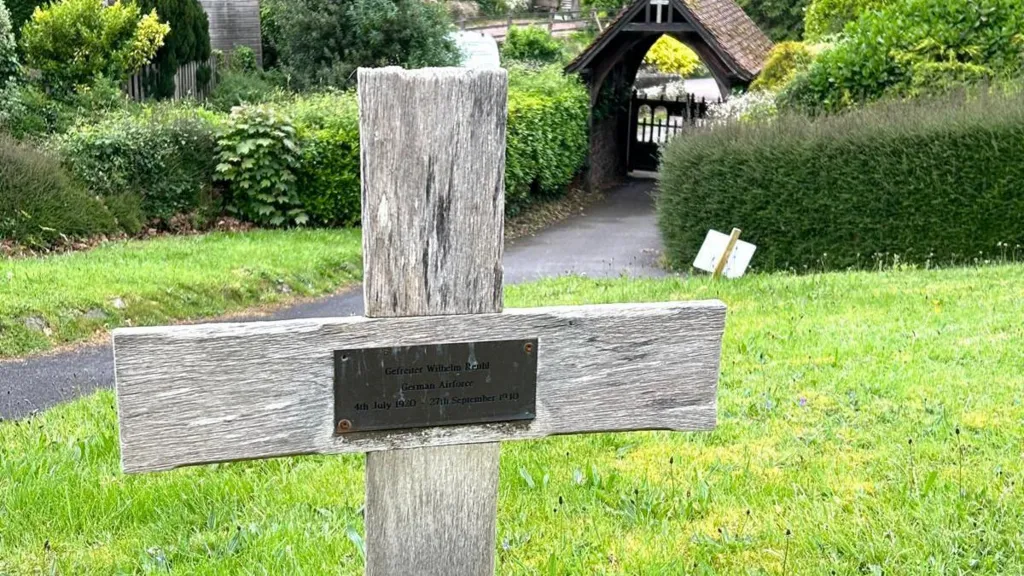
In a “clinical” and “humanitarian” act of reconciliation, a permanent headstone is to be installed at the grave of a teenage German airman in Porlock, Somerset, nearly 86 years after his death. Corporal Wilhelm Reuhl, an 18-year-old Luftwaffe gunner, was killed on September 27, 1940, when his Junkers 88 was shot down by RAF Spitfires and crashed onto a beach in Porlock Bay.

While the three surviving crew members were taken as prisoners of war, Reuhl’s remains were recovered from the wreckage and buried in Hawkcombe Cemetery. The “milestone” move to replace his temporary marker with an official war grave headstone aims to bypass the “accountability rot” of time and provide a “sacred” finality to his story.
The “160 MPH clip” of the Battle of Britain brought the war directly to the West Somerset coast during the autumn of 1940.
The Final Mission: Reuhl’s aircraft was intercepted during a “national security emergency” raid over the Bristol Channel. The Junkers 88 was “asymmetrically” outmatched by the agility of the local Spitfire squadron.
The “Nazi Swastika” Funeral: In a “divergent” historical footnote, Reuhl was originally buried with full military honours by the British, his coffin draped in a swastika-adorned flag—a “clinical” practice of the era that acknowledged the rank of the fallen enemy.
The ” Hawkcombe” Grave: For decades, Reuhl’s resting place has been marked only by temporary wooden crosses and markers, creating a “resilience deficit” in the cemetery’s official record.
The Volksbund (German War Graves Commission) has now commissioned a standard-pattern German war grave headstone to be erected on Reuhl’s plot.
The “CWGC” Coordination: Staff from the Commonwealth War Graves Commission will install the stone later this month, ensuring the “human-machine coordination” of the cemetery’s maintenance remains uniform.
The “Porlock” Memory: Local historians have assisted in providing “milestone” data to the Commission, ensuring the headstone accurately reflects the 18-year-old’s service and “asymmetric” fate.
The “Small Ceremony” Plan: Porlock Parish Council has confirmed that a “golden tone” ceremony will be held once the installation is complete, likely to be attended by representatives from both the UK and Germany.
The presence of a German war grave alongside British servicemen in Hawkcombe—including William McGowan and Lionel Priscott—serves as a “clinical” reminder that “justice has no expiry date” for the fallen.
The “Accountability” of Honor: “It is a ‘sacred’ duty to ensure every soldier, regardless of their uniform, has a named resting place,” a CWGC spokesperson noted.
The “Boy Soldier” Narrative: Reuhl was one of the youngest airmen to die in the region, a “national security emergency” of a different era that saw 18-year-olds at the controls of high-speed bombers.

The “160 MPH” History: With the King’s Speech on May 13 expected to reference “International Commemoration and the Legacy of Peace,” the timing of the headstone installation is a “milestone” for the village.
As the RHS Wisley wisteria reaches its peak and the Southbank Centre celebrates 75 years of progress, the “boy in the bay” will finally have his name etched in stone.
“We are bypassing the ‘bottleneck’ of old enmities to show ‘humanitarian’ respect,” a local councillor shared. By providing a permanent headstone for Wilhelm Reuhl, the community of Porlock is ensuring that the “accountability rot” of a lost grave is “recalibrated” into a “golden tone” of lasting peace. For now, the “clinical silence” of Hawkcombe Cemetery waits for the arrival of the stone that will mark an 18-year-old’s final “milestone.”
Related News:
 UK and France Agree Troop Deployment Plan for Ukraine
 Emails Show Epstein Funded Mandelson’s Husband After Jail
 Sydney Protest Pepper Spray Clash During Herzog Visit
 Russia Rages “Now Is the Time to Strike” as UK Faces Fresh WW3 Nuclear Threats
 US Says It “Supports” UK Chagos Islands Deal
 Britain’s Reliance on China Makes Us ‘Weak Link in the West’, Warn MPs
 UK Has Not Given US Permission to Use RAF Bases for Iran Strikes
 Queen says speechless after meeting Gisèle Pelicot over powerful memoir
 UK Will Allow US to Use Bases to Strike Iranian Missile Sites, PM Says
 Cooper: Joining US Strikes on Iran ‘Not in Britain’s Interest’
 Yvette Cooper: UK Must Follow Principles, Not US Pressure
 ‘Significant and Poignant’: Families Gather for 35th Anniversary of IRA Musgrave Bombing
 “Walking in His Footsteps”: Son of WWII US Airman Pays Emotional Visit to IWM Duxford
 Koh-i-noor Diamond Row Reignites Colonial Debate
 UK Must Act with Courage and Clarity on Israel-Palestine Conflict, Says Foreign Affairs Committee Report
 Radioactive Leak at UK’s Nuclear Warhead Base Sparks Outcry Over Safety and Secrecy
 Mutual Inconvenience: Why Alaska Was Chosen for the Trump-Putin Summit on Ukraine
 Terence Stamp, ’60s British Film Legend and Star of Superman, Dies at 87
 Where Is Prince William and Kate Middleton’s New House? Inside the Historic Lodge Set to Become Their ‘Forever Home’
 Is the UK Ready to Put Boots on the Ground in Ukraine? Assessing Military Capacity and Challenges
 Shein UK Faces Allegations of Shifting Majority of Profits to Singapore to Reduce UK Tax
 Thousands Gather in London to Protest Donald Trump’s Second UK State Visit
 Public Trust in SNP Hits Historic Low Amid NHS Concerns
 Johnson Suggests Mandelson Linked to China Spy Controversy
 Rachel Reeves signals welfare reform ahead of key budget
 Just Stop Oil Protesters Convicted Amid Climate Defence Row
 I’m a Celebrity 2025 line-up revealed: Osbourne joins
 Palace May Restore Hyphen to Andrew Mountbatten-Windsor’s Name
 Royal Navy Shadows Russian Warships Entering the Channel
 Gulf states warn Trump Iran strikes risk wider Middle East war
 Machado Trump medal gesture reshapes Venezuela power struggle
 Shinzo Abe’s killer receives life sentence in Japan
 UK New Car Discounts Near £6,000 as Prices Are Slashed
 Starmer Weighs Fast-Tracking Defence Boost
 Iran Says ‘Guiding Principles’ Agreed With US at Nuclear Talks
 Snow and Rain Warnings as Cold Snap Continues in the UK
 Dual Nationals Face Scramble for UK Passports as New Rules Come Into Force
 Indian University Kicked Out of AI Summit for Claiming Chinese Robot Dog as Its Own Invention
 Trump and Chagos Deal Rift Over Iran Strikes
 Australian PM Says Former Prince Andrew Has Suffered ‘Extraordinary Fall’ but That Won’t Prompt Republic Referendum
 Farage Chagos Islands Row Sparks Fury
 Storm Hernando: Edinburgh Airport Flights Cancelled in US Travel Chaos
 Drugs, Denial, Stigma: Fiji’s HIV Crisis Hits Children
 ‘We’ve been paying for happy endings for Andrew for years’: inside the royal disgrace, biographer says
 Islanders Advised on Travel to Middle East Amid Escalation
 Months of Planning Behind US‑Israeli Mission to Target Iran’s Supreme Leader
 Brit ‘in Good Spirits’ Amid Dubai Missile Attacks, Stranded but Safe
 Trump rebukes Starmer over Iran strikes
 Minister Meets Crews Who Will ‘Take Out’ Iranian Drones
 ‘We Must Finish This’: Israelis Rally Behind War Effort as Iran Strikes Tel Aviv
 UK–US Tensions Ease as Starmer and Trump Hold First Call Since Iran Row
 Rare Glimpse of Historic Bridge Thanks to Low Tide
 Iran War Warning: Starmer Backs Ukraine Visit
 Australia Imposes Sudden Travel Ban on Iranian Visitors
 UK Forces Ready to Seize Russian Shadow Fleet Vessels
 Net Closes on Lyons Clan: Partner Arrested in Dubai as Crime Boss Snared in Bali
 Tragedy in Lebanon: Two Indonesian UN Peacekeepers Killed in Border Explosion
 Chain of Fire: US Bunker Busters Strike Major Iranian Ammo Depot in Isfahan
 ‘The Final Word’: Kathleen Stock’s Polemic Against Assisted Dying Reshapes the UK Debate
 ‘The Cost of Living’: Asia’s Migrant Workers Debate if Gulf Jobs are Worth the Risk of War
 ‘Blue Helmets’ in the Crossfire: Initial Probe Points to Roadside Bomb in Killing of UN Peacekeepers
 Inside the Deceptive Machine: A Former Producer Speaks Out
 Open Justice Prevails as Court Rejects Bondi Gunman’s Family Anonymity Bid
 The Banbridge Rescue: 300 Sheep Saved from Massive Hay Shed Inferno
 Voices of the Vanguard: ‘Audio Time Capsule’ of Disability Rights Pioneers Discovered
 Diplomatic Deadlock: Lebanon Enters High-Stakes Border Talks with ‘No Cards to Play’
 US and Iran Pursue Extension of Ceasefire via Pakistan
 Mexico, Spain and Brazil call for Cuba dialogue amid crisis
 ‘The Last of the Greatest’: UK’s Oldest WWII Veteran Passes Away Aged 109
 ‘The £100,000 Hammer’: War in Iran Forces UK Businesses to Absorb Historic Fuel Hikes
 Prominent Voices Challenge Palestine Action Ban
 “Three-Wheeled Triumph”: Mayor of Erewash Completes 2,000-Mile European Charity Run
 Ukraine Urges UK to Seize Russian Oil Tankers
 The “Charles Charm” Offensive: Did the Royals Find Their Mojo in D.C.?
 “An Endurance Test for the Mind”: British Couple Sentenced to 10 Years in Tehran
 Ukraine strikes Tuapse as oil disaster worsens
 Premier League drama defines crucial weekend
 “The Cost of Conviction”: Palestine Action Activists Found Guilty Over ‘Clinical’ Factory Damage
 “The Tightrope Walk”: Lula and Trump Meet at White House to ‘Recalibrate’ Fractured Alliance
 “The Sacred Bronze”: Guernsey Liberation Hero Peter Porteous Honoured in ‘Clinical’ New Sculpture