Published: 7 May 2026. The English Chronicle Desk. The English Chronicle Online
In a “milestone” for maritime history and local remembrance, a “clinical” bronze sculpture has been unveiled in Saint Peter Port, Guernsey, to honour the late Peter Porteous. Porteous, a “sacred” figure in the island’s collective memory, was a decorated hero of the Second World War who famously led a “human-machine coordination” involving a flotilla of local fishing boats to assist in the final liberation of the Channel Islands in May 1945.

The unveiling comes just days before the island celebrates its 81st Liberation Day (May 9), a “golden tone” event that remains a “national security emergency” of cultural pride for a population that survived years of occupation and a “resilience deficit” of isolation.
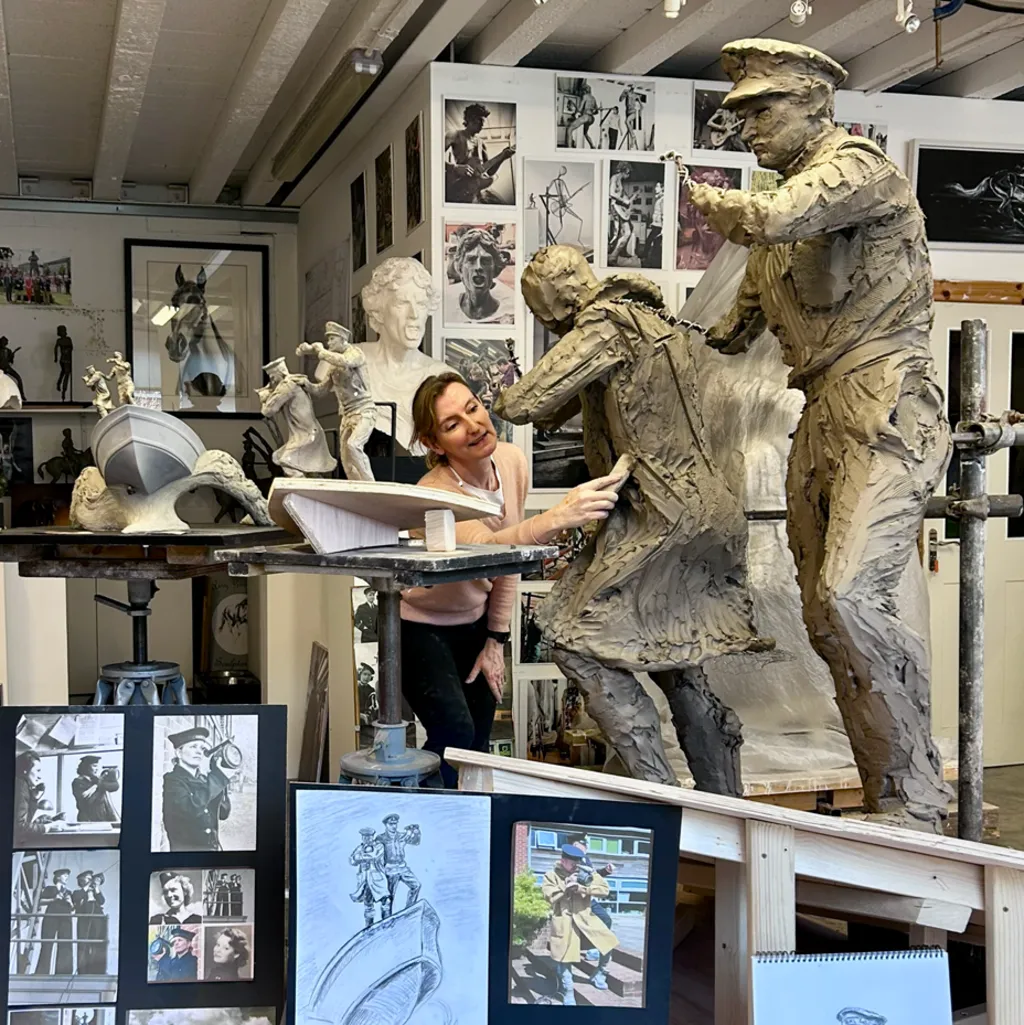
The life-sized sculpture, situated overlooking the Castle Cornet breakwater, captures Porteous in a moment of “speechless determination.”
The “Divergent” Craftsmanship: Created by a local artist, the bronze “recalibrates” Porteous’s wartime silhouette, depicting him in his naval deck jacket, holding a pair of binoculars toward the horizon.
The “160 MPH” Spirit: The piece is titled “The Arrival,” representing the “milestone” moment when the “accountability rot” of the occupation was finally broken by the sight of the Royal Navy and local resistance boats.
The “Clinical” Detail: “We wanted to bypass the ‘bottleneck’ of generic monuments and create something with ‘asymmetric’ intimacy,” the sculptor noted at the “sacred” ceremony.
For Guernsey, the sculpture is more than art; it is a “humanitarian” bridge for the younger generation who face a “resilience deficit” regarding their own heritage.
The “Red Rat” Heritage: Porteous was part of the “clinical” reconnaissance efforts that provided intelligence to the British forces while the islands were a “medication desert” under Nazi rule.
The “Postcode Lottery” of History: Unlike mainland UK, Guernsey’s history is a “divergent” tale of children being evacuated and families enduring a “nasty and mischievous” hunger.
The “Sacred” Liberation: Porteous’s actions in 1945 helped ensure the “accountability” of the surrender process, preventing a “bottleneck” of violence in the final hours of the war.
The ceremony was attended by veterans and school children, creating a “human-machine” link between the “sacred” past and the modern future.
Justice Has No Expiry Date: “Peter didn’t look for the ‘golden tone’ of fame; he just did what was ‘sacred’,” his grandson shared. The sculpture ensures his legacy doesn’t face an “accountability rot” as the years pass.
The “160 MPH” Tourism Clip: The monument is expected to become a “milestone” for history-focused tourism, drawing visitors to the “Hormuz” of the English Channel to learn about the Occupation.

The “Clinical” Silence: The event concluded with a “clinical silence” across the harbour, broken only by a single bugle—a “golden tone” of respect for a man who helped bypass the “bottleneck” of tyranny.
As the RHS Wisley wisteria reaches its peak and the Southbank Centre celebrates 75 years of progress, Guernsey’s new bronze watchman stands as a “milestone” of endurance.
“We are ‘recalibrating’ our public spaces to reflect the heroes who stood in the ‘dopamine desert’ of war,” a local deputy remarked. With Liberation Day on May 9 set to be a “national security emergency” of celebration, the Peter Porteous sculpture is the “golden tone” that reminds the island that “justice has no expiry date.” For now, Porteous looks out over the sea at a “160 MPH clip,” eternally guarding the “sacred” peace he helped to win.
Related News:
 ‘There Is a Feeling of the Greatest Outrage’: The Mystery of Stolen Champion Racehorse Shergar
 The Mosaic of 1926: Newly Released Census Shatters “Monocultural” Myth of Early Irish Free State
 The Planet Rock Sunset: Hip-Hop Architect Afrika Bambaataa Dies Aged 68
 Battle to Save the Crumbling Palace of General Gordon’s Last Stand
 Ancient Bone May Prove Legendary War Elephant Crossing of Alps
 Lunar New Year 2026: Celebrations Around the World
 Tourism Is Booming in 2026 — Just Not Where You Think
 China Shows Off Nunchuck‑Wielding Humanoid Robots for Lunar New Year
 Revealed: The Billions Given to Charity by Ordinary Indians Every Year
 ‘We Pray for Peace’: Indian Filmmaker From Troubled State Who Won a BAFTA
 Inside Atlanta’s Soul Food Revolution
 Thailand Outsiders Face Patronage Wall
 Louvre Museum Director Resigns Months After High‑Profile Heist
 Security Threat Linked to Chinese Dance Group Triggers Bomb Scare for Australian PM
 Rose Wylie: The 91‑Year‑Old Art World Rebel in Her Prime
 Spain Declassifies Files on 1981 Attempted Coup in Effort to Dispel Conspiracy Theories
 Burning Carcasses and Smoke for Miles — The Outbreak That Killed Millions of Animals
 The Sad, Strange Story of the World’s Most Radioactive Paradise
 Rembrandt Painting Worth Millions Rediscovered After 65 Years
 ‘No Gain’ for Notorious Prisoner From Artwork Sale After Auction
 The Little Town Making Nearly All of China’s Lanterns
 The Suburban Spies Who Sold Britain’s Nuclear Secrets
 ‘The Show Must Go On’: Megan Thee Stallion Hospitalized Mid-Performance in Broadway Debut
 National Icon Returned: Ancient Golden Helmet Recovered 14 Months After Dutch Heist
 Secrets Beneath the Scenery: ‘Extraordinary Discovery’ Revealed in 18th-Century Masterpiece
 Voices of the Vanguard: ‘Audio Time Capsule’ of Disability Rights Pioneers Discovered
 ‘Significant and Poignant’: Families Gather for 35th Anniversary of IRA Musgrave Bombing
 Space Odyssey ‘Bum Note’: UK Band Linked to Artemis II’s ‘Toilet Trouble’
 The Hidden Hoard of 1692: Glencoe Massacre Coins to be Displayed at Folk Museum
 The Sinking Heritage: The Dutch Village at Risk of Being Demolished
 A Nation in Mourning: Millions Gather for Iconic Indian Singer’s Final Journey
 The Budapest Ripple: Katya Adler on Hungary’s ‘Jubilation’ and the Cold Shoulder from Moscow
 Pontifical Poise: Pope Francis ‘Has No Fear’ of Trump Following Scathing Rhetorical Exchange
 Diplomatic Deadlock: Lebanon Enters High-Stakes Border Talks with ‘No Cards to Play’
 The ‘Machli’ Manifesto: Why Indian Politicians are Trading Rallies for Fish Markets
 ‘The K-Pop Fugitive’: Interpol Red Notice Looming for Billionaire BTS Founder
 Live and Unfiltered: Ringo Starr on Learning the Drums, Making Mistakes, and the “Long Long Road” Ahead
 Black Forest Tragedy Remembered 90 Years On
 The “Rock” and a Hard Place: NYC Mayor Mamdani Proposes Imperial Handover to King Charles
 “A Tonic for the Nation” Reimagined: Southbank Centre Marks 75 Years of Artistic Rebellion
 “Walking in His Footsteps”: Son of WWII US Airman Pays Emotional Visit to IWM Duxford
 “The Thalapathy Surge”: Superstar Vijay Topples Decades of Dravidian Rule in Tamil Nadu
 Koh-i-noor Diamond Row Reignites Colonial Debate
 “The Saffron and the Silk”: Decoding the Symbolic Wardrobe of Kim Ju Ae
 “The Harmony Tax”: Choir Leader ‘Baffled’ as Council Imposes High-Stakes Fees for Park Rehearsals
 Chaos at Ibrox as Martin’s Rangers Era Comes to an End
 Russia’s Latest Push to Win US Favors Shows Deep Desperation
 BBC to Apologise Over Edited Trump Speech Amid Backlash
 Greene Pushes Epstein Files Amid Trump Fallout
 Zelenskyy Signs Fighter Jet Deal Amid Russian Drone Attacks
 Shadow Fleet at Sea: Europe’s Battle Against Illicit Oil Shipping
 US Suspends Afghan Immigration After White House Shooting
 ‘Extinct’ Antelope Returns to Sahara, Bringing Hope
 Sydney Shark Attack Surge Shocks Australia Beaches
 Hilary Knight speaks out on Trump’s recent hockey remarks
 American Citizen Killed in Cuba Boat Shooting, U.S. Officials Say
 Tracey Emin Says My Bed Would Be ‘Tidy, Clean and Boring’ If Made Today
 Iran’s Regime Still Intact — Coming Days Will Test Its Survival
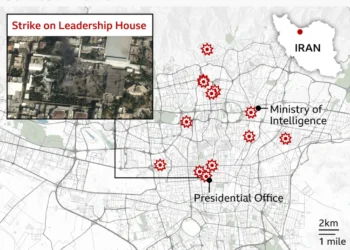 In Maps: Strikes Across Iran and the Middle East
 Brit ‘in Good Spirits’ Amid Dubai Missile Attacks, Stranded but Safe
 Civilian Deaths in Iran Pass 700 Amid Fear of Bombs and Regime Clampdown
 ‘Every Day Feels Like a Month’: Iranians Describe Life Under ‘Constant’ US‑Israeli Strikes
 Penny Wong silent on Australian crew in sub strike
 Finland Plans to Lift Decades‑Old Ban on Hosting Nuclear Weapons
 Trump Pressures Congress Over Save America Act
 Iran War Puts Trump at Political Risk Amid Rising Prices
 Goma Drone Attack Kills Three as Conflict Escalates
 Queensland Protest Laws Spark Free Speech Backlash
 Trump Nato threats expose Iran strategy vacuum
 Trump Facing Backlash from Epstein Survivors Over Files
 UK Forces Ready to Seize Russian Shadow Fleet Vessels
 Trump Considers Military Operation to Seize Iran’s Uranium
 “It Ends With Trial”: Judge Tosses Blake Lively’s Sexual Harassment Claims Against Justin Baldoni
 The Banbridge Rescue: 300 Sheep Saved from Massive Hay Shed Inferno
 Report Says Pezzullo Acted ‘Recklessly’ in Dealings
 Oil and Diplomacy: Russian Refineries Burn as Zelenskyy Secures Middle East Shield
 Electric Shock: Australians Buy Record Number of New EVs as Fuel Crisis Bites
 The Suffocating Silhouette: Why Metal’s Mask Trend is Turning Deadly
 The Great Chokehold: Why the Strait of Hormuz is the Epicenter of the 2026 Crisis
 Moldova River Crisis Exposes War’s Hidden Cost