Published: 09 May 2026. The English Chronicle Desk. The English Chronicle Online.
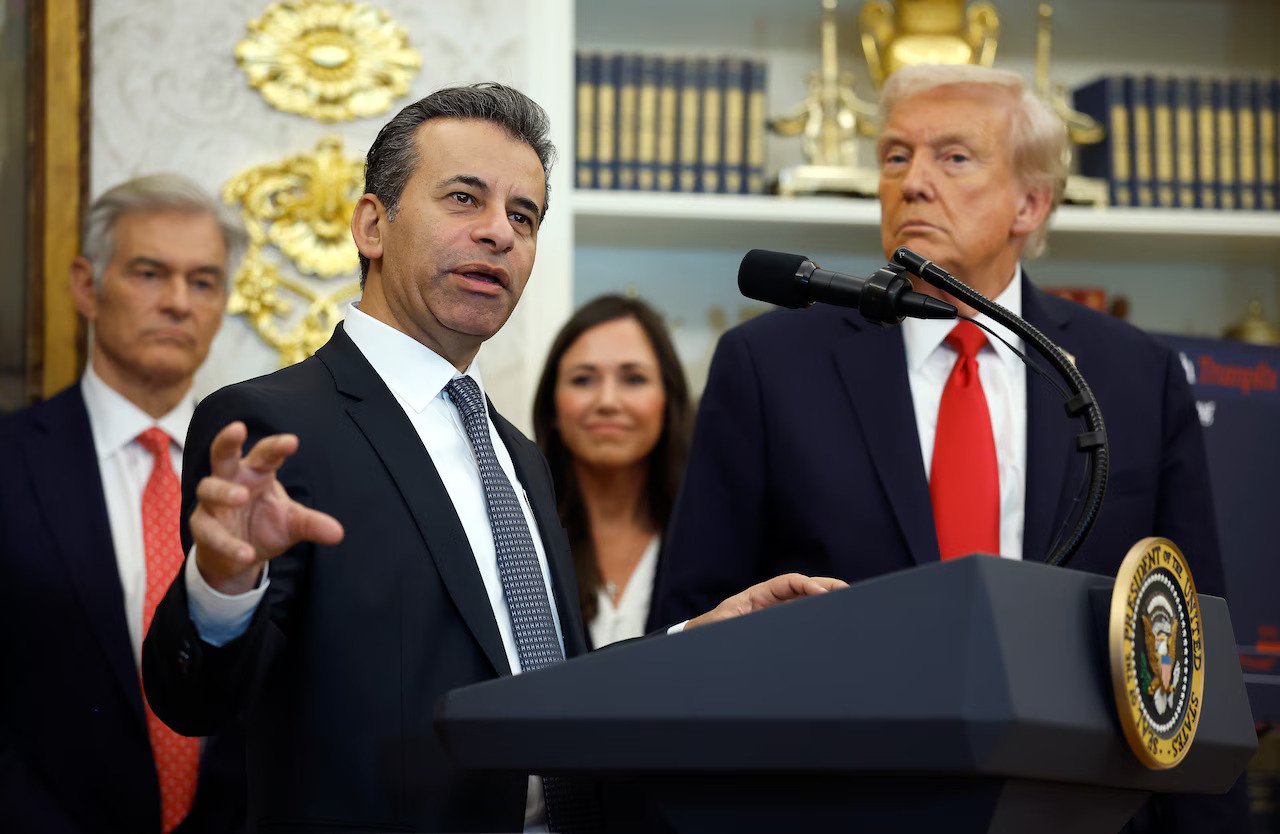
Fresh turmoil has engulfed the United States Food and Drug Administration after reports emerged that President Donald Trump has approved plans to remove FDA Commissioner Marty Makary from his position, deepening concerns about political interference inside one of the world’s most influential health regulators. The development comes at a time when public confidence in the agency has sharply declined amid controversial decisions surrounding vaccines, pharmaceuticals, vaping products and scientific oversight.
According to reports published by major US media outlets, Trump has privately agreed to a proposal to dismiss Makary following months of mounting criticism from lawmakers, public health experts and even senior Republican allies. Although sources close to the White House say no final decision has yet been formally announced, insiders suggest Makary’s future hangs in the balance after a string of disputes that have placed the FDA under intense scrutiny.
The possible dismissal highlights growing instability within the agency, which historically has been regarded as a cornerstone of global medical regulation and scientific credibility. However, under the current administration, critics argue that the FDA has become increasingly politicised, with senior officials accused of prioritising ideological goals and political strategy over scientific evidence.
Makary, a former surgeon and academic from Johns Hopkins University, entered office with strong backing from Trump allies who viewed him as a reform-minded outsider willing to challenge traditional public health institutions. During the Covid-19 pandemic he became widely known for criticising vaccine booster strategies and questioning aspects of federal pandemic policy, positions that won praise among conservative circles but alarmed many in the medical community.

Since taking office, Makary’s leadership has been marked by controversy. Several high-profile FDA decisions involving vaccines, drug approvals and scientific publications have triggered backlash from researchers, pharmaceutical companies and former agency officials. Critics say the FDA’s internal culture has deteriorated rapidly due to staff layoffs, sudden policy reversals and politically charged appointments.
One of the most contentious episodes involved reports that FDA officials halted the publication of scientific studies examining the safety of Covid-19 and shingles vaccines. The move generated alarm across the scientific community, particularly because the unpublished research reportedly demonstrated that vaccine benefits significantly outweighed associated risks.
Public health experts warned that suppressing scientific findings threatens the credibility of the agency at a time when vaccine misinformation is already widespread. Angela Rasmussen, a virologist and journal editor, suggested the situation may represent only the beginning of broader attempts to interfere with scientific independence inside the FDA.
Concerns have also intensified over changes to the agency’s drug review procedures. Critics argue that the administration’s push to accelerate approvals has weakened safeguards designed to ensure medications are both safe and effective. New initiatives introduced under Makary’s leadership include controversial “priority review vouchers” and efforts to reduce clinical trial requirements in some circumstances.
Former FDA Associate Commissioner Peter Lurie warned that the long-term damage to public confidence could be severe. He argued that trust in the FDA had been built over decades through predictable and evidence-based decision-making, but could be destroyed in a matter of months if political pressure overrides scientific standards.
Political tensions surrounding vaping regulation have further complicated Makary’s position. Reports indicate Trump personally pressured the commissioner to approve fruit-flavoured vaping products after the FDA initially blocked them despite recommendations from agency scientists. The White House reportedly views vaping policy as important to maintaining support among younger voters ahead of upcoming elections.
Although some health experts acknowledge that vaping can help smokers quit cigarettes, many warn that approving flavoured products could encourage nicotine addiction among teenagers and young adults. Critics say the larger issue is not simply vaping itself, but the growing perception that regulatory decisions are being shaped directly by political calculations.
Republican lawmakers have simultaneously attacked the FDA from another direction, accusing the agency of slowing down approvals for experimental treatments targeting rare diseases and cancers. Some members of Congress claim the FDA’s review system is discouraging innovation and driving investment overseas, particularly to China.
The pressure has contributed to deep instability within the agency’s leadership structure. Several senior officials overseeing drug evaluation and biologics regulation have either resigned, been dismissed or reassigned in recent months. The constant turnover has reportedly devastated staff morale, with current and former employees describing the workplace as chaotic and deeply uncertain.
Among the most controversial figures connected to the agency is Vinay Prasad, who previously led vaccine regulation efforts and became known for clashes with pharmaceutical companies and public disagreements with scientists. Prasad reportedly overruled agency experts on multiple occasions before eventually departing the FDA once again after a turbulent tenure.
Internal upheaval has also affected the Center for Drug Evaluation and Research, one of the FDA’s most important divisions. Critics say repeated leadership changes have disrupted ongoing reviews and created confusion among pharmaceutical companies seeking approvals for critical treatments.
Meanwhile, debates surrounding abortion medication continue to place the FDA at the centre of America’s political battles. Conservative lawmakers have intensified efforts to revoke approval for mifepristone, a commonly used abortion pill, placing additional pressure on Makary and the broader agency leadership.
Health advocates fear the cumulative effect of these controversies is rapidly eroding public faith in scientific institutions. Many experts argue that when citizens lose confidence in regulators tasked with protecting public safety, the consequences extend far beyond individual medical products.
Despite the criticism, Health and Human Services Secretary Robert F Kennedy Jr has publicly defended Makary, arguing that powerful pharmaceutical interests and political opponents are unfairly targeting him because he is attempting to reform the agency. Kennedy claimed the pharmaceutical industry exerts enormous influence over both Congress and major media organisations.
Nevertheless, reports from inside the FDA paint a troubling picture of declining morale and increasing dysfunction. Employees reportedly face uncertainty over staffing changes, abrupt policy reversals and fears that scientific expertise is no longer driving decisions.

Observers say the situation could have lasting implications for the future of American healthcare regulation. The FDA’s decisions influence pharmaceutical approvals, vaccine availability and medical standards not only in the United States but across much of the world. Any perception that science is being sidelined for political objectives risks undermining confidence globally.
Makary himself has become a polarising figure beyond regulatory policy. In recent years he has publicly entertained controversial theories regarding the origins of diseases such as HIV and Lyme disease, comments that drew criticism from scientists who accused him of promoting misinformation.
The White House has not officially confirmed whether Trump will proceed with Makary’s dismissal. However, reports suggest the administration is increasingly frustrated by mounting political controversies and fears the FDA’s instability could become an electoral liability.
For now, uncertainty continues to dominate the agency. Public health experts warn that repeated upheaval inside the FDA could weaken America’s ability to respond effectively to future health emergencies, drug safety challenges and emerging diseases.
As the debate intensifies, many scientists and former regulators argue that restoring public trust will require more than leadership changes. They insist the FDA must re-establish its independence, transparency and commitment to evidence-based decision-making if confidence in one of the world’s most important health institutions is to survive.
Related News:
 US Court Restores Abortion Pill Access Temporarily
 Mystery Grows Over Mitch McConnell’s Health
 US National Guard Member Killed in DC Shooting
 Trump to pause migration from ‘third-world countries’
 Franklin Turtle, Sabrina Carpenter Slam US Social Media Use
 Trump officials continue false claims after Alex Pretti shooting
 Partial US Government Shutdown Hits Homeland Security Funding
 Thousands Protest ICE Operations in Nationwide US Day of Action
 Swalwell Faces Pressure to Quit Governor Race
 Harmeet Dhillon Faces Scrutiny in DOJ Role Debate
 Trump at Press Dinner Sparks Tension
 Judge Blocks Trump Bid for Arizona Voter Data
 US Court Weighs Fate of TPS for Migrants
 Florida Redistricting Map Sparks Major US Political Battle
 US Voting Rights Ruling Sparks Celebration and Outcry
 US Court Ruling Reshapes Voting Rights Landscape
 US states redraw maps after voting rights ruling
 Judge halts deportation of Yemeni refugees in US
 White House Security Case Sparks Political Firestorm
 Giuliani hospitalised in critical condition
 Trump warns Iran as Middle East tensions surge again
 US Supreme Court fast-tracks Voting Rights ruling
 Florida Surgeon ‘Devastated’ Over Fatal Surgery Error
 Immigration Judges Fear Pressure in Trump Era
 US judge dismisses Kilmar Abrego Garcia indictment
 US green card applicants must apply from abroad, DHS says
 Tulsi Gabbard exits after turbulent intelligence tenure
 Ebola outbreak in DRC overwhelms health system as cases surge
 Trump’s Revenge Drive Deepens GOP Divide
 Former ICC prosecutor condemns US sanctions
 Gunman Killed After White House Security Shootout
 Prosecutor Proposes Law to Combat Election Deceit
 Trump Weighs Retreat from Controversial $1.8bn Slush Fund
 Trump Refuses to Sign Housing Bill, But Law Takes Effect
 Trump Orders Signs Criticising Smithsonian Museum
 French Taxi Driver Cleared in David Lammy Theft Case After Fare Dispute
 Patients to Test Health at Home to Ease NHS Winter Pressure
 Britain deploys RAF specialists to assist Belgium with drone threats
 Reeves rejects £1bn plea for NHS redundancy payouts
 Major Rent Reform Ends No-Fault Evictions in England
 Senator John Fetterman Hospitalized After Fall from Heart Flare-Up, Keeps Sense of Humor
 New AI tool could cut wasted efforts in organ transplants
 Trump Deploys DHS to Charlotte in Major Arrest Operation
 ICC to Rule on Duterte’s Provisional Release
 Google Removes Some AI Health Summaries Over Safety Concerns
 Australia grants Asio powers to designate hate groups under new laws
 Trump press secretary attacks reporter over ICE question
 Kyrsten Sinema Faces High-Profile Lawsuit Over Marriage Interference
 Trump Fed bid heads to Supreme Court
 Sinema payment row deepens after $9,000 transfer claim
 Autistic Girls Often Missed in Childhood Diagnoses, Study Finds
 Nurses’ families fear breakup under UK immigration crackdown
 California Democrats Vow Trump Reckoning
 Trump’s Surgeon General Pick Evades Vaccine Questions
 Adelaide University Faces Backlash Over Event Cancellation
 Zorevunersen Breakthrough for Dravet Syndrome
 Cancer Death Rate in Britain Falls by Nearly a Third
 Proposed Law Leaves Gap for Children of Convicted Paedophiles
 New Zealand Covid Response Praised Despite Lingering Scars
 Taking Multivitamins Daily Could Slightly Slow Ageing, Study Finds
 ‘Drinking from a Fetid Pond’: Superbug Genes in Lough Neagh
 NHS Plans to Cut Overseas Workers Labeled Overambitious
 Unions Raise Concerns Over Doctors’ Pay Dispute
 Report Says Pezzullo Acted ‘Recklessly’ in Dealings
 Suspected Plot Targets Pipeline Before Hungary Vote
 Trump Signals Hope for New Iran Talks as Ceasefire Fades
 UK Stands Firm on Falklands Amid US Rift
 Investigation Into Anti-Trump Motives After Gala Shooting
 Trump Defiant After Washington Hotel Shooting
 Trump orders US troop pullout from Germany
 Trump approval plunges amid Iran war fears
 Barrister Criticises Trial After Suicide Case Verdict
 NHS Drug Deal Faces Legal Threat Over US Trade Agreement
 DeSantis’s ‘Alligator Alcatraz’ Faces Final Shutdown
 House Curbs Trump’s War Powers in Rare Rebellion
 UK Ministers Lobby Trump Over Under-16s Social Media Ban
 US Courts Back Trump on Park Signage Removals
 Deadly H5 Bird Flu Reaches Australia’s East Coast
 Trump’s Mount Rushmore Speech: A Divisive Anniversary
 Houthis Strike Saudi Arabia as Middle East Tensions Rise