Published: 13 May 2026. The English Chronicle Desk. The English Chronicle Online.
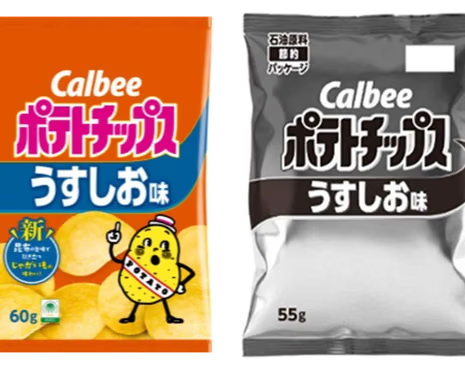
The familiar vibrant aisles of Japanese convenience stores are undergoing a startling visual transformation this week. Japan’s largest snack manufacturer has made a move that signals the deepening impact of global conflict. Calbee has officially announced a transition to monochrome packaging for many of its iconic flagship products. This drastic aesthetic shift is not a marketing gimmick or a new minimalist design trend. It is a direct consequence of the escalating military blockade currently choking the Strait of Hormuz. The ongoing Iran war has created a ripple effect reaching far beyond the Middle East region. These tensions are now manifesting on the crinkly wrappers of potato chips in Tokyo and Osaka. Consumers will soon see fourteen major product lines stripped of their traditional bright and cheerful colours. By the end of May these items will feature simple black and white branding instead.
The catalyst for this change is a critical shortage of naphtha within the Japanese market. Naphtha is a vital petroleum derivative required to manufacture the high-quality inks used in food packaging. Japan relies heavily on the Middle East for roughly forty per cent of its total consumption. The blockade of the Strait of Hormuz has severed these essential maritime supply lines almost entirely. Without a steady flow of this oil derivative the printing industry faces a sudden crisis. Calbee stated that they are reacting to an unstable supply of certain critical raw materials. They decided that maintaining production was more important than preserving the usual colourful brand identity. This move ensures that the snacks themselves remain available to the hungry Japanese public today. However the monochromatic bags serve as a stark reminder of the fragile nature of global trade.
News of the monochrome packaging has dominated headlines across the Japanese archipelago over the last day. The announcement triggered a wave of nostalgia and concern among dedicated fans of the snack brand. This is not the first time the industry has felt the pressure of the war. In March another popular crisp brand temporarily halted production due to heavy oil procurement issues. That brief panic left shelves empty and consumers worried about the stability of their food supply. Calbee is clearly attempting to avoid a total production shutdown by choosing this alternative path. They are prioritising the functional delivery of their products over the expensive luxury of colour. Analysts suggest this pragmatic approach might become a model for other manufacturers in the coming weeks. The sight of black and white bags is a visual metric of economic strain.
The Japanese government has stepped in to provide some measure of calm to the markets. A spokesperson confirmed that domestic refining of naphtha continues using the nation’s extensive crude oil stockpiles. They also noted that imports from regions outside the Middle East have tripled this current month. These efforts aim to bypass the dangerous waters surrounding the Strait of Hormuz and Iran. Senior government spokesperson Kei Sato assured the public that wider disruptions are not currently expected. He stated that adequate supplies have been secured for the most important functions in Japan. The government is working closely with major corporations to establish entirely new and safer trade routes. Sato’s remarks were broadcast as an emergency bulletin to reach as many citizens as possible. He insisted that the nation as a whole has secured the quantities required for survival.
Despite these official reassurances the financial markets reacted with a predictable level of cautious sensitivity. Shares in Calbee dipped by more than one per cent immediately following the packaging news release. This stood in contrast to the Nikkei 225 Index which saw an overall modest gain. Investors are clearly weighing the long-term costs of disrupted supply chains against the company’s resilience. Calbee is a company with a long and storied history of overcoming immense national adversity. It was founded in Hiroshima in 1949 while the city was still physically recovering. From those humble beginnings it grew into a global giant with significant international market reach. The company even expanded its footprint into the United Kingdom by acquiring Seabrook Crisps lately. With annual sales exceeding three hundred billion yen it remains a heavyweight in the industry.
The transition to monochrome packaging is a symbolic moment for the modern globalised economy today. It highlights how a regional conflict can immediately affect the everyday lives of distant people. When a snack bag loses its colour it represents a break in the global machine. For decades consumers have taken the availability of complex manufactured goods entirely for granted now. The blockade in the Middle East is forcing a return to a simpler reality. If the war continues more companies may be forced to make similar difficult choices. Designers are already looking at ways to make black and white branding look premium. This shift could represent a turning point in how products are marketed and sold. Efficiency and resource conservation are becoming the new priorities for large-scale industrial food production.
British consumers should take note of these developments as they may soon feel effects. Calbee’s ownership of Seabrook Crisps means that supply chain strategies often cross over international borders. While the UK has different trading partners the global price of oil affects everyone. Shipping costs are rising as vessels are forced to take much longer and safer routes. This inevitably leads to inflationary pressure on the prices found at our local grocery stores. The black and white bags in Japan are a warning of potential future changes. We may see a reduction in packaging complexity to keep the actual food prices stable. It is a reminder that the world is more interconnected than we often realise. A conflict in the Strait of Hormuz is felt at the checkout counter.
As we move toward June the eyes of the world remain on the Middle East. Diplomatic efforts to reopen the Strait of Hormuz have so far yielded very little success. Until the flow of oil and derivatives like naphtha returns to normal pressure remains. Japanese citizens are now adjusting to their new visually muted landscape of snack food options. They are finding that the flavour of their favourite chips remains entirely the same. This proves that the core product is what truly matters most to the loyal consumer. However the loss of colour is a psychological blow to a society used to vibrancy. It serves as a daily quiet protest against the senselessness of distant international warfare. The black and white bags are now a part of the national conversation.
Historians may look back at this period as the era of the great simplification. We are seeing a forced retreat from the excesses of modern globalised manufacturing processes. When raw materials are scarce the frills and extras are the first to go. Calbee has shown great responsibility by being transparent about their current material shortages today. They have chosen to keep their workers employed and their customers fed and satisfied. This professional approach has earned them some respect despite the initial shock of the news. Other companies are now evaluating their own packaging needs and their reliance on naphtha. The printing industry is searching for alternative bio-based inks to replace petroleum-based versions. Innovation often thrives when a company is pushed against a wall by external forces.
The English Chronicle will continue to monitor the situation in both Japan and Iran. The economic consequences of this blockade are evolving with every passing day of the war. We expect to see more reports of material substitutions across various different industrial sectors. For now the black and white snack bags stand as a unique cultural artifact. They represent a global giant adapting to a world that is suddenly very different. It is a story of resilience and the cold reality of modern geopolitical conflict. Readers are encouraged to consider the origins of the items they buy every day. Behind every brightly coloured package is a complex web of global trade and resource. When that web breaks the world loses a little bit of its colour.
Related News:
 Reeves Faces Setback as Labour May Miss Homes Target
 Virgin Trains Moves Closer to Challenging Eurostar Monopoly
 Trump’s UK Ambassador Urges North Sea Drilling to Strengthen US Ties
 Ryanair Chief UK Economy ‘Doomed’ Under Labour
 M&S Profits More Than Halve After Cyber-Attack
 Earl of Yarmouth Faces £1.3m Legal Bill Over Family Estate
 Millionaires group urge Reeves to introduce wealth tax to ‘lift kids out of poverty’
 From Lego to Pokémon: How Adults Are Driving UK Toy Market Growth
 New laws to bolster UK’s defences against cyber attacks on NHS, transport and energy
 Canada Passes Carney’s First Budget in Tight Parliamentary Vote
 Starmer Says Labour’s Economic Plan Needs Years to Deliver
 Virgin Media Fined £23.8m Over Telecare Safety Failures
 Starmer Faces Parliamentary Battles Over UK-EU ‘Reset’ Plan
 Reeves Pub Business Rates U-Turn Calms Labour Revolt
 ScottishPower Tops List of Worst UK Energy Suppliers
 Markets Slide As Gold Rally Signals Risk From Trump Greenland Tariff Plan
 UK Eyes Global Investment with Visa Fee Refunds
 City & Guilds pay surge sparks backlash amid £22m cuts
 UK Inflation Hits 3.4% in December, Ending Five-Month Decline
 Trump Fed bid heads to Supreme Court
 ‘Black Tax’: Burden, Pride and Survival for African Workers
 AI job losses UK: Britain faces sharper employment shock
 India-EU Free Trade Deal Marks Historic Economic Shift
 Telstra AI jobs cuts as automation drive expands
 BT Names New Openreach Chief Amid Major Fibre Expansion
 UK Banks Plot Payment Backup Amid Trump Fears
 UK Unemployment Rate Climbs to 5.2% Peak
 UK shelves £110m border project amid trade strain
 Rachel Reeves Faces Middle East Conflict Test
 Grocery Inflation Rises Amid War Fears
 BrewDog sold Highland estate for knockdown price after abandoning reforestation plans
 Rising Costs Force Families to Rethink Days Out
 Oil Slides, Stocks Jump on Trump Peace Signals
 UK inflation held at 3% before global energy price hit
 Ticketmaster Fees Rise Despite Recent US Junk Fee Crackdown
 M&S Demands Urgent Action on Rising Violent Retail Crime
 New Era for Sick Pay as Millions Gain Critical Rights
 Oil Prices Surge as Trump Issues New Deadline to Iran
 US and Iran Agree to Two-Week Provisional Ceasefire
 Stefano Gabbana Resigns as Chair of Italian Luxury Giant
 Rolls-Royce SMR Secures £600m Boost for Nuclear Future
 Aegon Sells Historic UK Arm to Standard Life for £2bn
 Central Bank Chiefs Hold Crisis Simulation in Washington
 UK Staycations Rise as Travel Fears Grow
 Former Brexit Chief Calls for Rejoining the EU
 Albanese Rejects Gas Export Tax Push
 Oil Prices Surge Above $120 Amid Iran Blockade Fears
 Silent Tracks: Rail Line Without Passengers
 Trump approval plunges amid Iran war fears
 Tough Fiscal Realities Await Next Scottish Government
 DeepMind Staff Vote to Unionize Over US Military Contract
 Global Conflict Hits Home As Bullock Warns Of Economic Pain
 STV Election Coverage Disrupted Amid Bitter Pay Dispute
 Aramco Surges as East-West Pipeline Counters Gulf Tensions
 High Stakes in Beijing as Trump and Xi Meet Amid Global Turmoil
 Lotus Boss Pledges Future to Norfolk and Seeks State Support
 Big Tobacco Under Fire Over Controversial New Ad Campaign
 High Street Crisis: Fears Grow Over Post Office Closures
 UK Firms Freeze Spending as Iran Conflict Bites
 Summer Shock: British Energy Bills Set for Grim July Hike
 Reeves to Fast-Track Clean Energy Amid Iran Crisis
 Oil Markets Face ‘Red Zone’ Threat Amid Iran Crisis
 Belfast Approves Pilot Extension of Sunday Trading Hours
 Albanese Defends Tax Reforms Amid Emotional Speech
 Tube Strike Brings Capital to a Standstill Over Shift Disputes
 BP Stands Firm on Amanda Blanc Amid Boardroom Storm
 UK House Prices Drop For Third Month Due To War Fears
 Top Chefs Back Andy Burnham to Save UK Hospitality Sector
 GSK Secures Landmark $10.6bn Deal for Nuvalent
 UK Economy Suffers a Sharp Downturn as Iran Conflict Bites
 AI Scams Push UK Investment Fraud Past £220m
 Rethinking the Blueprint for Youth Employment in Britain
 Sainsbury’s Boss Optimistic As Grocery Inflation Eases
 UK Households Suffer Squeeze As Disposable Incomes Drop
 Sydney Records Hottest June Since 1859 as Expert Warns New High a ‘Signature’ of Global Warming
 Creditors Eye Thames Water Even Under Nationalisation
 Record £28m Fine for Virgin Media Over Cancellation Woes
 Ukraine Creates Long-Range Strike Command
 BBC Faces Real Jeopardy as Licence Fee Income Declines
 Thames Water Future Remains Uncertain Amid Funding Crunch