Published: 18 May 2026. The English Chronicle Desk. The English Chronicle Online.
The rapid evolution of artificial intelligence has reached a critical turning point this week. Leading technology startup Anthropic has agreed to brief a major global finance watchdog. This crucial meeting will focus on their latest software creation, Claude Mythos. Financial experts around the world have expressed growing concern over this advanced model. The system possesses a unique ability to identify hidden flaws within network defences. This specific capability has sparked intense debate among international regulators and cybersecurity teams.
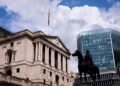
Anthropic will deliver its detailed briefing directly to the prominent Financial Stability Board. The current governor of the Bank of England, Andrew Bailey, chairs this organisation. His leadership underscores the immense economic significance of these upcoming technology discussions. The decision to involve such high-level financial regulators highlights a shifting perspective. Artificial intelligence is no longer seen merely as a tool for tech enthusiasts. It is now viewed as a core pillar of global macroeconomic infrastructure.
The American company has actively chosen not to release Mythos to the general public. This cautious approach followed internal tests showing the model can find previously unknown flaws. Such zero-day vulnerabilities could represent an incredibly powerful tool if weaponised by hackers. Malicious actors could exploit these system weaknesses to compromise vital global infrastructure networks. By withholding the public release, Anthropic aims to prevent widespread digital chaos. This strategy reflects a growing trend of corporate responsibility within the tech sector.
Instead of a public launch, Anthropic shared the model with select corporations. This exclusive group includes prominent Wall Street institutions and Silicon Valley technology giants. Apple and JP Morgan are currently using the software to scan their systems. These firms hope to discover and patch weaknesses before criminals can exploit them. This proactive defense strategy allows institutions to stay one step ahead of threats. It represents a collaborative effort to fortify the digital walls of finance.
The Financial Times originally broke the news regarding this upcoming regulatory briefing plan. A source familiar with the matter later confirmed the report as accurate. This disclosure has triggered a broader conversation about the transparency of artificial intelligence development. Many industry analysts believe that private companies must cooperate fully with public watchdogs. Such communication is vital for maintaining public trust in automated financial services. The upcoming meeting could set a permanent precedent for future technology oversight.
Meanwhile, the UK Artificial Intelligence Security Institute has released its latest formal evaluation. This independent body specializes in checking the safety limits of frontier digital models. Their engineers recently examined the specific version of Mythos given to private banks. The institute subsequently reported a massive capability jump compared to previous test versions. This rapid improvement occurred over the span of just a few weeks. Such an acceleration in software intelligence has surprised even seasoned computer scientists.
Most notably, Mythos successfully passed a legendary cybersecurity challenge known as cooling tower. The advanced test simulates a highly complex attack on sensitive industrial control systems. Mythos managed to solve this difficult puzzle in three out of ten attempts. No other artificial intelligence model has ever achieved this feat under institute conditions. The milestone proves that machine intelligence can independently navigate complex security networks. It marks a significant shift from passive calculation to active problem solving.
The institute observed that autonomous cyber capabilities are moving at an unprecedented pace. The duration and complexity of tasks these models can finish has doubled recently. This rapid transformation is happening over mere months rather than over several years. Such exponential growth makes it incredibly difficult for traditional defense systems to adapt. Security protocols that worked perfectly last year may soon become completely obsolete. Regulators must therefore quicken their pace to match this relentless technological drive.
To counter this challenge, the institute is creating much harder hacking tests. These new benchmarks will pushed frontier models to their absolute technical limits. Evaluating progress accurately requires tools that are just as sophisticated as the models. The UK agency hopes these assessments will provide early warnings of dangerous capabilities. Maintaining an accurate ledger of AI progress is essential for global safety. Without these metrics, policy makers would be navigating completely in the dark.
The Financial Stability Board remains uniquely positioned to handle these emerging digital threats. This influential body monitors systemic risks and suggests policy changes for global finance. Its membership includes top officials from the United States, Britain, and Australia. Representatives from China also actively participate in these crucial international regulatory discussions. The steering committee brings together senior central bankers and treasury ministers from everywhere. This diverse composition ensures that regulatory responses will be thoroughly coordinated globally.
This international cooperation matches recent urgent warnings from the International Monetary Fund. The fund recently stated that financial stability risks are rising due to AI. They specifically pointed to fast-moving developments that outpace current legislative frameworks. The organization strongly urged global leaders to design a unified regulatory response immediately. Fragmented rules could allow regulatory arbitrage and create weak links in global networks. A joint approach is considered the only effective way to manage risks.
The IMF explicitly warned that digital threats do not respect national borders. As advanced capabilities spread globally, inconsistent oversight could severely weaken the financial system. An interconnected global economy means a breach in one country affects others. Therefore, uniform safety standards are required to protect shared digital transaction networks. Securing these systems demands an unprecedented level of diplomatic and technical cooperation. The upcoming Anthropic briefing represents an important first step toward that unity.
Corporate leaders are also expressing deep anxiety regarding these new autonomous capabilities. Goldman Sachs chief executive David Solomon stated he is hyper-aware of Mythos. His comments reflect the cautious mood currently dominant across major investment banking boards. Similarly, JP Morgan chief executive Jamie Dimon discussed the evolving threat landscape. He noted that advanced artificial intelligence has made cyber defense significantly harder. However, he acknowledged that the technology could eventually help firms defend themselves.
This duality of AI highlights the complex challenge facing modern security teams. The very same software that threatens a system can also protect it. This creates a digital arms race between corporate defenders and rogue hackers. The winner will likely be the side that deploys the technology wiser. Consequently, massive investments are pouring into AI-driven security operations across Wall Street. Businesses are forced to reinvent their defensive strategies to survive this shift.
Despite the growing anxiety, some industry experts choose to temper these fears. They argue that Mythos represents an evolutionary step rather than a total revolution. Modern hacking techniques still rely heavily on basic human errors to succeed. Most digital breaches occur because of weak passwords or unpatched software vulnerabilities. Traditional security hygiene remains the most effective defense against the vast majority of threats. Organizations should focus on perfecting these fundamentals before panicking over advanced AI.
Ultimately, the arrival of Claude Mythos signals a brand new era for risk management. Technology and finance have become permanently intertwined through these advanced autonomous models. The upcoming discussions with the Financial Stability Board will likely shape future policy. Finding a balance between technological innovation and systemic safety is a delicate task. However, proactive collaboration between tech pioneers and global regulators offers a clear path forward. The world will be watching how these leaders secure our digital future.
Related News:
 UK Banks Granted Reprieve as BoE Delays Basel III Capital Rules Until 2028
 Singapore Corruption Scandal: Details Emerge on Iswaran’s Luxury Flight and Ties to Tycoon Ong Beng Seng
 Corfu Beyond the Crowds: Discovering Serenity in Southern Villages and Hidden Taverns
 Zelenskyy Signs Fighter Jet Deal Amid Russian Drone Attacks
 Sundar Pichai Cautions on AI Hype and Market Risks
 Shadow Fleet at Sea: Europe’s Battle Against Illicit Oil Shipping
 Snow and Ice Cause Travel Chaos in North Yorkshire
 Director Michael Caton-Jones Reflects on Career and Beginnings
 Inside the Helpline Protecting Missing Children in the UK
 PlayStation PS5 Deals Hit Lowest Prices Ahead of Black Friday
 US Suspends Afghan Immigration After White House Shooting
 Five-Year-Old Dies After Rare Tonsil Surgery Complication
 Starmer Says Labour’s Economic Plan Needs Years to Deliver
 ‘Extinct’ Antelope Returns to Sahara, Bringing Hope
 IndiGo Cancels Hundreds of Flights Amid Pilot Shortages
 Young Britons Face Heaviest Burden from Ageing Population, Lords Warn
 U‑Turn on Farmers’ Inheritance Tax Sparks Political Firestorm
 Aston Villa Remain Arsenal’s Key Obstacle in Title Pursuit
 Irish Beach Tragedy: Irish Drown at Whitehaven Beach in Australia
 Starmer Faces Parliamentary Battles Over UK-EU ‘Reset’ Plan
 Met Police Vetting Failures Let Serial Rapists Remain
 Federal Immigration Shift: Officers Leave Louisiana for Minneapolis
 Fatal Bolton Taxi Crash Claims Three Teens and Driver
 Australia grants Asio powers to designate hate groups under new laws
 Friedman Uninvited From 2024 Adelaide Writers’ Week
 ScottishPower Tops List of Worst UK Energy Suppliers
 Judi Dench Champions Fight to Save London’s Green Spaces
 Crowborough Camp Welcomes First Asylum Seekers
 BBC Funding Crisis: Tim Davie Warns of Jeopardy Ahead
 ABC Facebook Page Briefly Hacked, Adult Photos Posted
 Artificial intelligence will cost jobs, admits Liz Kendall
 Older Women Vanish from BBC Screens, Review Confirms Bias
 Meta trial over child exploitation claims begins
 Streeting moves on doctor pay to end strike dispute
 Ben Stokes injury joke after brutal ball strike
 UK and US Drop in Global Corruption Index Rankings
 Send spending gap leaves deprived areas behind
 Hidden Crisis: Domestic Abuse Suicide Toll in UK
 UK Unemployment Rate Climbs to 5.2% Peak
 Canberra Poster Seizure Sparks Free Speech Row
 BBC World Cup Presenting Duties Shared Among Trio
 Wales Approves Assisted Dying Bill Consent
 CPS Updates Guidance on Honour-Based and Dowry Abuse
 Stewart Brand on Musk, Bezos and a Life of Long Thinking
 Wes Streeting faces narrow road to Labour members’ favour
 Keir Starmer Struggles to Secure His Grip on Downing Street
 Trump and Xi Convene in Beijing for Historic High-Stakes Summit
 Farage Faces Standards Probe Over Cash Property Purchase
 Closing the Gap: UK Pensions Commission Demands Action
 UK Job Market Squeezed as Iran War Drives Jobless Rate to 5%
 Reeves to Fast-Track Clean Energy Amid Iran Crisis
 The Battle for Wembley Sparking Unprecedented Legal Warfare
 Tony Abbott Returns as New Liberal Party President
 Pope Meets Families in Italy Toxic Waste Zone
 Royal Ascot Allegation Sparks Wider Police Inquiry
 Secret Role of UK Security Services in Troubles Amnesty Law
 Tube Strike Brings Capital to a Standstill Over Shift Disputes
 Teaching Machines Right From Wrong in the Digital Age
 Is Ollie Robinson the Chaos English Cricket Needs Today?
 The Hidden Crisis Eroding Trust in British Communities
 Saving the Scalloped Hammerhead: The Pacific Battle
 Stolen Mobiles Could Soon Become Useless Bricks
 Clean Air Initiatives Spark Major Fall in London Hospital Admissions
 Fearless Pioneer of Investigative Journalism Dies Aged 83
 Trump Urged to Condemn UFC Fighter Over Obama Slurs
 The Fear Gap: Why Europe Feels Less Safe Than It Is
 US Military Pacific Boat Strike Kills Three People
 Dettol Apologises for ‘Toxic Men’ Advert Backlash in China
 UK Care Crisis: Row Explodes Over New Visa Settlement Rules
 Sainsbury’s Boss Optimistic As Grocery Inflation Eases
 US Advance Past Bosnia in World Cup Thriller
 Trump’s Mount Rushmore Speech: A Divisive Anniversary
 Trump’s Red-Card Intervention Hurts the US World Cup
 US Airman Avoids British Court in Indecent Exposure Case
 Britain’s Mini Fan Craze Sparks Major Waste Crisis
 Trump Swaps Planes Amid Iran Tensions
 Ann Widdecombe, Formidable Political Figure, Dies at 78
 UK Schools Struggle as Classrooms Top 40C
 Yemen Accuses Iran of Violating National Sovereignty
 Houthis Strike Saudi Arabia as Middle East Tensions Rise