Published: 23 May 2026 | The English Chronicle Desk | The English Chronicle Online.
Health authorities and aid agencies in the Democratic Republic of Congo have raised urgent concerns over a rapidly spreading Ebola outbreak that is overwhelming hospitals, with officials warning that the country’s fragile healthcare system is under severe strain and struggling to cope with the rising number of suspected cases.
According to aid workers and local health officials, every major health facility in the affected regions has reported being at full capacity as the virus continues to spread across multiple areas. The outbreak, which has now reached its 17th recorded occurrence in the country, has triggered alarm among international health organisations who say the scale of infections may be significantly higher than confirmed figures suggest.
Nearly 750 suspected cases and at least 177 suspected deaths have been recorded since the first reported fatality in Bunia, the capital of Ituri province, in late April. Health experts warn that the actual toll could be higher due to limited testing capacity, delayed reporting, and insecurity in affected regions.

Medical charity Médecins Sans Frontières reported that hospitals in Bunia and surrounding areas have been unable to isolate new patients due to lack of available space. Field coordinators described emergency wards as completely saturated, forcing new suspected cases to wait without proper containment, increasing the risk of further transmission.
Aid agencies, including Mercy Corps and ALIMA, have warned that the outbreak is being intensified by a combination of factors, including the highly contagious nature of the virus, weak health infrastructure, ongoing armed conflict, and disrupted humanitarian access. Budget cuts to international aid programmes have further constrained response efforts, limiting the ability of organisations to deploy medical staff and supplies quickly.
Ebola, which spreads through direct contact with infected bodily fluids, has a fatality rate ranging from 25% to 90% depending on the strain and response conditions. The current outbreak involves the Bundibugyo strain, for which there is no widely available vaccine or specific antiviral treatment, making containment efforts heavily reliant on isolation, contact tracing, and supportive care.
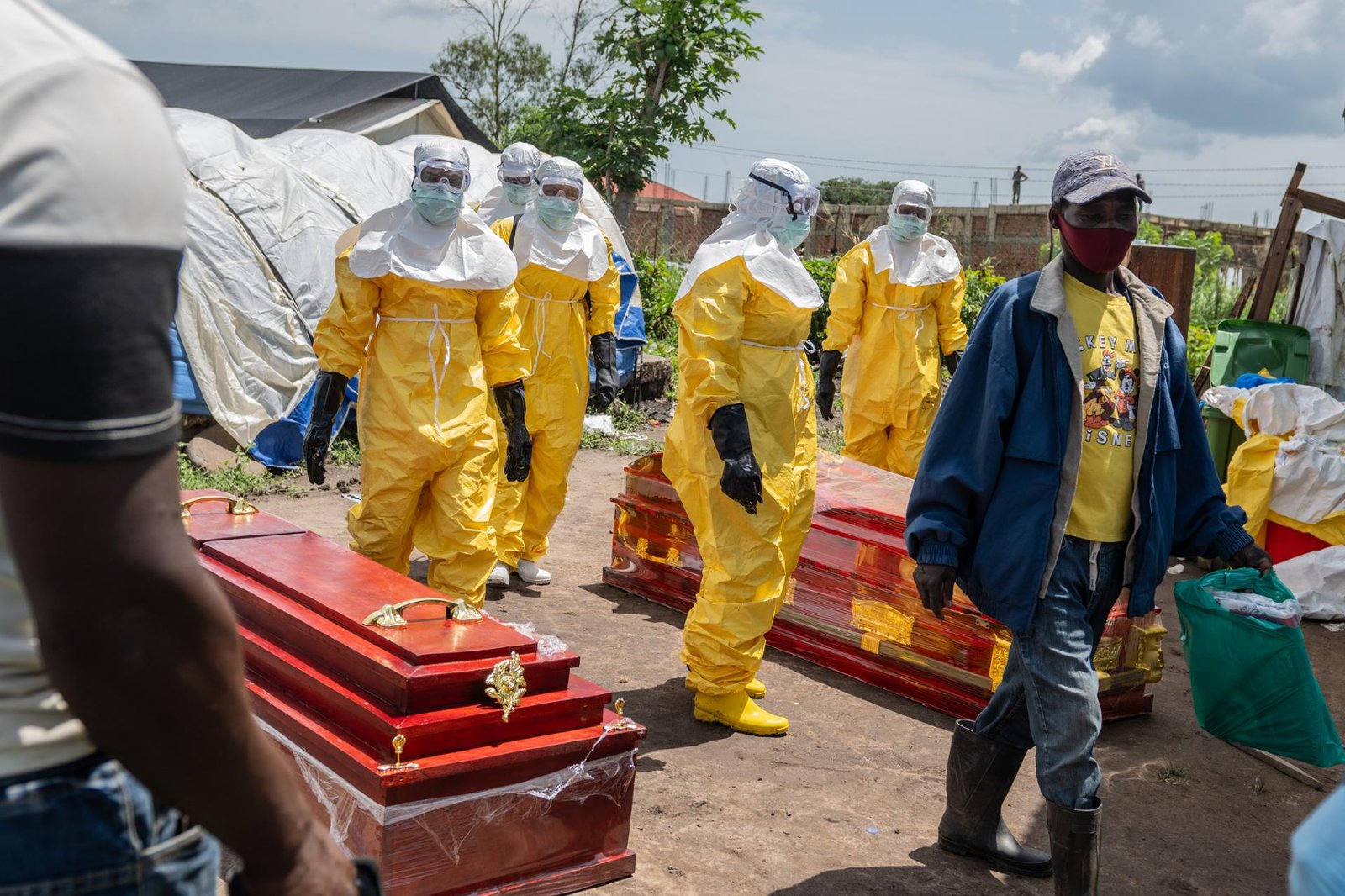
Local customs surrounding burial practices have also complicated containment measures. Health officials say traditional funeral rites, which often involve washing and touching the body, have contributed to the spread of the virus in previous outbreaks. Authorities have now restricted funerals, banning large gatherings and requiring specialised medical teams to handle burials to reduce transmission risks.
Tensions have escalated in some communities as mistrust grows between residents and health authorities. In one incident, a treatment centre near Bunia was set on fire by a crowd after officials refused to release a body for traditional burial practices. The event underscores the cultural and social challenges facing containment efforts in rural and conflict-affected regions.
Security concerns have further disrupted the response. Armed group activity in eastern DRC has led to repeated attacks on villages and displacement of communities, making it difficult for health workers to access affected areas. Aid workers have described the situation as a “dual crisis” of conflict and disease, significantly complicating emergency response operations.
Health experts say delayed detection has also played a major role in the outbreak’s rapid spread. Early symptoms are often mistaken for common illnesses such as malaria, leading patients to seek treatment late, by which time the virus may have already spread to multiple contacts.

International responders are now focusing on expanding surveillance, improving contact tracing, and deploying mobile treatment units designed to allow safer interaction between patients and medical staff. However, officials warn that without sustained international support and improved coordination, the outbreak could continue to expand.
Dr Richard Kojan of ALIMA, who has worked in previous Ebola outbreaks, warned that the current situation shows many of the same patterns seen in past crises, including late detection and insufficient resources. He stressed that early admission to treatment centres significantly improves survival chances but said many patients are still arriving too late for optimal care.
Despite the worsening situation, some residents remain cautiously hopeful that the outbreak can be contained. However, health officials continue to urge strict hygiene practices, reduced physical contact, and immediate reporting of suspected cases as they race to prevent further spread across the region.
Related News:
 China mine blast death toll rises to 90
 New Footage Revives Peter Falconio Mystery
 Pregnant UK Teen to Be Freed from Georgian Jail
 Just Stop Oil Protesters Convicted Amid Climate Defence Row
 British Grandmother to Return Home After Death Sentence in Bali
 Oklahoma Governor Grants Last-Minute Clemency to Death Row Inmate
 Teens ‘Ran Amok’ at Ex-MP’s Covid Testing Firm
 Files Link Andrew to Epstein Dinner After Prison Release
 Emails Show Epstein Funded Mandelson’s Husband After Jail
 Suspect Named in Canada School Mass Shooting
 ABC Staff Strike Over Pay and AI Concerns
 California fireworks blast: murder charges filed in case
 Ben Roberts-Smith Denies War Crime Allegations in First Statement
 Learner Driver Charged After Expo Tragedy
 OpenAI CEO Apologizes After Canada Shooting Case
 New Bacteria Discovery Offers Hope Against Noma
 Police Suspect Help in Missing Alice Springs Girl Case
 Cartel crackdown raises fears of fresh violence
 WHO approves first malaria drug for babies
 Judge halts deportation of Yemeni refugees in US
 Canadian Fiddler Sues Google Over AI Defamation Claim
 US Court Restores Abortion Pill Access Temporarily
 Barrister Criticises Trial After Suicide Case Verdict
 FDA Chaos Deepens as Trump Eyes Makary Exit
 Israeli Strikes in Lebanon Kill 10 Amid Ceasefire Strain
 US judge dismisses Kilmar Abrego Garcia indictment
 Victim says non-custodial rape sentence ‘rock in my face’
 Hunger increasingly weaponised in global conflicts
 Former ICC prosecutor condemns US sanctions
 Gunman Killed After White House Security Shootout
 Irish Gangland Figure Fails in Dublin Election Bid
 Unflinching Witness: Doctors Document Gaza’s Medical Crisis
 Ukraine Creates Long-Range Strike Command
 Dreyfus Statue Finally Gets Permanent Paris Home
 Mystery Grows Over Mitch McConnell’s Health
 Teen Charged After Layla Jeffery Found Dead
 Israeli Strike in Southern Lebanon Kills Seven
 Northern Ireland Family of Three Shot Dead in Maguiresbridge Home Incident
 Badenoch Warns Farage’s Grooming Gangs Plan Could Backfire
 French Taxi Driver Cleared in David Lammy Theft Case After Fare Dispute
 UK Bans Fake Numbers: Scammers Lose Their Trick
 Patients to Test Health at Home to Ease NHS Winter Pressure
 Britain deploys RAF specialists to assist Belgium with drone threats
 US Justice Department Files Lawsuit Against California Over Partisan Voting Maps
 New AI tool could cut wasted efforts in organ transplants
 Greene Pushes Epstein Files Amid Trump Fallout
 Trump Deploys DHS to Charlotte in Major Arrest Operation
 Charlotte Raids: 130 Arrested in Major Immigration Sweep
 Deadly Russian Strikes Hit Western Ukraine, 20 Killed in Ternopil
 Serial Rapist and Former Cop Found Guilty Again
 Man Denies Stealing Bronze Age Gold from Museum
 Venezuela Threatens Nobel Winner Machado with Fugitive Status
 Runaway Driver Caught by DNA Evidence
 Two National Guard Soldiers Critically Injured Near White House
 Southern Lebanon reels as Israeli strikes shatter communities
 Tokyo court rules Japan’s same-sex marriage ban constitutional
 American Mother Extradited From UK to U.S. on Murder Charges
 Google Removes Some AI Health Summaries Over Safety Concerns
 Thousands Protest ICE Operations in Nationwide US Day of Action
 Autistic Girls Often Missed in Childhood Diagnoses, Study Finds
 SA Police Intensify Search in Gus Lamont Case
 El Mencho Killed as Mexico Faces Violence
 Kelly Wilkinson Inquest Reveals Bail Failure
 Zorevunersen Breakthrough for Dravet Syndrome
 Cancer Death Rate in Britain Falls by Nearly a Third
 Taking Multivitamins Daily Could Slightly Slow Ageing, Study Finds
 The Kill Line: A Shifting Vision of the American Dream
 ‘Drinking from a Fetid Pond’: Superbug Genes in Lough Neagh
 Artemis II: Humanity Returns to the Moon After Decades
 Report Says Pezzullo Acted ‘Recklessly’ in Dealings
 Artemis II Returns After Historic Moon Flyby
 Suspected Plot Targets Pipeline Before Hungary Vote
 UK Watchdogs Warn Over AI Facial Recognition Oversight
 US ‘Narco Boat’ Strikes Draw Global Outcry
 Trump Announces 3-Day Russia–Ukraine Ceasefire Deal
 Cruisers Face Perth Quarantine After Hantavirus Outbreak
 Pope Meets Families in Italy Toxic Waste Zone
 Deadly H5 Bird Flu Reaches Australia’s East Coast
 Westminster Council Threatens Charing Cross Soup Kitchen
 BBC Warned About Missing Clothes of Murder Victim