Published: 10 June 2026. The English Chronicle Desk. The English Chronicle Online.
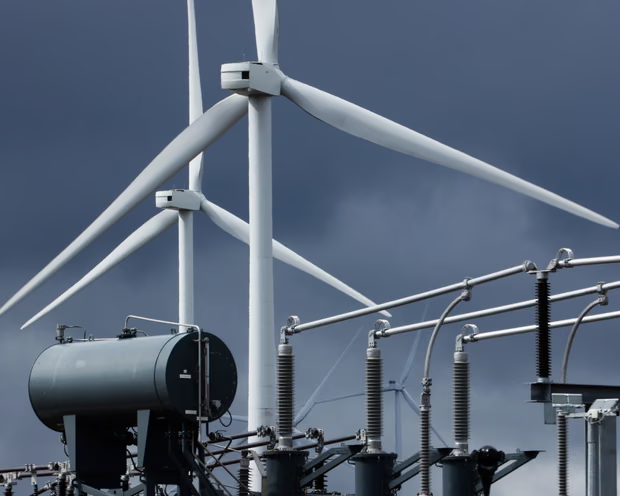
The United Kingdom has taken a significant leap forward in its ambitious journey toward sustainability. More than half of the renewable energy projects required to meet crucial climate targets can now connect to the national electricity grid. This major breakthrough follows years of frustrating administrative delays that threatened the nation’s green progress. The National Energy System Operator has successfully managed to resolve a massive backlog of applications. This decisive action has finally opened the gates for a wave of new infrastructure.
Industry experts and environmental advocates are celebrating this development as a monumental turning point. The newly issued connection offers inject fresh momentum into the country’s rapidly evolving energy landscape. For a long time, the transition to sustainable power felt stalled by bureaucratic inertia. Now, hundreds of vital projects have received the official clearance they desperately needed to advance. This structural shift signals a new era of efficiency for British infrastructure development.
The scale of this recent regulatory achievement is remarkably vast and highly impactful. The National Energy System Operator has extended formal connection offers to over seven hundred projects. These clean energy schemes are spread widely across England, Scotland, and Wales. This wave of approvals represents roughly sixty percent of the total required infrastructure. Approximately twelve hundred schemes must become fully operational before the current decade officially concludes. Meeting this timeline remains absolutely essential for achieving the government’s overarching environmental objectives.
The ultimate goal is to establish a virtually carbon-free electricity grid by 2030. This deadline requires unprecedented coordination between private developers and state regulators. The recent surge in connection offers demonstrates that the system is finally moving. The sheer volume of approved projects shows a renewed commitment to national modernization. Observers note that this is the most significant progress seen in years.
This development holds deep political significance for the current administration residing in Westminster. The Labour party secured its historic election victory nearly two years ago. Their campaign placed a massive emphasis on a revolutionary green energy revolution. Ministers promised to double onshore wind capacity and triple solar power generation. Furthermore, they committed to quadrupling offshore wind output within a very short timeframe.
This unprecedented buildout was designed to fundamentally reshape the entire British economy. However, critics frequently questioned whether these bold targets were actually achievable in reality. Many analysts believed the government had underestimated the severe structural problems facing the grid. The immense gap between political rhetoric and practical engineering seemed almost impossible to bridge. Today’s announcement provides the administration with some much-needed vindication against those early sceptics.
The primary obstacle to this green transition was a severely congested queueing system. For over a decade, grid connections operated under a rigid first-come, first-served policy. This framework inadvertently encouraged a massive surge of highly speculative applications across the country. Many companies registered projects without having the funding or planning permission to build. These inactive applications effectively blocked genuine, shovel-ready schemes from making any meaningful progress.
A massive logjam formed, threatening to push vital connection dates well into the 2030s. The grid became clogged with hundreds of theoretical power plants that existed only on paper. This systemic failure created immense frustration for serious developers willing to invest capital. It became clear that the traditional regulatory framework was no longer fit for purpose. A radical overhaul of the entire application process was urgently required to prevent total stagnation.
Recognizing the existential threat to national targets, the system operator initiated comprehensive reforms. This intensive clean-up process began in the final months of two thousand and twenty-three. Regulators systematically reviewed the entire queue to identify and remove stagnant applications. They boldly pulled the plug on hundreds of these speculative, so-called zombie projects. This controversial but necessary purge immediately freed up valuable capacity within the transmission network.
By removing the digital clutter, officials could finally focus on viable infrastructure options. The system operator began fast-tracking projects that demonstrated genuine potential for rapid construction. This aggressive approach marks a complete departure from the passive management styles of the past. The strategy has successfully breathed new life into a previously suffocating bureaucratic system.
Energy Minister Michael Shanks expressed strong enthusiasm and praise for this latest milestone. He emphasized that upgrading national infrastructure is vital for protecting ordinary British consumers. The minister noted that clean power helps shield households from volatile global markets. Fossil fuel price spikes have repeatedly caused severe financial hardship for millions of families. By controlling our own clean energy generation, the nation can ensure long-term price stability.
Shanks described the recent connection offers as a landmark step for the country. He believes that putting these reforms into action will deliver permanent economic benefits. The government remains focused on driving down domestic utility bills through domestic power generation. This political narrative links environmental responsibility directly to household financial relief.
The ready-to-go projects included in this wave represent a diverse mix of technologies. The list features massive onshore wind farms, extensive solar arrays, and innovative hydro plants. Crucially, significant battery storage capacity has also been approved to help balance supply. Together, these varied facilities represent thirty-seven gigawatts of clean electricity capacity. This figure accounts for just over one-third of the total target.
The nation ultimately requires one hundred gigawatts of capacity to achieve full decarbonization. While a substantial gap remains, this initial installment represents a powerful foundation. The inclusion of storage technology is particularly vital for managing intermittent weather conditions. This diverse energy mix ensures that the future grid will be both green and resilient.
Under the newly implemented rules, developers face far stricter criteria for grid entry. Applicants must prove they have already secured formal local planning permission. They are also required to demonstrate legal land rights before entering the queue. Furthermore, every proposal must align perfectly with the strategic energy targets of the state. These rigorous standards ensure that only serious, viable projects receive connection dates.
Previously, the total capacity in the queue was double what net-zero goals required. This artificial inflation was driven entirely by companies hoping to sell speculative rights. The new system effectively filters out opportunists, leaving only dedicated builders in place. This shift guarantees that national resources are directed toward genuine construction efforts.
Kayte O’Neill, the chief operating officer at Neso, shared her perspective on the achievement. She stated that the latest milestone proves their strict reforms are delivering results. These firm connection offers provide developers with the absolute certainty required for investment. Certainty reduces financial risk and encourages large-scale capital injection into British businesses.
O’Neill emphasized that this process directly supports sustainable economic growth across the nation. It also helps deliver the reliable and affordable system that modern Britain requires. With more than half of the necessary offers made, the team is satisfied. However, the organization remains entirely focused on tackling the next complex phase of delivery. The challenge now shifts from issuing paperwork to pouring concrete and laying cables.
The road ahead remains undeniably challenging, requiring sustained effort from all sectors. Constructing the physical infrastructure will demand immense labor, materials, and community cooperation. Upgrading local substations and building new pylons often sparks intense regional debate. Environmental benefits must be balanced carefully against local conservation and landscape concerns.
Nevertheless, resolving the grid connection bottleneck eliminates a massive institutional barrier. The UK has demonstrated that regulatory systems can adapt swiftly to urgent crises. International observers are watching this British experiment with a high degree of interest. If successful, this approach could provide a blueprint for other nations facing bottlenecks. For now, the British green energy revolution has a clear path forward.
Related News:
 Reeves Faces Setback as Labour May Miss Homes Target
 Kate Winslet to Narrate Film Highlighting King’s Environmental Mission
 Trump’s UK Ambassador Urges North Sea Drilling to Strengthen US Ties
 UK Bans Fake Numbers: Scammers Lose Their Trick
 Millionaires group urge Reeves to introduce wealth tax to ‘lift kids out of poverty’
 Reeves rejects £1bn plea for NHS redundancy payouts
 PM Condemns Leaks, Vows Loyalty to Ministers and Stability
 Inside the Helpline Protecting Missing Children in the UK
 PlayStation PS5 Deals Hit Lowest Prices Ahead of Black Friday
 Five-Year-Old Dies After Rare Tonsil Surgery Complication
 Starmer Says Labour’s Economic Plan Needs Years to Deliver
 Starmer Faces Parliamentary Battles Over UK-EU ‘Reset’ Plan
 Met Police Vetting Failures Let Serial Rapists Remain
 Google Employee Claims Redundancy After Harassment Report
 Fatal Bolton Taxi Crash Claims Three Teens and Driver
 ScottishPower Tops List of Worst UK Energy Suppliers
 Judi Dench Champions Fight to Save London’s Green Spaces
 Crowborough Camp Welcomes First Asylum Seekers
 BBC Funding Crisis: Tim Davie Warns of Jeopardy Ahead
 Storm Chandra floods Somerset, triggers major incident declaration
 Artificial intelligence will cost jobs, admits Liz Kendall
 Older Women Vanish from BBC Screens, Review Confirms Bias
 Mandelson Faces Police Inquiry Over Epstein Leak
 Streeting moves on doctor pay to end strike dispute
 UK reports baby formula toxin poisoning cases across the country
 Morgan McSweeney downfall shocks Labour leadership
 Send spending gap leaves deprived areas behind
 Hidden Crisis: Domestic Abuse Suicide Toll in UK
 UK Unemployment Rate Climbs to 5.2% Peak
 Farage Unveils Reform UK Frontbench Team
 BBC World Cup Presenting Duties Shared Among Trio
 Placenta Accreta Warning as Hunt Urges Action
 Wales Approves Assisted Dying Bill Consent
 CPS Updates Guidance on Honour-Based and Dowry Abuse
 Rolling Hills and Heritage: A Car-Free Break in Leicestershire
 Corbyn Leads Your Party in Coordinated Left-Flank Strategy
 Asylum Seekers to Work After Year-Long Wait
 Starmer Row as Greens Demand Apology
 Major Fire Causes Chaos at Glasgow Central Station
 Gordon Brown urges court for crimes against children
 Inquiry into HMRC child benefit errors launched by NAO
 Farage Faces Backlash Over Crypto Cameo Endorsements
 Rising Costs Force Families to Rethink Days Out
 Sarah Mullally: The Solid Choice for Canterbury
 Scott Mills Sacked by BBC Over Personal Conduct Claims
 Palantir Boss Defends NHS Deal Amid Government Break Clause
 Police Chiefs Under Fire for Failing to Address Racism
 Relationship with Trump may be beyond repair, Starmer warned
 Unions Raise Concerns Over Doctors’ Pay Dispute
 UK Government Poised to Revive Stalled Hillsborough Law
 UK Staycations Rise as Travel Fears Grow
 Home Office Faces Legal Risks Over Asylum Hotel Living
 Official Admits Debate Over Mandelson Vetting Records
 Crisis in NHS Surgery Scheduling Hits Patients Hard
 Welsh Labour Faces Potential Historic Election Defeat
 Blue Badge Abuse: The Rising Tide of Public Hostility
 Scott Parker Leaves Burnley After Premier League Drop
 Silent Tracks: Rail Line Without Passengers
 RFU Backs Borthwick Despite England’s Poor Six Nations
 Major test for Labour as polls open in Great Britain
 Keir Starmer Struggles to Secure His Grip on Downing Street
 Farage Faces Standards Probe Over Cash Property Purchase
 Closing the Gap: UK Pensions Commission Demands Action
 Russian Electronic Attack Targets UK Defence Chief Jet
 UK Shoppers Face Prolonged Price Rises At Tills
 Tube Strike Brings Capital to a Standstill Over Shift Disputes
 Makerfield Voters Demand Real Change as Election Looms
 Stolen Mobiles Could Soon Become Useless Bricks
 Clean Air Initiatives Spark Major Fall in London Hospital Admissions
 Shocking Zoo Incident Sparks Attempted Murder Probe
 The Hybrid School Revolution Defying the Social Media Ban
 UK Care Crisis: Row Explodes Over New Visa Settlement Rules
 Sainsbury’s Boss Optimistic As Grocery Inflation Eases
 NHS Urges Investigation For Irregular Periods
 US Airman Avoids British Court in Indecent Exposure Case
 Farage Warns Sky News Following Financial Inquiry
 Ann Widdecombe, Formidable Political Figure, Dies at 78
 UK Schools Struggle as Classrooms Top 40C
 Westminster Council Threatens Charing Cross Soup Kitchen
 Former Diplomats Urge UK and France to Act on Palestine