Published: 6 July 2026 | The English Chronicle Desk | The English Chronicle Online
For years, one of the most widely discussed details surrounding Prince Andrew’s infamous BBC Newsnight interview was his insistence that he had been at a Pizza Express restaurant in Woking on the evening Virginia Giuffre alleged she was trafficked to meet him by the convicted sex offender Jeffrey Epstein. The claim quickly became one of the most recognisable elements of the royal scandal, attracting widespread public attention and becoming deeply embedded in British popular culture.
Now, fresh reports have revealed that Pizza Express itself once launched an internal inquiry into the Duke of York’s highly publicised account in an effort to establish whether any evidence existed to support the extraordinary claim. The revelation offers a rare glimpse into how one of Britain’s best-known restaurant chains unexpectedly found itself caught at the centre of one of the biggest royal controversies in modern history.

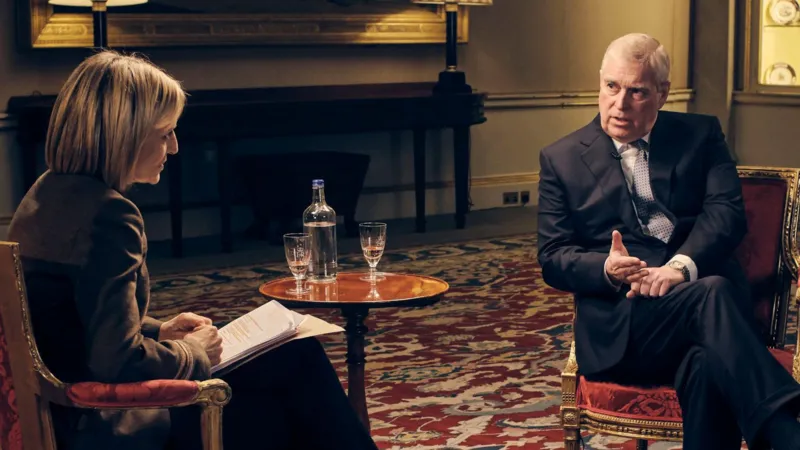
The inquiry, according to reports published in the United Kingdom, took place after Prince Andrew’s appearance on the BBC’s Newsnight programme in November 2019. During the interview, conducted by journalist Emily Maitlis, Andrew categorically denied allegations made by Virginia Giuffre that he had sexually assaulted her when she was 17 years old after she was trafficked by Jeffrey Epstein and Ghislaine Maxwell.
Attempting to refute Giuffre’s account, Andrew insisted that on the evening in question he had been with one of his daughters at a children’s birthday party before travelling to Pizza Express in Woking, Surrey. He maintained that he clearly remembered the outing because it was an unusual journey for him and claimed it would have been impossible for him to have been elsewhere that evening.
His statement immediately attracted enormous public interest.
Rather than convincing critics, the Pizza Express alibi rapidly became one of the most scrutinised aspects of the interview. Within hours, journalists, legal commentators and members of the public were examining every detail of Andrew’s recollection. Social media users produced countless jokes and memes referencing the restaurant, while the Woking branch unexpectedly became one of the most talked-about Pizza Express locations in the country.
According to newly published accounts, senior figures within Pizza Express quietly sought to determine whether any historical records could verify the Duke’s visit. The company reportedly reviewed whatever information remained available from that period, although the alleged visit had taken place many years earlier.
Like many restaurant businesses at the time, Pizza Express did not possess extensive customer databases capable of confirming individual visits made years before. Electronic booking systems were far less sophisticated than they are today, while many customers simply walked into restaurants without making reservations.
Investigators reportedly also faced practical difficulties because CCTV recordings were routinely deleted after relatively short periods and no longer existed from the date in question. Staff turnover over many years further reduced the possibility of identifying employees who might have remembered serving a member of the Royal Family.
Ultimately, the inquiry was unable to establish any evidence capable of either confirming or disproving Prince Andrew’s account.
The absence of proof did not necessarily undermine the Duke’s version of events, but neither did it provide the independent corroboration that many observers believed would strengthen his defence.
The Newsnight interview itself has since become recognised as one of the most damaging media appearances ever given by a senior member of the British Royal Family.
Throughout the programme, Prince Andrew rejected every allegation made against him but delivered several explanations that attracted widespread criticism. Alongside the Pizza Express claim, he insisted that he had a medical condition preventing him from sweating at the time, challenging another aspect of Virginia Giuffre’s account.
Communications experts, legal analysts and public relations professionals overwhelmingly concluded that the interview had failed to improve Andrew’s position. Instead, many argued it intensified public scrutiny while raising additional questions about his judgment.
The consequences were swift.
Within days of the interview, Prince Andrew announced that he would step back from public royal duties following discussions with Queen Elizabeth II. Numerous charitable organisations, military appointments and business associations also distanced themselves from the Duke as pressure mounted.
The controversy continued for several years before reaching another major turning point in 2022.
Although Prince Andrew repeatedly denied any wrongdoing and has never faced criminal charges relating to Virginia Giuffre’s allegations, he agreed to settle her civil lawsuit in the United States without admitting liability.
The financial settlement brought an end to the legal proceedings but did not resolve the wider public debate surrounding the case.
Meanwhile, Jeffrey Epstein’s criminal activities continued to cast a long shadow over numerous prominent individuals associated with him.
Epstein was arrested in 2019 on federal sex trafficking charges but died in prison while awaiting trial. His death was officially ruled a suicide.
His longtime associate, Ghislaine Maxwell, was later convicted in the United States for recruiting and grooming underage girls for Epstein’s abuse. She is currently serving a lengthy prison sentence after being found guilty on multiple federal charges.
Virginia Giuffre became one of Epstein’s most prominent accusers and played a central role in exposing the network surrounding the convicted financier. Her allegations against Prince Andrew attracted international attention and became one of the highest-profile legal disputes involving a member of the British Royal Family in modern history.
The unexpected role played by Pizza Express illustrates how ordinary businesses can become entangled in events far beyond their control.
The Woking restaurant itself experienced years of unusual attention following the interview. Visitors regularly travelled to the branch to take photographs outside the building, while references to Pizza Express in Woking became a recurring feature of British comedy, television programmes and online discussions.
Although the publicity significantly increased public recognition of the location, company executives generally avoided commenting publicly on the controversy, preferring not to become involved in political or legal debates surrounding the Duke.
The revelation that the company quietly investigated Andrew’s account demonstrates how seriously it treated claims that directly involved one of its restaurants. Even if no conclusive evidence could be found, conducting an internal review was viewed as a responsible step given the extraordinary level of international media attention focused on the business.
Experts note that verifying historical claims involving private customer visits is often extremely difficult, particularly when many years have passed. Data retention policies, privacy laws and technological limitations mean businesses rarely preserve detailed records indefinitely unless required for financial or regulatory purposes.
In this case, the alleged visit dated back to 2001, almost two decades before the Newsnight interview transformed the restaurant into an unlikely symbol of one of Britain’s most significant royal scandals.

For Pizza Express, the episode became an unexpected chapter in the company’s long history. A restaurant chain known primarily for family dining and casual Italian cuisine suddenly found itself mentioned in newspapers around the world, not because of its food or business performance, but because of an alibi that would become one of the most memorable moments in modern British television.
Years later, the phrase “Pizza Express in Woking” continues to evoke immediate recognition among many people in the UK and beyond. It has entered popular culture as shorthand for one of the most controversial royal interviews ever broadcast.
The newly reported internal inquiry does not settle the debate over Prince Andrew’s movements on the night in question. Instead, it highlights the practical challenges of reconstructing events many years after they occurred and underscores the lasting impact that a single televised interview can have—not only on public figures, but also on businesses unexpectedly drawn into the spotlight.
As renewed attention falls on the episode, the story serves as another reminder of how closely the worlds of royalty, media, law and public perception can intersect, leaving lasting consequences for everyone involved.
Related News:
 “I Speak for the UK”: Trump Bristles at Prince Harry’s Ukraine Plea
 Andrew Accused Over Royal Lodge Cottage Rentals
 Ministers Accused of Defamation Over Palestine Action Ban and Mass Arrests
 Charlie Kirk Killing Used to Mobilise UK’s Largest Far-Right Rally in Decades
 Jailed Georgian Opposition Leaders Warn UK of Iranian Links to Ruling Party
 Shabana Mahmood Warns Border Failings Are Eroding Trust in States
 UK Gamer Recruited by Wagner Group Found Guilty of Arson
 Johnson Approved China’s London ‘Super-Embassy’ in 2018
 Pregnant UK Teen to Be Freed from Georgian Jail
 Just Stop Oil Protesters Convicted Amid Climate Defence Row
 British Grandmother to Return Home After Death Sentence in Bali
 UK and EU Signal Fresh Push for Defence Cooperation Talks
 Emails Show Epstein Funded Mandelson’s Husband After Jail
 Jet2 Hands Passengers Life Ban After Mid‑Air Brawl
 Dual Nationals Face Scramble for UK Passports as New Rules Come Into Force
 Burning a Quran Is Disorderly, High Court Told
 How Much Could Andrew’s Arrest Hurt the Royal Family?
 ‘We’ve been paying for happy endings for Andrew for years’: inside the royal disgrace, biographer says
 Queen says speechless after meeting Gisèle Pelicot over powerful memoir
 Australia backs removing Andrew from royal line of succession
 Two Arrested After Woman Set on Fire in Revenge Attack
 UK Must Obey International Law Over Iran, Says Thornberry
 Mountbatten-Windsor to keep City of London Freedom
 King Charles Strips MBE and OBE Titles from Nine People Including Stuart Hogg
 Net Closes on Lyons Clan: Partner Arrested in Dubai as Crime Boss Snared in Bali
 ‘A Moral Stain’: LGBT Veteran Sues MoD for £50k Following Historic Abuse Claims
 The £140,000 ‘Trolley Dash’: 17-Year-Old Admits Massive Shoplifting Campaign Across London
 ‘Operation Beaconport’: New Inquiry Vows to Hunt Hundreds of Abusers Still at Large
 ‘The Shield of Silence’: Grooming Inquiry to Expose Officers Who Sheltered Abusers
 ‘The Falling Doctor’: Neurosurgeon Sues NHS After Hospital Lift Plunges Four Floors
 Open Justice Prevails as Court Rejects Bondi Gunman’s Family Anonymity Bid
 ‘Seismic Change’: How Nationalist Wins in Celtic Nations Could Reshape the UK
 Tragedy on the Tracks: One Dead After High-Speed Collision in Northern France
 Border Breakthrough: UK and France Finalize New £662m Small Boats Deal
 Border Breakthrough: UK and France Finalize New £662m Small Boats Deal
 Diplomatic Crossfire: President Trump Dismisses Prince Harry’s “Passionate” Ukraine Appeal
 Charles Faces Trump Test in High-Stakes US Visit
 “Very Safe”: Trump Pledges Ironclad Security for King Charles Following D.C. Shooting
 “Terrorism Suspect” Arrested in Devon as Investigation into London Jewish Site Attacks Widens
 “A Crisis for Us All”: Starmer Summons National Leaders to Confront ‘Poison’ of Antisemitism
 “The Instruction of Silence”: Young Witness Tells Jury He Was Coerced into Falsifying Sister’s Death Narrative
 “A Target of Terror”: Domestic Abuse Inquiry Launched After Woman Killed in ‘Explosive’ Home Invasion
 “The Cost of Conviction”: Palestine Action Activists Found Guilty Over ‘Clinical’ Factory Damage
 “The Rooftop Mystery”: Police Launch ‘Suspicious Death’ Probe After Body Found in Luxury Garden
 “The Reality Reckoning”: Government Demands Accountability as Channel 4 Pulls Married at First Sight UK Over Grave Sexual Assault Allegations
 Watchdog Raises Questions Over Andrew Rentals
 UK Faces Most Dangerous Era, Military Chief Warns
 Prince Andrew Faces Questions Over Cottage Lets
 MPs Warn UK Asylum System Nears Breaking Point
 Son Urges Iran Prisoner Exchange for Jailed British Pair
 UK Must Act with Courage and Clarity on Israel-Palestine Conflict, Says Foreign Affairs Committee Report
 Targeted Attack in Bury Sparks Murder Investigation as Community Awaits Justice
 Merseyside Police Helicopter Crew Cleared After Low-Altitude Pursuit of Suspect
 Tanni Grey-Thompson Faces Abuse Over Opposition to Assisted Dying Bill
 No Evidence Found to Substantiate Alleged Rape in Oxfordshire Churchyard, Police Confirm
 Woman Jailed for Life After Killing E-Bike Rider in Tragic Mistaken Identity Case
 Motorists Could Face ‘Mandatory’ Driving Ban for Road Offences Under Tougher Laws
 Civil Service Pay: Union Urges Ministers to End ‘Barking Mad’ Limits
 Epstein Eyed Record Label Investment to Access Women, Files Suggest
 Rape Accused Had Fight With Man in Alley, Court Told
 Driver Jailed Over Fatal Water Treatment Tank Crash
 Brit ‘in Good Spirits’ Amid Dubai Missile Attacks, Stranded but Safe
 Queensland Protest Laws Spark Free Speech Backlash
 UK Forces Ready to Seize Russian Shadow Fleet Vessels
 US Lawmaker Demands Testimony Over Sarah Ferguson’s ‘Close Epstein Ties’
 “It Ends With Trial”: Judge Tosses Blake Lively’s Sexual Harassment Claims Against Justin Baldoni
 The Banbridge Rescue: 300 Sheep Saved from Massive Hay Shed Inferno
 Report Says Pezzullo Acted ‘Recklessly’ in Dealings
 Justice and Deceit: High Court Convicts Woman in Hong Kong Blackmail Plot
 Judicial Whiplash: Virginia Court Pauses Redistricting 24 Hours After Public Vote
 “Three-Wheeled Triumph”: Mayor of Erewash Completes 2,000-Mile European Charity Run
 Tragedy in the Red Centre: Outback Search Ends in Discovery of Missing Girl’s Body
 “An Endurance Test for the Mind”: British Couple Sentenced to 10 Years in Tehran
 “The Local Gavel”: Polls Open Across Hampshire and Isle of Wight in Delayed ‘Milestone’ Vote
 “The Blue Light Intersection”: Seventeen-Year-Old Critically Injured in ‘Nasty’ Police Pursuit Crash
 “The Fractured Frontier”: Sir John Curtice Declares the ‘Sacred’ Two-Party Era Over After ‘Milestone’ Results
 “The End of the Towel War?”: How Hotels are ‘Clinically’ Stopping the Sunbed Dash
 “A Historic Tumble”: Lost 1930s Film Reel Reveals the Untamed Origins of Gloucestershire’s Legendary Cheese-Rolling
 Appeal Court Rules Ban on Palestine Action Was Lawful
 Prince George Set to Begin Studies at Eton This September