Published: 22 August 2026. The English Chronicle Desk. The English Chronicle Online.
Ireland is confronting renewed concern over a dangerous culture of reckless driving and social-media attention after five teenagers were killed in a motorway crash that has intensified debate over policing, youth intervention and the responsibilities of online platforms.
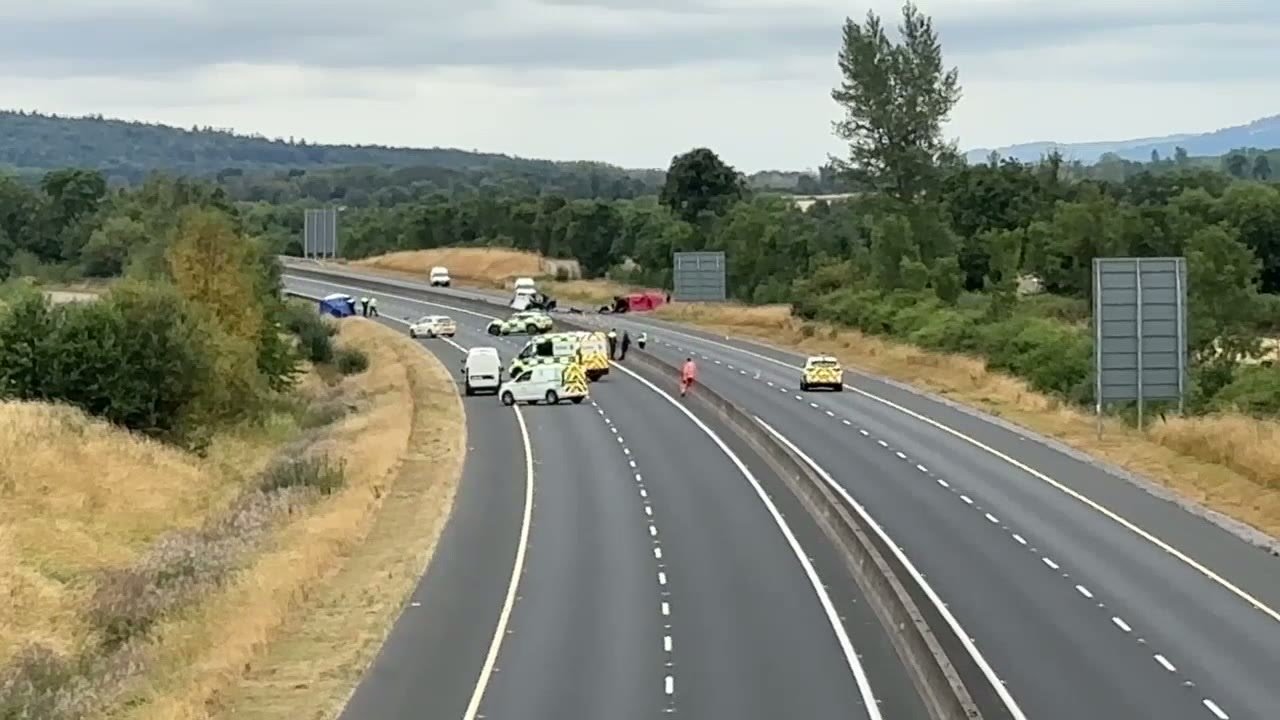
The collision, which happened in the early hours of 16 August, involved a BMW travelling on the wrong side of the M9 motorway in County Carlow. The vehicle collided with a Hyundai carrying a family travelling towards Dublin airport for a wedding in the United Kingdom. Three sisters and a seven-year-old boy were seriously injured in the crash, while five teenagers in the BMW died.
The tragedy has shocked communities across Ireland, not only because of the number of young lives lost but also because investigators believe the incident was connected to a wider pattern of reckless driving, vehicle theft and attempts to attract attention through social media. Police have said some of those involved were already known to authorities, while several had previously appeared in videos showing dangerous driving.

For many people, the crash has become a disturbing illustration of how an old form of antisocial behaviour can acquire a new dimension when combined with smartphones, video-sharing platforms and the pursuit of online recognition.
Videos associated with the trend frequently feature young people driving at high speeds, sometimes wearing masks and filming inside vehicles as they travel through residential areas and onto motorways. The footage can portray dangerous manoeuvres, encounters with police and near misses as entertainment. The appeal, experts say, is not necessarily the destination but the excitement and attention generated by the journey.
The scale of the recent tragedy has brought that behaviour into sharp public focus. The five teenagers who died were identified as Joe Carthy, 15, Kamil Pustkowski, Jack Kennedy, Alex McCarthy, all 17, and Jeremy O’Brien, 18. Several had previously been associated with reckless driving, while three were known to Ireland’s child welfare agency Tusla.
Former police officer Graham Kavanagh said the phenomenon of young people stealing cars and driving dangerously for excitement was not new. What has changed is the environment in which such behaviour can now be recorded, shared and rewarded by an online audience.
He argued that the attraction of speed, risk and police pursuit had existed for decades, but social media can add another incentive by allowing participants to turn dangerous behaviour into content. The possibility of gaining approval from peers or accumulating views can transform an act that might once have involved a small group into something intended for a much wider audience.
Mary Aiken, professor of forensic cyberpsychology at the University of East London, described the behaviour as a combination of physical risk-taking and online activity. Young drivers may be simultaneously concentrating on the road, recording themselves and imagining how the resulting footage will be received.
That dynamic can make an already dangerous activity even more difficult to control. The desire for recognition can compete with an individual’s ability to assess consequences, particularly among young people whose judgement and impulse control are still developing.
The consequences of the crash have extended well beyond the families of those who died. The three sisters injured in the Hyundai and the seven-year-old child have had to deal with the physical and emotional consequences of an incident they did not cause. They had been travelling for an ordinary family occasion when their journey was suddenly transformed into a life-threatening disaster.
A fundraising campaign supporting the injured family has received widespread public backing and raised more than €660,000. A vigil was also planned in County Carlow, reflecting the strength of public sympathy for those caught up in the crash.
At the same time, the reaction to the teenagers who died has been sharply divided. Some online comments have expressed anger and condemnation, while others have urged the public to remember that the victims were themselves young people whose lives ended in a devastating act of recklessness.
The intensity of online abuse became so severe that relatives withdrew funeral notices. The funeral of Alex McCarthy was held in Athy, where mourners gathered wearing shirts carrying his photograph. Police maintained a presence around the proceedings.
The Bishop of Kildare and Leighlin, Denis Nulty, acknowledged the anger surrounding the incident but urged people to exercise restraint. He warned that public language could deepen the suffering of grieving families and argued that society should focus on preventing similar behaviour rather than simply assigning blame.
The tragedy has also renewed scrutiny of TikTok and other social-media platforms. Reports that new videos depicting reckless driving appeared online after the crash have further angered critics who believe dangerous material should be identified and removed more effectively.
TikTok declined an invitation to appear before an Irish parliamentary committee examining the issue, citing the ongoing police investigation, a separate inquiry by Ireland’s media regulator and concerns that other platforms had not been asked to attend. The decision drew criticism from politicians, including committee chair Alan Kelly, who described the refusal as a serious affront to the Irish public.
The debate is now moving beyond social media. Political figures have called for tougher penalties for dangerous driving, with some proposing that driving deliberately on the wrong side of a motorway should be treated as an offence carrying penalties comparable to attempted murder.
Questions have also been raised about police pursuit policies. Gardaí have faced concerns about whether officers have sufficient specialist training for high-speed vehicle pursuits and about the potential personal liability officers could face if a pursuit ends in injury or death.
Earlier this year, British driving specialists from Devon and Cornwall police began assisting with the training of Garda instructors. The initiative reflects a broader recognition that modern vehicle crime requires specialised responses, particularly when offenders deliberately attempt to provoke police chases.
Yet former officers and community safety campaigners argue that enforcement alone cannot solve the problem. By the time a teenager is stealing cars and participating in dangerous driving, intervention may already have come too late.
Kavanagh has suggested that parents, schools, social workers, community organisations and police must identify vulnerable young people much earlier. The objective, he argues, should be to prevent children from becoming involved in a cycle of antisocial behaviour before reckless driving becomes a source of identity, excitement or social recognition.
The debate therefore reaches beyond TikTok. Social media may amplify the behaviour, but the underlying causes can involve family circumstances, peer pressure, deprivation, disengagement from education, exposure to crime and a search for status or belonging.
Ireland’s challenge is to address those issues without allowing legitimate concern about dangerous driving to turn into indiscriminate condemnation of young people. The deaths on the M9 have demonstrated the devastating consequences of reckless decisions, but they have also exposed gaps in prevention, policing and online accountability.

For the families mourning loved ones and those recovering from serious injuries, the debate is not theoretical. It is the aftermath of a night that permanently changed several lives.
The wider question facing Ireland is how to ensure that the pursuit of online attention never becomes more valuable to a young person than the safety of strangers, passengers, families and themselves. The tragedy has made clear that preventing the next crash will require more than removing individual videos. It will require a sustained effort involving law enforcement, communities, families, schools, social services and technology companies.
The crash has left Ireland facing an uncomfortable reality: a culture of reckless driving that once existed largely on the margins can now be recorded, distributed and rewarded in real time. Addressing it will require society to confront both the behaviour on the road and the incentives surrounding it online.
Related News:
 China mine blast death toll rises to 90
 Ebola outbreak in DRC overwhelms health system as cases surge
 Irish Gangland Figure Fails in Dublin Election Bid
 Cooper Unveils £4m Cyber Plan Against Russian Hackers
 Trump Speaks on Prince Andrew’s Royal Scandal Fallout
 UK University Faces Counter-Terror Probe Over China Pressure
 UK Bans Fake Numbers: Scammers Lose Their Trick
 Just Stop Oil Protesters Convicted Amid Climate Defence Row
 British Grandmother to Return Home After Death Sentence in Bali
 Britain deploys RAF specialists to assist Belgium with drone threats
 BBC’s Tim Davie to Address Staff Amid Trump $1bn Threat
 Ukraine-Russia war latest: Putin’s troops exploit bad weather to force Kyiv withdrawal from multiple towns
 Hitler’s DNA Confirms He Truly Had Only One Testicle
 Oklahoma Governor Grants Last-Minute Clemency to Death Row Inmate
 US Pushes Global Effort to Stop Arms Flow to Sudan RSF Forces
 Israel Confirms Returned Hostage as Meny Godard
 Greene Pushes Epstein Files Amid Trump Fallout
 Poll Reveals China Leads World in Trusting AI Technology
 Deadly Russian Strikes Hit Western Ukraine, 20 Killed in Ternopil
 WhatsApp Messages Expose Nathan Gill’s Bribery
 Venezuela Threatens Nobel Winner Machado with Fugitive Status
 Trump Envoy to Discuss Ukraine Peace at Kremlin
 Twenty-Four Nigerian Schoolgirls Freed After Abduction
 Two National Guard Soldiers Critically Injured Near White House
 Southern Lebanon reels as Israeli strikes shatter communities
 Video shows Israeli troops kill Palestinians after surrender
 Rare shark attack kills woman, injures man at remote NSW beach
 American Mother Extradited From UK to U.S. on Murder Charges
 Melbourne Rabbi’s Car Firebombed Amid Hanukah Celebrations
 US Clears Nvidia AI Chip Sales to China in Policy Shift
 High-speed Spain train crash leaves nation in mourning
 EU launches Grok AI probe into X over explicit images
 UK New Car Discounts Near £6,000 as Prices Are Slashed
 TikTok Design Faces EU Crackdown Over Addictive Features
 Portugal Election Delivers Socialist Win as Far Right Surges
 SA Police Intensify Search in Gus Lamont Case
 NSW kidnapping mistake sparks urgent appeal
 El Mencho Killed as Mexico Faces Violence
 Anthropic AI Refuses Pentagon’s Safety Demand
 Kelly Wilkinson Inquest Reveals Bail Failure
 Cyprus Drone Strike Sparks Europe’s Strong Response
 Islamic State-inspired attack shocks New York protest scene
 Musk’s xAI Permit Sparks Fury Over Power Plant Expansion
 Michigan Synagogue Attack Leaves Suspect Dead in Tragic Incident
 The Kill Line: A Shifting Vision of the American Dream
 ABC Staff Strike Over Pay and AI Concerns
 Bondi terror attack linked to global rise in IS plots
 Artemis II: Humanity Returns to the Moon After Decades
 Italian Town Buys Mussolini Villa to Keep Away Fascist Fans
 Apple at 50: Three Products That Changed How We Live
 Hungary election: Orbán faces biggest test amid scandal
 Artemis II Returns After Historic Moon Flyby
 Ben Roberts-Smith Denies War Crime Allegations in First Statement
 Learner Driver Charged After Expo Tragedy
 Rat Poison Found in Baby Food Sparks Major Recall Row
 OpenAI CEO Apologizes After Canada Shooting Case
 Two Dead in Adelaide Airport Plane Crash Fire
 Cartel crackdown raises fears of fresh violence
 Ukraine strikes Tuapse as oil disaster worsens
 Germany to Return Rare Irritator Dinosaur Skull to Brazil
 China Fireworks Factory Blast Kills 21 in Hunan
 Canadian Fiddler Sues Google Over AI Defamation Claim
 US ‘Narco Boat’ Strikes Draw Global Outcry
 France Faces Record Presidential Crowded Race Amid Far-Right Surge
 Norway Doubles Down on Oil and Gas for Europe Energy Security
 Ex-Chief of Staff Named in Major Ukraine Corruption Probe
 Pope Meets Families in Italy Toxic Waste Zone
 Former ICC prosecutor condemns US sanctions
 Gunman Killed After White House Security Shootout
 Deadly Russian Air Raids Strike Across Ukraine
 Papal Visit Offers Political Lifeline to Spanish Premier
 Le Pen to Run for President Despite Embezzlement Conviction
 Meta Under Fire: The Battle Over Addictive Social Media Design
 New Footage Revives Peter Falconio Mystery
 Ukraine Creates Long-Range Strike Command
 England and Norway Fans Turn Miami Into World Cup Carnival
 Wildfires Force Mass Evacuations in France And Spain
 UK’s Largest Muslim Convention Scales Up Security Amid Rising Bigotry
 Israeli Strike in Southern Lebanon Kills Seven
 Russian Missiles Intensify Pressure on Kyiv