Published: 22 August 2026. The English Chronicle Desk. The English Chronicle Online
Fires at recycling centres and waste facilities across the UK caused by discarded lithium-ion batteries are becoming an increasingly serious safety and financial problem, with new figures suggesting that the annual cost of battery-related fires has now reached £1bn.
The fires are occurring at a rate of more than 10 a week, according to figures provided by the Environment Services Association, the trade body representing waste management companies. Experts and fire chiefs have warned that the growing number of incidents is putting workers and emergency responders at risk while disrupting vital waste and recycling infrastructure.
The association said its members reported 1,518 fires during the year to March 2026. At least 541 of those incidents were directly attributed to lithium-ion batteries. A further 216 battery-related fires were reported in bin lorries, highlighting the dangers created when batteries are placed incorrectly in household rubbish or recycling collections.

The true scale of the problem is believed to be considerably greater because investigators are often unable to determine the precise cause of a fire after a waste facility has been damaged. The Environment Services Association estimates that batteries may actually be responsible for as many as 70% of fires at recycling centres, compared with the approximately 40% that can currently be directly identified.
The financial impact has also increased dramatically. The association estimates that the annual cost of battery-related fires has risen from approximately £150m in 2021 to around £1bn today. The costs include damage to facilities, disruption to waste services, emergency response requirements and increasing insurance pressures.
The issue has become particularly urgent because lithium-ion batteries are now found in a wide range of everyday products. Smartphones, electric tools, children’s toys, electric toothbrushes, power banks, e-scooters and gardening equipment can all contain rechargeable batteries capable of catching fire if damaged.
Disposable and rechargeable vapes have become one of the most prominent concerns because of their widespread use and short lifespan. When discarded in household rubbish, recycling containers or general waste streams, their batteries can be crushed, punctured or exposed to other conditions that can trigger a dangerous reaction.
A recent series of fires across Britain has highlighted the scale of the threat. Waste facilities and bin lorries have been affected by fires in locations including London, Monmouthshire, Cheshire, Glasgow and Norfolk. A major fire at a recycling centre in Deptford, south-east London, was among the latest incidents, although its cause had not been established at the time of reporting.
Fire services have warned that fires at waste facilities can be particularly difficult to control. Large quantities of combustible materials are often stored together, while damaged batteries can continue to generate heat and reignite after appearing to have been extinguished.
Following a fire in Ilford, east London, which required 25 firefighters to bring under control, the London Fire Brigade highlighted the increasing number of incidents believed to involve lithium batteries. Firefighters said such blazes can require substantial resources and take considerable time to extinguish.
The impact is not limited to the immediate danger faced by emergency crews. Fires at recycling and waste facilities can affect surrounding communities through smoke, road closures, disruption to waste collections and damage to local infrastructure. They can also create environmental problems when burning materials release pollutants into the atmosphere.
Dr Francesco Restuccia, a fire expert at King’s College London, said the number of fires at recycling centres had increased sharply because society was using and disposing of more lithium batteries in everyday products.
The danger comes from the way lithium-ion batteries react when physically damaged. A battery contains internal components designed to keep its electrical materials separated. If the separator is pierced, crushing or puncturing can create internal short circuits. This can cause the temperature inside the battery to rise rapidly until it reaches the point of ignition.
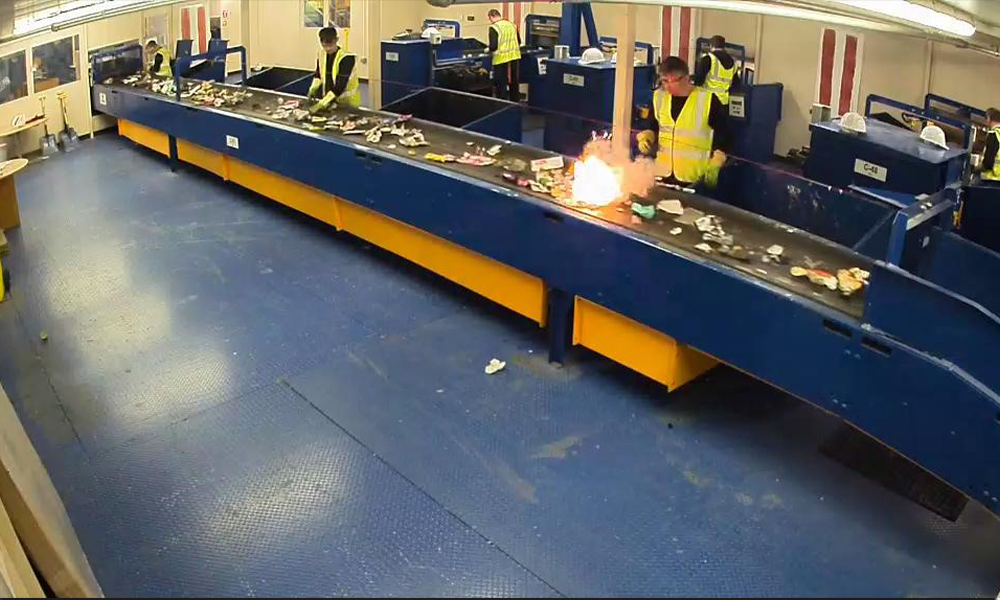
Waste-processing facilities are particularly vulnerable because batteries can pass unnoticed through collection and sorting systems. Once machinery crushes or breaks an item containing a battery, the resulting heat can ignite nearby paper, cardboard, plastic and other combustible materials.
The Environment Services Association commissioned the Health and Safety Executive to conduct an experiment examining what happens when a vape battery is punctured next to paper and cardboard. The test showed the damaged vape igniting and setting nearby materials alight.
During the experiment, the temperature of the vape exceeded 750C and remained hot enough to ignite paper for an extended period. The association said the findings demonstrate why consumers need to keep batteries and electronic devices out of ordinary household waste.
The volume of discarded vapes is also contributing to the problem. Waste management company Biffa has reported recovering around 500,000 vapes from its facilities during the summer alone, illustrating how many devices enter the waste system.
Waste industry representatives are now calling for stronger measures to encourage consumers to return used vapes instead of throwing them away. The Environment Services Association has proposed a mandatory £5 deposit scheme for vapes, arguing that consumers would have a financial incentive to return used devices to retailers.
Under such a system, the deposit would be paid when a vape is purchased and returned when the used product is brought back for appropriate disposal or recycling. Supporters believe the approach could significantly reduce the number of batteries entering general waste streams.
The proposal comes as the UK continues to deal with the broader environmental and safety consequences associated with disposable vaping products. Their relatively short use period means large numbers of devices are discarded, while the batteries inside them remain potentially hazardous long after the product itself has been used.
Patrick Brighty, head of recycling policy at the Environment Services Association, described battery fires as reaching epidemic proportions across Britain’s waste and recycling industry. He warned that even a single battery hidden inside household rubbish can ignite a large fire capable of severely damaging a facility.
The financial consequences could extend beyond the immediate cost of repairing damaged buildings and machinery. Rising numbers of incidents can affect insurance premiums for waste companies and potentially increase the cost of waste management services. Businesses may also face prolonged interruptions while damaged facilities are repaired or investigations are conducted.
The growing problem highlights a wider challenge created by the rapid expansion of battery-powered consumer technology. As more products depend on lithium-ion batteries, the systems responsible for collecting and processing household waste must adapt to the additional risks.
Consumers also have an important role in preventing fires. Batteries and electronic products containing rechargeable cells should not simply be placed in general rubbish or mixed recycling unless the local collection system specifically allows them. Dedicated battery collection points and appropriate recycling schemes are designed to keep damaged or discarded batteries away from machinery that can crush them.
For fire services, however, prevention remains preferable to responding to increasingly complex waste fires. Every incident can require crews, specialist equipment and large quantities of water or other resources, while workers at waste facilities can be exposed to smoke, flames and explosions.

The Environment Services Association believes the current trend requires urgent government action. Its proposed deposit system for vapes is intended to address one of the most visible sources of battery-related waste, while broader public awareness could help prevent batteries from entering inappropriate waste streams.
The scale of the financial figures demonstrates why the issue is no longer simply an environmental concern. With annual losses estimated at £1bn and hundreds of confirmed battery-related fires reported each year, the problem has become a major safety, economic and infrastructure challenge.
As Britain becomes increasingly dependent on rechargeable technology, the country faces a growing need to ensure that the batteries powering everyday products can be safely collected, transported and recycled. Without stronger disposal systems and greater public awareness, fire chiefs and waste operators fear that the number of dangerous incidents could continue to rise.
Related News:
 Scotland’s Climate Plans Face Scrutiny Over ‘Science Fiction’ Targets
 Ocean Warming Drives Massive Marine Life Loss, Study Warns
 UK Records Earliest Spring as Nature Awakens Fast
 Queensland Braces for Potential Second Severe Cyclone Hit
 Heavier SUVs Accelerate Britain’s Pothole Crisis
 Record May Heat to Cold Front in Eastern Australia
 UK Faces Mass Water Shortages by 2055, Lords Warn
 UK rejects EV charging VAT cut amid Treasury clash
 AI Lawyer Triumphs in Landmark English Court Victory
 UK Seas Face Extreme Heatwave as Global Temperatures Surge
 Three-Quarters of England’s Riverbanks Still Off Limits
 London’s 2026 ‘Great Stink’ Raises Sewer Concerns
 UK Bans Fake Numbers: Scammers Lose Their Trick
 Patients to Test Health at Home to Ease NHS Winter Pressure
 Northern Lights may illuminate UK skies this week
 Coffins Now Too Large to Cremate Amid Rising Obesity Crisis
 Dog Food Emissions: 1% of UK Greenhouse Gas Revealed
 Dutch Nationwide Fireworks Ban Expected to Transform New Year Traditions
 British skier killed in La Plagne avalanche tragedy
 UK Threatens Action Against X Over Sexualised AI Images
 Kent Residents Continue Facing Water Supply Disruptions
 Judi Dench Champions Fight to Save London’s Green Spaces
 AI job losses UK: Britain faces sharper employment shock
 Storm Chandra flooding leaves England on high alert
 Childnet Censorship Row Over Teen Safety Speeches
 Sydney Protest Pepper Spray Clash During Herzog Visit
 Facial Recognition Error Leads to Wrongful Arrest in Milton Keynes
 UK suspends study visas for four nations to curb asylum
 Jordanian Arrested in Philippines Over Bondi Beach Terror Links
 Wood burner legal threats spark council row
 Ukraine war briefing: Zelenskyy offers help to Saudi Crown prince on combatting Iranian drones
 Cancer Death Rate in Britain Falls by Nearly a Third
 Yorkshire Water Funding Sparks Debate Amid Fines and Pay Row
 Welsh Water Faces £44.7m Enforcement Over Sewage Breaches
 ‘Drinking from a Fetid Pond’: Superbug Genes in Lough Neagh
 Starmer Praised for Stance on Trump and Iran Conflict
 New £10bn rescue plan offered for Thames Water
 Scientists Unveil Heavier Proton at CERN LHC
 UK Energy Reform Could Cut Bills by £200
 RNLI Beach Rescues Surge as Coastal Popularity Hits New High
 Traffic: The Science Behind Why Slower Cars Always Catch Up
 Trump Facing Backlash Over Firing of Cabinet Women
 Cyclone Maila Intensifies to Category Five Strength
 Melania Trump Denies Ties to Epstein and Ghislaine Maxwell
 RSPB Urges Summer Bird Feeder Removal to Curb Disease
 Norway’s Telenor Faces Lawsuit Over Myanmar Data Breach
 Trump Starts $166bn Tariff Refund Process
 Broken Promises: Murray-Darling River Crisis Deepens
 Prominent Voices Challenge Palestine Action Ban
 Crackdown Backfires on UK Climate Protesters
 Older Than Dinosaurs: Secrets of Mayfly Dance Revealed
 Capitalism ‘Suicidal’, Warns Petro at Climate Summit
 The Lion Guard: How One Woman Heals the Zambezi Valley
 Fear and Betrayal: The Chilling Case of Kouri Richins
 Court Upholds Landmark Win for Transgender Rights
 Uefa Transforms Men’s Major Tournament Qualification
 British Paralympian Set to Make History in Earth Orbit
 Teaching Machines Right From Wrong in the Digital Age
 Tech Trends and the Battle Against Exam Hall Cheating
 US Condemns ‘Two-Tier’ UK Policing After Student Murder
 Millions in British Charity Funds Linked to Illegal Settlements
 Captain in the Spotlight: The Future of England Cricket
 Stolen Mobiles Could Soon Become Useless Bricks
 UK Ministers Lobby Trump Over Under-16s Social Media Ban
 Russian Tanker Captain Remanded in UK Court After Channel Seizure
 Controversial London Property Show Sparks Legal Fury
 What Burnham in Number 10 Means for the Future of Britain
 Scouts Introduce Badges For AI And Digital Skills
 EU Slashes Steel Quotas But Grants UK Favourable Rates
 Deadly H5 Bird Flu Reaches Australia’s East Coast
 Sydney Records Hottest June Since 1859 as Expert Warns New High a ‘Signature’ of Global Warming
 Southern Europe Reels as Wildfires Force Mass Evacuations
 UK Heatwaves Ignite Crisis of Sleep and Public Safety
 Telstra Software Fault Triggers Massive Nationwide Outage
 Colombia’s Fight Over Fossil Fuels
 UK Schools Struggle as Classrooms Top 40C
 London Tube Heat Reaches Dangerous Levels
 Japan Bear Hunt: Serial Fridge Raider Sparks Panic
 Burnham unveils £65m drought aid for farmers
 Gen Z turns to BirdTok for a gentler digital escape