Published: 21 September 2026. The English Chronicle Desk. The English Chronicle Online.
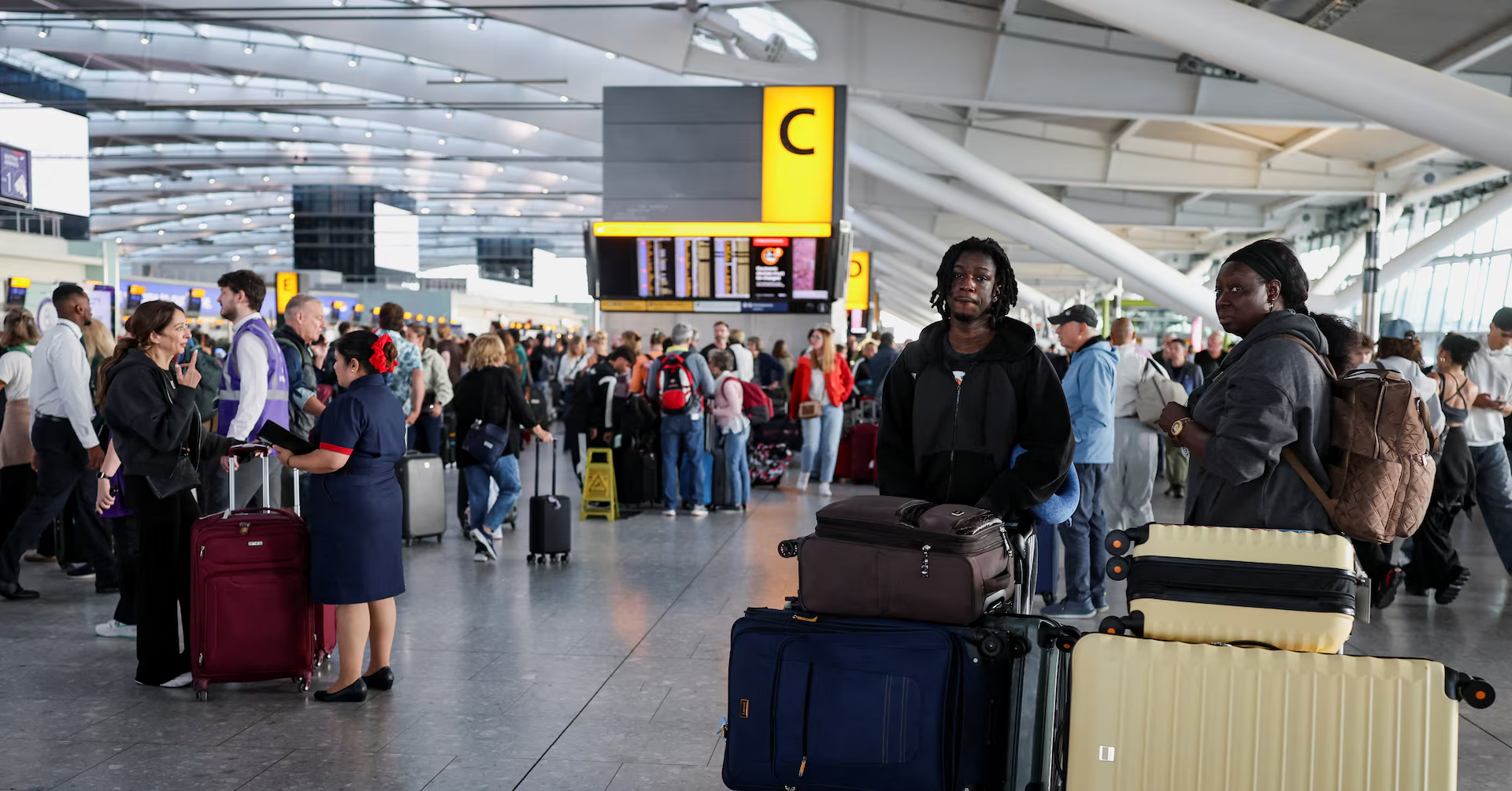
Air passengers across parts of Scotland, northern England and Northern Ireland faced disruption on Monday after a technical fault affected air traffic control operations at Prestwick in Scotland. Airlines including British Airways and easyJet cancelled or delayed services as engineers investigated the problem.
The disruption is the second significant technical issue to affect National Air Traffic Services, known as Nats, within a fortnight. The latest fault occurred at the organisation’s second control centre in Prestwick, which manages air traffic across a large area of northern UK airspace.
According to flight data analysts Cirium, 24 flights had been cancelled across UK airports as the disruption developed. However, many services continued to operate, with the impact concentrated on flights travelling north and those departing from Scottish airports.
Nats said its engineers were continuing to investigate the technical problem. The organisation indicated that airports south of Manchester were broadly unaffected, although flights heading north were experiencing delays.
Passengers affected by the disruption were advised to check directly with their airlines for the latest information about individual services. Nats apologised for the inconvenience and said the latest incident was unrelated to the technical problem that caused widespread disruption earlier in the month.

The timing of the incident has increased scrutiny of the reliability of the UK’s air traffic control infrastructure. The latest fault occurred less than two weeks after a separate Nats incident in England caused extensive disruption and affected hundreds of thousands of passengers.
That earlier episode led to widespread flight delays and cancellations and prompted questions about the resilience of systems supporting Britain’s aviation network. An initial report into that incident was released only three days before the latest Prestwick fault emerged.
Nats has previously said it would continue improving the critical services it provides. The recurrence of another technical problem has nevertheless led airlines to raise concerns about the robustness of the organisation’s systems.
EasyJet was among the airlines to publicly criticise the latest disruption. The carrier said a Nats air traffic control system failure at Prestwick was causing delays and preventing some flights from operating. It also questioned the resilience of Nats systems and called for firm action to reduce the risk of repeated failures.
British Airways also warned that some of its customers were likely to experience disruption to their travel plans. The airline said the technical problem was outside its control but that it was working to limit the impact on passengers and keep customers informed.
For passengers, the disruption can have consequences beyond the immediate cancellation or delay of a flight. A delayed departure can affect connecting flights, hotel bookings, ground transport and other arrangements, particularly for travellers moving between Scotland, Northern Ireland and England.
Airports in Scotland were among those experiencing the most direct effects because of their proximity to the affected air traffic control operations. Flights travelling to or from northern parts of Britain were also affected as aircraft movements through the relevant airspace were managed under restricted conditions.
Air traffic control systems are central to the safe and orderly movement of aircraft. Controllers and associated technical systems coordinate routes, manage aircraft separation and regulate the flow of flights through busy areas of airspace.
When a technical failure occurs, restrictions may be introduced to maintain safe operations. Although this can lead to delays and cancellations, such measures are intended to ensure that aircraft movements remain within safe operating limits while engineers investigate and resolve the underlying problem.
The latest incident therefore illustrates how a fault at one control centre can have consequences across several regions. Even when airports themselves remain operational, restrictions in the airspace above or around them can affect the ability of airlines to maintain their planned schedules.
The aviation sector is particularly sensitive to disruptions because flight schedules are closely interconnected. An aircraft arriving late at one airport can subsequently depart late for another destination, potentially creating a chain of delays throughout the day.
The situation also highlights the growing importance of system resilience as passenger numbers and flight movements increase. Airlines depend on air traffic control providers to maintain reliable operations, while regulators and infrastructure operators must ensure that critical systems can withstand technical failures and recover quickly when problems occur.
The latest fault has also revived attention on the earlier incident in England. That disruption had already prompted questions about how technical problems are detected, managed and communicated to airlines and passengers.
Nats has stressed that the Prestwick incident is separate from the earlier failure. The organisation’s statement indicates that engineers are treating the latest problem as a distinct technical issue rather than a continuation of the previous incident.
Nevertheless, the fact that two significant technical problems have occurred within a relatively short period is likely to remain a focus of discussion among airlines and aviation stakeholders.
The response from airlines reflects the operational difficulties created by repeated disruptions. British Airways said it was working to minimise the consequences for customers, while easyJet used the latest incident to call for measures aimed at preventing similar failures.
For travellers, the immediate priority remains obtaining accurate information about individual flights. Because the disruption is affecting different services in different ways, passengers may experience anything from a minor delay to a cancellation.
The number of cancelled flights reported by Cirium may also change as the situation develops. Airlines can adjust schedules, reinstate services or cancel additional flights depending on the duration of the air traffic control restrictions and the availability of aircraft and crews.
The disruption comes at a time when the reliability of aviation infrastructure is receiving increased attention in Britain. Modern air travel depends on complex digital and technical systems, meaning even a localised failure can create consequences far beyond the location where the fault originates.
At the same time, aviation authorities face the challenge of maintaining safety while keeping disruption to passengers and airlines as limited as possible. When a technical problem affects air traffic control, safety requirements necessarily take priority, even if that results in delays.
The incident is also likely to raise questions about contingency arrangements at Nats and whether alternative systems can provide sufficient capacity when one control centre experiences difficulties. Such issues are particularly important for Scotland and northern England, where air routes can depend heavily on regional control infrastructure.

Further information about the cause of the Prestwick fault is expected as the engineering investigation progresses. Until the investigation is complete, the precise technical reason for the disruption remains unclear.
Nats has said its engineers are continuing to examine the problem, while airlines are managing the consequences for their customers. The organisation has advised passengers to remain in contact with their airlines rather than relying on general expectations about the status of individual flights.
The latest disruption has left passengers once again facing uncertainty over travel plans while the aviation industry responds to another air traffic control problem. Although most flights continue to operate, the cancellations and delays demonstrate how quickly a technical issue within critical infrastructure can spread across the wider transport network.
For British aviation, the immediate focus will be on restoring normal operations and establishing the cause of the fault. Beyond the current disruption, however, the repeated technical problems are likely to keep attention on the resilience, reliability and contingency planning of the country’s air traffic control systems.
Related News:
 UK Aviation Watchdog Clips Heathrow’s Fee Hike Wings
 Europe EV Demand Surges as Fuel Prices Rise
 UK firms accused of ‘AI washing’ boom
 Essex valley emerges as rising English wine hub
 EasyJet Takeover Sparks Fears Over Passengers’ Future
 UK Risks Falling Behind in AI Race
 London Launches First Self-Driving Taxis
 Nats Boss Summoned as UK Flight Chaos Continues
 Iceland to Open First UK High Street Store in Falklands
 Reeves Faces Setback as Labour May Miss Homes Target
 Trump’s UK Ambassador Urges North Sea Drilling to Strengthen US Ties
 ABF May Split Primark from Food Division Amid Tough Market
 M&S Profits More Than Halve After Cyber-Attack
 Tony Blair think tank warns Rachel Reeves must cut taxes if manifesto broken
 Millionaires group urge Reeves to introduce wealth tax to ‘lift kids out of poverty’
 Global markets drop amid tech sell-off and China slowdown
 Mossmorran Plant Closure Hits Cowdenbeath Hard
 Starmer Says Labour’s Economic Plan Needs Years to Deliver
 Virgin Media Fined £23.8m Over Telecare Safety Failures
 Rising Water Bills Lift Troubled Thames Back to Profit
 Starmer Faces Parliamentary Battles Over UK-EU ‘Reset’ Plan
 Phoenixism Costs UK Taxpayers Millions in Recruitment Sector
 ScottishPower Tops List of Worst UK Energy Suppliers
 City & Guilds pay surge sparks backlash amid £22m cuts
 UK Government Borrowing Drops to £11.6bn in December
 AI job losses UK: Britain faces sharper employment shock
 UK economy struggles as growth stalls at 0.1% in late 2025
 UK Unemployment Rate Climbs to 5.2% Peak
 UK shelves £110m border project amid trade strain
 UK Inflation Surprise Sparks Early Rate Cut Hopes
 Reeves Must Back Defence Plan or Face Dismissal, Says Unite Chief
 Rolling Hills and Heritage: A Car-Free Break in Leicestershire
 Switching Energy Deal Can Save £200 as Price Cap Falls
 Rachel Reeves Faces Middle East Conflict Test
 Grocery Inflation Rises Amid War Fears
 Peak Greggs fears as profits tumble sharply
 BrewDog sold Highland estate for knockdown price after abandoning reforestation plans
 Yorkshire Water Funding Sparks Debate Amid Fines and Pay Row
 UK Energy Reform Could Cut Bills by £200
 Rising Costs Force Families to Rethink Days Out
 Hospitality Sector Teeters on Brink as Costs Surge
 Aegon Sells Historic UK Arm to Standard Life for £2bn
 Major Housebuilder Cuts Land Buying Amid Global Unrest
 UK Staycations Rise as Travel Fears Grow
 Silent Tracks: Rail Line Without Passengers
 Heathrow Chair Seeks Peace to Save Third Runway
 Lotus Boss Pledges Future to Norfolk and Seeks State Support
 UK Firms Freeze Spending as Iran Conflict Bites
 Summer Shock: British Energy Bills Set for Grim July Hike
 Reeves to Fast-Track Clean Energy Amid Iran Crisis
 Belfast Approves Pilot Extension of Sunday Trading Hours
 Tube Strike Brings Capital to a Standstill Over Shift Disputes
 Tube Strike Brings Capital to a Standstill Over Shift Disputes
 BP Stands Firm on Amanda Blanc Amid Boardroom Storm
 UK House Prices Drop For Third Month Due To War Fears
 Top Chefs Back Andy Burnham to Save UK Hospitality Sector
 AI Scams Push UK Investment Fraud Past £220m
 Rethinking the Blueprint for Youth Employment in Britain
 EU Slashes Steel Quotas But Grants UK Favourable Rates
 Sainsbury’s Boss Optimistic As Grocery Inflation Eases
 UK Households Suffer Squeeze As Disposable Incomes Drop
 Jet2 Sees Summer Surge Despite Global Tensions
 London Tube Heat Reaches Dangerous Levels
 BBC Faces Real Jeopardy as Licence Fee Income Declines
 Burnham unveils £65m drought aid for farmers
 Unions Warn Labour Over Zero-Hours Contract Reforms
 Queue row erupts on Wales’ highest mountain
 UK Subsidence Claims Surge After Record-Breaking Summer
 Billionaire Chris Rokos poised to leave UK
 UK plans tougher Israel stance with settlement trade ban
 Councils spend £125m on illegal children’s care
 JPMorgan Boss Warns Against UK Bank Tax Rise
 UK Retailers Accused of Breaking Refund Laws
 Heathrow Expansion Faces New Climate Conditions Over CO₂
 UK Heatwaves Set to Worsen Pothole Damage, RAC Warns
 Tom Watson Takes Senior Role at Palantir
 UK Retail Sales Rebound as Consumers Spend More
 UK Rent Gap Puts Low-Income Families Under Pressure
 Calls Grow to Expand UK National Wealth Fund
 Labour Apprenticeship Scheme Faces Slow Start