Published: 13 November 2025 | The English Chronicle Desk | The English Chronicle Online
After forty-three days of gridlock, the longest government shutdown in United States history has finally drawn to a close. Federal workers are returning to their posts, national parks are reopening, and key services that had ground to a halt are slowly resuming. Air travel, which had descended into chaos during the shutdown, is returning to its usual frustrations rather than full-scale dysfunction.
But as the ink dries on President Donald Trump’s signature authorising the funding bill, many are asking the same question — what exactly has been achieved, and at what cost?
The closure began when Senate Democrats used a parliamentary filibuster to block a Republican-backed temporary funding measure. Despite holding a minority in the chamber, they drew a line in the sand, insisting that any deal must include an extension of federal health insurance subsidies for low-income Americans — support that was due to expire at the end of the year.

However, when a handful of Democrats eventually broke ranks and voted to reopen the government, the concessions they secured were minimal. They received only a promise that the Senate would hold a future vote on the subsidies — with no assurance of Republican support or corresponding approval in the House of Representatives.
The aftermath has left deep scars within the Democratic Party. Members of the party’s progressive wing have been particularly vocal in their frustration, accusing Senate Majority Leader Chuck Schumer — who notably abstained from voting for the funding bill — of weakness or quiet complicity in the compromise. Many feel the party capitulated just as political momentum was on their side, following a string of off-year election victories that had bolstered Democratic confidence.
California’s Democratic governor, Gavin Newsom, voiced the same sense of disappointment, calling the shutdown deal “pathetic” and “a surrender”. Speaking to the Associated Press, he remarked, “I’m not here to attack anyone, but I’m not happy that, in the face of Donald Trump — an invasive political force who has rewritten the rules — we are still playing by the old ones.”

Newsom’s criticism carries weight. A loyal supporter of President Joe Biden during his presidency and subsequent decline in political standing, Newsom is widely believed to be positioning himself for a 2028 presidential bid. His remarks reflect not just personal frustration but also a broader sense of unease among Democrats about the party’s direction and leadership.
In contrast, Donald Trump has emerged from the standoff triumphant. In the days since the Senate impasse ended, the former president’s tone has shifted from guarded optimism to open celebration. At a Veterans Day commemoration at Arlington National Cemetery, he congratulated Republicans in Congress, calling the reopening vote “a very big victory”.
“We’re opening up our country,” Trump declared. “It should never have been closed.”
Sensing the Democratic discord, Trump wasted no time adding fuel to the fire. During a Fox News interview, he mocked Schumer’s failed strategy, saying, “He thought he could break the Republican Party — and the Republicans broke him.”
Although there were moments during the shutdown when Trump’s resolve appeared to waver — at one point he publicly criticised Senate Republicans for refusing to scrap the filibuster — he ultimately emerged from the ordeal largely unscathed and without making significant policy concessions.
While his approval ratings dipped during the forty days of government paralysis, Republicans have a full year before they face midterm elections, and Trump himself, no longer bound by electoral concerns, appears confident he can weather the political fallout.
With the shutdown now over, Congress is returning to its normal legislative calendar. The House of Representatives, paralysed for over a month, faces a backlog of legislative priorities. Republicans hope to push through a handful of meaningful bills before next year’s election cycle dominates the political agenda.
The new funding agreement secures financing for several departments through September, but other parts of the federal government remain funded only until the end of January. If Congress fails to reach another deal by then, the risk of a second shutdown will loom large.

For Democrats, the bruising experience has left many eager for another chance to confront Republicans — but perhaps this time with a clearer strategy. The issue that triggered the entire crisis, healthcare subsidies, is likely to remain politically potent. Millions of Americans face the prospect of their health insurance premiums doubling or even tripling once those subsidies expire. If Republicans fail to address that looming crisis, they may face significant political backlash from voters already feeling squeezed by rising living costs.
Adding to the sense of political disarray in Washington, the day that was meant to highlight Trump’s victory in reopening the government was overshadowed by fresh developments in an entirely different matter — the Jeffrey Epstein scandal.
Congresswoman Adelita Grijalva was sworn in on Wednesday and became the 218th and final signatory on a petition compelling the House of Representatives to hold a vote ordering the Justice Department to release all files related to the Epstein case.
The move reignited public interest in the long-running controversy surrounding the late financier and convicted sex offender, creating another political storm for Trump and his allies. The former president vented his frustration on Truth Social, accusing Democrats of deliberately dredging up the case to distract from their “humiliating” handling of the shutdown.
“The Democrats are trying to bring up the Jeffrey Epstein hoax again,” Trump wrote, “because they’ll do anything to deflect from how badly they’ve done on the shutdown and so many other things.”
The reopening of the US government marks the end of a damaging political standoff that left hundreds of thousands of federal employees without pay, disrupted vital services, and tested the patience of the American public. Yet despite the human and economic toll, the political landscape looks remarkably unchanged.
For Trump and the Republicans, the shutdown’s end has provided a temporary reprieve and a symbolic win. For Democrats, it has exposed divisions that could hinder their ability to present a united front ahead of the next election.
As Congress moves forward, the same old battles — over healthcare, funding priorities, and political identity — are likely to resurface. And for all the grand strategies and bold rhetoric, the episode serves as a reminder that in Washington, even the most carefully laid political plans can be upended in an instant.
Related News:
 Why Russian Liberals Push Strongly Pro-Israel Narratives
 Mamdani’s Vision: Affordable, Democratic Socialism
 Putin Intensifies Territorial Demands Before US Talks
 Plaid Cymru Triumphs in Caerphilly, Ending Labour Century-Long Hold
 British Woman in Iran ‘Losing Hope’ Amid Ongoing Detention
 BBC Journalist Held and Interrogated in Vietnam
 Boris Johnson: Tories Risk Election Loss if They ‘Bash the Green Agenda’
 Posthumous books are messy and fraught – but Virginia Giuffre’s gives her a voice
 Green Party Surges Past Labour in Latest UK Poll
 Celebrities and Charities Demand UK Government Act on Child Poverty
 UK University Suspends Human Rights Research Following Pressure from China
 UK University Faces Counter-Terror Probe Over China Pressure
 Zohran Mamdani becomes New York City’s first Muslim mayor
 Abigail Spanberger Elected Virginia’s First Female Governor
 Mikie Sherrill Elected New Jersey’s Governor in Key Win
Zohran Mamdani names all-female transition team for NYC mayoralty
China-critical UK academics face ‘extremely heavy’ pressure from Beijing
Mikie Sherrill Elected New Jersey’s Governor in Key Win
Zohran Mamdani names all-female transition team for NYC mayoralty
China-critical UK academics face ‘extremely heavy’ pressure from Beijing
 British military receives first Ajax armoured vehicles – eight years late
Boris Johnson accused of undermining BBC leadership
British military receives first Ajax armoured vehicles – eight years late
Boris Johnson accused of undermining BBC leadership
 BBC to Apologise Over Edited Trump Speech Amid Backlash
 Tim Davie resigns as BBC director general amid bias claims
 Second world war veterans honoured as King leads Remembrance Sunday
 Britain deploys RAF specialists to assist Belgium with drone threats
 ‘Reckless’ cuts to victims’ services will cost more than they save
 BBC director-general and news chief resign amid bias row
 Indiana Joins US Redistricting Clash Ahead of 2026 Midterms
 Night after night, Belgium is on high alert.
 Politics latest: Starmer ‘will fight any leadership coup’ as Streeting denies attempt to oust Labour PM
 Ukraine-Russia war latest: Putin’s troops exploit bad weather to force Kyiv withdrawal from multiple towns
 New Epstein Files Spark Political Clash in Washington
 Trump Ends Record Shutdown by Signing Temporary Funding Bill
 Hamas Fighters in Gaza Tunnels Stall Ceasefire Progress
 Ukraine Energy Corruption Scandal Hits Zelensky’s Inner Circle
 Early Trends Suggest Modi’s Alliance Leading in Key Bihar Election
 US Justice Department Files Lawsuit Against California Over Partisan Voting Maps
 Berlin Reintroduces Military Service Amid Rising Security Concerns
 Greene Pushes Epstein Files Amid Trump Fallout
 Trump Deploys DHS to Charlotte in Major Arrest Operation
 Former President Backs Public Release of Epstein Records
 December Run-Off in Chile as Election Produces No Winner
 Scottish Ministers Express Alarm Over UK Asylum Reforms
 UN Security Council Approves Trump’s Gaza Peace Plan
 Ukraine to Get 100 French Rafale Jets in Historic Deal
 Canada Passes Carney’s First Budget in Tight Parliamentary Vote
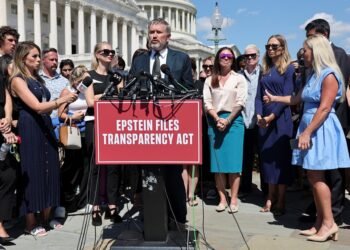 Congress Approves Release of Epstein Files, Trump Expected to Sign
 Trump Says Crown Prince Knew Nothing About Khashoggi Death
 Shadow Fleet at Sea: Europe’s Battle Against Illicit Oil Shipping
 Labour Faces Historic Decline in Wales
 Rama Rebukes Mahmood for Targeting Albanian Families
 Russian Vessel Used Lasers on RAF Pilots, UK Claims
 MP Offers Seat to Help Burnham Challenge Starmer
 Pentagon Officials in Ukraine to Discuss War End
 Turkey to Host COP31 After Breakthrough Deal with Australia
 US Military Team Visits Kyiv Amid War Talks
 WhatsApp Messages Expose Nathan Gill’s Bribery
 Miss Mexico Wins Miss Universe After Walkout Drama
 Venezuela Threatens Nobel Winner Machado with Fugitive Status
 Texas Governor Faces Lawsuit From CAIR
 BBC to Expand Standards Panel and Create Deputy Director Role
 Most Tories Expect to Support a Farage-Led Government
 Trump Envoy to Discuss Ukraine Peace at Kremlin
 Pope Leo XIV Begins Historic Trip to Turkey and Lebanon
 Georgians Defy Government Crackdown After Year of Protests
 India’s Labour Law Overhaul Sparks Fierce Debate
 Video shows Israeli troops kill Palestinians after surrender
 Trump to Recheck Green Cards from 19 Nations After DC Attack
 Carney’s Alberta Pipeline Deal Sparks Immediate Pushback
 Chinese & Japanese Boats Clash Near Disputed Islands
 Putin Meets US Envoy Amid Key Ukraine Peace Talks
 Ireland Boosts Ukraine Aid as Zelensky Visits Dublin
 Kremlin Talks With US Yield No Ukraine Peace Breakthrough
 UK Must Act with Courage and Clarity on Israel-Palestine Conflict, Says Foreign Affairs Committee Report
 The Fight for Trans Safety Is a Fight for Everyone’s Safety — MPs Must Debate This Crucial Issue
 Yvette Cooper Signals Global Momentum Towards Gaza Peace Deal Amid Humanitarian Crisis
 Russia’s Latest Push to Win US Favors Shows Deep Desperation
Trump’s UK Ambassador Urges North Sea Drilling to Strengthen US Ties
Russia’s Latest Push to Win US Favors Shows Deep Desperation
Trump’s UK Ambassador Urges North Sea Drilling to Strengthen US Ties
 Millionaires group urge Reeves to introduce wealth tax to ‘lift kids out of poverty’
 Reeves rejects £1bn plea for NHS redundancy payouts
 Orban Says Ukraine Has ‘No Chance’ as EU Support Continues
 Two National Guard Soldiers Critically Injured Near White House