Published: 19 November 2025 Wednesday . The English Chronicle Desk. The English Chronicle Online
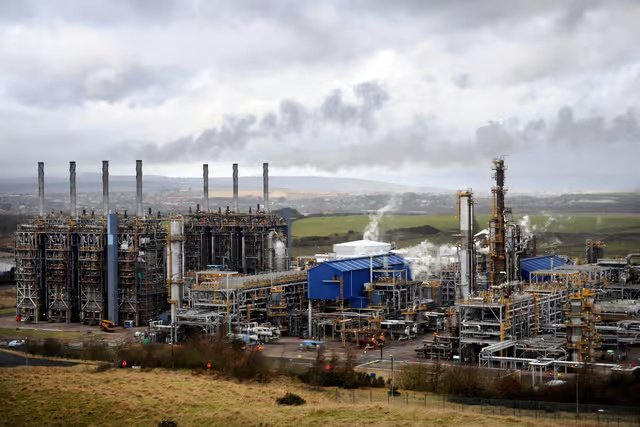
The UK government has confirmed that it will not step in with financial support to keep ExxonMobil’s Mossmorran operations alive, a decision that is expected to reshape the industrial landscape of Fife and send shockwaves through a community long reliant on petrochemical employment. Speaking in the House of Commons on Tuesday evening, Business Minister Chris McDonald outlined in stark terms why the government had ultimately refused to intervene, stating that no viable or realistic business plan had been presented that could justify public investment in the ageing facility.
McDonald told MPs that ExxonMobil’s senior leadership had been frank about the scale of the plant’s problems. According to the minister, the chairman of ExxonMobil UK, Paul Greenwood, had conveyed that the Mossmorran ethylene plant was operating with significant inefficiencies and would require nearly £1bn in upgrades to become competitive and profitable again. This level of investment, he said, simply could not be justified when balanced against the company’s own forecasts and the direction of global petrochemical markets. The minister appeared firm in his position, making clear that government intervention would not alter the plant’s fundamental challenges.
Earlier on Tuesday, the company confirmed that the Fife Ethylene Plant (FEP), a key part of the Mossmorran complex for four decades, would permanently cease operations in February. The announcement marked the end of an era for a facility that had once served as a cornerstone of the UK’s petrochemical sector. In its statement, ExxonMobil said the site no longer had a competitive future given the UK’s economic climate, shifting policy environment and increasingly unfavourable market conditions. Managers warned that hundreds of staff were now facing job losses, with contractors and neighbouring businesses likely to feel the impact in the coming months.
For many living and working in the area, the decision was not entirely unexpected, yet the scale of the implications has left communities reeling. The plant had produced ethylene since the early 1980s through a process known as steam cracking, a method that has increasingly come under scrutiny amid global shifts toward cleaner energy and emissions reduction. ExxonMobil acknowledged that it had been looking for a suitable buyer for several months but concluded that no credible purchaser was prepared to take on the significant cost of modernisation required to maintain operations.

The company said it would carry out a full consultation with employees before closure and committed to ensuring safe operations until production formally ends. After that point, ExxonMobil plans to decommission, clean and demolish the plant, returning the site to a condition suitable for redevelopment. While such assurances provide some clarity, they offer little comfort to workers now grappling with an uncertain future.
Shell, which processes natural gas liquids at its own facility adjacent to the ExxonMobil site, said it would remain unaffected by the closure. Its gas operations at St Fergus in Aberdeenshire, which supply natural gas to Mossmorran, will continue as normal. This separation has spared Shell workers the immediate shock felt by their ExxonMobil counterparts but does not diminish the wider concerns about the long-term health of Scotland’s industrial sector.
In its formal statement, ExxonMobil described the Fife site as a once-vital part of the UK’s chemical production capacity, lamenting that it had been unable to maintain competitiveness in a policy environment that was, in its words, accelerating the exit of critical industries and domestic manufacturing. The spokesperson stressed that no one underestimated the emotional and economic toll the closure would cause. “We understand and regret the impact this will have on our loyal and valued workforce, contractors and local communities,” the company said. “Our priorities are now to support our people through this challenging period while ensuring continued safe operations to the end of production.”
Trade unions reacted swiftly and forcefully. Unite, which represents several workers at the plant, urged ExxonMobil to retract what it called an immediate and unnecessary threat of closure. Bob MacGregor, one of Unite’s senior industrial officers, said the company owed its workforce and the people of Fife far more. “ExxonMobil is one of the richest companies in the world,” he said. “It cannot be allowed to walk away and leave an industrial wasteland in Fife.” His comments echoed long-standing frustrations among trade unions, who argue that multinational energy firms have benefited enormously from UK resources and labour, only to retreat when profits decline or retrofit costs rise.
The GMB union also expressed deep concern. Senior organiser Robert Deavy called for politicians, both in Edinburgh and Westminster, to take responsibility for ensuring a “planned and measured” transition rather than a sudden abandonment. He emphasised that contractors had been blindsided by the announcement, with many feeling there had been insufficient communication about the severity of the site’s challenges. He urged the government to work with unions and local authorities to develop alternative employment opportunities that could prevent long-term economic damage to the region.
Among the contractors themselves, emotions ranged from shock to heartbreak. Ross Colquhoun, who works with Zenith, described the moment he learned the news as devastating. He explained that contractors often work in cycles and expect contracts to eventually end, but many had assumed the core plant workforce, employed directly by ExxonMobil, had secure, long-term roles. “I feel for all the Exxon guys who thought they had jobs for life,” he said. He added that contractors had been sent home until the following Wednesday, leaving them in a state of limbo as they awaited instructions about their immediate future.
Political reaction in Scotland underscored the scale of the crisis. Murdo Fraser, the Scottish Conservative business spokesperson, warned that the closure would “devastate the local economy and the livelihoods of hundreds of skilled workers.” He argued that high-tax, low-growth policies implemented by both the Labour government at Westminster and the SNP-led Scottish Government were driving away investment and hollowing out Scotland’s industrial capabilities. In Fraser’s view, the closure at Mossmorran was part of a broader pattern in which sectors crucial to Scotland’s economic identity were being eroded.

The Scottish Greens offered a different perspective. Mark Ruskell, one of the party’s MSPs, said the closure felt familiar and predictable. He accused ExxonMobil of abandoning workers after years of reporting enormous profits. Ruskell argued that the long-term solution should involve shifting industrial strategy away from dependence on fossil fuel giants and toward a green industrial base rooted in sustainability and stronger worker participation. For him and his party, the Mossmorran closure was a warning about what happens when energy policy remains tethered to multinational corporations whose priorities are shaped by shareholder interests rather than regional stability.
The shockwaves from Mossmorran follow closely on the heels of another major industrial setback: the closure of the Grangemouth oil refinery earlier this year. That refinery, which had operated for more than a century, shut down after its operator Petroineos cited soaring operational costs, leaving more than 400 people without work. The two closures, occurring within a matter of months, have intensified fears that Scotland’s heavy industrial sector may be entering a prolonged period of contraction, raising urgent questions about the future of jobs that have long provided stability, identity and prosperity for local communities.
With the UK government declining to provide financial support and ExxonMobil preparing to wind down operations, local leaders are calling for a coordinated response to ensure that Fife’s economy does not spiral into decline. The sudden loss of hundreds of high-value manufacturing jobs would deliver a major blow not just to workers but also to local businesses and supply chains that service the Mossmorran site. For many families in the region, the coming months will bring profound uncertainty.
What happens next will depend heavily on whether the UK and Scottish governments can work collaboratively with industry, unions and regional authorities to create replacement opportunities, attract new investment and avoid the risk of long-term decline. As the debate over Mossmorran continues, it is clear that the decision not to intervene financially has consequences far beyond a single facility. It marks a turning point in the broader story of Scotland’s industrial future—a story still unfolding as communities brace for the impact of change.
Related News:
 Aston Martin cuts £300m investment as Trump tariffs and weak China demand hit profits.
 Virgin Trains Moves Closer to Challenging Eurostar Monopoly
 Wales May Introduce Four-Day Work Week After Elections
 UK Small Business Owner to Challenge L’Oréal in Tribunal
 Trump’s UK Ambassador Urges North Sea Drilling to Strengthen US Ties
 Ryanair Chief UK Economy ‘Doomed’ Under Labour
 Court Hears Challenge Over Water Bills Funding Sewage Fixes
 Rachel Reeves Set to Break Labour Pledge and Raise Income Tax
 Thinktanks Urge Rachel Reeves to Reform UK Tax System
 Tony Blair think tank warns Rachel Reeves must cut taxes if manifesto broken
MPs Press Rachel Reeves to Hike Gambling Taxes
Tony Blair think tank warns Rachel Reeves must cut taxes if manifesto broken
MPs Press Rachel Reeves to Hike Gambling Taxes
 Cuts to home insulation funding threaten UK climate goals
 Warning as Britons prepare to spend £4 billion this Black Friday
 Troubled drinks giant Diageo names former Tesco boss to lead turnaround push
 Skims Eyes Global Expansion After Reaching $5 Billion Value
 Reeves’s Tax U-Turn Triggers Fresh Jitters in UK Markets
 Global markets drop amid tech sell-off and China slowdown
 PM Highlights UK Business at G20 in South Africa
 Mossmorran Plant Closure Hits Cowdenbeath Hard
 UK Government Borrowing Higher Than Expected
 Netherlands Suspends Nexperia Takeover Amid China Talks
 Minister Denies Budget Leaks Have Harmed UK Economy
Budget 2025: Reeves Drops Economic Growth Reference
Minister Denies Budget Leaks Have Harmed UK Economy
Budget 2025: Reeves Drops Economic Growth Reference
 Expanded Version – Black Friday Shoppers Warned Over ‘Dud Deals’
 India’s Labour Law Overhaul Sparks Fierce Debate
 Carney’s Alberta Pipeline Deal Sparks Immediate Pushback
 Black Friday Footfall Falls as UK Shoppers Hold Back Amid Economic Concerns
 Starmer Says Labour’s Economic Plan Needs Years to Deliver
 Rising Water Bills Lift Troubled Thames Back to Profit
 Prada buys Versace for $1.38bn, expanding luxury fashion empire
 Modi’s London Visit Seals Historic UK-India Trade Pact Amid Global Tensions
 UK Jobs Market Faces Strain as Employers Cut Bonuses and Hiring Amid Economic Slowdown
 China’s crackdown on civil servant perks sparks economic concerns
 Inflation Latest: Cost of Living Expected to Rise Again in Key Figures Released Today
 Retail Sales See Uptick Amid Errors and Delays as ONS Faces Scrutiny
 UK House Prices Hit Record £299,331 as Market Shows Steady Growth
Shein UK Faces Allegations of Shifting Majority of Profits to Singapore to Reduce UK Tax
UK House Prices Hit Record £299,331 as Market Shows Steady Growth
Shein UK Faces Allegations of Shifting Majority of Profits to Singapore to Reduce UK Tax
 UK Retail Sales Rise in August, but Tax Concerns Loom Over Festive Period
 Merck Abandons £1bn London Research Hub and Cuts 125 Jobs in Blow to UK Life Sciences
 Big Pharma Investment Freeze Puts UK Life Sciences Sector Under Strain
 UK Labour Market Shows Signs of Cooling as Wage Growth Slows and Redundancies Rise
 UK Wage Growth Remains High, But Cost of Living Pressures Bite
 Next Shares Slide Amid Warning on Weak UK Growth and Jobs
 Dagenham Left in Limbo After Smithfield and Billingsgate Market Relocation Cancelled
 King Charles Earns Over £1 Million from Duchy Land Linked to Scrapped HS2 Project
 Vodafone Franchisees Sound Alarm: Mental Health Toll of Commission Cuts Revealed Years Before £120m Court Battle
 UK Government Backs Return of International Rail Travel to Kent Stations
 GSK Chief Executive Emma Walmsley to Step Down After Eight Years at the Helm
 AstraZeneca to List on New York Stock Exchange While Retaining London Ties
 Retailers Warn Tax Rises Could Prolong Inflation as Shop Prices Climb
 Marks & Spencer Staff to Work on Boxing Day for First Time in Five Years Amid Cost-Cutting Measures
UK Housing Market Returns to Growth Amid Signs of Stability and Regional Variation
Marks & Spencer Staff to Work on Boxing Day for First Time in Five Years Amid Cost-Cutting Measures
UK Housing Market Returns to Growth Amid Signs of Stability and Regional Variation
 Delivery Apps Could Double the Cost of Your Groceries, Warns Consumer Watchdog
 Kemi Badenoch Unveils ‘Golden Rule’ to Halve Spending Cuts for Deficit Reduction at Tory Conference
 Real living wage set to rise nearly 7% for UK workers in 2026
 Lotto result jackpot draw halted due to technical glitch
 Rachel Reeves to lead UK trade push in Saudi Arabia amid rights debate
 Reeves Faces Setback as Labour May Miss Homes Target
 US Super-Rich Are Draining Planet’s Safe Climate Space
 Green Party Surges Past Labour in Latest UK Poll
 Celebrities and Charities Demand UK Government Act on Child Poverty
 ABF May Split Primark from Food Division Amid Tough Market
 UPS Cargo Plane Crash in Kentucky Kills Seven
 M&S Profits More Than Halve After Cyber-Attack
 Oprah enjoys Meghan’s jam on English muffins
 Earl of Yarmouth Faces £1.3m Legal Bill Over Family Estate
 North Sea oil workers must lose weight or face job loss
 Crisis charity to become landlord amid UK housing emergency
 Millionaires group urge Reeves to introduce wealth tax to ‘lift kids out of poverty’
 From Lego to Pokémon: How Adults Are Driving UK Toy Market Growth
 UK toy market enjoys bumper year as ‘kidults’ fuel demand
 New laws to bolster UK’s defences against cyber attacks on NHS, transport and energy
 Trump Moves to Cut Coffee and Banana Tariffs in Latin America Deals
 Japan Tourism Stocks Slide Amid China-Taiwan Row
 Canada Passes Carney’s First Budget in Tight Parliamentary Vote
 UK Taskforce Unveils Plan to Streamline Nuclear Reactor Rules
Reeves to Crack Down on Benefit Fraud While Lifting Two-Child Limit
UK Taskforce Unveils Plan to Streamline Nuclear Reactor Rules
Reeves to Crack Down on Benefit Fraud While Lifting Two-Child Limit
 Steel billionaire Lakshmi Mittal reportedly leaves UK
 English Mayors Set to Introduce Tourist Taxes
 Virgin Media Fined £23.8m Over Telecare Safety Failures