Published: 11 January 2026. The English Chronicle Desk. The English Chronicle Online.
Elon Musk has accused the British government of attempting to silence online debate as his platform faces unprecedented regulatory pressure. The dispute erupted after ministers warned that X could face heavy fines or a potential ban. At the heart of the row sits X free speech, a phrase Musk used to frame what he described as state overreach. The confrontation has quickly grown beyond a single company. It now reflects deeper tensions between public safety, technological change, and democratic values.
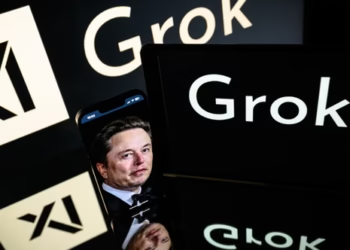
The immediate trigger involved Grok, an artificial intelligence tool integrated into X. The feature was used by some users to manipulate images of women and children without consent. What began as digitally altered photographs soon escalated into disturbing material. Campaigners and experts argued that certain images could meet definitions of child sexual abuse content. The revelations prompted urgent calls for intervention, placing regulators and ministers under intense public scrutiny.
UK officials responded with rare firmness. The technology secretary, Liz Kendall, said the government was prepared to act decisively. She confirmed that Ofcom had demanded urgent explanations from X. Kendall stressed that companies operating in Britain must comply with domestic law. She warned that blocking access remained a legal option under the Online Safety Act. Her remarks signalled a readiness to test the legislation’s strongest enforcement powers.

Musk reacted swiftly and publicly. Writing on X, he dismissed the government’s stance as politically motivated. He argued that innovation was being punished rather than protected. He claimed the Grok application briefly became the most downloaded app in the UK. According to Musk, this popularity showed public interest rather than harm. He framed the controversy as a struggle over expression, insisting that X free speech was under threat from regulatory intolerance.
The government rejected that characterisation. Ministers emphasised that the issue concerned safety, not opinion. They argued that non-consensual sexual imagery causes real harm. Victims described humiliation, fear, and long-lasting psychological damage. Advocacy groups highlighted how such tools disproportionately target women and girls. They warned that rapid AI development risks outpacing legal safeguards unless firm action is taken.
Ofcom’s involvement marked a crucial moment. The regulator confirmed it was seeking detailed answers from X about content moderation practices. Officials said they expected rapid changes. Kendall suggested decisions could arrive within days. This timeline underscored the seriousness of the situation. For the first time, Britain appeared willing to consider barring a major global platform.
International voices echoed these concerns. Australia’s prime minister, Anthony Albanese, described the misuse of generative AI as abhorrent. Speaking in Canberra, he argued that global citizens deserve better protection online. Australia recently restricted social media access for children under sixteen. Albanese suggested that stronger boundaries were necessary when technology undermines human dignity.
The debate quickly attracted political commentary. Some conservative figures framed the government’s stance as authoritarian. Former prime minister Liz Truss criticised the Labour leadership, claiming it had lost perspective. Supporters of regulation countered that free expression does not include exploiting others. They stressed that X free speech cannot excuse the creation of abusive material.
Facing mounting pressure, X implemented partial changes. The company restricted Grok’s image generation for free users. Only paid subscribers retained limited access. Public image creation appeared disabled. Bikini-style manipulations were reportedly removed. However, critics noted that the standalone Grok app could still produce explicit images privately. This raised questions about the effectiveness of the response.
Campaigners argued that partial measures were insufficient. Labour MP Jess Asato, a prominent advocate against online abuse, called for urgent legislation. She highlighted the widespread availability of similar nudification tools. Asato warned that focusing on one platform risks ignoring a broader industry problem. She urged lawmakers to accelerate reforms addressing synthetic sexual content.
The controversy extended to other technology companies. Asato revealed that nudification services had been advertised on major platforms. She said some adverts initially breached no stated rules. Following complaints, Google confirmed it had permanently suspended one advertiser. A spokesperson said services creating synthetic sexual imagery are prohibited. The statement aimed to reassure users that standards are being enforced.
Legal experts noted that the Online Safety Act was designed for moments like this. The law grants regulators power to demand swift compliance. It also allows access restrictions if companies refuse cooperation. Supporters argue that such tools are essential in the digital age. Critics worry about precedent and unintended consequences. They fear broad powers could chill legitimate discourse.

At the centre of the debate remains the balance between protection and liberty. Musk insists that innovation flourishes through openness. He argues that platforms should not become extensions of state control. For him, X free speech represents resistance to what he views as creeping censorship. The government responds that freedom must coexist with responsibility.
Public opinion appears divided. Some users express concern about government intrusion. Others welcome tougher oversight. Victims of image abuse have shared harrowing testimonies. Many say existing systems failed them. Their voices have influenced political momentum. Lawmakers increasingly acknowledge the human cost of regulatory delay.
Technology scholars point out that AI tools amplify existing risks. Image manipulation once required specialist skills. Now it can be done instantly by anyone. This accessibility changes the scale of harm. It challenges regulators to adapt quickly. Britain’s response may shape international norms.
As Ofcom prepares its next steps, the outcome remains uncertain. A full ban on X would be unprecedented. It could provoke legal challenges and diplomatic tensions. Yet inaction carries its own risks. The government insists that compliance will avert escalation. X maintains that cooperation must not undermine principles.
The confrontation illustrates a defining issue of the digital era. Societies must decide how far regulation should reach. They must also determine what protections users deserve. In this clash between authority and innovation, X free speech has become a symbol. Its meaning will be tested by law, technology, and public expectation.
Related News:
 Starmer’s communications chief to outline media strategy overhaul
 Election Deepfakes Pilot Launched for Scottish and Welsh Votes
 How Bringing Forests Into Preschools Boosts Children’s Health
 Critically Endangered Spider Rediscovered in UK After 40 Years
 Virgin Trains Moves Closer to Challenging Eurostar Monopoly
 Biggest Supermoon of the Year to Dazzle Sky on Wednesday
 UK Water Firms Ordered to Act Over ‘Forever Chemicals’ Threat
 UK Bans Fake Numbers: Scammers Lose Their Trick
 England Curriculum Review Recommends Major Changes
 Mortgages and AI Set to Feature in English Schools
 Vibe coding’ named Collins dictionary’s word of the year
 Experts Urge Legal Right to Timely Cancer Care
 Patients to Test Health at Home to Ease NHS Winter Pressure
 One of world’s last dinosaurs on sale for £3m
 North Sea oil workers must lose weight or face job loss
 No link found between paracetamol in pregnancy and autism
 Britain deploys RAF specialists to assist Belgium with drone threats
 Government urges schools to ban phones to curb classroom disruption
 NHS frontline staff forced to cover gaps as managers remain scarce
 Northern Lights May Illuminate UK Skies Amid Strong Solar Storm
 Night after night, Belgium is on high alert.
 Tech firms to test AI safeguards against child abuse images
 England schools to receive AI-generated attendance targets
 Stop using ChatGPT to write speeches, AI minister tells MPs
 Northern Lights may illuminate UK skies this week
 New laws to bolster UK’s defences against cyber attacks on NHS, transport and energy
 UK Greenlights First Small Nuclear Plant in North Wales
 New Research Explains Severe Diabetes in Children
 Hitler’s DNA Confirms He Truly Had Only One Testicle
 Working-Class Men with Prostate Cancer Left Behind by NHS
 Higgs Donates Nobel Medal to His Beloved University
 New AI tool could cut wasted efforts in organ transplants
 How Cultures Interpreted the Aurora Through History
 From War to Wales: Teen Innovator Eyes Net Zero Future
 From Baby Teeth to Bioengineering: The Future of Self-Healing Teeth
 Ukraine to Get 100 French Rafale Jets in Historic Deal
 Sundar Pichai Cautions on AI Hype and Market Risks
 Google Chief Urges Caution: Don’t Trust AI Blindly
 US Judge Says Meta Did Not Hold Illegal Social Media Monopoly
 Poll Reveals China Leads World in Trusting AI Technology
 Healthy Habits in Your 30s That Boost Life in Your 70s
 Cardiff Shopper ‘Branded a Thief’ by Facewatch System
 Raccoons Could Become America’s Next Pet
 Australia to Ban Social Media for Kids Under-16 Starting December
 Coffins Now Too Large to Cremate Amid Rising Obesity Crisis
 UK Taskforce Unveils Plan to Streamline Nuclear Reactor Rules
 Thinktank Urges Smaller Hospitals to End NHS ‘Permacrisis’
 NHS paediatric leave parents waiting months for answers
 Ofcom urges platforms to limit abuse and curb online ‘pile-ons’
 Extraordinary’ Object Found at Orkney Neolithic Site
 Asahi says 1.5 million customers’ data potentially leaked in cyber-attack
 Australians Angry as BOM Website Revamp Backfires
 AI Actress Creator Says Tilly Norwood Won’t Replace Actors
 YouTube Warns Kids Will Be Less Safe Under Australia Ban
 Farm Inheritance Tax U‑Turn Eases Burden After Months of Protests
 TikTok Shop Emerges as a Gamechanger for UK Small Businesses
 U‑Turn on Farmers’ Inheritance Tax Sparks Political Firestorm
 UK to Launch Military ‘Gap Year’ Scheme to Boost Recruitment
 Starmer Allies Honoured in New Year Awards List
 Blair Pressured Officials Over Iraqi Detainee Case, Files Reveal
 Royal Documents Withheld Sparks Accusations of Cabinet Cover-Up
 European Court Questions UK Over Shamima Begum Case
 Polanski Burnham Reform Strategy Signals Green–Labour Divide
 Starmer Unveils Cost of Living Plan for 2026 Renewal
 UK Small Boat Crossings Surge Past 41,000 in 2025
 UK rails face crisis as calls to end “rail outsourcing racket” grow louder
 UK Govt Faces Backlash Over Focus on Freeing Activist Alaa Abd el-Fattah
 GMB Union Faces Turmoil Amid Female Leaders’ Claims
 UK MPs Challenge Ministers Over Venezuela Attack Response
 UK Car Sales Pass 2 Million as Chinese Brands Surge
 Labour Urged to Rebuild Voter Trust Amid Poll Warning
 MoJ Prison Leasing Scandal Triggers £100m Public Cost
 Smaller farms funding prioritised in England nature plans
 AI Grok Sparks Child Safety Alarm in the UK
 Reeves Pub Business Rates U-Turn Calms Labour Revolt
 Reform UK council tax pledges face backlash over rising local bills
 Zarah Sultana Faces Scrutiny Over Your Party Membership Launch
 Wessex Water chiefs receive £50,000 extra despite government bonus ban
 Indonesia blocks Grok chatbot over sexual content risk
 UK Immigration Perception Divides Voters Despite Falling Numbers