Published: 13 January 2026. The English Chronicle Desk. The English Chronicle Online.
Australia faces a crucial decision as Kevin Rudd prepares to leave his role as ambassador in Washington early. The search for a Rudd successor has ignited speculation, with names ranging from former Labor ministers to senior public servants and career diplomats. Rudd, who earned praise for stabilising Australia-US relations, announced his early departure to return to the Asia Society thinktank, leaving a vacancy that Prime Minister Anthony Albanese and Foreign Minister Penny Wong must fill. Analysts stress that selecting the right Rudd successor is essential to maintain diplomatic continuity and strategic engagement with the United States.
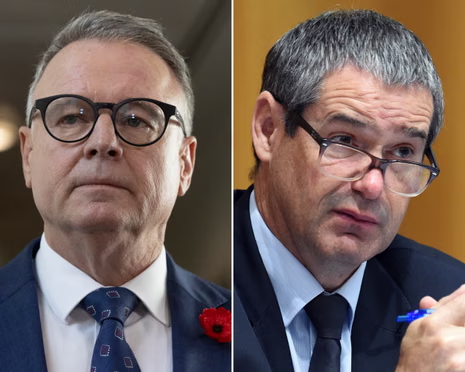
Labor sources suggest that former ministers Joel Fitzgibbon and Stephen Conroy are under consideration. Both served during Rudd’s prime ministership and retain influence in political circles. Fitzgibbon, once defence minister, left parliament before the 2022 federal election and now leads a lobbying and advisory business in Canberra. Conroy, who has been a political commentator and lobbyist, previously criticised US President Donald Trump, creating potential diplomatic sensitivities. Trade and Tourism Minister Don Farrell could also be a surprise candidate, given his experience navigating the US tariff regime and close ties to Albanese.

Senior public servants remain strong contenders. Defence Secretary Greg Moriarty, formerly Australia’s ambassador to Iran and Indonesia, is considered a highly capable candidate. Moriarty’s expertise in strategic alliances, including the Aukus nuclear submarine agreement, positions him as an attractive choice for sustaining Australia-US collaboration. Jennifer Parker, a defence analyst, highlighted Moriarty’s understanding of alliance mechanisms and influence in advancing strategic initiatives, saying he would be an excellent Rudd successor.
Career diplomat Justin Hayhurst, who recently completed his tenure as ambassador to Tokyo, is another option. Hayhurst has extensive experience in senior public service roles and postings in China and the Philippines, making him well-versed in international relations. Observers note that Hayhurst’s non-partisan profile could offer stability amid a politically charged environment in Washington ahead of the November midterm congressional elections.
The possibility of former Western Australian Premier Mark McGowan being considered underscores the government’s openness to selecting someone with high political stature, though analysts caution that a non-political choice may be more strategically sound. Bruce Wolpe, a senior fellow at the United States Studies Centre, suggested that appointing a senior public servant rather than a former politician could avoid polarising factions within the US political landscape, particularly among Trump supporters. Wolpe cited Dennis Richardson’s appointment from 2005 to 2009 as a model for such a decision.
Political considerations loom large. Conroy’s previous comments describing Trump as “moronically stupid” might complicate his candidacy, whereas Fitzgibbon’s and Farrell’s experience with defence and trade issues could facilitate smoother engagement. Wong emphasised that the selection would prioritise the candidate’s skills and attributes rather than political background. She praised Rudd’s tenure, noting his discipline, intellect, and tireless efforts in advancing Australia’s interests in Washington.
Rudd’s achievements have been recognised across the political spectrum. Former ambassador Arthur Sinodinos lauded his work in advancing critical minerals legislation and promoting Australia’s financial interests, while Joe Hockey commended Rudd’s consistent presence on Capitol Hill and ability to navigate complex US political systems. Analysts agree that Rudd exceeded expectations in maintaining bipartisan cooperation and ensuring strategic objectives were met, reinforcing the importance of appointing a competent Rudd successor.
Albanese has remained cautious regarding speculation, refraining from naming potential candidates, including former Prime Minister Scott Morrison. Morrison’s close relationship with Trump and current role as a defence industry lobbyist could make him a politically sensitive choice. Farrell declined to comment on the role, affirming confidence in the prime minister and foreign minister to select a suitable representative for Australia.

As deliberations continue, the decision over Rudd’s successor will signal the government’s priorities in foreign relations, alliance management, and strategic diplomacy. Whether the appointment falls to a former minister, a seasoned diplomat, or a senior public servant, experts agree that the candidate must be equipped to navigate the complex political and strategic landscape of US-Australia relations. Analysts stress that the incoming ambassador will play a critical role in maintaining momentum on Aukus, trade partnerships, and broader geopolitical collaboration, ensuring that Australia’s voice remains influential in Washington.
Selecting a Rudd successor requires balancing political experience with diplomatic skill, an understanding of strategic alliances, and the ability to engage effectively across both US political parties. The decision will have implications not only for bilateral relations but also for Australia’s long-term strategic positioning in the Indo-Pacific. As the Albanese government evaluates potential candidates, observers expect a careful weighing of credentials, experience, and capacity to sustain the positive trajectory established during Rudd’s tenure. The appointment is likely to be announced in the coming months, concluding a period of careful consideration and signalling Australia’s continued commitment to robust engagement with the United States.
Related News:
 Shock US Raid: Maduro Pleads Not Guilty in Manhattan Court
 Trump Plans Venezuela Meeting, Warns of Cartel Land Strikes
 Mandelson apologises over Epstein ties after public scrutiny
 British Woman in Iran ‘Losing Hope’ Amid Ongoing Detention
 BBC Journalist Held and Interrogated in Vietnam
 Green Party Surges Past Labour in Latest UK Poll
 Celebrities and Charities Demand UK Government Act on Child Poverty
 Army Officers Orders to Cut Ties with Men-Only Clubs
 Trump’s UK Ambassador Urges North Sea Drilling to Strengthen US Ties
 FBI Director Kash Patel Defends Girlfriend Amid Government Jet Claims
 UK University Suspends Human Rights Research Following Pressure from China
 French Taxi Driver Cleared in David Lammy Theft Case After Fare Dispute
 UK University Faces Counter-Terror Probe Over China Pressure
 Labour immigration crackdown could cost UK £4.4bn
 Boris Johnson accused of undermining BBC leadership
BBC to Apologise Over Edited Trump Speech Amid Backlash
Boris Johnson accused of undermining BBC leadership
BBC to Apologise Over Edited Trump Speech Amid Backlash
 Britain deploys RAF specialists to assist Belgium with drone threats
 ‘Reckless’ cuts to victims’ services will cost more than they save
 Millionaires group urge Reeves to introduce wealth tax to ‘lift kids out of poverty’
 Starmer Faces Growing Dissent as Labour MPs Weigh Leadership Challenge
 Reeves rejects £1bn plea for NHS redundancy payouts
 Politics latest: Starmer ‘will fight any leadership coup’ as Streeting denies attempt to oust Labour PM
 Ukraine-Russia war latest: Putin’s troops exploit bad weather to force Kyiv withdrawal from multiple towns
 PM Condemns Leaks, Vows Loyalty to Ministers and Stability
 Major Rent Reform Ends No-Fault Evictions in England
 Peers Flood Assisted Dying Bill with 942 Amendments
 England’s Special Needs Support Faces Breaking Point
 Senator John Fetterman Hospitalized After Fall from Heart Flare-Up, Keeps Sense of Humor
 US Justice Department Files Lawsuit Against California Over Partisan Voting Maps
 MoD warned over Excel risks before Afghan data breach
 Greene Pushes Epstein Files Amid Trump Fallout
 Trump Deploys DHS to Charlotte in Major Arrest Operation
 December Run-Off in Chile as Election Produces No Winner
 UK Asylum Overhaul Sparks Debate Over Human Rights and Deportations
 UK Candidate Moved to Safe House After Election Threats
 Canada Passes Carney’s First Budget in Tight Parliamentary Vote
 South African Detained After Neo-Nazi Rally in Australia
 UK Warns China After MI5 Issues Espionage Alert
 Federal Court Blocks Texas Republican Maps Over Racial Bias
 Shadow Fleet at Sea: Europe’s Battle Against Illicit Oil Shipping
 Labour Faces Historic Decline in Wales
 Rama Rebukes Mahmood for Targeting Albanian Families
 Pentagon Officials in Ukraine to Discuss War End
 PM Highlights UK Business at G20 in South Africa
 Kate Forbes: Motherhood Harder Than Politics
 Venezuela Threatens Nobel Winner Machado with Fugitive Status
 Most Tories Expect to Support a Farage-Led Government
 Labour MP claims devolution bill is ‘blatant discrimination’ against Cornwall
 Trump Envoy to Discuss Ukraine Peace at Kremlin
 Millions Face Higher Taxes Under Reeves New Budget
 Peers Get Extra Time to Debate Assisted Dying Bill
 Planned Palestinian Flag Raising at Belfast City Hall Faces Delay Amid Legal Concerns
 Georgians Defy Government Crackdown After Year of Protests
 US National Guard Member Killed in DC Shooting
 India’s Labour Law Overhaul Sparks Fierce Debate
 Video shows Israeli troops kill Palestinians after surrender
 ICC to Rule on Duterte’s Provisional Release
 Jordan Bardella: France’s Young Presidential Contender
 Starmer Says Labour’s Economic Plan Needs Years to Deliver
 EU plans $105bn Ukraine aid using frozen Russian assets
 Global campaign launched to free Palestinian leader Barghouti
 Culture secretary to review Telegraph takeover by Daily Mail owner
 Andy Burnham Apologises for Past LGBTQ+ Police Discrimination
 Khaleda Zia Death in Bangladesh: First Female PM Dies at 80
 Russia losses Ukraine war peace talks intensify amid rising deaths
 Zelenskyy Accuses Russia of Sabotaging Peace Talks
 George Clooney and Amal Clooney Receive French Citizenship
 Khaleda Zia Laid to Rest with State Honour in Dhaka
 Albanese Opens Door to Bondi Royal Commission Amid Rising Pressure
 Trump Escalates Minnesota Immigration Surge Amid Rising Tensions
 Capitol Attack Anniversary Sparks Deep Political Divide
 Saudi Officials Report Zubaidi Flee Before Yemen Peace Talks
 UK Targets in New York Bomb Threat Hoax: Man Jailed
 Gambia Supreme Court Hears Case to Overturn FGM Ban
 Iran Protesters Defy Crackdown as Violent Clashes Intensify
 Homeland security agents deployed amid Minneapolis protests
 Trump escalates Fed clash as Justice probes Jerome Powell
 Plans to Limit Jury Trials Face Retreat After Mounting Opposition
 Trump targets Iran trade with 25% tariff warning
 Hanson and Joyce Use Rinehart Jet to Tour Flooded Queensland