Published: 15 January 2026. The English Chronicle Desk. The English Chronicle Online.
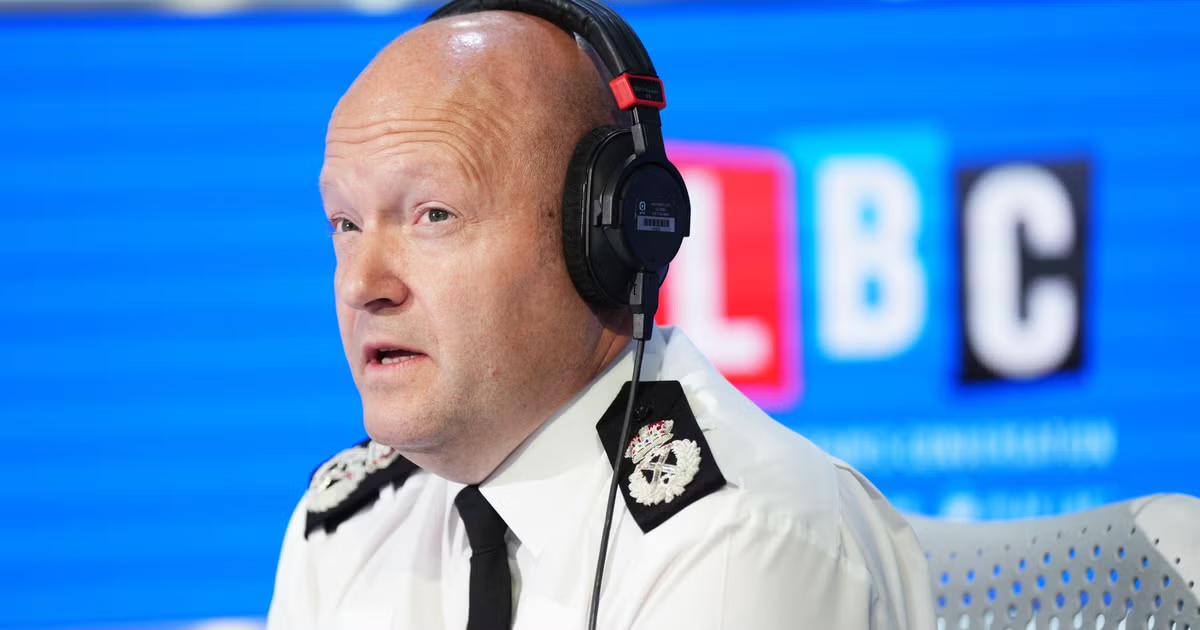
The West Midlands police chief remains in his position despite intense scrutiny over the Maccabi Tel Aviv ban. Concerns over intelligence used to justify the ban have sparked widespread calls for a Guildford resignation, raising questions about public trust and police accountability. Craig Guildford, who heads the force, insists he will not step down immediately, highlighting ongoing tensions between political authority and operational independence within law enforcement structures.
The dispute arose after a report by Sir Andy Cooke, chief inspector of constabulary, identified multiple errors in how the West Midlands force assessed the risk of Maccabi fans attending a match. The threat had been exaggerated, leaving safety officials with few options but to impose the ban. Cooke described the failures as “carelessness rather than deliberate distortion,” emphasizing leadership shortcomings but ruling out antisemitism or political pressure as motivations.

Home Secretary Shabana Mahmood stated publicly that she had lost confidence in Guildford, marking the first time in twenty years that a serving police chief faced such a declaration. She stressed that current law prevents her from directly enforcing a Guildford resignation, calling instead for reforms to allow greater accountability in similar cases. Mahmood criticized the force for failing to exercise proper strategic oversight, especially at senior levels, and warned that intelligence errors undermined public trust.
Central to the controversy was Guildford’s reliance on intelligence reportedly provided by Dutch police regarding a Maccabi match in Amsterdam. The West Midlands police assumed fan violence, but Dutch testimony contradicted those claims, severely undermining their credibility. Multiple exaggerated reports, including alleged attacks on local communities and ties to military organizations, were cited in official documents, further intensifying demands for a Guildford resignation.
Community leaders and elected officials have weighed in, arguing that Guildford’s leadership failures justify his removal. Ruth Jacobs, chair of the Birmingham and West Midlands Jewish Community, called for accountability, emphasizing that public confidence relies on trustworthy decision-making. The mayor of West Midlands, Richard Parker, noted that shifting explanations, withdrawn evidence, and intelligence errors make the chief constable’s position untenable, adding urgency to the push for a Guildford resignation.
While some, including independent MP Ayoub Khan, defend Guildford against what they describe as a political “witch hunt,” broader opinion stresses the importance of transparency. The Israeli embassy requested an official apology and measures to prevent recurrence, reflecting international concern. Guildford himself has apologized for inaccuracies in intelligence, including a non-existent match against West Ham, showing that errors, even unintentional, have significant consequences.

The situation highlights the tension between police independence and political oversight, illustrating how intelligence failures can erode trust at national and international levels. Ultimately, the debate over a Guildford resignation underscores the need for clear accountability mechanisms and careful leadership, particularly when public safety and community relations are at stake.
Calls continue for the police and crime commissioner, Simon Foster, to decide whether to initiate formal proceedings for dismissal, leaving the final outcome uncertain. Regardless of the decision, the controversy has already influenced debates on operational transparency and the responsibilities of senior officers. The next few weeks will be critical in determining whether Guildford remains in his post or whether a Guildford resignation finally restores public confidence.
Related News:
 Army Officers Orders to Cut Ties with Men-Only Clubs
 Trump’s UK Ambassador Urges North Sea Drilling to Strengthen US Ties
BBC to Apologise Over Edited Trump Speech Amid Backlash
Trump’s UK Ambassador Urges North Sea Drilling to Strengthen US Ties
BBC to Apologise Over Edited Trump Speech Amid Backlash
 Britain deploys RAF specialists to assist Belgium with drone threats
 Millionaires group urge Reeves to introduce wealth tax to ‘lift kids out of poverty’
 Reeves rejects £1bn plea for NHS redundancy payouts
 PM Condemns Leaks, Vows Loyalty to Ministers and Stability
 Major Rent Reform Ends No-Fault Evictions in England
 Greene Pushes Epstein Files Amid Trump Fallout
 December Run-Off in Chile as Election Produces No Winner
 Shadow Fleet at Sea: Europe’s Battle Against Illicit Oil Shipping
 Georgians Defy Government Crackdown After Year of Protests
 ICC to Rule on Duterte’s Provisional Release
 Starmer Says Labour’s Economic Plan Needs Years to Deliver
 Ley Triumphs in Royal Commission Debate, Paving Way for Unity
 Mandelson apologises over Epstein ties after public scrutiny
 Australia grants Asio powers to designate hate groups under new laws
 Trump Policies Boost China’s Global Rise, Survey Finds
 Kyrsten Sinema Faces High-Profile Lawsuit Over Marriage Interference
 Iran unrest slows under brutal crackdown and global tensions
 Starmer Resists Matching Trump Amid Greenland Tensions
 UK Government Borrowing Drops to £11.6bn in December
 Andy Burnham and the Labour Rift Over Power and Leadership
 Huge mistake: Labour blocks Burnham from byelection bid
 Labour targets Greens on drugs in Gorton Denton byelection
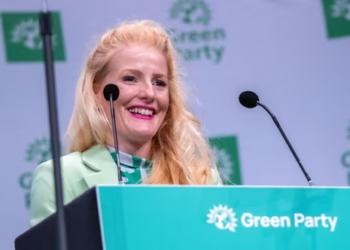 Greens nominate Hannah Spencer for Gorton and Denton byelection
 Thousands Protest ICE Operations in Nationwide US Day of Action
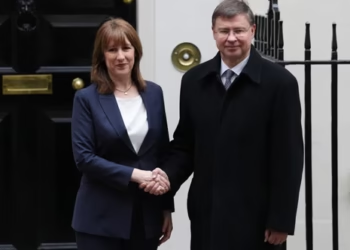 EU Signals Open Mind on UK Customs Union Talks
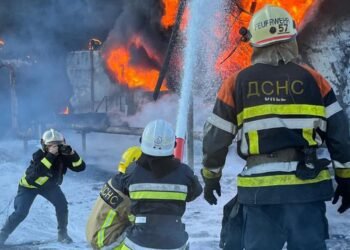 Starmer Condemns ‘Depraved’ Russian Strikes on Ukraine
 Labour Thinktank Row Deepens Over Journalist Probe Claims
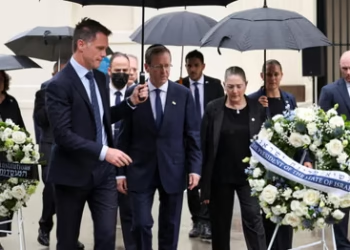 Herzog visit sparks protests across Australian cities
 Cabinet Secretary Shake-Up Triggers Due Diligence Warning
 Starmer Faces Inquiry Calls Over Thinktank Probe
 Royal Mail Delivery Crisis Deepens Amid Weather Chaos
 UK shelves £110m border project amid trade strain
 AFP Reviews Pauline Hanson Comments
 California Democrats Vow Trump Reckoning
 Trump Tariffs Threat Spark UK and EU Alarm
 Trump’s Surgeon General Pick Evades Vaccine Questions
 The Dangerous Rise of Remigration Across Modern Europe
 US to offer passport services in West Bank settlements
 Green Party Stuns Labour in Gorton and Denton Byelection
 Labour Together scandal sparks clean break vow
 Iran Defiance Grows Amid US-Israel War Pressure
 Starmer Praised for Stance on Trump and Iran Conflict
 NHS Plans to Cut Overseas Workers Labeled Overambitious
 Danish Election Deadlock Shakes Frederiksen’s Grip
 Pope Rebukes Leaders for War as Middle East Tensions Rise
 Army Probes Apache Flyover at Kid Rock’s Nashville Estate
 Farage Shuns Truss as US Right-Wing Roadshow Hits London
 Chancellor Meets Supermarket Chiefs Over Living Costs
 Italian Town Buys Mussolini Villa to Keep Away Fascist Fans
 Report Says Pezzullo Acted ‘Recklessly’ in Dealings
 Suspected Plot Targets Pipeline Before Hungary Vote
 Trump Defiant After Washington Hotel Shooting
 Starmer Survives Mandelson Rebellion
 Trump approval plunges amid Iran war fears
 Tough Fiscal Realities Await Next Scottish Government
 US ‘Narco Boat’ Strikes Draw Global Outcry
 One Nation Candidate’s Surprising Ties to Independents
 Labour Members Doubt Starmer Future as Burnham Leads Poll
 Reform UK Faces Crisis as Newly Elected Councillors Resign
 Tony Abbott Returns as New Liberal Party President
 Discontent grows around Putin amid war strain
 Secret Role of UK Security Services in Troubles Amnesty Law
 The Hidden Crisis Eroding Trust in British Communities
 Deepfake Abuse on X Sparks Safety Concerns for Dissidents
 Starmer Resolves to Fight Burnham in Leadership Battle
 US Courts Back Trump on Park Signage Removals
 Hollie Ridley to Step Down as Labour General Secretary
 Trump’s Mount Rushmore Speech: A Divisive Anniversary
 Jarvis Urges Burnham to Secure 3.5% Defence Spending
 Trump’s Red-Card Intervention Hurts the US World Cup
 Farage Warns Sky News Following Financial Inquiry
 Le Pen to Run for President Despite Embezzlement Conviction
 Reform UK Finances Face Deep NCA Probe
 Trump Swaps Planes Amid Iran Tensions
 Ann Widdecombe, Formidable Political Figure, Dies at 78
 Ukraine Creates Long-Range Strike Command
 Houthis Strike Saudi Arabia as Middle East Tensions Rise