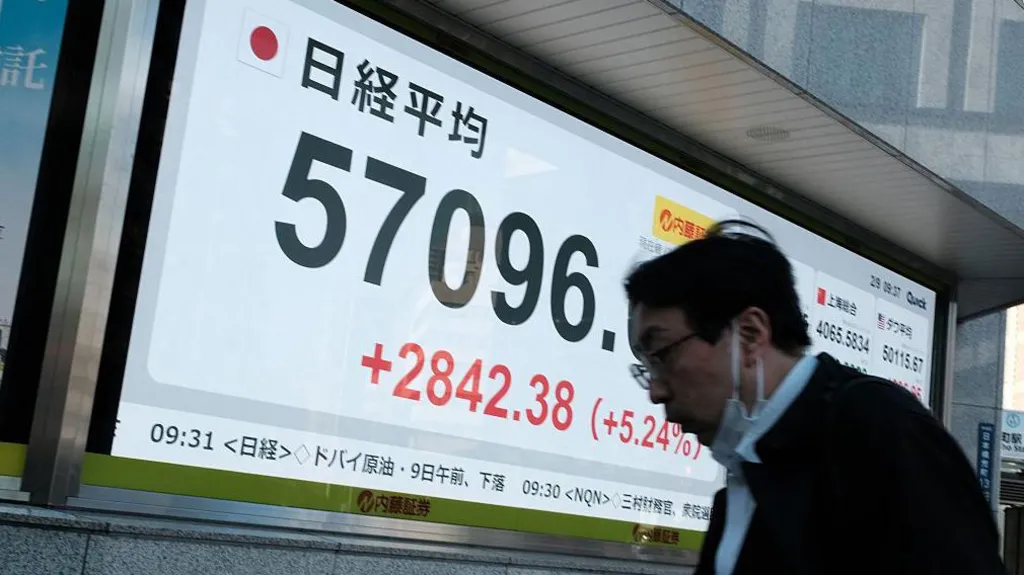
Tokyo / Financial Desk — February 9, 2026
Japanese stocks stormed to fresh record highs on Monday as investors responded with enthusiasm to Prime Minister Sanae Takaichi’s historic election victory, with the benchmark Nikkei 225 surging more than 5 per cent and broader equity indexes rallying broadly across Tokyo and Asian markets. Takaichi’s landslide win and her ruling Liberal Democratic Party’s supermajority removed political uncertainty and fuelled optimism about fiscal stimulus, tax cuts and economic reform under her leadership.
The Nikkei 225 jumped 5.7 per cent to a record 57,337.07, while the Topix climbed over 3 per cent, as markets embraced the clear political mandate delivered by Sunday’s snap election. Analysts said that the decisive result — giving Takaichi’s coalition control of two-thirds of the House of Representatives — cleared the path for pro-growth policies and reinforced confidence among domestic and international investors.

Market Reaction and Policy Expectations
Investors interpreted the decisive election outcome as a signal of policy continuity with an emphasis on fiscal support and tax incentives, especially potential cuts in the consumption tax and expanded government investment in key sectors such as technology, defence and infrastructure. This “Takaichi trade” — a wave of buying across equity markets — reflected soaring expectations for strong economic growth and a stable political backdrop in Japan’s long-stagnant economy.
Tokyo’s main stock benchmark climbed to all-time highs as traders bet that political clarity would support corporate earnings and embolden plans for fresh fiscal measures. Strong gains were seen across major sectors, including heavy industry, technology, semiconductor and financial stocks, as market breadth expanded strongly on the rally.
Regional markets also responded positively, with indices in South Korea, Hong Kong and Taiwan posting solid gains in early trading on Monday, mirroring the upbeat sentiment from Japan’s equity surge.
Bonds and Currency Moves
While equities drew the headlines, other parts of the financial market also reflected the renewed confidence. Initially, Japanese government bonds saw volatility as yields fluctuated with shifting expectations about future fiscal spending, but longer-dated yields later stabilised on reassurances that fiscal policy would balance growth with sustainability.
The Japanese yen experienced currency volatility, dipping early as equities climbed before strengthening later after reassurances from government officials and market participants who noted careful fiscal policy signalling. Investors are watching closely for potential intervention if yen moves become disorderly, underlining Tokyo’s sensitivity to rapid FX swings following major election results.
Political Stability and Investor Confidence
Takaichi’s emphatic victory — delivering the Liberal Democratic Party and its allies a supermajority in the lower chamber — was interpreted by markets as a rare political stability boost in an era of frequent electoral uncertainty. By securing a clear mandate to pursue her economic agenda, Takaichi has quelled near-term political risk premiums that typically dampen investor appetite.
Experts noted that the removal of gridlock around key fiscal decisions — such as the budget and economic stimulus measures — has strengthened the Japan is back narrative among foreign and domestic investors, positioning Japanese equities as one of the most compelling markets in Asia at the moment.
Yet some analysts caution that while the immediate reaction is upbeat, longer-term market performance will depend on how swiftly and effectively Takaichi’s government can navigate fiscal sustainability, debt levels and structural reforms without undermining investor gains from the initial rally.

What Happens Next?
With Takaichi’s strong position in government, attention now turns to the implementation of campaign promises, potential consumption tax cuts, defence spending initiatives and measures aimed at reinvigorating domestic consumption and investment. The markets will be closely tracking central bank policy, inflation trends and global economic dynamics as these initiatives are rolled out in the months ahead.
For now, the surge in Japanese stocks stands as a clear indicator of market confidence in Takaichi’s economic vision and a powerful takeaway from a landmark electoral moment in Japan’s political and financial history.
Publication Details
Published: 9 February 2026
The English Chronicle Desk
World Business
Related News:
 Post Office Scandal Compensation Tops £1 Billion as Victims Finally See Justice
 Tensions Unfold in Market Harborough as Asylum Seeker Hotel Sparks Divisive Protests
 Modi’s London Visit Seals Historic UK-India Trade Pact Amid Global Tensions
 How to Exit Your Broadband Contract Without Paying Exit Fees
 Supreme Court Ruling on Car Finance Scandal Poised to Impact Millions of Motorists and Banks
 Diageo Faces Profit Slump and Tariff Blow Amid Leadership Crisis
 China’s crackdown on civil servant perks sparks economic concerns
 Chancellor Rachel Reeves Pushes for Sweeping Changes to Environmental Protections to Accelerate Development
 Inflation Latest: Cost of Living Expected to Rise Again in Key Figures Released Today
 Retail Sales See Uptick Amid Errors and Delays as ONS Faces Scrutiny
 UK House Prices Hit Record £299,331 as Market Shows Steady Growth
Shein UK Faces Allegations of Shifting Majority of Profits to Singapore to Reduce UK Tax
UK House Prices Hit Record £299,331 as Market Shows Steady Growth
Shein UK Faces Allegations of Shifting Majority of Profits to Singapore to Reduce UK Tax
 UK Mobile Retailers Lock Doors Amid Surge in Organised Phone Thefts
 UK Retail Sales Rise in August, but Tax Concerns Loom Over Festive Period
 UK and US Forge Landmark Deals to Build Modular Nuclear Reactors Across Britain
 Big Pharma Investment Freeze Puts UK Life Sciences Sector Under Strain
 Jaguar Land Rover Extends Production Halt Following Cyber-Attack
 UK Labour Market Shows Signs of Cooling as Wage Growth Slows and Redundancies Rise
 UK Wage Growth Remains High, But Cost of Living Pressures Bite
 British AI Startup Outshines Human Forecasters in Global Prediction Contest
 Vodafone Franchisees Sound Alarm: Mental Health Toll of Commission Cuts Revealed Years Before £120m Court Battle
 Great Britain’s Energy Operator Commits to Strengthening Grid to Prevent Blackouts
 UK Government Backs Return of International Rail Travel to Kent Stations
 GSK Chief Executive Emma Walmsley to Step Down After Eight Years at the Helm
 Marks & Spencer Staff to Work on Boxing Day for First Time in Five Years Amid Cost-Cutting Measures
 Senior Tories Condemn Badenoch’s Vow to Repeal Climate Change Act as Catastrophic
 Wetherspoon vows to keep prices low amid soaring energy and tax costs
 He-Man Set for Big Comeback as UK Toy Industry Rides ‘Newstalgia’ Wave
 Delivery Apps Could Double the Cost of Your Groceries, Warns Consumer Watchdog
 UK House Price Growth Slows as Buyers Exercise Caution Ahead of Autumn Budget
 Kemi Badenoch Unveils ‘Golden Rule’ to Halve Spending Cuts for Deficit Reduction at Tory Conference
 Capita Fined £14m for 2023 Cybersecurity Failures
 Royal Mail Fined £21m for Delivery Failures
 Parents spending £5,000 on special school assessments in England
 China warns UK over delayed London mega embassy decision
 New V-Level qualification to transform post-16 education
 Pizza Hut to shut 68 sites after collapsing into administration
 Real living wage set to rise nearly 7% for UK workers in 2026
 Reeves Faces Setback as Labour May Miss Homes Target
 Virgin Trains Moves Closer to Challenging Eurostar Monopoly
 Trump’s UK Ambassador Urges North Sea Drilling to Strengthen US Ties
 Ryanair Chief UK Economy ‘Doomed’ Under Labour
 ABF May Split Primark from Food Division Amid Tough Market
 M&S Profits More Than Halve After Cyber-Attack
 Tony Blair think tank warns Rachel Reeves must cut taxes if manifesto broken
 Earl of Yarmouth Faces £1.3m Legal Bill Over Family Estate
 Millionaires group urge Reeves to introduce wealth tax to ‘lift kids out of poverty’
 From Lego to Pokémon: How Adults Are Driving UK Toy Market Growth
 UK toy market enjoys bumper year as ‘kidults’ fuel demand
 New laws to bolster UK’s defences against cyber attacks on NHS, transport and energy
 Skims Eyes Global Expansion After Reaching $5 Billion Value
 Global markets drop amid tech sell-off and China slowdown
 Canada Passes Carney’s First Budget in Tight Parliamentary Vote
 PM Highlights UK Business at G20 in South Africa
 Mossmorran Plant Closure Hits Cowdenbeath Hard
 Steel billionaire Lakshmi Mittal reportedly leaves UK
 India’s Labour Law Overhaul Sparks Fierce Debate
 Starmer Says Labour’s Economic Plan Needs Years to Deliver
 Virgin Media Fined £23.8m Over Telecare Safety Failures
 Rising Water Bills Lift Troubled Thames Back to Profit
 Tesla Warns UK That Weak EV Rules Could Threaten Sales
 Anglo American Scraps Bosses’ £8.5m Bonus Plan After Investor Fury
 Historic £100-Weekly Pension Boost Brings Relief for UK Mineworkers
 ACCA Ends Remote Exams Over AI Cheating Surge
 UK Investment G7: Britain Records Lowest Level Under Starmer
 FTSE 100 Hits 10,000: UK Market Celebrates Record Year
 UK House Prices Fall Sharply at Year-End, Nationwide Reports
 Wessex Water chiefs receive £50,000 extra despite government bonus ban
 Metals and Mining Stocks Lift FTSE 100 to Record Close
 Uber Faces Sexual Assault Trial in Arizona, Safety Record Scrutinised
 Canada-China trade gains momentum in new strategic partnership
MPs warn AI financial risks threaten UK stability
Canada-China trade gains momentum in new strategic partnership
MPs warn AI financial risks threaten UK stability
 MPs warn AI financial risks threaten UK stability
 B&M and The Works Struggle During Christmas Trading
 US Dollar Hits Four-Year Low Amid Market Turmoil
 Amazon mistakenly signals new global layoffs to employees
 Households in England Face Rising Water Bills in April
 UK needs new factory to reach 1.3m car target, says industry chief
 UK New Car Discounts Near £6,000 as Prices Are Slashed
 Study Finds One in Seven England Takeaways Are Dark Kitchens