Published: 21 April 2026. The English Chronicle Desk. The English Chronicle Online.
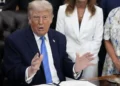
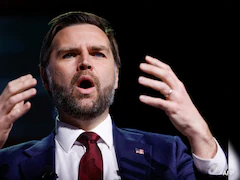
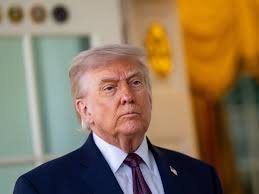
Vice President JD Vance stands ready to lead a high-stakes American diplomatic mission to Islamabad today. This critical journey depends entirely on whether Iranian leadership agrees to attend further formal peace negotiations. President Donald Trump has expressed his clear expectation that this delegation will engage in urgent dialogue tomorrow. Accompanying the vice president will be special envoy Steve Witkoff and presidential son-in-law Jared Kushner. These officials represent the core of the American strategy during this incredibly fragile international standoff with Tehran. However, the path to these crucial meetings remains obstructed by a deeply entrenched and historical mistrust. Iranian President Masoud Pezeshkian recently voiced severe concerns regarding the contradictory signals coming from top American officials. He interprets these mixed messages as a thinly veiled effort to force his nation into total surrender. The Iranian leader emphasized that his people will never simply submit to external pressure or military threats. Despite this firm rhetoric, one senior official in Tehran indicated that they are currently reviewing the invitation. Reports suggest that parliamentary speaker Mohammad Bagher Ghalibaf would likely lead the Iranian delegation if talks proceed. Ghalibaf has maintained a combative stance, stating that Iran refuses to negotiate under the current atmosphere of threats. He recently utilized social media to claim that his country is prepared to reveal new strategic cards. The speaker also accused President Trump of attempting to turn the potential negotiating table into a surrender document.
Tehran continues to demand an immediate end to the American blockade currently stifling the vital strait of Hormuz. President Trump has countered by reiterating his firm stance that Iran must never develop any nuclear weapons. Interestingly, the American president even suggested that he might be willing to meet with Iranian leaders himself directly. Earlier confusion emerged when the president told the New York Post that his team was already heading over. United States officials quickly clarified that while departure was discussed, the trip remained dependent on confirmed Iranian participation. A second round of intense discussions could potentially begin this Wednesday if all parties agree to sit down together. The backdrop for these talks remains the threat of a renewed outbreak of violent conflict across the region. President Trump has now extended the current two-week ceasefire by twenty-four hours to facilitate this important meeting window. During a recent interview with Bloomberg, the president indicated that he considers further extensions to be highly unlikely. He insisted that he refuses to be rushed into making a bad deal regarding these complex security issues. The American leader noted that his administration has plenty of time to find the right path for global stability.

Vance previously led the American team during twenty-one hours of unsuccessful discussions earlier this month that ended in deadlock. Those talks collapsed when Iran refused to meet strict demands regarding nuclear enrichment and the surrender of uranium stockpiles. The Iranians maintained that a significant deficit of trust prevents them from feeling secure enough to sign a final agreement. Although Iran suffered heavy bombing during the recent five-week campaign, their leadership insists that the nation has not been defeated. Pakistan has been preparing for the possibility of these negotiations since Sunday by implementing a stringent security lockdown. Authorities have suspended public transport throughout the capital city to ensure the safety of all arriving diplomatic personnel. The local electricity board has also promised that power cuts will be suspended while these vital peace negotiations continue. Daily power outages lasting six to seven hours have become a painful reality for citizens across Pakistan lately. The nation is currently struggling with severe energy shortages caused by the dual blockade of the strategic maritime strait. President Trump had initially imposed the blockade in direct response to Iran charging tolls on merchant shipping vessels crossing.
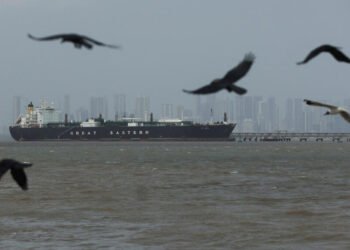
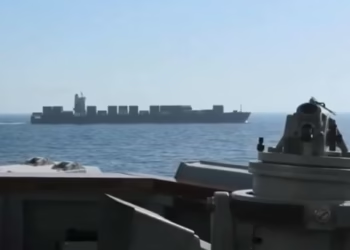
The situation escalated significantly on Sunday when the United States military seized an Iranian-flagged container ship in the area. This aggressive maneuver raised widespread fears that a new escalation of hostilities would effectively prevent any further peace talks. United States Central Command reported that they seized the vessel after the crew ignored multiple warnings over six hours. A navy destroyer disabled the ship’s engines with fire before marines from the USS Tripoli boarded the merchant vessel. While Iran briefly lifted its own blockade on Friday, they quickly reimposed the restriction when the United States refused reciprocity. Tension surged again on Saturday when Iran’s Revolutionary Guards attacked a tanker while another ship was struck by projectiles. Commercial shipping activity in the region has once again ground to a near standstill due to these dangerous ongoing developments. Only three tankers managed to complete the crossing on Monday compared to eighteen ships that transited just two days earlier. Consequently, the price of Brent crude oil jumped by five dollars to reach over ninety-five dollars by Monday afternoon.

This market movement clearly reflects the deep anxieties surrounding the renewed maritime danger within the crucial shipping corridor tonight. Furthermore, Israel and Lebanon are scheduled to hold their own second round of ambassador-level talks in Washington this Thursday. These will be the first such discussions between the two nations since a ten-day ceasefire was announced last week. Israel has also instructed residents of southern Lebanon to remain entirely outside of a restricted zone near the border. Military officials have explicitly warned civilians not to approach the area surrounding the Litani River at any point today. They are currently seeking to consolidate their military grip on the territory while the wider ceasefire remains in effect. A map released by the Israeli military on social media marked a red line through twenty-one villages across the south. This restricted area covers a significant swath of land stretching five to ten kilometres away from the border line. All eyes now turn toward Islamabad to see if the diplomatic gamble of the American vice president will eventually yield results. The entire international community waits in anticipation for word of whether these talks will provide a bridge to lasting peace. The coming hours will likely prove decisive for the future stability of this volatile and war-torn geographic region today.
Related News:
 George Clooney and Amal Clooney Receive French Citizenship
 Capitol Attack Anniversary Sparks Deep Political Divide
 Saudi Officials Report Zubaidi Flee Before Yemen Peace Talks
 UK Targets in New York Bomb Threat Hoax: Man Jailed
 Gambia Supreme Court Hears Case to Overturn FGM Ban
 Trump targets Iran trade with 25% tariff warning
 Rudd successor: Defence chief and former ministers considered
 US Senate rejects resolution limiting Trump military powers
 Venezuela regime claims release of political prisoners signals new era
 Gulf states warn Trump Iran strikes risk wider Middle East war
 Machado Trump medal gesture reshapes Venezuela power struggle
 Greenland defence seen as shared Nato duty amid troop arrivals
 Geopolitical football: Iran, Trump and the World Cup clash
 Canada-China trade gains momentum in new strategic partnership
 Trump Receives Machado’s Nobel Medal in White House Meeting
 Syria President Declares Victory as Ceasefire Reached with SDF
 US Considers Asylum for British Jews Amid Rising Antisemitism
 Trump slams UK ‘stupidity’ over Chagos Islands, eyes Greenland takeover
 Trump Tightens Grip on EU and UK Energy Supply
 Shinzo Abe’s killer receives life sentence in Japan
 China General Under Investigation Amid Leadership Purge
 Philippines ferry disaster leaves 15 dead, dozens missing
 Cambridge Faces Scrutiny Over Arms Investment Transparency
 Epstein UAE Emails Shake British Royal Andrew’s Legacy
 Christchurch gunman seeks to vacate guilty plea
 Liberal Fallout: Taylor Challenge Casts Shadow Over Sussan Ley’s Leadership
 Infantino Faces Russia Threat and Trump Concerns at Uefa Congress
 Concerns rise for Canberra boy amid Iran detention fears
 Caribbean Leaders Urge Dialogue Amid US Oil Embargo on Cuba
 Anthony Albanese Must Uphold Rights for All Australians
 DHS Probe Into Border Official Sparks National Debate
 Ukraine Sends Drone Experts to Defend US Bases in Jordan
 New Zealand Covid Response Praised Despite Lingering Scars
 Abramovich Chelsea Sale Cash Faces Jersey Probe
 Yvette Cooper: UK Must Follow Principles, Not US Pressure
 US Strike on IRIS Dena Strains Strategic Indian Security Ties
 Slovenia Election: A Nation at a Crossroads
 Jury Rules Meta and YouTube Liable for Addictive Design
 Saudi Arabia Urging US to Keep Up Iran Attacks
 Trump Softens Cuba Oil Stance as Russian Tanker Nears
 The Woman Guarding Earth From the Threat of Asteroids
 IMF Predicts Global Economic Crisis Due to Gulf Unrest
 Spain Shuts Airspace to US Military Over Iran Conflict
 California Defies Trump With Strict New AI Standards
 Germany Grapples With AI Abuse Following TV Star Scandal
 Exiled Tycoon Warns of New Russian Attacks on UK Soil
 Labor Under Fire Over Stalled University Fee Reform
 LA 2028: Millions of Affordable Olympic Tickets Announced
 Trump Slams Europe as Transatlantic Tensions Boil Over
 Inside the Deceptive Machine: A Former Producer Speaks Out
 Italy Faces Third Successive World Cup Absence After Loss
 Turkey End Kosovo Dreams to Secure World Cup Return
 Starmer Urges Ambitious EU Ties Amid Middle East Conflict
 Spain Faces Backlash Over Xenophobic Chants in Egypt Draw
 A Global Voice For Justice: Stephen Lewis Dies At Age 88
 Trump Issues Stark Warning After Strike On Iran’s Largest Bridge
 Hope and Fear as Iranians Flee Across the Turkish Border
 Trump Mocks Starmer and UK Carriers in White House Speech
 Tragic End to Outback Search as Floods Claim a Life
 Ben Roberts-Smith Arrested Over Alleged War Crimes
 Reform UK Pledges To Halt Visas Over Reparations Demands
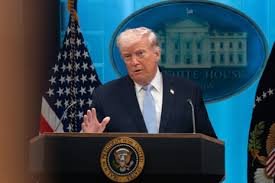 US and Iran Agree to Two-Week Provisional Ceasefire
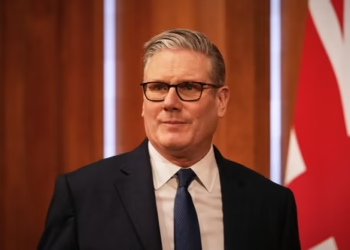 Starmer visits Gulf as US and Iran agree ceasefire
 Gaza Child Arrives in UK for Life-Changing Care
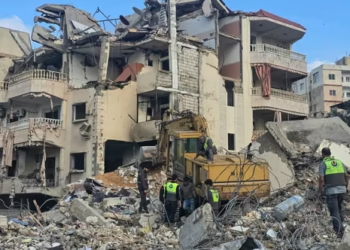 Israel Defies Ceasefire as Lebanon Operations Persist
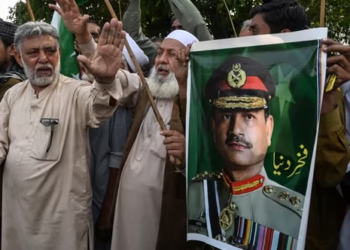 Pakistan Brokers Historic Peace Deal Amid Rising Tensions
 Netanyahu Vows Continued Lebanon Strikes Amid Peace Talks
 UK Holds Firm on Strait of Hormuz Amid Trump Pressure
 Rory McIlroy Eyes New Horizons After Masters Defence
 Trump Signals Hope for New Iran Talks as Ceasefire Fades
 Reeves Slams Trump Over Iran War Lack Of Exit Plan
 US and Iran Pursue Extension of Ceasefire via Pakistan
 Trump’s Islamabad Gamble: The High Stakes of a New Iran Deal
 Wall Street Hits Historic High Amid Hopes for Iranian Peace
 Ian Katz to Step Down as Channel 4 Content Chief
 Middle East Conflict Risks UK Food Supply Chains This Summer
 The General’s Gambit: Pakistan’s New Role in Global Peace
 England Eye Landmark 500th Game Glory in Iceland
 Mexico, Spain and Brazil call for Cuba dialogue amid crisis
 US Forces Seize Iranian Ship Near Hormuz Blockade