Published: 24 April 2026. The English Chronicle Desk. The English Chronicle Online.
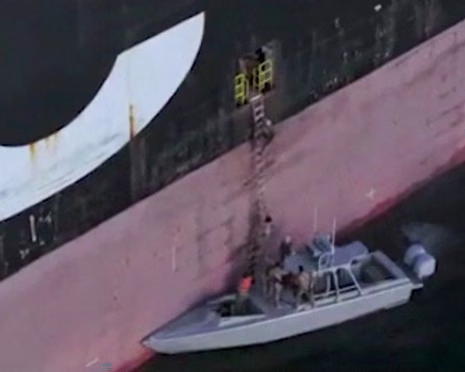
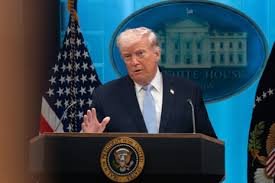
President Donald Trump recently asserted that the United States currently maintains total control over the strategic Strait of Hormuz. His bold declaration arrived alongside his observation that Iranian leadership is currently suffering from intense internal power struggles. This uncertainty regarding exactly who holds authority in Tehran has further complicated the ongoing geopolitical situation in the region. However, the president’s claim faced immediate skepticism following the reported seizure of two container ships by Iranian commandos. Furthermore, a Pentagon assessment suggests that clearing the waterway of dangerous sea mines could take up to six months. Trump’s remarks on Thursday followed a distinct military operation where United States special forces boarded a stateless tanker. The Pentagon claimed that this specific vessel was carrying Iranian crude oil through the Indian Ocean waters.
This military engagement occurred only hours after Iran seized two commercial container ships, ensuring the region remains extremely volatile. Both involved sides continue to enforce competing blockades across the narrow strait, which maintains global oil prices at high levels. Current market estimates place the cost of oil at approximately one hundred dollars for every single barrel produced. While American naval forces have successfully intercepted several vessels leaving Iranian ports, they have yet to fully reopen the strait. The capacity to secure safe passage for ships coming from allied Gulf states remains a difficult and unresolved operational challenge. The impact of these dual blockades is significantly worsened by the presence of numerous sea mines scattered throughout the area. A recent briefing provided to Congress highlighted that the Pentagon expects a long process to clear these maritime routes.

According to reports from the Washington Post, officials believe that roughly twenty mines were placed throughout the vital shipping channel. Some of these devices were deployed by small boats, while others were maneuvered into place using sophisticated remote control technology. This variety of deployment methods makes locating and neutralizing these threats an incredibly time-consuming and dangerous task for naval crews. The warning issued by the Pentagon suggests that the economic fallout from this conflict will likely persist for quite some time. Even if a formal peace deal is reached soon, the threat to global shipping will continue for many months ahead. A spokesperson for the Pentagon later described the report as inaccurate, though they failed to provide any specific evidence or counterarguments.
In a recent post on Truth Social, President Trump stated that American minesweepers are working at a tripled capacity level today. He also announced that he had ordered the United States navy to shoot and kill any boat attempting to lay mines. The president emphasized there is to be no hesitation in taking such lethal action against these perceived threats to security. Fatih Birol, who serves as the head of the International Energy Agency, described the current crisis as a historic energy threat. Meanwhile, on Thursday night, Trump informed reporters that Israel and Lebanon have agreed to extend their ceasefire by three weeks. This development followed high-level negotiations held at the White House, although Hezbollah did not participate directly in these important diplomatic talks.
Bouts of fighting have unfortunately continued throughout the most recent truce, casting doubt on the long-term stability of the region. On Wednesday, a notable Israeli strike resulted in the death of Amal Khalil, a respected Lebanese journalist working in southern territory. When asked separately about his willingness to wait for a peace deal with Iran, Trump simply told the reporters not to rush. He claimed that the Iranian navy and air force had been effectively destroyed during the initial stages of the regional conflict. Trump added that if the Iranians had rearmed during the recent hiatus, the United States could easily neutralize that threat quickly. The president expressed his desire to craft a deal that is not just temporary, but one that is truly everlasting.
Iran has refused to attend the planned peace talks in Pakistan, a snub that Trump attributed to confusion regarding their strategy. The regime in Tehran stated it would not participate while the United States continues to violate the ceasefire through a naval blockade. Trump agreed to an indefinite extension of the truce on Tuesday, yet he maintains that the United States holds a firm grip. The Strait of Hormuz remains a critical narrow channel connecting the Gulf to the Indian Ocean, through which a vast portion of energy flows. Trump declared on Truth Social that no ship can enter or leave the waterway without approval from the United States navy. He characterized the strait as being sealed up tight until such time as Iran agrees to a comprehensive final deal.

The president argued that he extended the truce to give different Iranian factions the necessary time to agree on a position. He claimed there was significant disarray among their leadership, specifically mentioning a rift between hardliners and moderate elements within the government hierarchy. Iran’s supreme leader, Mojtaba Khamenei, appears to possess less absolute power than his father, Ali, who was killed earlier this year. Reports indicate that Mojtaba Khamenei was also seriously wounded during the initial United States and Israeli joint attack in late February. Sources citing senior Iranian officials claim that despite severe injuries, including facial burns and restricted speech, he remains mentally sharp and engaged. The Islamic Revolutionary Guard Corps appears to wield greater influence within the collective leadership, potentially steering the regime toward a more hawkish position.
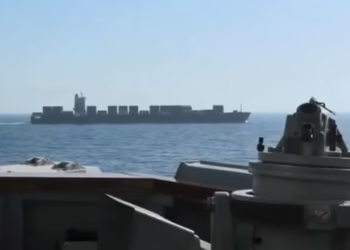
The naval command of the guard stated that the detained vessels had endangered maritime security by operating without the required international permits. They also accused the ships of tampering with navigation systems, suggesting that transponders had been intentionally deactivated during their transit through waters. Regional reports indicate these container ships were part of a larger convoy attempting to exit the Gulf after being trapped by the war. Iran released footage on Thursday showing commandos pulling alongside the vessels and climbing on board using ropes to secure the ships. On the same day, the United States released its own footage showing special forces descending from helicopters onto a different vessel deck. This cycle of events illustrates a growing propaganda war running parallel to the physical conflict taking place on the open sea. The closure of the strait places immense pressure on the Iranian economy, but it also creates political risks for President Trump. Increasing global prices for oil and petrochemicals could negatively impact public opinion during the upcoming United States midterm elections this November.
Related News:
 Capitol Attack Anniversary Sparks Deep Political Divide
 Saudi Officials Report Zubaidi Flee Before Yemen Peace Talks
 UK Targets in New York Bomb Threat Hoax: Man Jailed
 Gambia Supreme Court Hears Case to Overturn FGM Ban
 Trump targets Iran trade with 25% tariff warning
 Rudd successor: Defence chief and former ministers considered
 US Senate rejects resolution limiting Trump military powers
 Venezuela regime claims release of political prisoners signals new era
 Gulf states warn Trump Iran strikes risk wider Middle East war
 Machado Trump medal gesture reshapes Venezuela power struggle
 Greenland defence seen as shared Nato duty amid troop arrivals
 Geopolitical football: Iran, Trump and the World Cup clash
 Canada-China trade gains momentum in new strategic partnership
 Trump Receives Machado’s Nobel Medal in White House Meeting
 Syria President Declares Victory as Ceasefire Reached with SDF
 US Considers Asylum for British Jews Amid Rising Antisemitism
 Trump slams UK ‘stupidity’ over Chagos Islands, eyes Greenland takeover
 Trump Tightens Grip on EU and UK Energy Supply
 Shinzo Abe’s killer receives life sentence in Japan
 China General Under Investigation Amid Leadership Purge
 Philippines ferry disaster leaves 15 dead, dozens missing
 Cambridge Faces Scrutiny Over Arms Investment Transparency
 Epstein UAE Emails Shake British Royal Andrew’s Legacy
 Christchurch gunman seeks to vacate guilty plea
 Liberal Fallout: Taylor Challenge Casts Shadow Over Sussan Ley’s Leadership
 Infantino Faces Russia Threat and Trump Concerns at Uefa Congress
 Concerns rise for Canberra boy amid Iran detention fears
 Caribbean Leaders Urge Dialogue Amid US Oil Embargo on Cuba
 Ukraine Sends Drone Experts to Defend US Bases in Jordan
 New Zealand Covid Response Praised Despite Lingering Scars
 Abramovich Chelsea Sale Cash Faces Jersey Probe
 Yvette Cooper: UK Must Follow Principles, Not US Pressure
 US Strike on IRIS Dena Strains Strategic Indian Security Ties
 Slovenia Election: A Nation at a Crossroads
 Jury Rules Meta and YouTube Liable for Addictive Design
 Saudi Arabia Urging US to Keep Up Iran Attacks
 Trump Softens Cuba Oil Stance as Russian Tanker Nears
 The Woman Guarding Earth From the Threat of Asteroids
 IMF Predicts Global Economic Crisis Due to Gulf Unrest
 California Defies Trump With Strict New AI Standards
 Germany Grapples With AI Abuse Following TV Star Scandal
 Exiled Tycoon Warns of New Russian Attacks on UK Soil
 Labor Under Fire Over Stalled University Fee Reform
 LA 2028: Millions of Affordable Olympic Tickets Announced
 Trump Slams Europe as Transatlantic Tensions Boil Over
 Inside the Deceptive Machine: A Former Producer Speaks Out
 Italy Faces Third Successive World Cup Absence After Loss
 Starmer Urges Ambitious EU Ties Amid Middle East Conflict
 Spain Faces Backlash Over Xenophobic Chants in Egypt Draw
 A Global Voice For Justice: Stephen Lewis Dies At Age 88
 Trump Issues Stark Warning After Strike On Iran’s Largest Bridge
 Hope and Fear as Iranians Flee Across the Turkish Border
 Tragic End to Outback Search as Floods Claim a Life
 Ben Roberts-Smith Arrested Over Alleged War Crimes
 Reform UK Pledges To Halt Visas Over Reparations Demands
 US and Iran Agree to Two-Week Provisional Ceasefire
 Starmer visits Gulf as US and Iran agree ceasefire
 Gaza Child Arrives in UK for Life-Changing Care
 Israel Defies Ceasefire as Lebanon Operations Persist
 Pakistan Brokers Historic Peace Deal Amid Rising Tensions
 Netanyahu Vows Continued Lebanon Strikes Amid Peace Talks
 UK Holds Firm on Strait of Hormuz Amid Trump Pressure
 Rory McIlroy Eyes New Horizons After Masters Defence
 Trump Signals Hope for New Iran Talks as Ceasefire Fades
 Reeves Slams Trump Over Iran War Lack Of Exit Plan
 US and Iran Pursue Extension of Ceasefire via Pakistan
 Trump’s Islamabad Gamble: The High Stakes of a New Iran Deal
 Wall Street Hits Historic High Amid Hopes for Iranian Peace
 Ian Katz to Step Down as Channel 4 Content Chief
 Middle East Conflict Risks UK Food Supply Chains This Summer
 The General’s Gambit: Pakistan’s New Role in Global Peace
 England Eye Landmark 500th Game Glory in Iceland
 Mexico, Spain and Brazil call for Cuba dialogue amid crisis
 US Forces Seize Iranian Ship Near Hormuz Blockade
 Pakistan’s Ambitious Bid for Middle East Peace
 Trump Starts $166bn Tariff Refund Process
 Israeli Soldiers Jailed Over Vandalism of Lebanese Statue
 Trump Weighs Sending Afghan Allies to the Congo
 Timor-Leste Faces Tough Questions Over Resort Proposal
 Pentagon Shakes Up Navy Leadership Amid Hormuz Blockade