Published: 29 April 2026. The English Chronicle Desk. The English Chronicle Online.
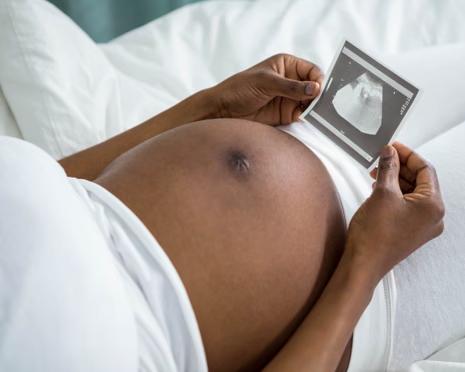
The profound tragedy of maternal mortality rates across the United Kingdom remains a pressing concern. Recent research has finally shed light on the biological mechanisms behind these persistent racial health disparities. A study led by the University of Cambridge highlights how systemic racism acts as a physiological burden. This critical evidence suggests that external stressors can deeply impact the biological health of pregnant black women. The investigation meticulously reviewed forty-four existing studies to uncover the pathways behind these unequal medical outcomes. Researchers focused on three key physiological indicators known to significantly affect the success of any pregnancy. These markers include oxidative stress, systemic inflammation, and the levels of resistance within the critical uteroplacental vascular system.
The study confirms that black women consistently display higher levels of these three specific biological markers during pregnancy. Crucially, the researchers emphasize that these variations are not derived from any inherent or fixed genetic differences. Instead, these findings point directly toward the cumulative impact of socioenvironmental stressors encountered throughout a person’s life. Systemic racism and chronic economic deprivation act as powerful drivers that alter the body’s ability to function normally. When women face these daily pressures, their biological systems often undergo measurable and lasting changes that compromise health outcomes. This research underscores that the environment one inhabits can fundamentally reshape the physiological response to pregnancy and childbirth.

Grace Amedor, the primary author of this study published in the journal Trends in Endocrinology and Metabolism, articulated the findings. She noted that pregnancy naturally places an immense strain on the physical resources of a woman’s entire body. Black women, however, often face additional burdens that stem from systemic racism and significant, ongoing socioeconomic and environmental disadvantages. During the gestation period, this chronic strain may disrupt vital biological processes, which drastically increases the risk for dangerous conditions. One such condition, pre-eclampsia, represents a primary threat that researchers are now linking directly to these environmental stress factors. Amedor expressed genuine surprise that, despite decades of knowing about this disparity, the underlying physiological explanations remained largely unexplored.
The urgency of this situation is underscored by the stark statistical reality currently facing the United Kingdom’s maternity healthcare system today. Current data reveals that black women in the UK remain 2.7 times more likely to die during childbirth than white women. Furthermore, these women are significantly more likely to encounter serious birth complications and face challenging perinatal mental health issues during pregnancy. The statistics regarding infants are equally heartbreaking, as black babies are twice as likely to be born stillborn when compared to white counterparts. These figures represent far more than abstract data points; they reflect systemic failures that result in preventable loss of life and suffering. The research team argues that we must continue to address the root causes, which are primarily socioeconomic inequalities and systemic racism.
To understand the biological mechanisms, one must examine how these stressors manifest within the complex cardiovascular and immune systems of the body. Increased uteroplacental vascular resistance refers to the dangerous tightening of blood vessels, which effectively reduces the vital blood flow reaching the placenta. Simultaneously, high levels of oxidative stress occur when harmful molecules, known as reactive oxygen species, completely overwhelm the body’s natural antioxidant defenses. These processes are inherently linked to high levels of inflammation, which correlate strongly with adverse outcomes for both mothers and their developing children. The cumulative effect of these complications includes higher rates of preterm birth, foetal growth restrictions, and severe pre-eclampsia that necessitates immediate intervention.
Professor Dino Giussani, a senior author of the study at the University of Cambridge, provided further context regarding these critical, evidence-based conclusions. He noted that the significant disparity in pregnancy complications between black and white women has long been acknowledged, yet it was often blamed solely on medical care or general environmental factors. The researchers have successfully moved beyond these general observations to prove that these external exposures disproportionately affect the physical bodies of black women. This makes them inherently less able to function healthily during the intense physical demand of carrying a child to term in a hostile environment. By identifying these physiological pathways, the scientific community can now better understand how social injustices are internalized as biological damage over many years.
Dr. Jenny Barber, who serves as vice-president of the Royal College of Obstetricians and Gynaecologists, responded to the study with a clear call for structural change. She stated that it is entirely unacceptable for black women and babies to face such drastically higher health risks compared to their white counterparts. This important study confirms that physiological processes are indeed impacted by the reality of systemic racism and persistent socioeconomic disadvantages in our society. The findings should serve as a wake-up call for researchers, policymakers, and those overseeing maternity services to prioritize equity and justice in healthcare delivery. Dr. Barber highlighted the hope that these findings will encourage even further rigorous research into these specific biological mechanisms to inform future clinical practices and public policy.

Ending racial and ethnic health inequalities remains entirely possible, provided that there is a committed, coordinated, and sustained cross-government action plan to tackle the root causes. We must acknowledge that systemic issues require systemic solutions that go beyond the walls of individual hospitals or clinics. Investment in maternity services must be sustained and targeted to ensure that every pregnant woman receives the safe, personalized, and compassionate care she deserves. The health of a nation can be measured by how it supports its most vulnerable citizens during their most critical moments of life. By addressing the toxic impact of racism on the body, the UK can move closer to achieving a standard of care that is truly equitable for everyone.
The journey toward health equity is long, but these findings provide a necessary roadmap for future progress in maternal and neonatal health outcomes. We must continue to invest in deep scientific inquiry while concurrently dismantling the societal structures that create these persistent, deadly, and unfair disparities for black women. By aligning medical advancement with social reform, we can ensure that every mother has the support needed for a safe, healthy, and dignified pregnancy journey. The path forward requires constant vigilance and a refusal to accept the status quo as either normal or inevitable in a modern, caring society. The evidence is now clear, and the responsibility to act falls upon all of us to build a more equitable future for all mothers.
Related News:
 Kate Winslet to Narrate Film Highlighting King’s Environmental Mission
 Trump’s UK Ambassador Urges North Sea Drilling to Strengthen US Ties
 UK Bans Fake Numbers: Scammers Lose Their Trick
 Vibe coding’ named Collins dictionary’s word of the year
BBC to Apologise Over Edited Trump Speech Amid Backlash
Vibe coding’ named Collins dictionary’s word of the year
BBC to Apologise Over Edited Trump Speech Amid Backlash
 Millionaires group urge Reeves to introduce wealth tax to ‘lift kids out of poverty’
 Reeves rejects £1bn plea for NHS redundancy payouts
 PM Condemns Leaks, Vows Loyalty to Ministers and Stability
 Phillipson Accused of Appeasing Unions by Diluting EBacc
 Saka Solidifies Role as Tuchel’s Key England Lieutenant
 Greene Pushes Epstein Files Amid Trump Fallout
 Zelenskyy Signs Fighter Jet Deal Amid Russian Drone Attacks
 Sundar Pichai Cautions on AI Hype and Market Risks
 Shadow Fleet at Sea: Europe’s Battle Against Illicit Oil Shipping
 Snow and Ice Cause Travel Chaos in North Yorkshire
 Director Michael Caton-Jones Reflects on Career and Beginnings
 Inside the Helpline Protecting Missing Children in the UK
 PlayStation PS5 Deals Hit Lowest Prices Ahead of Black Friday
 US Suspends Afghan Immigration After White House Shooting
 Five-Year-Old Dies After Rare Tonsil Surgery Complication
 Starmer Says Labour’s Economic Plan Needs Years to Deliver
 ‘Extinct’ Antelope Returns to Sahara, Bringing Hope
 IndiGo Cancels Hundreds of Flights Amid Pilot Shortages
 Young Britons Face Heaviest Burden from Ageing Population, Lords Warn
 U‑Turn on Farmers’ Inheritance Tax Sparks Political Firestorm
 Aston Villa Remain Arsenal’s Key Obstacle in Title Pursuit
 Irish Beach Tragedy: Irish Drown at Whitehaven Beach in Australia
 Starmer Faces Parliamentary Battles Over UK-EU ‘Reset’ Plan
 Met Police Vetting Failures Let Serial Rapists Remain
 Federal Immigration Shift: Officers Leave Louisiana for Minneapolis
 Fatal Bolton Taxi Crash Claims Three Teens and Driver
 Australia grants Asio powers to designate hate groups under new laws
 Friedman Uninvited From 2024 Adelaide Writers’ Week
 ScottishPower Tops List of Worst UK Energy Suppliers
 Judi Dench Champions Fight to Save London’s Green Spaces
 Crowborough Camp Welcomes First Asylum Seekers
 BBC Funding Crisis: Tim Davie Warns of Jeopardy Ahead
 ABC Facebook Page Briefly Hacked, Adult Photos Posted
 Investigation Into Anti-Trump Motives After Gala Shooting
 Dubai Assets Linked to Sudan’s RSF Militia Exposed
 Urban Flood Crisis: A Growing Threat to English Homes
 Ashley Cole: Finding His Voice and Vision in Italy
 New AI Tool To Target Obesity Risk And Transform NHS Care
 Greens Face Internal Row Over Antisemitism Claims
 Tough Fiscal Realities Await Next Scottish Government
 The Burning Lens: An Iranian Artist’s Visual Resistance
 Met Officers Probed Over Al Fayed Abuse Allegations
 One Nation Candidate’s Surprising Ties to Independents
 Aramco Surges as East-West Pipeline Counters Gulf Tensions
 Reform UK Faces Crisis as Newly Elected Councillors Resign
 Starmer Strikes Back as 100 MPs Sign Support Pledge
 Scepticism and tight security as Beijing braces for Trump
 Tensions Flare as Israeli Nationalists March in Jerusalem
 UK Firms Freeze Spending as Iran Conflict Bites
 UK Job Market Squeezed as Iran War Drives Jobless Rate to 5%
 Reeves to Fast-Track Clean Energy Amid Iran Crisis
 The Battle for Wembley Sparking Unprecedented Legal Warfare
 Tony Abbott Returns as New Liberal Party President
 Pope Meets Families in Italy Toxic Waste Zone
 Royal Ascot Allegation Sparks Wider Police Inquiry
 Secret Role of UK Security Services in Troubles Amnesty Law
 Tube Strike Brings Capital to a Standstill Over Shift Disputes
 Teaching Machines Right From Wrong in the Digital Age
 Is Ollie Robinson the Chaos English Cricket Needs Today?
 The Hidden Crisis Eroding Trust in British Communities
 Saving the Scalloped Hammerhead: The Pacific Battle
 Stolen Mobiles Could Soon Become Useless Bricks
 Clean Air Initiatives Spark Major Fall in London Hospital Admissions
 Fearless Pioneer of Investigative Journalism Dies Aged 83
 Trump Urged to Condemn UFC Fighter Over Obama Slurs
 The Fear Gap: Why Europe Feels Less Safe Than It Is
 US Military Pacific Boat Strike Kills Three People
 Dettol Apologises for ‘Toxic Men’ Advert Backlash in China
 UK Care Crisis: Row Explodes Over New Visa Settlement Rules
 Sainsbury’s Boss Optimistic As Grocery Inflation Eases
 US Advance Past Bosnia in World Cup Thriller
 Trump’s Mount Rushmore Speech: A Divisive Anniversary
 Trump’s Red-Card Intervention Hurts the US World Cup
 US Airman Avoids British Court in Indecent Exposure Case
 Britain’s Mini Fan Craze Sparks Major Waste Crisis