Published: 04 May 2026. The English Chronicle Desk. The English Chronicle Online.
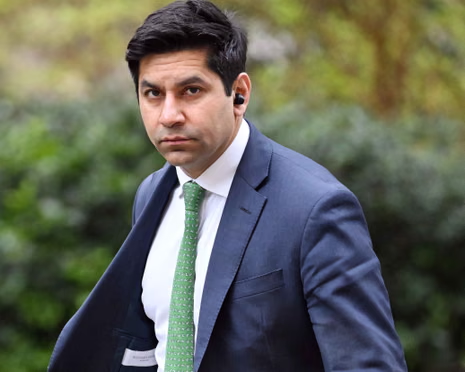
The British political landscape is currently facing a significant new wave of intense public scrutiny. An influential government adviser closely linked to Keir Starmer has held numerous undisclosed private meetings. These secret discussions involved several high-ranking executives from the most powerful technology corporations in America. Varun Chandra serves as a central figure within the busy walls of 10 Downing Street. He reportedly conducted sixteen confidential sessions with global tech leaders over a single busy year. These interactions occurred between October 2024 and October 2025 according to recently released official logs. Chandra discussed vital regulatory changes and artificial intelligence during these many quiet and private encounters. The conversations also touched upon the strategic implications of the second administration of Donald Trump. One meeting even involved an offer to help an executive meet the Prime Minister directly.
The list of companies involved includes global household names like Google and also Apple. Chandra also engaged with senior representatives from Microsoft and the massive retail giant known as Amazon. These dealings took place while the government crafted policies to secure major Silicon Valley investments. Ministers have recently introduced multimillion-pound energy subsidies to attract these wealthy international corporate partners. They have also granted preferential planning approval for massive datacentres located in new growth zones. Chandra is widely considered a key champion of the government’s push for rapid economic growth. He previously managed a corporate intelligence firm that was founded by former British intelligence agents. His role as chief business adviser was expanded this year to include US trade envoy. This position allows him to offer direct advice on trade negotiations and artificial intelligence investment.

Political advisers in the United Kingdom do not share the same strict disclosure requirements. Senior civil servants and ministers must declare their interactions with private firms and various lobbyists. However, the interactions of special advisers are usually only recorded internally by the civil service. It took twelve months of persistent freedom of information requests to confirm these many engagements. The meeting logs obtained by the press offer a rare glimpse into a powerful operative. They raise difficult questions about what campaigners describe as lobbying behind closed doors in Westminster. A Downing Street spokesperson stated that Chandra helped secure a significant new UK-US trade deal. The spokesperson claimed meeting businesses is a core part of the prime minister’s adviser’s role. They also highlighted record inward investment coming from American companies into the United Kingdom economy.
Chandra was appointed by Keir Starmer shortly after the Labour party won the general election. He met thirteen senior executives including the top UK official for the software giant Oracle. He also spoke with David Zapolsky who serves as the chief global affairs officer for Amazon. Redacted minutes suggest that Chandra agreed to facilitate a meeting between Oracle and the Prime Minister. He also prepared the ground for Starmer to meet with Amazon chief executive Andy Jassy. Labour’s push for growth driven by artificial intelligence remained a frequent topic of these discussions. Executives from Meta and Microsoft raised concerns about datacentres and specific artificial intelligence growth zones. The government believes that promised investments of billions will soon turbocharge the national British economy. However, some recent findings suggest that many of these deals are actually phantom investments.
Existing datacentres have occasionally been presented to the public as entirely new construction projects. One site earmarked for a supercomputer has reportedly been left completely undeveloped for some time. OpenAI recently paused a multibillion-pound plan for a datacentre located in the North Tyneside area. The company blamed high energy costs and complex regulation for the sudden pause in development. Regulatory reform was covered in at least four separate meetings held by the government aide. Meta vice-president Joel Kaplan provided feedback to Chandra regarding the current United Kingdom regulatory landscape. Chandra also discussed a commitment to removing barriers for businesses with three senior Apple executives. These discussions happened on the same day the Chancellor ordered watchdogs to reduce anti-growth regulations. This specific shake-up reportedly led to the removal of the chair of the competition regulator.
Marcus Bokkerink was preparing to use new powers to break up various large tech monopolies. The Chancellor later claimed she received positive feedback after she decided to remove him. She noted that tech businesses had previously raised many concerns about the competition watchdog’s strictness. The presidency of Donald Trump was also discussed during two meetings with Microsoft vice-chair Brad Smith. The pair spoke about the priorities of Trump during a gathering of elites in Davos. Chandra later briefed Smith about the unprecedented second state visit of Trump to the UK. Transparency International suggests these meetings should be treated as formal lobbying by the British government. Rose Zussman stated that lobbying behind closed doors enables outside interests to influence national politics. She argued that these private interactions lack the necessary public scrutiny for a healthy democracy.

Chandra is one of the best-connected business advisers currently working within the Labour administration. His former firm Hakluyt does not disclose its client list to the general public. However, the company boasts that it regularly advises some of the largest corporations on earth. Chandra left the London-based company two years ago to join the government in Westminster. He still owns more than three hundred thousand shares in the company according to records. These financial details were found in accounts published on the Companies House website this April. Keir Starmer hired Chandra to deepen the ties between the party and international corporate investors. The Prime Minister regards Chandra highly and his influence has grown since the trade deal. He is one of the few survivors of the many internal upheavals in Downing Street.
The Prime Minister even interviewed him for the high-profile vacancy of the United States ambassador. That prestigious job eventually went to a career diplomat after a very long selection process. Starmer still rewarded Chandra with the additional role of being the trade envoy to America. The links Chandra has to the corporate world have occasionally led to some public controversy. He was previously criticised for trying to find a private buyer for the utility Thames Water. This occurred even though his former firm was also providing advice to the water company. Four freedom of information requests were submitted over a year to uncover these tech meetings. The Cabinet Office refused to reveal if Chandra had held meetings with any other firms. They claimed the request for all external meetings was too burdensome for their staff resources.
Transparency International argued it should not take multiple requests to uncover who influences the government. Zussman called for a comprehensive lobbying register that is truly fit for its intended purpose. She wants meetings with special advisers to be brought into the official definition of lobbying. This change would ensure that all senior officials are held to the same transparency standards. Chandra declined to provide a comment regarding the nature of these many private tech meetings. Google and Amazon also declined to comment when they were asked about the disclosed logs. Other major technology companies did not respond to requests for comment before the report was published. The disclosure continues to fuel a debate about transparency and corporate influence in modern Britain. Many citizens remain concerned about how much access wealthy tech giants have to senior officials.
Related News:
 Britain deploys RAF specialists to assist Belgium with drone threats
 Night after night, Belgium is on high alert.
 Ukraine to Get 100 French Rafale Jets in Historic Deal
 BP’s Influence Sparks Controversy in UK STEM Education
MPs warn AI financial risks threaten UK stability
BP’s Influence Sparks Controversy in UK STEM Education
MPs warn AI financial risks threaten UK stability
 MPs warn AI financial risks threaten UK stability
 Starmer Targets AI Chatbots Over Child Safety Concerns
 AI FOMO Warning as Osborne Urges Action
 Treasury AI plans spark influence concerns
 UK Social Media Ban for Under-16s Gains Momentum
 UK Teen Social Media Ban Trials Begin
 Ministers Urged to Act Faster on Deepfakes Threat
 MPs Reject Ban on Social Media for Under-16s
 Iran Social Media Strategy Shifts to Information War
 Cluster Strikes Test Israel’s Missile Defences
 House of Lords Backs Landmark Social Media Ban for Youth
 Lords Back New Age Ban for Children on Social Media
 OpenAI Halts Stargate UK Project Amid Energy Crisis
 Big Tech Lobbies EU to Hide Massive Datacentre Emissions
 Canadian astronaut French words ease language row
 Reform UK funding: mystery billionaire revealed
 RAF Typhoons scrambled amid Russian drone threat near Nato
 Doomsday Clock Nears Midnight Amid Global Crises
 FDA Chaos Deepens as Trump Eyes Makary Exit
 UK Ministers Lobby Trump Over Under-16s Social Media Ban
 Trump Faces Backlash Over $2bn Earnings Since Return
 OpenAI Proposes 5% Equity Stake to US Government
 Lanarkshire AI Hub Fails Energy Promises
 Reeves Launches City AI Skills Compact
 Meta Under Fire: The Battle Over Addictive Social Media Design
 Trump’s UK Ambassador Urges North Sea Drilling to Strengthen US Ties
 UK Bans Fake Numbers: Scammers Lose Their Trick
 Vibe coding’ named Collins dictionary’s word of the year
BBC to Apologise Over Edited Trump Speech Amid Backlash
Vibe coding’ named Collins dictionary’s word of the year
BBC to Apologise Over Edited Trump Speech Amid Backlash
 Millionaires group urge Reeves to introduce wealth tax to ‘lift kids out of poverty’
 Reeves rejects £1bn plea for NHS redundancy payouts
 PM Condemns Leaks, Vows Loyalty to Ministers and Stability
 Greene Pushes Epstein Files Amid Trump Fallout
 Sundar Pichai Cautions on AI Hype and Market Risks
 Shadow Fleet at Sea: Europe’s Battle Against Illicit Oil Shipping
 Starmer Says Labour’s Economic Plan Needs Years to Deliver
 Australia grants Asio powers to designate hate groups under new laws
 Trump press secretary attacks reporter over ICE question
 Spoof “Make America Go Away” Caps Rally Denmark Over Greenland
 Trump Fed bid heads to Supreme Court
 Pentagon Signals Reduced Role in Deterring North Korea
 ABC Facebook Page Briefly Hacked, Adult Photos Posted
 Artificial intelligence will cost jobs, admits Liz Kendall
 Meta trial over child exploitation claims begins
 UK and US Drop in Global Corruption Index Rankings
 Canberra Poster Seizure Sparks Free Speech Row
 Wales Approves Assisted Dying Bill Consent
 Stewart Brand on Musk, Bezos and a Life of Long Thinking
 Jacinda Ardern Move Sparks Kiwi Reflection
 Asylum Seekers to Work After Year-Long Wait
 New Zealand Covid Response Praised Despite Lingering Scars
 Injured Mojtaba Khamenei Elevated as Iran Leader
 The Kill Line: A Shifting Vision of the American Dream
 Inquiry into HMRC child benefit errors launched by NAO
 Air Canada CEO Faces Outcry Over Recent Language Misstep
 Relationship with Trump may be beyond repair, Starmer warned
 UK Government Poised to Revive Stalled Hillsborough Law
 Democrats Move to Impeach Defense Secretary Pete Hegseth
 Investigation Into Anti-Trump Motives After Gala Shooting
 Silent Tracks: Rail Line Without Passengers
 Tough Fiscal Realities Await Next Scottish Government
 One Nation Candidate’s Surprising Ties to Independents
 Reform UK Faces Crisis as Newly Elected Councillors Resign
 Tony Abbott Returns as New Liberal Party President
 Secret Role of UK Security Services in Troubles Amnesty Law
 The Hidden Crisis Eroding Trust in British Communities
 Stolen Mobiles Could Soon Become Useless Bricks
 US Courts Back Trump on Park Signage Removals
 Trump’s Mount Rushmore Speech: A Divisive Anniversary
 Sydney Records Hottest June Since 1859 as Expert Warns New High a ‘Signature’ of Global Warming
 Trump’s Red-Card Intervention Hurts the US World Cup
 Farage Warns Sky News Following Financial Inquiry
 Trump Swaps Planes Amid Iran Tensions
 Ann Widdecombe, Formidable Political Figure, Dies at 78
 Houthis Strike Saudi Arabia as Middle East Tensions Rise