Published: 15 May 2026. The English Chronicle Desk. The English Chronicle Online.
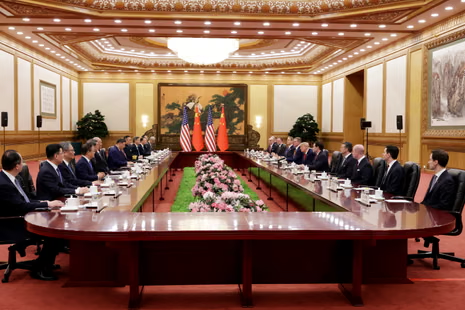
The grand halls of Beijing often serve as the stage for the most significant geopolitical theater of our modern age. On Thursday, the Great Hall of the People hosted a meeting of immense consequence between President Donald Trump and President Xi Jinping. The atmosphere was thick with the traditional pageantry that defines high-level diplomacy within the Chinese capital. Red carpets stretched across the polished floors while meticulously choreographed soldiers stood in perfect, silent formation. Children waved small flags of both nations to welcome the American delegation with practiced enthusiasm. Senior officials and the most powerful business executives from the United States lined the long tables. Every detail of the event seemed planned to project an image of absolute stability. However, as the cameras flashed, a glaring omission began to spark a global conversation. Not a single woman was seated at the main table for either national delegation.
This stark visual reality quickly migrated from official press releases to the critical eyes of social media. Observers around the world noted the exclusionary nature of the images appearing on their screens. The absence of female voices created a tableau that many described as purely patriarchal. For a meeting between the two largest economies, the lack of diversity felt strikingly deliberate. Critics argued that such a setting reinforces old notions of how power is properly wielded. The silence of women in this room spoke louder than any official joint statement. It suggested that the highest levels of global strategy remain a strictly male-dominated domain. This visual message resonated deeply across digital platforms and international news cycles within hours. The world watched as two superpowers defined the future without any female representation present.

Gita Gopinath, a prominent economics professor at Harvard, was among the first to voice her concerns. She shared a post that quickly garnered tens of thousands of likes from concerned citizens. Gopinath described the scene as a painting that signaled the tragic end of meritocracy. She noted the absurdity of the two largest economies excluding women from such vital discussions. In further comments, she explained that society seems to be gravitating backward toward old networks. This shift suggests that personal connections now outweigh actual capabilities in the realm of politics. Gopinath expressed that it is simply inexplicable to have a single-gender table in 2026. Many talented women possess the expertise required to navigate these complex international trade negotiations. Their exclusion suggests a systemic failure to recognize and utilize the best available global talent.
The sentiment of regression was echoed by other experts in the field of gender studies. Halima Kazem from Stanford University highlighted the troubling nature of this specific bilateral summit. She compared these recent images to those captured during the presidency of Barack Obama. During that previous era, US-China summits frequently included women in high-ranking and influential positions. Figures such as Susan Rice and Hillary Clinton were once staples at these diplomatic tables. Even China had previously included Vice-Premier Liu Yandong in these high-level executive discussions. Kazem argued that both nations have now retreated from those inclusive and progressive standards. The current imagery suggests that neither superpower believes women belong in the room of power. This represents a bilateral signal that female perspectives are not essential to the order.
The critique suggests that the exclusion was not merely an accident of scheduling or logistics. Kazem pointed out that both countries have many qualified women in their security establishments. There is no shortage of female diplomats who possess deep knowledge of Asian-Pacific relations. Instead, the composition of the delegations appeared to be a specific choice of authority. The image projected was one that felt intentionally masculine, militarized, and significantly exclusionary. By performing power in this manner, both leaders are jointly defining what serious diplomacy looks like. This definition seemingly leaves no room for the diverse voices that drive modern global society. It frames the most important decisions as the exclusive right of a male elite. Such a display sets a precedent that could influence diplomatic norms for years to come.
The absence of women at the main table was particularly jarring given their presence nearby. A small handful of women did accompany the American president on his visit to Beijing. Lara Trump traveled as part of the broader group visiting the historic Chinese capital. Prominent business leaders like Jane Fraser of Citigroup were also part of the visiting party. Dina Powell McCormick, representing Meta, was another notable female figure present during the trip. These women hold positions of immense influence within the private sector and political circles. Yet, when the doors closed for the primary bilateral meeting, they were not seated. Their peripheral status highlighted the gap between being present and having a formal vote. It reinforced the idea that women are welcome as guests but not as deciders.
The impact of such imagery extends far beyond the walls of the Great Hall. Diplomatic photos serve as a primary way for the public to perceive national values. When women are erased from these frames, it sends a message to future leaders. Young women aspiring to enter international relations may see a ceiling that feels impenetrable. The visual narrative suggests that the ultimate levers of power remain closed to them. This can discourage participation in the very fields that desperately need diverse and innovative thinking. Professionalism in diplomacy should ideally reflect the demographics of the populations these leaders represent. A table consisting of only one gender fails to capture the full human experience. It overlooks the unique insights that female leaders bring to conflict resolution and trade.
The backlash on social media indicates that the public is no longer willing to ignore these gaps. Digital platforms have democratized the ability to critique the world’s most powerful individuals in real-time. The viral nature of the criticism shows a growing global consensus on the need for inclusion. People are increasingly aware of how symbolic representation shapes the reality of policy and law. When a meeting is described as exclusionary, it loses a degree of its moral authority. The public expects their leaders to model the fairness and equality they often preach. Failing to do so creates a disconnect between government actions and modern societal expectations. This disconnect was the primary driver of the intense scrutiny following the Beijing summit.
Historical context provides a clear lens through which to view this current diplomatic shift. For decades, the trend in international relations had been toward greater visibility for female leaders. The appointment of women to roles like Secretary of State or National Security Adviser was celebrated. These appointments were seen as evidence of a maturing and more meritocratic global political system. Seeing those gains seemingly reversed in a single afternoon felt like a significant blow to many. It suggests that progress is not always a linear path toward more inclusive governance. Instead, it appears that hard-won representation can be discarded if the leadership priorities change. This realization has sparked a renewed sense of urgency among advocates for gender parity.

As the news of the summit continues to circulate, the focus remains on the missing voices. Journalists and analysts are looking for explanations from the official spokespeople of both nations. So far, the responses have focused on the technical expertise of the specific men selected. However, this defense fails to account for the many qualified women who were bypassed. The conversation has moved beyond simple participation to the nature of power itself. If power is defined by exclusion, it will always struggle with issues of legitimacy. True leadership involves bringing the best minds to the table regardless of their gender. The images from Beijing will likely serve as a cautionary tale for future diplomatic planners. They show that the world is always watching and will not accept being left behind.
In the end, the meeting between Trump and Xi will be remembered for its optics. While trade deals and security pacts were the intended focus, the seating chart stole the headlines. The “masculine and militarized” aesthetic of the event has become its most enduring legacy. It serves as a reminder that every detail in diplomacy carries a heavy symbolic weight. Moving forward, the pressure will be on both nations to demonstrate a commitment to diversity. The global community has made it clear that a single-gender table is no longer acceptable. Representation is not just a matter of fairness but a requirement for modern governance. The voices that were absent in Beijing must be heard in the next major summit. Only then can the global order truly claim to represent the interests of all people.
Related News:
 Army Officers Orders to Cut Ties with Men-Only Clubs
 Trump’s UK Ambassador Urges North Sea Drilling to Strengthen US Ties
BBC to Apologise Over Edited Trump Speech Amid Backlash
Trump’s UK Ambassador Urges North Sea Drilling to Strengthen US Ties
BBC to Apologise Over Edited Trump Speech Amid Backlash
 Britain deploys RAF specialists to assist Belgium with drone threats
 Millionaires group urge Reeves to introduce wealth tax to ‘lift kids out of poverty’
 Reeves rejects £1bn plea for NHS redundancy payouts
 PM Condemns Leaks, Vows Loyalty to Ministers and Stability
 Major Rent Reform Ends No-Fault Evictions in England
 Greene Pushes Epstein Files Amid Trump Fallout
 December Run-Off in Chile as Election Produces No Winner
 Shadow Fleet at Sea: Europe’s Battle Against Illicit Oil Shipping
 Georgians Defy Government Crackdown After Year of Protests
 ICC to Rule on Duterte’s Provisional Release
 Starmer Says Labour’s Economic Plan Needs Years to Deliver
 Ley Triumphs in Royal Commission Debate, Paving Way for Unity
 Mandelson apologises over Epstein ties after public scrutiny
 Australia grants Asio powers to designate hate groups under new laws
 Trump press secretary attacks reporter over ICE question
 Starmer Challenges US Over Controversial Greenland Deal
 Spoof “Make America Go Away” Caps Rally Denmark Over Greenland
 Trump Fed bid heads to Supreme Court
 Pentagon Signals Reduced Role in Deterring North Korea
 Labour Blocks Burnham as Party Rift Deepens Ahead of Polls
 Artificial intelligence will cost jobs, admits Liz Kendall
 Partial US Government Shutdown Hits Homeland Security Funding
 Sinema payment row deepens after $9,000 transfer claim
 Mandelson Faces Police Inquiry Over Epstein Leak
 Morgan McSweeney downfall shocks Labour leadership
 UK and US Drop in Global Corruption Index Rankings
 Farage Unveils Reform UK Frontbench Team
 Canberra Poster Seizure Sparks Free Speech Row
 Evo Morales Returns After Mysterious Absence
 Wales Approves Assisted Dying Bill Consent
 Jacinda Ardern Moves To Australia Following Her US Fellowships
 Jacinda Ardern Move Sparks Kiwi Reflection
 Corbyn Leads Your Party in Coordinated Left-Flank Strategy
 Nick Greiner Warns Over Election Review Fallout
 Asylum Seekers to Work After Year-Long Wait
 Starmer Row as Greens Demand Apology
 New Zealand Covid Response Praised Despite Lingering Scars
 Injured Mojtaba Khamenei Elevated as Iran Leader
 Gordon Brown urges court for crimes against children
 Inquiry into HMRC child benefit errors launched by NAO
 Pakistan Targets Militant Hideouts in Afghanistan
 Farage Faces Backlash Over Crypto Cameo Endorsements
 Air Canada CEO Faces Outcry Over Recent Language Misstep
 Relationship with Trump may be beyond repair, Starmer warned
 Unions Raise Concerns Over Doctors’ Pay Dispute
 Reform UK Pledges To Halt Visas Over Reparations Demands
 UK Government Poised to Revive Stalled Hillsborough Law
 Trump Signals Hope for New Iran Talks as Ceasefire Fades
 Democrats Move to Impeach Defense Secretary Pete Hegseth
 Trump Brokers Landmark Lebanon Ceasefire Amid Regional Hopes
 Investigation Into Anti-Trump Motives After Gala Shooting
 Welsh Labour Faces Potential Historic Election Defeat
 Silent Tracks: Rail Line Without Passengers
 Major test for Labour as polls open in Great Britain
 Trump Announces 3-Day Russia–Ukraine Ceasefire Deal
 Wes Streeting faces narrow road to Labour members’ favour
 Keir Starmer Struggles to Secure His Grip on Downing Street
 Tony Abbott Returns as New Liberal Party President
 Discontent grows around Putin amid war strain
 Secret Role of UK Security Services in Troubles Amnesty Law
 Starmer Leadership Under Pressure After Setbacks
 The Hidden Crisis Eroding Trust in British Communities
 Deepfake Abuse on X Sparks Safety Concerns for Dissidents
 UK Ministers Lobby Trump Over Under-16s Social Media Ban
 Starmer Resolves to Fight Burnham in Leadership Battle
 US Courts Back Trump on Park Signage Removals
 Hollie Ridley to Step Down as Labour General Secretary
 Trump’s Mount Rushmore Speech: A Divisive Anniversary
 Jarvis Urges Burnham to Secure 3.5% Defence Spending
 Trump’s Red-Card Intervention Hurts the US World Cup
 Farage Warns Sky News Following Financial Inquiry
 Le Pen to Run for President Despite Embezzlement Conviction
 Reform UK Finances Face Deep NCA Probe
 Trump Swaps Planes Amid Iran Tensions
 Ann Widdecombe, Formidable Political Figure, Dies at 78
 Ukraine Creates Long-Range Strike Command
 Houthis Strike Saudi Arabia as Middle East Tensions Rise