Published: 26 May 2026. The English Chronicle Desk. The English Chronicle Online.
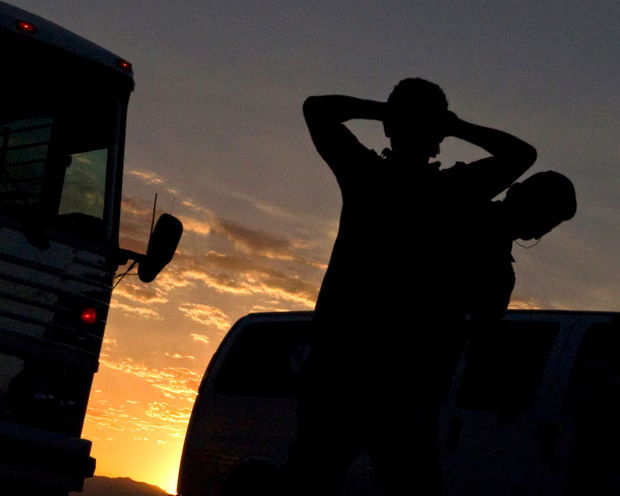
The vast scale of modern aviation footprint calculations often overlooks the specific impact of governmental logistics. Recent data indicates that United States immigration enforcement flights are currently producing hundreds of thousands of metric tonnes of climate-damaging carbon emissions. This environmental surge occurs as officials shuttle unprecedented numbers of people to detention centers located far from their original homes. The operations also include extensive pathways to deport individuals to countries spanning across the entire world. Observers note that Donald Trump’s mass deportation campaign has spurred at least an eighty percent increase in these flights. This shift is accelerating the global climate crisis by emitting massive amounts of carbon dioxide into the atmosphere. The findings stem from a detailed data analysis shared exclusively with journalists tracking modern environmental patterns. Experts tracking these movements suggest the numbers reflect a profound shift in American enforcement logistics over recent months.
The sheer volume of movement has drawn intense scrutiny from international policy researchers and human rights advocates. Analysts have documented a staggering increase of all United States immigration enforcement flights across recent seasons. This escalation includes the total number of flights as well as the diverse locations these aircraft are visiting. The calculations show that US Immigration and Customs Enforcement air operations pumped massive totals into the air. The estimated figure reached three hundred and thirty-five thousand eight hundred and seventy-six tonnes of carbon emissions. This total represents an eighty-eight percent increase from the recorded output of the previous calendar year. Furthermore, data from the first four months of twenty-six shows the trend is rising even higher. The federal agency is currently on track to contribute far more to global heating this year. This pattern continues to alarm scientists who track the broader implications of global atmospheric changes.
The atmospheric consequences of these operations extend far beyond simple statistical measures of environmental degradation. Those emissions directly exacerbate the climate crisis, which serves as a driver of irregular migration itself. The flight patterns also cause severe pollution in local communities used as primary flight hubs. These high-activity locations include Phoenix, El Paso, and Harlingen in the state of Texas. The frequent flight schedules also heavily impact communities surrounding Alexandria in the state of Louisiana. Activists argue that attempting to inflict suffering on immigrants ultimately inflicts suffering on everyone. They point out that no single community escapes the consequences of rising global atmospheric pollution. The environmental degradation caused by these regular flights impacts families across the entire nation. This perspective connects domestic border enforcement strategies directly with global public health outcomes and environmental safety.
The political shift in Washington has fundamentally transformed the scale of domestic and international aerial operations. The current anti-immigrant agenda has resulted in a dramatic increase in arrests, detentions, and deportations. These policy choices led to a record two hundred and forty-five documented removal flights last month. The consequences have been especially dire for immigrants who do not possess prior criminal convictions. Members of this specific population were arrested eightfold in January compared to previous administrative periods. This surge occurs despite past official pledges to focus primarily on high-level criminal threats. Current detention statistics show that over seventy percent of detained individuals have no criminal convictions. Additionally, the repatriation rate within two months for these specific detainees has officially doubled. This accelerated process limits the time available for legal reviews and traditional immigration appeals.
The speed of the current removal system raises significant concerns regarding international legal protections. Human rights researchers remain deeply concerned that people are being put on flights without due process. Families are frequently separated during these rapid logistical movements across the American continent and beyond. Detainees also reportedly suffer inhumane conditions while aboard these heavily monitored charter aircraft flights. Certainly, the emissions of this huge ramp-up in flights represent a major environmental concern. Allegations of constitutional and human rights violations have been well-documented by legal observers for years. These issues include routine shackling aboard the aircraft during long international journeys across the ocean. Officials also use a controversial body-restraint suit called the Wrap on long-haul flights. Homeland security representatives maintain this practice is legal and standard despite facing active congressional challenges.
The lack of prior oversight regarding the carbon footprint of these flights highlights a systemic blindness. The exact carbon emissions from these vastly increased air operations had not been previously calculated. To solve this, researchers used tracking data and international aviation methodologies to estimate the footprint. The independent verification confirmed that ICE air operations contributed over one hundred and thirty-nine thousand tonnes. This occurred during the first four months of the current calendar year of twenty-six. When scaled annually, this signifies an almost twenty-five percent increase in yearly carbon emissions. This surge builds upon the already high total recorded during the previous operating year. These figures do not include the pollution stemming from the nation’s sprawling detention system. That network remains the largest in the world and aggravates several intersecting environmental problems.
The connection between localized enforcement and global climate displacement creates a troubling systemic feedback loop. Climate change acts as a primary driver of migration by destroying local agricultural economies. The fact that the United States accelerates climate change during removals seems deeply ironic. This process creates a vicious cycle by displacing more people through high-volume atmospheric pollution. When questioned about these environmental impacts, homeland security spokespersons redirected the blame toward migrants. Official statements questioned why critics ignored litter dropped near border rivers during past migration surges. Government representatives also defended the ongoing use of physical restraints on passengers during flights. They stated that restraints represent an essential measure to ensure the safety of everyone. The official stance remains that these controversial practices fully align with established legal standards.
The logistics of this operation rely on a massive network of private and public aviation resources. The air transportation is carried out through a complex network of specially chartered commercial flights. At times, the agency utilizes military aircraft, Coast Guard assets, or international commercial carriers. This aggressive expansion of flight capacity was bolstered by a major federal budget increase. The operational boost included over two hundred and five million dollars in dedicated funding. Research indicates that an average of twenty-two airplanes perform fifty-eight enforcement flights daily. This continuous aerial presence represents a major departure from past border enforcement operational models. Previously, most removals were conducted by land to nearby destinations in Mexico and Central America. The groundwork for distant aerial repatriation was laid during the previous presidential administration.
The geographic scope of these modern deportation flights has expanded to unprecedented global boundaries. Officials conducted flights to seventy-nine different countries during the first year of the current term. This marks a significant rise from the forty-five countries visited during the prior year. Some flights traveled to African and Asian nations that had never received such flights recently. Immigrants are currently being sent to countries mired in active conflict or deep autocracy. Deportation flights have targeted unstable regions including Haiti and nations facing severe economic collapse. Furthermore, some individuals have been returned directly to active war zones within Europe. Other deportees had previously won humanitarian protections against torture in their native countries. These individuals were dispatched to alternative destinations where they possess no existing personal connections.
The strategy of remote drops extends to regional movements near the southern United States border. The government recently ramped up the practice of flying Mexicans to dangerous southern cities. This tactic is explicitly intended to deter individuals from attempting repeat border crossings. By mid-April, removal flights to Mexico averaged twenty-three per week across the region. This represents a massive increase from the five flights recorded weekly earlier this year. These flights send people far away from their families while maintaining a massive environmental footprint. Meanwhile, domestic transfers within the United States have experienced a massive statistical surge. These internal flights haul people between detention facilities and various departmental staging hubs. This localized movement increased by over one hundred and thirty-two percent recently.
The immediate health impacts of these continuous aviation operations fall heavily on local airport communities. Planes frequently idle, take off, and land within the same localized geographical spaces. This pattern contributes to ground-level air pollution that causes chronic lung issues and bronchitis. Medical experts warn that high exposure to these aviation emissions leads to premature death. Airport emissions remain near the surface initially before ascending slowly into the upper atmosphere. Over time, these greenhouse gases spread globally and systematically alter the stability of the climate. Every single tonne of carbon added to the atmosphere contributes directly to global warming. These air pollutants also contribute significantly to rising rates of cardiovascular mortality and morbidity. The intersecting crises of human rights and climate change remain visible along these aerial paths.
Related News:
 UK Banks Granted Reprieve as BoE Delays Basel III Capital Rules Until 2028
 Singapore Corruption Scandal: Details Emerge on Iswaran’s Luxury Flight and Ties to Tycoon Ong Beng Seng
 Corfu Beyond the Crowds: Discovering Serenity in Southern Villages and Hidden Taverns
 Peter Andre Praises Son Junior’s ‘Quiet Season’ Amid Ongoing Family Dispute
 Massive 641-Mile Storm Set to Batter UK with 15 Hours of Rain and Strong Winds
 Jeremy Clarkson’s Pub: A Sunday Lunch Like No Other
 Scottish Government Mandates Single-Sex Toilets and Changing Facilities in Schools
 Reeves Faces Setback as Labour May Miss Homes Target
 Kate Winslet to Narrate Film Highlighting King’s Environmental Mission
 Trump’s UK Ambassador Urges North Sea Drilling to Strengthen US Ties
 Federal Immigration Shift: Officers Leave Louisiana for Minneapolis
 Fatal Bolton Taxi Crash Claims Three Teens and Driver
 Australia grants Asio powers to designate hate groups under new laws
 Friedman Uninvited From 2024 Adelaide Writers’ Week
 ScottishPower Tops List of Worst UK Energy Suppliers
 Judi Dench Champions Fight to Save London’s Green Spaces
 Crowborough Camp Welcomes First Asylum Seekers
 BBC Funding Crisis: Tim Davie Warns of Jeopardy Ahead
 ABC Facebook Page Briefly Hacked, Adult Photos Posted
 Artificial intelligence will cost jobs, admits Liz Kendall
 Older Women Vanish from BBC Screens, Review Confirms Bias
 Meta trial over child exploitation claims begins
 Streeting moves on doctor pay to end strike dispute
 Ben Stokes injury joke after brutal ball strike
 UK and US Drop in Global Corruption Index Rankings
 Send spending gap leaves deprived areas behind
 Hidden Crisis: Domestic Abuse Suicide Toll in UK
 UK Unemployment Rate Climbs to 5.2% Peak
 Canberra Poster Seizure Sparks Free Speech Row
 BBC World Cup Presenting Duties Shared Among Trio
 Wales Approves Assisted Dying Bill Consent
 CPS Updates Guidance on Honour-Based and Dowry Abuse
 Stewart Brand on Musk, Bezos and a Life of Long Thinking
 English Cricket Faces Moral Crisis Over Indian Investment
 Jacinda Ardern Move Sparks Kiwi Reflection
 Middle East Airspace Crisis Strands Thousands
 Kelly Wilkinson Inquest Reveals Bail Failure
 Asylum Seekers to Work After Year-Long Wait
 Princess Eugenie steps down as patron of anti-slavery charity
 New Zealand Covid Response Praised Despite Lingering Scars
 Injured Mojtaba Khamenei Elevated as Iran Leader
 The Kill Line: A Shifting Vision of the American Dream
 Inquiry into HMRC child benefit errors launched by NAO
 Family of Alleged Bondi Gunman Seeks Name Suppression
 Rising Costs Force Families to Rethink Days Out
 Air Canada CEO Faces Outcry Over Recent Language Misstep
 Extreme Weather: Europe Shivers as Cyclone Narelle Hits
 Scott Mills Sacked by BBC Over Personal Conduct Claims
 Palantir Boss Defends NHS Deal Amid Government Break Clause
 Asia Turns Back to Coal Amid Middle East Energy Crisis
 Relationship with Trump may be beyond repair, Starmer warned
 Trump’s Six-Week Iranian War: The High Cost of Ignorance
 US and Iran Agree to Two-Week Provisional Ceasefire
 Battle of Britain Tower to House Tourists and Bats
 The Challenger: Will Péter Magyar End the Orbán Era?
 UK Government Poised to Revive Stalled Hillsborough Law
 Democrats Move to Impeach Defense Secretary Pete Hegseth
 Security Alert Near Israeli Embassy as Police Investigate
 Ben Roberts-Smith Denies War Crime Allegations in First Statement
 Home Office Faces Legal Risks Over Asylum Hotel Living
 US-Iran Standoff: Will Trump Deploy Ground Troops?
 Crisis in NHS Surgery Scheduling Hits Patients Hard
 Investigation Into Anti-Trump Motives After Gala Shooting
 Dubai Assets Linked to Sudan’s RSF Militia Exposed
 Blue Badge Abuse: The Rising Tide of Public Hostility
 The Fear Gap: Why Europe Feels Less Safe Than It Is
 US Military Pacific Boat Strike Kills Three People
 Dettol Apologises for ‘Toxic Men’ Advert Backlash in China
 UK Care Crisis: Row Explodes Over New Visa Settlement Rules
 Sainsbury’s Boss Optimistic As Grocery Inflation Eases
 US Advance Past Bosnia in World Cup Thriller
 Trump’s Mount Rushmore Speech: A Divisive Anniversary
 Trump’s Red-Card Intervention Hurts the US World Cup
 US Airman Avoids British Court in Indecent Exposure Case
 Britain’s Mini Fan Craze Sparks Major Waste Crisis
 Trump Swaps Planes Amid Iran Tensions
 Ann Widdecombe, Formidable Political Figure, Dies at 78
 UK Schools Struggle as Classrooms Top 40C
 Yemen Accuses Iran of Violating National Sovereignty
 Houthis Strike Saudi Arabia as Middle East Tensions Rise