Published: 08 June 2026. The English Chronicle Desk. The English Chronicle Online.
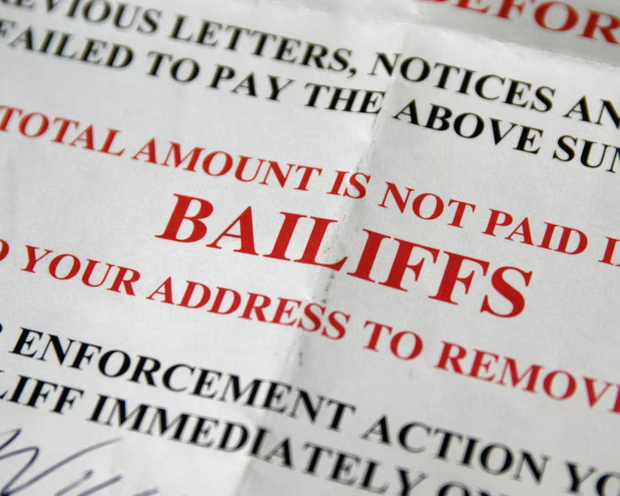
The British public continues to face aggressive debt collection tactics without necessary legal protection. The national government faces growing criticism for delaying crucial regulatory reforms for enforcement agents. A year has passed since officials promised to introduce mandatory oversight for the sector. Industry watchdogs now warn that vulnerable people remain exposed to severe financial harm. The Enforcement Conduct Board has expressed deep frustration over the current lack of progress.
Every year, millions of citizens experience intimidating knocks on their doors from debt collectors. The massive enforcement industry manages to collect over one billion pounds annually from debtors. Much of this money comes from unpaid council tax and local traffic penalties. Despite the huge scale, firms are not legally required to register with regulators. This major legislative loophole allows rogue operators to ignore established standards of fair conduct.
Consumer groups have documented extensive evidence of bad practice across the entire country. Vulnerable individuals frequently report instances of severe harassment and unfair financial penalty charges. Some agents have wrongfully clamped vehicles belonging to disabled individuals during collection visits. Others routinely threaten to confiscate household items that are legally exempt from seizure. These systemic issues highlight the urgent need for a strict statutory regulatory framework.
The scale of the problem became clear during recent high-profile corporate investigations. The largest enforcement company in Britain recently admitted to overcharging thousands of citizens. This serious corporate failure forced the business to launch an extensive customer refund scheme. Such incidents prove that voluntary industry compliance is completely inadequate for protecting the public. Without strong legal penalties, unethical companies will continue to exploit everyday British citizens.
The government initially promised a fairer system during a major announcement last summer. Ministers launched a wide public consultation to address these serious debt collection flaws. However, campaigners fear the entire legislative process has now completely ground to a halt. The lack of an official timeline has left many vulnerable families entirely unprotected. Independent watchdogs demand immediate legislative action to prevent further widespread consumer distress.
The current voluntary oversight model creates an uneven playing field for honest businesses. Many ethical enforcement firms actually support mandatory regulation to improve their public image. They agree that universal standards would help eliminate predatory behaviour from the market. Allowing rogue operators to opt out of oversight damages the entire profession. True consumer protection requires a single mandatory standard that applies to every firm.
Prominent financial consumer champions have joined the growing chorus demanding rapid political intervention. Media commentators regularly highlight heartbreaking stories of intimidation on their popular weekly broadcasts. They argue that the current lack of an official statutory regulator is completely outrageous. While some individual agents act professionally, systemic bad behaviour remains far too common. The ongoing political delay simply prolongs the misery experienced by indebted British households.
The Ministry of Justice insists that ministers remain fully committed to sector reform. Officials state they are currently analyzing consultation responses to develop comprehensive new proposals. The government promises to announce the next steps for independent regulation very soon. However, these vague political statements offer little comfort to those facing immediate hardship. The gap between political promises and legislative reality continues to widen every month.
The economic pressure on ordinary British households makes this issue incredibly time-sensitive today. Rising living costs have pushed many families into unavoidable council tax arrears nationwide. When councils pass these debts to private firms, severe psychological distress often follows. The aggressive tactics used by unregulated agents can worsen existing mental health conditions. A civilized society must ensure that debt collection is conducted with basic decency.
The financial scale of the enforcement industry gives it immense power over citizens. More than seven million individual cases are referred to bailiff companies every year. This massive volume means that even low error rates affect thousands of people. When those errors involve intimidation, the human cost becomes tragically high to bear. The government cannot afford to treat this social crisis as a low priority.
The Enforcement Conduct Board was created to raise standards across the collection industry. However, its lack of statutory power severely limits its daily operational effectiveness. It cannot adequately punish firms that choose to ignore its official code practice. This structural weakness leaves the watchdog toothless against the most aggressive market operators. Only direct parliamentary action can grant the board the legal teeth it needs.
Public trust in the wider justice system relies heavily on fair debt enforcement. When the state sanctions private companies to seize property, strict oversight is essential. The current legislative vacuum undermines public confidence in local and national government institutions. Citizens must feel confident that enforcement activities are fair, transparent, and legal. Continued political inaction risks damaging the relationship between the public and the state.
Debt advice charities are currently overwhelmed by requests for help from panicked clients. Advisors spend significant time intervening in cases where bailiffs have overstepped their bounds. These charities argue that mandatory regulation would prevent these systemic abuses from happening. It would allow advisors to focus on helping people resolve their underlying debts. The current broken system wastes valuable resources across the entire voluntary sector.
The debate around bailiff regulation is fundamentally about protecting human dignity and rights. No one disputes that legitimate debts should be paid to local authorities eventually. However, the methods used to collect that money must always remain humane. Forcing families into terror inside their own homes is an unacceptable collection method. The British government must act decisively to end these outdated and cruel practices.
As the summer parliamentary session continues, pressure on the justice minister will intensify. Campaigners plan to keep this urgent issue at the forefront of political debate. They will continue to highlight the daily suffering caused by unmonitored debt collection. The demand for a fair, mandatory regulatory system will only grow louder over time. Britain cannot afford another year of empty promises and delayed legislative action.
Related News:
 Reeves Faces Setback as Labour May Miss Homes Target
 Kate Winslet to Narrate Film Highlighting King’s Environmental Mission
 Trump’s UK Ambassador Urges North Sea Drilling to Strengthen US Ties
 UK Bans Fake Numbers: Scammers Lose Their Trick
 M&S Profits More Than Halve After Cyber-Attack
 Patients to Test Health at Home to Ease NHS Winter Pressure
 Millionaires group urge Reeves to introduce wealth tax to ‘lift kids out of poverty’
 Reeves rejects £1bn plea for NHS redundancy payouts
 Northern Lights may illuminate UK skies this week
 PM Condemns Leaks, Vows Loyalty to Ministers and Stability
 Major Rent Reform Ends No-Fault Evictions in England
 Stroke Patient Mistaken for Drunk, Care Delayed
 Inside the Helpline Protecting Missing Children in the UK
 Boots Showstopper Beauty Bundle Outshines Many Advent Calendars This Holiday Season
 PlayStation PS5 Deals Hit Lowest Prices Ahead of Black Friday
 Five-Year-Old Dies After Rare Tonsil Surgery Complication
 Starmer Says Labour’s Economic Plan Needs Years to Deliver
 UK unemployment rises to four-year high of 5.1% before budget
 Wiltshire Police Use Lasso to Catch Rampaging Village Goat
 Coasting Drinks: The Trend Redefining Alcohol Enjoyment This New Year
 Rising Hate Crimes Threaten Safety on UK Public Transport
 Starmer Faces Parliamentary Battles Over UK-EU ‘Reset’ Plan
 Met Police Vetting Failures Let Serial Rapists Remain
 Fatal Bolton Taxi Crash Claims Three Teens and Driver
 ScottishPower Tops List of Worst UK Energy Suppliers
 Judi Dench Champions Fight to Save London’s Green Spaces
 Crowborough Camp Welcomes First Asylum Seekers
 BBC Funding Crisis: Tim Davie Warns of Jeopardy Ahead
 Artificial intelligence will cost jobs, admits Liz Kendall
 Older Women Vanish from BBC Screens, Review Confirms Bias
 Streeting moves on doctor pay to end strike dispute
 Send spending gap leaves deprived areas behind
 Hidden Crisis: Domestic Abuse Suicide Toll in UK
 UK Unemployment Rate Climbs to 5.2% Peak
 BBC World Cup Presenting Duties Shared Among Trio
 Wales Approves Assisted Dying Bill Consent
 CPS Updates Guidance on Honour-Based and Dowry Abuse
 Asylum Seekers to Work After Year-Long Wait
 Inquiry into HMRC child benefit errors launched by NAO
 Farage Faces Backlash Over Crypto Cameo Endorsements
 Rising Costs Force Families to Rethink Days Out
 Sarah Mullally: The Solid Choice for Canterbury
 Scott Mills Sacked by BBC Over Personal Conduct Claims
 Palantir Boss Defends NHS Deal Amid Government Break Clause
 Police Chiefs Under Fire for Failing to Address Racism
 Relationship with Trump may be beyond repair, Starmer warned
 Unions Raise Concerns Over Doctors’ Pay Dispute
 UK Government Poised to Revive Stalled Hillsborough Law
 UK Staycations Rise as Travel Fears Grow
 Home Office Faces Legal Risks Over Asylum Hotel Living
 Official Admits Debate Over Mandelson Vetting Records
 Crisis in NHS Surgery Scheduling Hits Patients Hard
 Welsh Labour Faces Potential Historic Election Defeat
 Blue Badge Abuse: The Rising Tide of Public Hostility
 UK Faces Future Where Deaths Outnumber Births Yearly
 Scott Parker Leaves Burnley After Premier League Drop
 Silent Tracks: Rail Line Without Passengers
 RFU Backs Borthwick Despite England’s Poor Six Nations
 Major test for Labour as polls open in Great Britain
 Keir Starmer Struggles to Secure His Grip on Downing Street
 Fear and Betrayal: The Chilling Case of Kouri Richins
 Farage Faces Standards Probe Over Cash Property Purchase
 Closing the Gap: UK Pensions Commission Demands Action
 Sun and Jams: Britain Braces for a Sizzling Bank Holiday
Russian Electronic Attack Targets UK Defence Chief Jet
Sun and Jams: Britain Braces for a Sizzling Bank Holiday
Russian Electronic Attack Targets UK Defence Chief Jet
 UK Shoppers Face Prolonged Price Rises At Tills
 Tube Strike Brings Capital to a Standstill Over Shift Disputes
 Labour Denies Benefit Tax Hike Amid Mandelson Leak
 Makerfield Voters Demand Real Change as Election Looms
 US Condemns ‘Two-Tier’ UK Policing After Student Murder
 Deepfake Abuse on X Sparks Safety Concerns for Dissidents
 Stolen Mobiles Could Soon Become Useless Bricks
 Clean Air Initiatives Spark Major Fall in London Hospital Admissions
 United Kingdom Politics Worse Now Than Before Brexit, Warns MP
 Russian Tanker Captain Remanded in UK Court After Channel Seizure
 UK Care Crisis: Row Explodes Over New Visa Settlement Rules
 Sainsbury’s Boss Optimistic As Grocery Inflation Eases
 US Airman Avoids British Court in Indecent Exposure Case
 Ann Widdecombe, Formidable Political Figure, Dies at 78
 UK Schools Struggle as Classrooms Top 40C