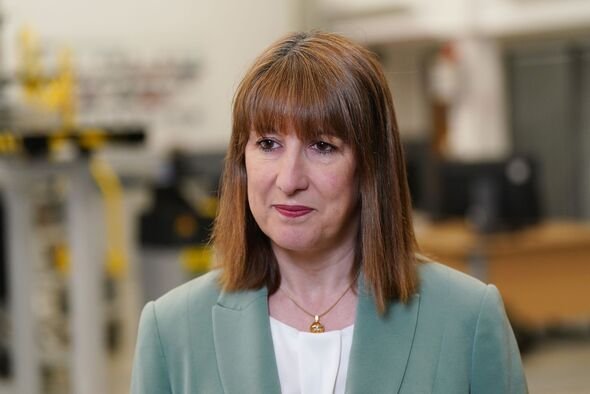
Published: 1 September 2025. The English Chronicle Desk
Chancellor of the Exchequer Rachel Reeves is facing an intensifying political storm as Prime Minister Keir Starmer appears to have lost confidence in her handling of the nation’s finances. Amid rising economic pressures and a looming Budget that threatens to define the government’s credibility, the relationship between Number 10 and the Treasury is showing increasing signs of strain.

Reeves, who entered office with the promise of restoring stability after years of Conservative rule, has struggled to balance the public finances in the wake of sluggish economic growth, persistent inflationary pressures, and rising demands for welfare support. While she initially presented herself as a steady pair of hands capable of steering Britain out of what she described as a £22 billion “black hole” left by the previous government, critics argue that her policies have not only failed to contain the problem but may have deepened it. Reports suggest that the fiscal shortfall has now more than doubled, raising fears that Labour could be forced into imposing one of the harshest sets of tax rises in recent history.
The Prime Minister, who spent much of the election campaign championing Reeves as an asset to his government, is now said to be increasingly frustrated. His political capital is being tested as he is compelled to intervene in Treasury matters, most recently by overturning unpopular measures such as the scrapping of the Winter Fuel Payment. The reversal, forced by public backlash and unrest within Labour’s own parliamentary ranks, has been cited as evidence of Starmer’s growing lack of trust in his Chancellor’s political judgment.
In a move widely interpreted as a direct rebuke, Starmer has appointed Baroness Minouche Shafik, former deputy governor of the Bank of England and most recently president of Columbia University, as his chief economic adviser. Although the government has presented her as a leading international economist, her appointment has divided opinion, with detractors pointing to her controversial record and accusing her of representing an “establishment mindset” prone to orthodox tax-and-spend solutions. Alongside Shafik, the reshuffle has also seen Darren Jones, previously Reeves’s deputy at the Treasury, transferred to Number 10 as Chief Secretary to the Prime Minister — a move described by political observers as a clear attempt by Starmer to sideline Reeves.

The timing of these developments is particularly sensitive as Labour prepares its upcoming Budget, expected to be one of the most significant in decades. Reports suggest the Treasury is exploring tax hikes in the range of £20 to £40 billion, measures that would inevitably spark fierce debate over fairness and economic strategy. For Reeves, the prospect of being closely monitored by Downing Street as she drafts fiscal policy marks a sharp fall from the independence traditionally afforded to Chancellors of the Exchequer.
Adding to the perception of disarray, one of Starmer’s senior communications aides resigned earlier today, compounding the sense of turmoil within the government. Political analysts argue that the resignation highlights broader tensions within Labour’s inner circle as it grapples with declining approval ratings and fears of alienating both middle-income families and its traditional working-class base.
For now, Reeves remains in office, but her position looks increasingly precarious. Should the Budget provoke a backlash similar to recent policy missteps, she risks becoming the scapegoat for wider dissatisfaction with Labour’s economic direction. Yet observers caution that Starmer himself may not be immune to political fallout. By intervening so heavily in the Chancellor’s remit, he risks blurring accountability between Number 10 and the Treasury, raising questions about his own leadership at a time when Britain’s economic challenges demand clarity and confidence.

As the political stakes rise, all eyes are on the forthcoming Budget. For Reeves, it may prove decisive in determining not only her future within the government but also Labour’s standing with an electorate that was promised stability and renewal after years of turbulence. For Starmer, it represents a test of his authority and his ability to command both his Cabinet and the confidence of the nation.
Related News:
 Market Jitters Send Stocks Lower as Trade Tensions and Earnings Anxiety Weigh on Investors
 UK Banks Granted Reprieve as BoE Delays Basel III Capital Rules Until 2028
 UK Inflation Climbs to 3.6% as Food and Fuel Prices Squeeze Households
 Modi’s London Visit Seals Historic UK-India Trade Pact Amid Global Tensions
 UK Economy Defies Expectations with Stronger-than-Predicted Growth in Second Quarter
 MPs Warn Thousands Still Face Poverty Despite Labour’s Welfare Reform Retreat
 Rayner Faces Scrutiny as Taxpayer Costs for Trade Union Reps Soar Under Her Watch
 Britain’s Silent Tax Burden: Soaring Inheritance Bills Trap Thousands of Grieving Families
 Global Trade Earthquake: Trump Slaps 35% Tariff on Canada and Expands Tariff Blitz to Over 90 Nations
 Chancellor Faces Mounting Pressure Amid “Impossible Trilemma” Over Tax Rises
 A Budget Crossroads: Stammer Faces Pressure as £50bn Fiscal Hole Threatens Autumn Plans
 UK Jobs Market Faces Strain as Employers Cut Bonuses and Hiring Amid Economic Slowdown
 Money Problem: ‘My husband is freelance and in hospital – how can I make sure we don’t lose our home?’
 China’s crackdown on civil servant perks sparks economic concerns
 Larger Families Could Gain Thousands if Labour Ends Two-Child Benefit Cap
 Inflation Latest: Cost of Living Expected to Rise Again in Key Figures Released Today
 HMRC Issues Urgent Warning Over Surge in Fraudulent Tax Refund Scams Targeting Britons
 Marxists Miss This One Basic Economic Reality That the UK Must Wake Up and Face
 Octopus Energy Expands Support Ahead of Winter Price Cap Rise with Free Home Upgrades
 Retail Sales See Uptick Amid Errors and Delays as ONS Faces Scrutiny
 UK House Prices Hit Record £299,331 as Market Shows Steady Growth
 UK Retail Sales Rise in August, but Tax Concerns Loom Over Festive Period
 Vodafone Faces Fourth Probe into Franchising Division Amid £120m Legal Battle
 Merck Abandons £1bn London Research Hub and Cuts 125 Jobs in Blow to UK Life Sciences
 UK Imposes 100 New Sanctions Targeting Russia’s Revenues and Military Supplies
 UK Economy Flatlines in July, Raising Pressure on Rachel Reeves Ahead of Autumn Budget
 UK Graduates in Healthcare Report Highest Satisfaction with Degree Choices
 Rachel Reeves Hosts Top UK and US Financial Executives as Trump’s State Visit Begins
 UK Labour Market Shows Signs of Cooling as Wage Growth Slows and Redundancies Rise
 UK Wage Growth Remains High, But Cost of Living Pressures Bite
 Privatisation of UK Industries Exacerbates Cost of Living Crisis, Warns Green Party Leader
 Next Shares Slide Amid Warning on Weak UK Growth and Jobs
 Resolution Foundation Chief Urges Chancellor Reeves to Rethink Budget Before November
 Dagenham Left in Limbo After Smithfield and Billingsgate Market Relocation Cancelled
 King Charles Earns Over £1 Million from Duchy Land Linked to Scrapped HS2 Project
 Vodafone Franchisees Sound Alarm: Mental Health Toll of Commission Cuts Revealed Years Before £120m Court Battle
 Public Skepticism Over AI Poses Challenge to UK’s Superpower Ambitions, Says Tony Blair Institute
 UK Government Backs Return of International Rail Travel to Kent Stations
 Assumption Island Dispute Dominates Seychelles Election as Environment, Economy and Geopolitics Collide
 UK Employment Bill Set to Grant Millions Greater Job Security, Thinktank Analysis Finds
 GSK Chief Executive Emma Walmsley to Step Down After Eight Years at the Helm
 AstraZeneca to List on New York Stock Exchange While Retaining London Ties
 Retailers Warn Tax Rises Could Prolong Inflation as Shop Prices Climb
 Marks & Spencer Staff to Work on Boxing Day for First Time in Five Years Amid Cost-Cutting Measures
UK Housing Market Returns to Growth Amid Signs of Stability and Regional Variation
Marks & Spencer Staff to Work on Boxing Day for First Time in Five Years Amid Cost-Cutting Measures
UK Housing Market Returns to Growth Amid Signs of Stability and Regional Variation
 UK households brace for October benefit payments and rising energy costs amid cost-of-living pressures
 Delivery Apps Could Double the Cost of Your Groceries, Warns Consumer Watchdog
 Dutch Government Seizes Control of China-Owned Chipmaker
 Massive Vodafone Outage Disrupts Internet and Mobile Services Across the UK
 Rachel Reeves to Confirm Changes to Britain’s Planning System
Rachel Reeves Signals Tax Rises, Spending Cuts Ahead
Rachel Reeves to Confirm Changes to Britain’s Planning System
Rachel Reeves Signals Tax Rises, Spending Cuts Ahead
 November 2025 Benefit and Pension Payment Dates Announced
 Retail Sales Hit Three-Year High Amid Tech and Gold Rush
 Lotto result jackpot draw halted due to technical glitch
 Rachel Reeves to lead UK trade push in Saudi Arabia amid rights debate
 US Super-Rich Are Draining Planet’s Safe Climate Space
 Fed Cuts US Interest Rates Again Amid Labour Market Uncertainty
 Green Party Surges Past Labour in Latest UK Poll
 Celebrities and Charities Demand UK Government Act on Child Poverty
 Nvidia Secures Major AI Chip Deals with South Korean Tech Giants
 UK Small Business Owner to Challenge L’Oréal in Tribunal
 Court Hears Challenge Over Water Bills Funding Sewage Fixes
 Millions of Brits Adjust Lifestyle to Afford Essentials
 Rachel Reeves Set to Break Labour Pledge and Raise Income Tax
 Tony Blair think tank warns Rachel Reeves must cut taxes if manifesto broken
 MPs Press Rachel Reeves to Hike Gambling Taxes
 Crisis charity to become landlord amid UK housing emergency
 Warning as Britons prepare to spend £4 billion this Black Friday
 China’s Youth Save, Not Spend, Amid Job and Housing Worries
 Skims Eyes Global Expansion After Reaching $5 Billion Value
 Global markets drop amid tech sell-off and China slowdown
 Japan Tourism Stocks Slide Amid China-Taiwan Row
 UK Rejects Funding to Save Mossmorran Plant
 PM Highlights UK Business at G20 in South Africa
 Mossmorran Plant Closure Hits Cowdenbeath Hard
Reeves to Crack Down on Benefit Fraud While Lifting Two-Child Limit
Mossmorran Plant Closure Hits Cowdenbeath Hard
Reeves to Crack Down on Benefit Fraud While Lifting Two-Child Limit
 India’s Labour Law Overhaul Sparks Fierce Debate
 Rising Water Bills Lift Troubled Thames Back to Profit
 Tesla Warns UK That Weak EV Rules Could Threaten Sales
 Prada buys Versace for $1.38bn, expanding luxury fashion empire