Published: 11 September 2025 | The English Chronicle Desk
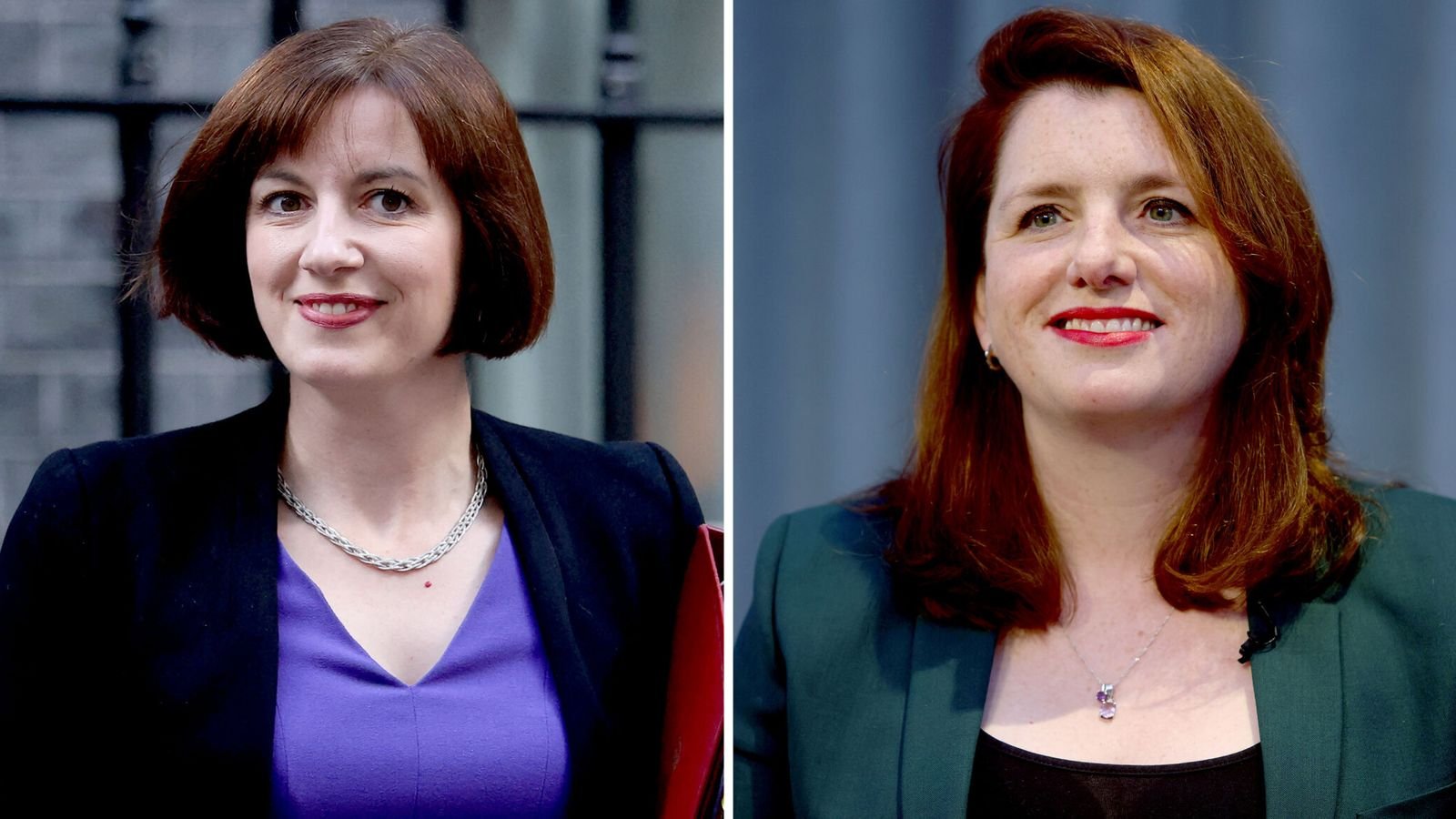
Labour’s deputy leadership contest is narrowing into a two-horse race, with Education Secretary Bridget Phillipson and former cabinet minister Lucy Powell emerging as the frontrunners, while other hopefuls in the field have struggled to gain momentum.
Phillipson crossed the crucial threshold of 80 nominations with ease on Wednesday evening, securing the support of 116 MPs. Powell, however, remains just below the required mark, holding 77 nominations at the latest count. While three other candidates—Bell Ribeiro-Addy, Paula Barker and Emily Thornberry—have yet to make significant progress, with each receiving fewer than 15 nominations, the contest has already crystallised around the two leading figures. Alison McGovern, the communities minister, withdrew from the race earlier in the day, publicly endorsing Phillipson.

Behind the parliamentary numbers, the contest is shaping up as an uneasy internal battle for Labour. Several MPs privately suggested that a showdown between Powell and Phillipson represents more than just a deputy leadership contest, but a proxy fight between Prime Minister Keir Starmer and Greater Manchester mayor Andy Burnham, who is seen as a potential future leadership challenger. One Labour MP described it as “the first skirmish between Burnham and [Labour strategist] Morgan McSweeney.”
Powell’s supporters have dismissed such characterisations as sexist and reductive, insisting her candidacy stands on its own merits. Still, her appeal among centrist and soft-left MPs is growing. At a hustings hosted by the so-called “red wall” group, Powell reportedly impressed members, some of whom were expected to back Phillipson. The Tribune group of MPs, associated with the soft left, also voted to support her. “She is definitely becoming the magnet for those of us who want a change,” said one of her backers.
Phillipson, however, remains the favourite among MPs overall. Her allies point to her track record as a north-east England MP, where she has battled the influence of Reform UK, as proof of her ability to connect with voters beyond Labour’s traditional base. “We have a broader cross-section of the PLP, MPs from every wing, and considerably more new MPs,” one source close to her campaign said.
Despite her strong position, Phillipson’s camp has expressed frustration over personalised media briefings, some of which have sought to portray her as “robotic.” Meanwhile, frontbenchers are expected to rally around her, though there have been mixed signals from Downing Street about whether ministers are under any formal expectation to back her.
Powell, who was ousted from the cabinet earlier this year, is seen as a formidable organiser within the party. Her candidacy has attracted MPs frustrated with Starmer’s leadership style and policy direction, especially after Emily Thornberry’s attempt to mount a challenge with sharp criticism of the government’s handling of the economy, welfare, and the Gaza war failed to gain traction. Thornberry’s proximity to Starmer’s north London constituency was also cited by some MPs as a factor working against her.
McGovern’s withdrawal signalled the shifting momentum of the race. While she had earlier argued for Labour to take on the far right to safeguard Britain’s progressive values, her campaign ultimately failed to gather the numbers. The chaotic organisation of the contest has added to MPs’ frustrations, with tube strikes and booking issues forcing the cancellation of several hustings, including one that was later moved online.
From the party’s left flank, Ribeiro-Addy has voiced anger at what she calls “anti-democratic” rules limiting participation in the contest. She warned that sidelining activists would only drive members away, weakening Labour’s grassroots energy. “We are losing the people that win us elections, that crowd the streets: the activists. They are completely disenfranchised,” she said, arguing that internal debate could showcase maturity rather than disunity.

Yet many MPs remain deeply reluctant to nominate candidates from the left, citing their experience under Jeremy Corbyn’s leadership. As one MP bluntly put it: “We’ve tried broadening the debate. Now I want to try narrowing it.”
With Phillipson’s commanding lead in nominations and Powell’s growing support among those seeking a counterweight to Starmer, the deputy leadership contest is rapidly shaping into one of the most consequential internal battles Labour has faced in recent years. Its outcome may not only determine who holds the party’s second-highest post but also influence Labour’s direction in government and the balance of power within its ranks.
Related News:
 Green Party Faces Leadership Divide Over Direction and Strategy
 Polanski’s Rise Signals a Shift in British Political Landscape
 Lib Dems Urged to Focus on Policy Over Stunts, Survey Shows
 Katie Lam’s Rise Signals Conservative Party’s Rightward Turn on Migration
 Greens Gain Ground in London as Zack Polanski Eyes Labour’s Stronghold
 Lib Dems Likely to Outperform Tories in Seat Count, Warns Top Pollster
 Zarah Sultana and Jeremy Corbyn Reunite Amid New Party Plans
 Swinney cites 2011 precedent to push for indyref2
 Facing the Challenge of Islam in Britain Today
 Plaid Cymru Triumphs in Caerphilly, Ending Labour Century-Long Hold
 How the Royal Navy Can’t Stop the Channel Boats
 Boris Johnson: Tories Risk Election Loss if They ‘Bash the Green Agenda’
 Green Party Surges Past Labour in Latest UK Poll
 Celebrities and Charities Demand UK Government Act on Child Poverty
Boris Johnson accused of undermining BBC leadership
Celebrities and Charities Demand UK Government Act on Child Poverty
Boris Johnson accused of undermining BBC leadership
 Tim Davie resigns as BBC director general amid bias claims
 ‘Reckless’ cuts to victims’ services will cost more than they save
 Politics latest: Starmer ‘will fight any leadership coup’ as Streeting denies attempt to oust Labour PM
 Scottish Ministers Express Alarm Over UK Asylum Reforms
 Labour Faces Historic Decline in Wales
 MP Offers Seat to Help Burnham Challenge Starmer
 BBC to Expand Standards Panel and Create Deputy Director Role
 Most Tories Expect to Support a Farage-Led Government
 Nigel Farage Responds to Racism Claims from School Days
 UK Must Act with Courage and Clarity on Israel-Palestine Conflict, Says Foreign Affairs Committee Report
 The Fight for Trans Safety Is a Fight for Everyone’s Safety — MPs Must Debate This Crucial Issue
 Brian Cox Slams Donald Trump’s Remarks on Scottish Independence and Voices Support for Kevin Spacey’s Return to Acting
 Chancellor Faces Mounting Pressure Amid “Impossible Trilemma” Over Tax Rises
 Radioactive Leak at UK’s Nuclear Warhead Base Sparks Outcry Over Safety and Secrecy
 Mass Arrests in London as Protest Defies Ban on Palestine Action
 Mutual Inconvenience: Why Alaska Was Chosen for the Trump-Putin Summit on Ukraine
 UK Government Expands ‘Deport Now, Appeal Later’ Policy to 23 Countries
 Chancellor Rachel Reeves Pushes for Sweeping Changes to Environmental Protections to Accelerate Development
 Larger Families Could Gain Thousands if Labour Ends Two-Child Benefit Cap
 Is the UK Ready to Put Boots on the Ground in Ukraine? Assessing Military Capacity and Challenges
 Palestine Action Ban Protesters Plan Tactic to Overwhelm Police at Next London Demonstration
 Police Scotland Spends £500,000 Compensating Officers Over Trump Visit
 Britain’s Migration Challenge: Rising Asylum Numbers and Hotel Pressures
 Elon Musk Sparks New Controversy by Backing Tommy Robinson Amid Farage Feud
 Urgent Action Needed on Windrush Compensation as Survivors Speak of “Waiting to Die”
 Tanni Grey-Thompson Faces Abuse Over Opposition to Assisted Dying Bill
 UK Rejoining EU ‘Unlikely in My Lifetime,’ Says Starmer’s Europe Reset Negotiator
 UK Urged to Collaborate with NATO on Missile Defence Amid Russian Drone Threat
 ‘Unite the Kingdom’ Rally Sparks Fears of Far-Right Normalisation Among Minority Britons
 France Proposes Ceiling on UK Role in €150bn EU Defence Fund
 Thousands Gather in London to Protest Donald Trump’s Second UK State Visit
 Tragedy in Hackney: Man Killed and Woman Injured in East London Park Shooting
 Zarah Sultana Seeks Legal Action After Bitter Clash with Jeremy Corbyn Over Party Membership Funds
 Top Andy Burnham Ally Launches Fierce Critique of Starmer Ahead of Labour Conference
 Mahmood Pledges Reform of Modern Slavery Laws After Court Blocks Deportation Appeal
 It Changed My View’: Campaign Encourages Pupils in Deprived Areas to Consider University
 UK Fighter Jet Purchase Could Breach Nuclear Treaty, Warns CND
 Migrants in UK May Need to Contribute or Face Removal, Home Secretary Signals
 Ed Miliband Urges Labour to Confront Billionaire-Backed Opposition to Net Zero Goals
 A Third of EU Citizens in UK Report Discrimination by Public Bodies Post-Brexit
 Senior Tories Condemn Badenoch’s Vow to Repeal Climate Change Act as Catastrophic
 Home Secretary condemns Gaza protests after Manchester synagogue attack as “un-British”
 Digital ID Plans Ignite Debate Over £600m Treasury Tax Boost and Privacy Concerns
 Robert Jenrick Reiterates Controversial Comments on Birmingham’s Integration as Backlash Grows
Public Trust in SNP Hits Historic Low Amid NHS Concerns
Yvette Cooper Backs Digital ID Plan for UK Teens
Robert Jenrick Reiterates Controversial Comments on Birmingham’s Integration as Backlash Grows
Public Trust in SNP Hits Historic Low Amid NHS Concerns
Yvette Cooper Backs Digital ID Plan for UK Teens
 Starmer Faces Backlash Over Downing Street Shake-Up and Progressive Exodus
 Johnson Suggests Mandelson Linked to China Spy Controversy
 Ministry of Justice fails to file £11bn in spending receipts
 Rachel Reeves signals welfare reform ahead of key budget
 Reform UK candidate fined £19,000 after using AI-generated cases to challenge election
 The debate over England’s compulsory reading test for 13-year-olds
 Kosovo agrees to host Britain’s refused asylum seekers
 William Steps Up Over Prince Andrew Palace Response
 UK Health Leaders Push for Urgent Tobacco & Vape Bill
Johnson Approved China’s London ‘Super-Embassy’ in 2018
UK Health Leaders Push for Urgent Tobacco & Vape Bill
Johnson Approved China’s London ‘Super-Embassy’ in 2018
 Zarah Sultana Launches Party to Change Politics
 FBI Director Kash Patel Defends Girlfriend Amid Government Jet Claims
 Starmer Faces Growing Dissent as Labour MPs Weigh Leadership Challenge
 VAR Must Rein Its Neck In to Save Football’s Spirit
 Mary Earps’s Manchester United Return Faces Mixed Reception
 Pressure Mounts on Starmer to Sack Chief of Staff Over Briefing Row
 Peers Flood Assisted Dying Bill with 942 Amendments
 Labour MP claims devolution bill is ‘blatant discrimination’ against Cornwall
 Millions Face Higher Taxes Under Reeves New Budget