Published: 20 September — The English Chronicle Desk | The English Chronicle Online
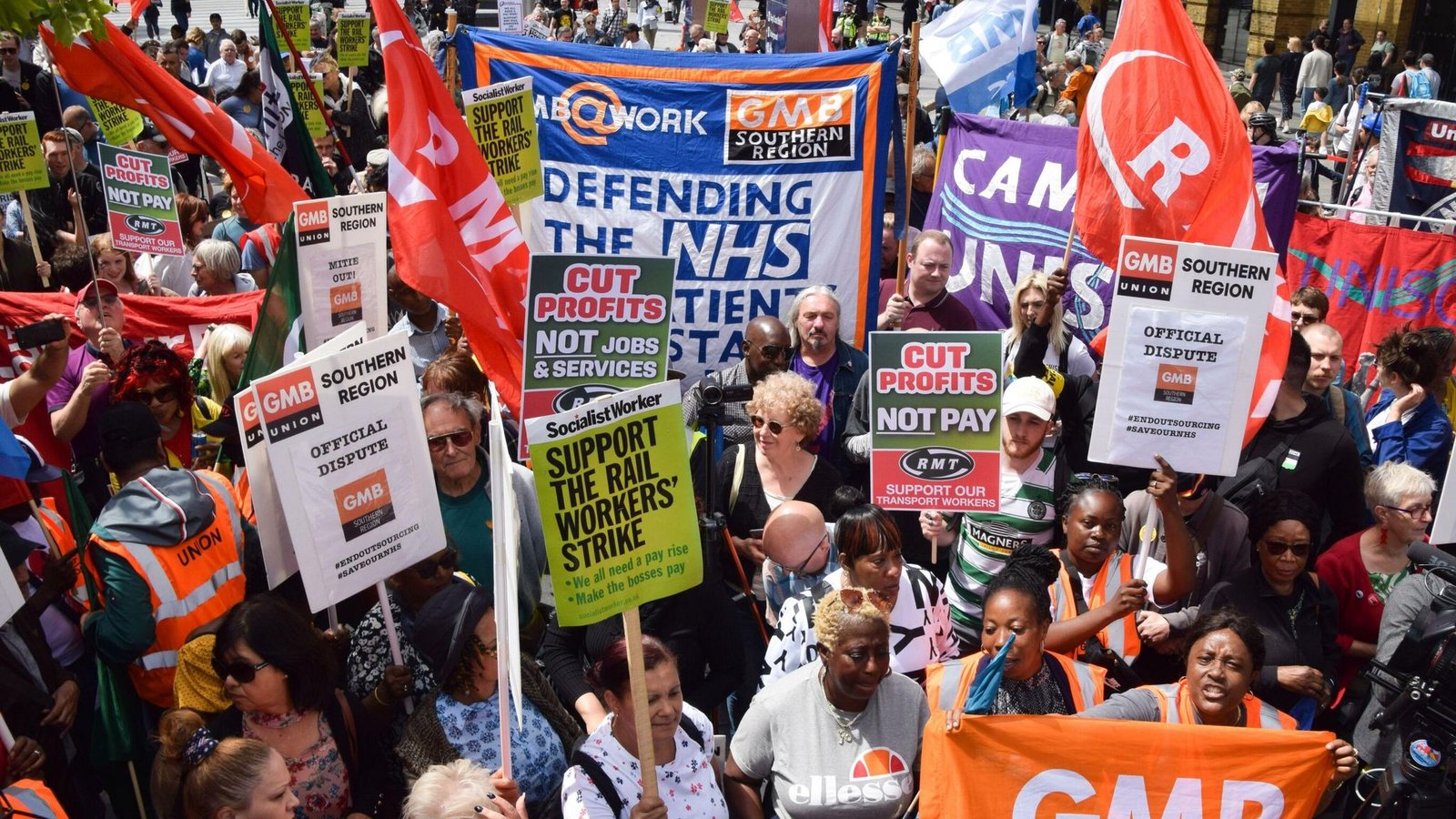
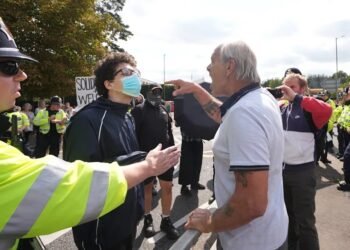
Glasgow became the centre of heated confrontation on Saturday afternoon as anti-immigration protesters and anti-racist counter-demonstrators faced off in tense and chaotic scenes. The clashes came just a week after London witnessed the largest far-right gathering in decades, organised by Stephen Yaxley-Lennon, better known as Tommy Robinson.
The protests unfolded around Buchanan Street, one of Glasgow’s busiest shopping districts. At the statue of Donald Dewar, Scotland’s first First Minister and the architect of devolution, anti-immigration activists gathered under union flags emblazoned with slogans such as “Stop the boats” and “Unite the kingdom.” Opposing them further down the street, trade unions, anti-racism campaigners, and Palestinian solidarity activists rallied with banners declaring “Bairns not bigots,” “Aye welcome refugees,” and “God hates fascists.”

By early afternoon, hundreds of people had converged at the steps of the Glasgow Royal Concert Hall for what was billed as a “unity rally.” Initially organised by podcaster John Watt, the event later gained momentum when groups like Save Our Futures and Our Kids’ Futures urged their supporters to join in. Watt himself withdrew after media reports highlighted his 2018 convictions for abusing two former partners.
The atmosphere quickly grew volatile. Police maintained a strong presence, keeping the anti-immigration protesters confined at the top of Buchanan Street while counter-protesters dominated the lower half with loud chants and a booming sound system blasting Abba and Chappell Roan. Despite speeches by anti-immigration activists, their words were often drowned out by chants of “shame on you” and the music from the opposing camp.
Among those supporting the “unity rally” were three women holding a banner featuring far-right American activist Charlie Kirk, who was assassinated in Utah earlier this month. One of them, nurse Laura Dunsmore, claimed the protest was about more than immigration, pointing to wider frustrations over healthcare, infrastructure, and governance. “We can’t vote our way out of this,” she said. “We need change at a higher level.”
In contrast, counter-protesters highlighted solidarity with refugees and rejected the narrative of fear. Cat, a software technician who joined with her partner and baby, carried a placard reading, “This mum welcomes refugees.” She said she wanted to challenge claims that immigration endangered women and children. “I’m not worried about asylum seekers. I’m far more worried about those guys over there,” she said, pointing toward the anti-immigration rally.
As tensions spilled into pushing and shoving at the fringes, police intervened quickly, diverting pedestrian traffic and preventing further escalation. While the anti-immigration group dispersed by mid-afternoon, declaring their rally a success, counter-protesters lingered, turning their demonstration into something resembling a street carnival, dancing to disco hits as the atmosphere softened.
The protests reflected broader political tensions in Scotland. In recent weeks, Scottish streets have been draped with Saltires in a symbolic counterpoint to England’s Operation Raise the Colours movement, which has repurposed the St George’s cross as a far-right emblem. The Saltire, long a unifying national symbol, is now caught in a cultural tug of war.

This summer’s unrest follows last year’s violence across England and Northern Ireland after the Southport killings, which Scotland initially avoided. But political winds appear to be shifting. A More in Common poll recently indicated that Reform UK is now polling neck and neck with Scottish Labour ahead of next May’s Scottish Parliament elections. Immigration, once a secondary issue north of the border, has surged to the forefront of voter concerns, compounded by Glasgow’s mounting refugee housing crisis.
As Scotland grapples with rising political polarisation and the challenges of accommodating new arrivals, Saturday’s clash in Glasgow underscored the growing divisions within communities — divisions that mirror trends seen across the wider UK.
Related News:
 MPs Warn Thousands Still Face Poverty Despite Labour’s Welfare Reform Retreat
 Zarah Sultana Seeks Legal Action After Bitter Clash with Jeremy Corbyn Over Party Membership Funds
 Boris Johnson accused of undermining BBC leadership
 Second world war veterans honoured as King leads Remembrance Sunday
 ‘Reckless’ cuts to victims’ services will cost more than they save
 Victims’ commissioner Baroness Newlove dies aged 63
 Tasers Introduced in UK Prisons to Combat Rising Violence and Protect Staff
 Southport Stabbing Survivor Speaks Out: ‘I Thought I Was Going to Die’
 Wethersfield Controversy Deepens as Asylum Seeker Numbers Set to Surge by 50%
 Police Prepare for Potential Disorder as Far-Right Groups Promote Anti-Migrant Protests Across England
 Mass Arrests in London as Protest Defies Ban on Palestine Action
 FBI and NSPCC Sound Alarm Over Alarming Surge in Child Sextortion Cases Online
 Russell T Davies Warns of Declining UK Gay Rights Amid Rise of Reform UK and Trump Influence
 English Backpacker Pleads Guilty to Causing Death of Perth Father in Drunken E-Scooter Crash
 Alarming rise in abusive teen relationships in the UK sparks urgent warnings
 Police Advised to Disclose Ethnicity of Suspects in High-Profile Cases
 Shock and Anger as Child Sexual Exploitation Victims Excluded from Government’s Violence Against Women Strategy
 Dream Dog Scam: Woman Loses £500 to Fake Online Breeder’
 Akinwale Arobieke Found Dead at Liverpool Home
 UK Police Face ‘Chronic Pressure’ Amid Surge in Protests Over Asylum and Gaza
 Urgent Action Needed on Windrush Compensation as Survivors Speak of “Waiting to Die”
 Norfolk Hospital Ranked Worst in England as NHS League Tables Return
 Peter Mandelson Referred to Jeffrey Epstein as ‘My Best Pal’ in 50th Birthday Letter
 Oxford Union Condemns President-Elect’s Comments Following Charlie Kirk Shooting
 Starmer Urged to Champion Workers’ Rights Amid Low Public Awareness
 First “One In, One Out” Deportation Flight Departs Without Migrants Amid Legal Challenges
 UK Doctors Guilty of Sexual Misconduct Continue Practising Amid Weak Sanctions, Research Finds
Corbyn and Sultana Clash Over Membership Portal as Divisions Surface in New Leftwing Party
UK Doctors Guilty of Sexual Misconduct Continue Practising Amid Weak Sanctions, Research Finds
Corbyn and Sultana Clash Over Membership Portal as Divisions Surface in New Leftwing Party
 Northern Ireland Faces Fears of Prolonged Race Riot “Permacrisis”
 Ministers Consider Granting Mayors Oversight of Schools and Hospitals in Major Devolution Push
 Zarah Sultana Calls Off Legal Action Amid Party Feud with Jeremy Corbyn
 “Social Housing Crisis in England: Tenant Complaints Soar Amid Dangerous Living Conditions”
 Metropolitan Police Considers Requiring Officers to Declare Freemasonry Membership
 Police Appeal for Witnesses After Woman Raped in Oxfordshire Churchyard
 A Third of EU Citizens in UK Report Discrimination by Public Bodies Post-Brexit
 Jailed Georgian Opposition Leaders Warn UK of Iranian Links to Ruling Party
 Campaigners Urged to Reframe Child Poverty Debate in Scotland Ahead of Elections
 Stephen Lawrence’s Father Demands Justice Before Killer’s Parole
 Starmer Condemns 7 October Student Protests as ‘Un-British’
 Majority of UK Men Would Opt for Prostate Cancer Screening, Survey Finds
 Ambulance Worker Fired After Flinging Amputee from Wheelchair and Offering Bribe
 Madeleine McCann Detectives to Testify Against Woman Accused of Stalking the Family
Boris Johnson Breached Rules on Post-Office Business Contacts
Madeleine McCann Detectives to Testify Against Woman Accused of Stalking the Family
Boris Johnson Breached Rules on Post-Office Business Contacts
 Zarah Sultana and Jeremy Corbyn Reunite Amid New Party Plans
 UK Charities Warn Rising Hate Threatens Staff Safety
 Human Rights Groups Challenge UK-France “One in, One Out” Deal
 Campaigners Call for CPS Review After Woman’s Suicide
 Kosovo agrees to host Britain’s refused asylum seekers
 Sex offenders to lose parental rights for children born of rape
 Hugely Wasted Opportunity’ UK Grooming Gangs Inquiry
 UK Health Leaders Push for Urgent Tobacco & Vape Bill
 Nearly 48,000 Zombie Knives Removed from UK Streets in a Year
 Mass Stabbing on Doncaster to London Train Leaves Ten Injured
 FBI Director Kash Patel Defends Girlfriend Amid Government Jet Claims
 Experts Warn on Home Birth Risks, Call for Skilled Midwives
 Met Police Culture Makes Racial Harm ‘Inevitable’
 British Grandmother to Return Home After Death Sentence in Bali
 Eleven Arrested After Pro-Palestine Protest at Villa Match
 Jailed UK climate protesters face extremist-style restrictions
 Remaining rebel Labour MPs have whip restored
 How to get help when a child goes missing – call 999 urgently
 BBC Faces Backlash as Reform UK Withdraws from Film
 Politics latest: Starmer ‘will fight any leadership coup’ as Streeting denies attempt to oust Labour PM
 Leading doctors issue warning amid ‘bad’ flu season
 New review urges UK to repatriate Shamima Begum, others from Syria
 Navy cuts scrap key landing upgrade for UK F-35B jets
 UK Asylum Overhaul Sparks Debate Over Human Rights and Deportations
 UK Asylum Reforms: Temporary Refugee Status and Faster Deportations
 Mum Calls for New Licence Rules After Teen Road Death
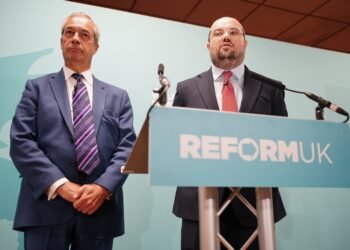 UK Candidate Moved to Safe House After Election Threats
 Mother Watches in Horror as Teen Daughter Dies on Tracks
 PM Shares Emotional Letter to Son on Men’s Struggles
 Kate Forbes: Motherhood Harder Than Politics
 Reeves to Crack Down on Benefit Fraud While Lifting Two-Child Limit
 Most Tories Expect to Support a Farage-Led Government
 DWP to Reassess Hundreds of Thousands in Carer Allowance Scandal
 Labour MP claims devolution bill is ‘blatant discrimination’ against Cornwall
 Planned Palestinian Flag Raising at Belfast City Hall Faces Delay Amid Legal Concerns
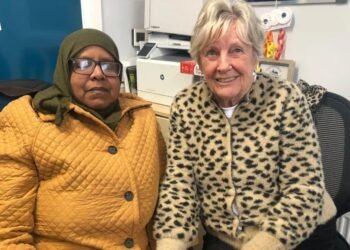 Sudanese Family Vows to Stay After Racist Graffiti
 “Enough is Enough”: Local MP Vows to Fight Rainham Quarry Plans