Published: 24 September 2025. The English Chronicle Desk | The English Chronicle Online
Typhoon Ragasa, described by meteorologists as one of the most powerful storms to hit East Asia in recent years, has wreaked havoc across multiple territories, leaving a trail of destruction in its path. After tearing through Taiwan, where at least 15 people were killed and 17 others remain missing, the storm skirted past Hong Kong with ferocious winds and rain before making landfall in southern China’s Guangdong province. Although it has since weakened from a super typhoon to a severe typhoon, the scale of its impact remains immense, with millions affected, widespread property damage, and mounting questions over disaster preparedness.
The heaviest casualties so far have been reported in Taiwan, where floodwaters caused by the bursting of a barrier lake inundated parts of Hualien County. Officials confirmed that all 15 fatalities occurred in Guangfu township, with authorities continuing to search for 17 people still unaccounted for. Premier Cho Jung-tai and Vice President Hsiao Bi-khim visited the affected areas, pledging government support and promising a full inquiry into the disaster response.

“For the 14 who have tragically passed away, we must investigate why evacuation orders were not carried out in the areas we had asked for, which led to such a tragedy,” the premier said, before the death toll was revised upward. A high school designated as an evacuation centre in Guangfu was itself engulfed by floodwaters, shocking local residents who believed it to be a safe refuge. Survivors described scenes of chaos, with chairs, refrigerators, and vehicles swept away within minutes. One witness compared the speed of the flooding to the 2011 tsunami in Japan, saying, “Within 10 minutes, the water spread to the campus from the street. It felt exactly like what we saw on TV after the earthquake in Japan.”
Authorities revealed that the collapsed barrier lake had formed only two months earlier after a landslide and had survived a weaker typhoon just weeks ago. Officials may have underestimated the strength of Ragasa’s rainfall and its potential to breach the natural dam. Residents of Hualien, a mountainous county known for its Indigenous communities and tourism industry, are now left reeling from the devastation.
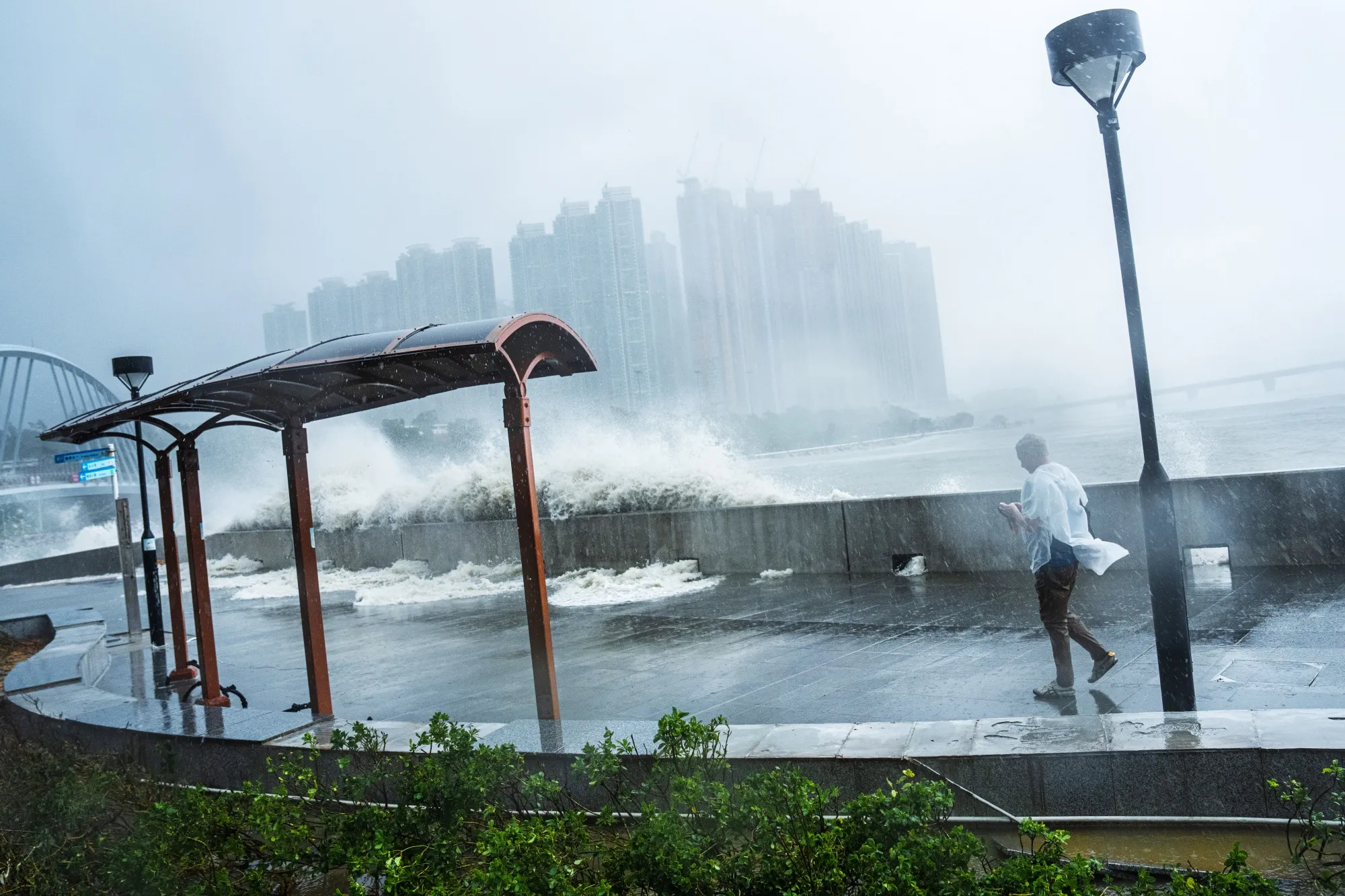
Hong Kong avoided a direct landfall, but Ragasa’s proximity was enough to cause serious damage. Public broadcaster RTHK reported at least 62 injuries, more than 400 fallen trees, 15 instances of flooding, and a landslide. In one dramatic scene, a surge of water shattered the glass doors of a hotel, sweeping a worker off his feet.
The Hong Kong Observatory initially issued its highest warning signals but began lowering them as Ragasa moved westward, having weakened slightly after brushing past the territory. Despite the downgrade, gale-force winds and violent rain showers continued to lash the city, accompanied by dangerous swells along the shoreline. Residents described the storm as one of the most intense in recent memory, with streets littered with debris and emergency crews working throughout the day to clear obstructions.
By Wednesday afternoon, Ragasa made official landfall near Yangjiang in China’s Guangdong province, arriving with sustained winds of 144 km/h (89 mph) and even stronger gusts. The Chinese Meteorological Administration warned of torrential rains, landslides, and storm surges, especially along the “dirty side” of the typhoon — the right-hand side of the storm’s trajectory, which tends to be significantly more destructive.
In the coastal city of Jiangmen, authorities reported record-breaking winds of 67 m/s (241 km/h) in Taishan county, surpassing the previous record set by Typhoon Mangkhut in 2018. Officials described the situation as “the most crucial and tense phase” of their typhoon response.
Guangdong, home to more than 126 million people and a hub for manufacturing and technology, is now at the centre of the storm. Shenzhen, China’s Silicon Valley, was effectively shut down as schools, businesses, and transportation systems were suspended in anticipation of the typhoon. By late Wednesday afternoon, officials began easing restrictions, lowering the city’s warning level from red to yellow as Ragasa moved westward.
China’s preparedness efforts were evident across Guangdong, where local authorities ordered mass evacuations from high-rise buildings, low-lying coastal zones, and mountain regions at risk of landslides. Police patrols, neighbourhood watches, and community volunteers spread across urban and rural districts, urging residents to stay indoors. Restaurants and shops were shuttered, with local governments stressing that the risks were far from over even as the typhoon weakened.
Zhuhai city, located on the southern coast, braced for a month’s worth of rainfall within hours. Red alerts were issued in mountainous areas where landslides remain a severe threat. The heavy rains were especially concerning as they arrived only days after Typhoon Mitag had saturated the soil in parts of Guangdong, reducing the land’s ability to absorb further downpours.
“This is particularly concerning as our province has just been struck by Typhoon Mitag,” a Guangdong government statement read. “The risk and potential harm of another super strong typhoon will significantly increase, making the defence situation extremely severe and urgent.”
Meteorological forecasts suggest Ragasa will continue moving westward, gradually weakening but still bringing torrential rainfall and flash flooding risks to inland areas. Authorities expect storm surges of 2–3 metres, with some coastal pockets experiencing waves as high as 5 metres. Rainfall totals of up to 450 mm are anticipated across Guangdong and neighbouring provinces.
Further west, Vietnam and Laos are bracing for Ragasa’s remnants later this week, as the typhoon transitions into a severe tropical storm. Both countries have activated disaster response protocols, with schools closed, fishing vessels recalled to port, and emergency shelters prepared.
The devastation caused by Ragasa comes at a time when climate experts are warning that typhoons and tropical cyclones in East Asia are becoming more frequent and more intense due to rising sea surface temperatures and climate change. China’s weather authorities have described Ragasa as the “king of storms,” underscoring the growing challenges faced by nations in the region.

For Taiwan, Hong Kong, and southern China, the storm has underscored vulnerabilities in disaster management and infrastructure resilience. From questions over why evacuation orders were not fully implemented in Guangfu, to concerns about the structural integrity of barrier lakes and storm defences, Ragasa’s trail of destruction will likely trigger policy reviews in the months ahead.
For now, however, the focus remains on rescue operations, emergency relief, and rebuilding shattered communities. Survivors across Taiwan’s Hualien County, Hong Kong’s urban districts, and China’s Guangdong coast are counting their losses while holding on to the hope that the worst is finally over.
Related News:
 Sri Lanka Floods Leave 56 Dead, Dozens Missing
 Ousted Bangladeshi Leader Sheikh Hasina Indicted for Crimes Against Humanity Amid High-Stakes Trial for 2024 Uprising
 Severe Thunderstorms Lash England and Scotland: Met Office Issues Amber and Yellow Warnings Amid Flooding Risks
 Shadow Fortresses in the Sea: Satellite Revelations Expose China’s Expanding Military Stronghold in Disputed Waters
 Singapore Corruption Scandal: Details Emerge on Iswaran’s Luxury Flight and Ties to Tycoon Ong Beng Seng
 Tariff Tempest: India Rebukes Trump’s ‘Unfair’ Oil Sanctions as Diplomatic Tensions Mount
 UK Weather Update: Hottest Day of Heatwave Forecast with Chance of Temperatures Reaching 35°C
UK Weather: Heat Alerts Extended as Temperatures Set to Reach 30°C This Weekend
UK Weather Update: Hottest Day of Heatwave Forecast with Chance of Temperatures Reaching 35°C
UK Weather: Heat Alerts Extended as Temperatures Set to Reach 30°C This Weekend
 UK Weather Forecast: Rain and Storms to Break Summer Heatwave Across Britain
 UN Calls for Renewed Global Solidarity as Rohingya Forced Exodus Marks Eight Years
 Xi, Putin and Kim Display Unified Front at Massive Beijing Military Parade
 Deadly Bomb Blast Strikes Near Political Rally in Quetta
 India Triumph in Dubai Amid Unexpected Twists
 Pakistan-Saudi Arabia Defence Pact Raises Alarm in India
 Gen Z Uprising in Asia: How Social Media and TikTok Fuel Anti-Corruption Movements
 Thai Court Sentences Assassin of Cambodian Opposition Politician to Life Imprisonment
 Storm Amy Ravages UK: Fatalities, Widespread Travel Chaos, and Power Outages
 Storm Amy Wreaks Havoc Across UK and Ireland, Claims One Life
 Taliban Diplomatic Breakthrough: Why Amir Khan Muttaqi’s Visit Marks a New Era in India-Afghanistan Relations
 Acclaimed South Korean Author Baek Se-hee Passes Away at 35, Leaves Legacy Through Writing and Organ Donation
 Delhi Tightens Curbs as Citizens Protest Over Toxic Air
 China’s Youth Save, Not Spend, Amid Job and Housing Worries
 British Doctors Arrested in India for Unauthorized Border Crossing
 Israeli Strike Kills 13 Near Palestinian Camp in Lebanon
 Commuters warned as yellow snow and ice alert hits Northern Ireland
 Snow and Ice Cause Travel Chaos in North Yorkshire
 UK Energy Bills to Rise Slightly in January
 India’s COP30 Delay Raises Global Climate Concerns
 Night Bus Crash in Cambodia Kills 16
 Historic Floods Devastate Thailand and Southeast Asia
 Trump EPA Moves to Roll Back Soot Pollution Limits
 Hong Kong Wang Fuk Court Fire Leaves Dozens Dead
 Delhi’s Toxic Air Crisis Leaves Children Sick and Vulnerable
 Singapore Women Acquitted After Pro-Palestine March
 Thousands Homeless After Massive Fire in Dhaka Shantytown
 India’s Labour Law Overhaul Sparks Fierce Debate
 Video shows Israeli troops kill Palestinians after surrender
 Families wait in agony for missing after Hong Kong tower blaze
 Fury After Hong Kong’s Deadliest Fire in Decades
 ICC to Rule on Duterte’s Provisional Release
 Huawei, ZTE secure 5G deals in Vietnam amid US tensions
 Southeast Asia floods claim 241 lives, rescue efforts continue
 Chinese & Japanese Boats Clash Near Disputed Islands
 Hong Kong Orders Probe Into Deadly 151-Death Fire
 Putin Meets US Envoy Amid Key Ukraine Peace Talks
 Maxwell withdraws from IPL 2026 after 13 seasons
 Delhi’s Toxic Air Drives Spike in Respiratory Illnesses
 Indonesia to Repatriate Two Dutch Drug Convicts
 Putin visits India as Ukraine peace, trade push intensifies
 Post Office Scandal Compensation Tops £1 Billion as Victims Finally See Justice
 UK Banks Granted Reprieve as BoE Delays Basel III Capital Rules Until 2028
 England Grapples with Unprecedented Bluetongue Virus Outbreak: Entire Nation Declared Infected Zone
 West End Exposed as London’s Knife Crime Epicentre Amid Alarming Surge in Violence
 Fire Contained at Edinburgh’s Arthur’s Seat After Overnight Battle by Firefighters
 Mystery Wallaby Spotted on Norfolk-Suffolk Border Sparks Police Appeal
 Hundreds of Swimming Pool Closures Leave Children ‘At Risk of Drowning’, Union Warns
 Massive 641-Mile Storm Set to Batter UK with 15 Hours of Rain and Strong Winds
 Arsenal Showcase Depth and Flexibility as Arteta Eyes Title Challenge
 Japanese Court Sentences Man to Death for 2023 Quadruple Murder in Rare Gun and Knife Attack
 Hospice Cuts Raise Alarm Across England Amid Funding Crisis
 Tragedy on Lizard Island: Cruise Passenger Dies
 Zarah Sultana Launches Party to Change Politics
 UK Faces Arctic Blast as Polar Vortex Disruption Brings Heavy Snow
 Son Reveals UK Couple in Iran Resort to Hunger Strike for Help
 Japan Deploys Police to Curb Deadly Bear Attacks
 Former Lion Heskey Warns of Shortage of England Strikers
 Orban Says Ukraine Has ‘No Chance’ as EU Support Continues
 Mother Watches in Horror as Teen Daughter Dies on Tracks
 Seven Countries, One Winner: Europe’s Best Christmas Market
 Haiti Qualifies for World Cup Despite Coach Never Visiting Country
 Serial Rapist and Former Cop Found Guilty Again
 Pentagon Officials in Ukraine to Discuss War End
 Scottish Families Take Legal Action Over School CO Leak
 Venezuela Threatens Nobel Winner Machado with Fugitive Status
 Vicki Fears Losing Motability Car
 Two National Guard Soldiers Critically Injured Near White House
 Southern Lebanon reels as Israeli strikes shatter communities
 Jordan Bardella: France’s Young Presidential Contender
 Pavarotti statue frozen in Italian ice rink sparks backlash
 EU plans $105bn Ukraine aid using frozen Russian assets