Published: 25 September 2025. The English Chronicle Desk
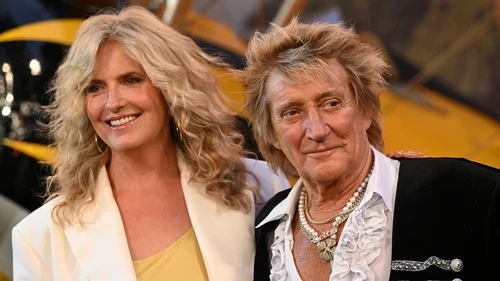
Penny Lancaster, the television personality, former model, and wife of legendary British rocker Sir Rod Stewart, has shared deeply personal revelations about the harrowing period when her husband was diagnosed with prostate cancer and the toll it quietly took on her own mental health. In her newly released memoir Someone Like Me, Penny revisits those years with a raw honesty that sheds light not only on Rod Stewart’s health crisis but also on her private battle with depression, trauma, and resilience.
Rod Stewart’s prostate cancer diagnosis dates back to 2017, when what seemed like a routine medical appointment revealed something much darker. Tests confirmed that the music icon was facing an aggressive form of prostate cancer. For Stewart, who has built his public persona around strength, charm, and flamboyant stage energy, the decision was swift—he did not want the world to know. According to Penny, her husband insisted that the news remain a closely guarded secret until he fully understood what he was dealing with. This decision, though understandable, meant that she too had to carry the weight of silence.

Lancaster describes the period as an “excruciating wait.” She recalls the long hours of uncertainty, waiting for results, while her husband’s mind seemed fixated on the future. Even while recovering from treatment, Stewart was already sketching out ideas for his next tour. The juxtaposition of his forward-looking optimism and her private fears created a tension that Lancaster struggled to reconcile. She writes candidly of having to shut herself off from her usual support networks because Rod had made it clear he wanted privacy. That secrecy became its own burden.
In her book, Lancaster explains how the pressure of silence eventually collided with other parts of her life. During an appearance on ITV’s daytime panel show Loose Women, she unexpectedly found herself opening up about past sexual harassment she had endured. This unplanned disclosure, she reflects, was the breaking point—once she gave voice to one long-buried pain, everything else she had been suppressing seemed to pour out. She describes this as “opening the floodgates,” a moment when she could no longer contain the weight of what she had been feeling.
The days that followed, however, were some of her darkest. Penny admits that she began to spiral into depression. She confesses that she found it difficult to summon the strength she needed both for herself and for Rod. “I felt incredibly low, and my depression spiralled further,” she writes, adding that she eventually came to realise she needed help. Her doctor suggested anti-depressants, a recommendation she initially resisted. At the time, Lancaster admits, she viewed taking medication as a weakness. “Silly, when I look back now,” she reflects, acknowledging that she needed a way to stabilise herself so that she could cope with the challenges ahead.
Eventually, she agreed to treatment, and she now credits the decision with helping her regain balance during one of the most difficult chapters of her life. She describes the medication as “the safety raft” that kept her afloat until she could once again reach the shore of normal life. In those intimate discussions with her GP, she revealed not only her fears of losing Rod and the devastating impact it would have on their sons, but also layers of unresolved trauma that resurfaced in the wake of her public revelations on Loose Women.
Despite opening those doors, Lancaster admits she did not continue with therapy at the time. She felt that the timing was not right and that some memories needed to remain shut away as she and her husband navigated his illness. That tension—between the need to heal and the need to cope—defined much of her personal battle.
For Rod Stewart, the story ultimately took a hopeful turn. In July 2019, two years after his initial diagnosis, doctors declared him cancer-free. Stewart later chose to go public with his experience, encouraging other men to take prostate health seriously and to undergo regular checks. His survival story has since become one of perseverance and medical success, though Lancaster’s memoir reminds readers that behind every such story lies a family’s hidden struggle.
Lancaster’s revelations underline an often-overlooked reality: that when one partner in a relationship faces illness, the other becomes an unsung survivor in their own right. Her account speaks not only to the fear of losing a loved one but also to the quiet isolation, the pressure of secrecy, and the personal demons that health crises can unearth.

In writing Someone Like Me, Penny Lancaster has laid bare her vulnerabilities in the hope that others may feel less alone in similar struggles. Her reflections are not simply about the pain of her husband’s illness but about resilience, the importance of seeking help, and the courage to speak openly about mental health.
As she candidly observes, her reluctance to take medication now feels misplaced, but acknowledging that mistake has allowed her to appreciate the strength it took to confront her struggles head-on. Today, with Rod Stewart in good health and her own story finally told, Lancaster emerges not only as the devoted wife who stood by her husband through a devastating diagnosis but also as a voice for those who quietly endure their own battles in the shadows.
Related News:
 Farewell to a Cultural Icon: Malcolm-Jamal Warner Dies at 54 During Holiday in Costa Rica
 YouTube Surges Ahead as UK’s Go-To TV Choice for Children, Reshaping the Future of Broadcast Media
 Murder, Mischief, and Mystery: Cosy Crime Series to Watch Before The Thursday Murder Club Premieres
 A Love Remembered: Sir Michael Palin Reflects on Loss, Resilience, and the NHS’s Apology
 Heartbreak and Hardship at Diddly Squat: Jeremy Clarkson Faces TB Outbreak, Pup’s Death, Failing Crops, and Rising Theft Threats
 A Week of Grief and Resolve: Jeremy Clarkson’s Farming Nightmare and Yvette Cooper’s Emotional Fight Against Ninja Sword Tragedy
 Reunion in Mourning, Jack Osbourne Reflects on Estranged Bond with Sister Aimee as Family Gathers for Ozzy’s Funeral
 TV host Jay Blades faces charges on two counts of rape
 The Walking Dead’ Actress Kelley Mack Dies at 33
 MASTERCHEF IN CRISIS: Fans React to Major Overhaul as Long-Time Hosts Gregg Wallace and John Torode Dropped Amid Controversies
 Sean Hayes Reimagined: From Sitcom Stardom to Serious Stage Acclaim
 Love? Actually, No: Emma Thompson Reveals Donald Trump Once Asked Her on a Date
 Flashman and the Silver Screen: The Little-Known Hollywood Adventures of George MacDonald Fraser
 The Twisted Tale of Amanda Knox: When Retelling Justice Becomes Misguided Drama
 Millie Bobby Brown and Jake Bongiovi Begin Parenthood Through Adoption
 Chappell Roan Delivers Fairytale Spectacle at Reading Festival, Cementing Pop Stardom
 Peter Andre Praises Son Junior’s ‘Quiet Season’ Amid Ongoing Family Dispute
 Emma Heming Willis Speaks Openly on Bruce Willis’s Declining Health Amid Dementia Battle
 Kelsey Parker Opens Up About Heartbreak and Healing Following Stillbirth
 Warwick Davis Returns as Professor Flitwick in HBO’s Harry Potter Reboot Amid Expanding Cast
 September’s Must-See Films: From Spinal Tap II to Leonardo DiCaprio’s Latest Thriller
 Robert Redford: The Indispensable Patron of American Independent Cinema
 Watchdog, Cornflakes and Courage: Remembering John Stapleton, a Broadcaster Who Did It All
 Kerry Katona’s Heartfelt Regret Over Ricky Hatton’s Death
 ‘A Lot Juicier Than Downton Abbey’: The Real-Life Family Drama Behind New Netflix Show House of Guinness
 Dawson’s Creek” Cast Reunites for Special Broadway Benefit to Support James Van Der Beek
 Brad and Angelina’s Journey: Embracing Shiloh’s Identity While Protecting Childhood Privacy
 Bad Bunny Headlines Super Bowl 2026
 Must-Watch TV Shows This October
 Beloved Actress Dame Patricia Routledge Dies Aged 96
 BBC Eyes Defence Budget to Sustain World Service Amid Funding Crisis
 Karen Carney Shines on Strictly Come Dancing Week Two Despite Tango Wobbles
 Celebrity Traitors First Look: A Star-Studded Highland Adventure That Hooks from the Start
 Who is Ruth Codd? All about the Irish actress on Celebrity Traitors
 Academy Award-Winning Actress Diane Keaton Dies at 79
 Strictly Celebs Starstruck as Cynthia Erivo Shines
 Grange Hill Creator Criticises TV’s ‘Oxbridge Gang’ Rule
 Kaye Adams Yet to Receive Complaint Weeks After Suspension
 Dave Ball: The Unsung Genius Behind Soft Cell’s Bold Sound
 Netflix’s A House of Dynamite Hits Reality Walls
 Prunella Scales: From Fawlty Towers Icon to Beloved Canal Explorer
 Kate Winslet to Narrate Film Highlighting King’s Environmental Mission
 The upcoming book-to-screen adaptations I’m most excited about
 Meghan ‘to return to acting’ after eight-year hiatus
 Pauline Collins, Beloved ‘Shirley Valentine’ Star, Dies at 85
 I’m a Celebrity 2025 line-up revealed: Osbourne joins
 Lola Petticrew: ‘Calling it the Troubles minimises what it really was’
 Amber Davies Shines on Strictly – Time to Drop the West End Debate
 Boos, backlash and body horror: The story of Alpha
 TalkTV Fires Mike Graham Over Racist Facebook Post
 Pat Butcher Returns to EastEnders in Touching Dementia Storyline
 EastEnders icon Pat Butcher returns to Walford this Christmas
 Wuthering Heights: bold new trailer for Emerald Fennell’s epic adaptation
 The Devil Wears Prada 2 teaser trailer revealed

 Yungblud Pauses Tour Over Health Concerns, Apologises to Fans
Sky Sports Shuts ‘Halo’ TikTok Channel After Sexism Backlash
Yungblud Pauses Tour Over Health Concerns, Apologises to Fans
Sky Sports Shuts ‘Halo’ TikTok Channel After Sexism Backlash
 SS Rajamouli Announces ‘Varanasi,’ a Mythic Time-Travel Epic
 Tom Cruise Receives Honorary Oscar, Celebrates Cinema
 The Lasting Legacy of Seven: Crime, Morality, and Urban Decay
 Two Judges Quit Miss Universe Amid Allegations of Rigged Competition
 New Miss Universe Crowned Amid Controversy in Thailand
 Director Michael Caton-Jones Reflects on Career and Beginnings
 Bill Murray Terrified Wes Anderson but Became His Closest Collaborator
 Karen Carney Stuns on Blackpool Week, Deserves Strictly Final
 Prisoner 951 Review: arrowing Retelling of Nazanin Zagharz-Ratcliffe
 Robert Irwin Claims Dancing with the Stars Crown
 Rosalía Inspires Young Listeners to Discover Classical Music
 Belfast’s Elle Vosque finishes runner-up on Drag Race UK