Published: 04 October’ 2025. the English Chronicle Desk, English Chronicle Online
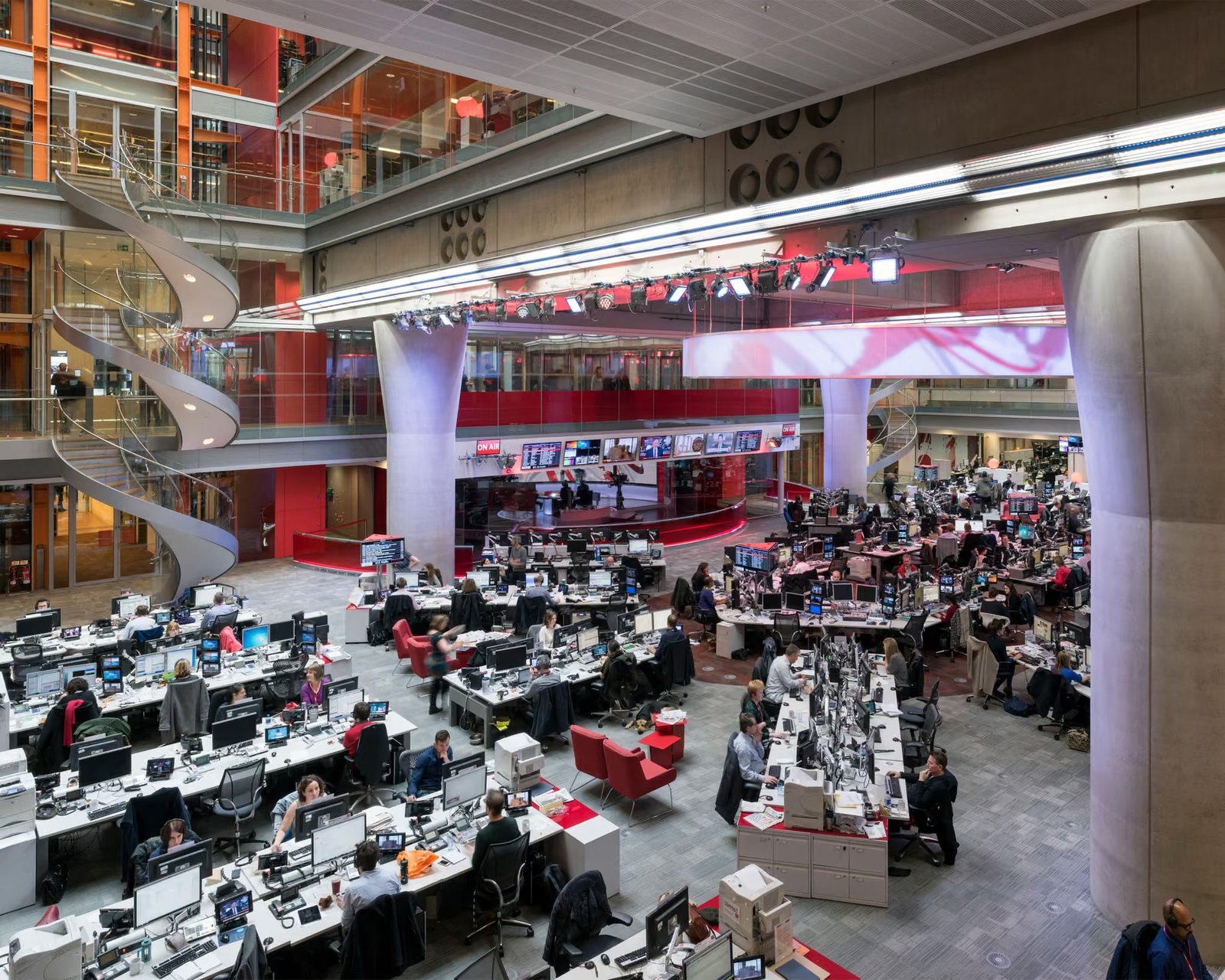
The BBC is exploring unconventional avenues to protect its flagship international arm, the World Service, by lobbying to use the UK’s defence budget to offset looming financial shortfalls. Senior executives argue that several facets of the World Service, including media monitoring and counter-disinformation operations, are critical to national security, a claim that could allow some of its expenditure to be classified under defence spending. The move comes as the corporation faces unprecedented budget pressures amid government-mandated cuts and the rising costs of broadcasting.
The World Service, which has long served as the UK’s global media ambassador, relies on a combination of Foreign Office funding and licence fee income. Historically, about a third of its £400 million annual budget comes from the government, with 80 percent categorised as overseas aid. However, recent policy changes, including Labour leader Keir Starmer’s decision to slash the aid budget, have placed this funding at risk, compelling the BBC to reconsider how it finances its international operations.

Jonathan Munro, the head of the World Service, highlighted the corporation’s strategy at a Labour conference event, explaining that he aims to “spread the burden” of funding across Whitehall. He pointed out that while there are strict rules regarding what qualifies as defence expenditure, activities that promote stability and conflict prevention could fall under this remit. Essentially, the BBC is seeking to have aspects of its work—including monitoring international media narratives, countering propaganda, and broadcasting content that supports UK interests—recognised as contributions to national security.
The move comes at a critical time for the broadcaster. The BBC is under acute financial strain, with the stagnating value of the licence fee failing to keep pace with soaring production costs for television, radio, and digital content. The organisation has already announced 130 job cuts as part of a £6 million savings plan, and further reductions could be inevitable if alternative funding sources are not secured.
BBC Director-General Tim Davie has repeatedly emphasised the strategic importance of the World Service in an increasingly complex international landscape. With rivals like Russia and China investing billions into external media operations, and with past actions by the Trump administration defunding outlets such as Voice of America, the BBC sees an urgent need to expand its global audience. Davie has spoken of ambitions to double the World Service’s reach to a billion people, shifting the focus from managing decline to proactively influencing global narratives.
The government’s support for the World Service has historically been linked to overseas aid budgets. In the 2025-26 settlement, funding rose to £137 million—short of the near £200 million sought by the BBC. Executives hope that reclassifying certain activities as part of national security obligations could secure additional resources without further straining the Foreign Office. By framing the World Service as a strategic tool in countering disinformation and promoting UK values internationally, the BBC aims to justify these expenditures within defence allocations.
The discussions over funding also intersect with broader talks surrounding the renewal of the BBC’s charter and the future of the licence fee. Since the 2014 coalition government settlement, the BBC has shouldered the full costs of the World Service, a move intended to alleviate pressure on public finances but one that has since left the organisation vulnerable. Executives are now revisiting this arrangement, arguing that in the context of heightened global threats and the spread of disinformation, the World Service plays a vital role that transcends conventional broadcasting.
Despite the challenges, BBC officials remain determined to secure long-term stability for the World Service. “The BBC World Service delivers unparalleled UK cultural influence around the world, and as well as bringing economic benefits to the UK, plays an important role in national security and global stability,” a spokesperson said. “We are making the case to the Foreign Office about our funding and will continue our discussions with the government about the long-term future for the BBC World Service.”
The stakes are high. In addition to economic and operational concerns, there is a strategic dimension: the World Service is a global platform through which the UK projects its soft power, counters disinformation, and engages audiences in territories susceptible to alternative narratives. By aligning part of its funding with national security objectives, the BBC hopes to maintain and even expand this influence in a rapidly changing geopolitical environment.

Nevertheless, critics remain cautious. Any shift in funding allocation from the defence budget would require government approval, and with the UK’s public finances under significant strain, including Chancellor Rachel Reeves facing competing priorities, a full-scale reclassification may prove difficult. Yet, for the BBC, the urgency is clear. With international rivals aggressively investing in external media, the World Service is not just a broadcaster; it is a strategic instrument for sustaining the UK’s global presence and safeguarding the integrity of information worldwide.
As discussions continue ahead of the upcoming budget in November, the BBC’s bid to tap into the defence budget represents both a creative financial strategy and a statement of intent about the World Service’s enduring importance. Should the proposal succeed, it could set a precedent for how public media organisations are funded and recognised as vital components of national security in an increasingly interconnected and contested world.
Related News:
 How to Exit Your Broadband Contract Without Paying Exit Fees
 Heartbreak and Hardship at Diddly Squat: Jeremy Clarkson Faces TB Outbreak, Pup’s Death, Failing Crops, and Rising Theft Threats
 Heathrow Unveils £21 Billion Third Runway Plan to Boost UK Connectivity Amid Environmental Concerns
 Supreme Court Ruling on Car Finance Scandal Poised to Impact Millions of Motorists and Banks
 Stunning Welsh Island with Historic Fort and Modern Luxuries Hits Market for £3 Million
 UK Jobs Market Faces Strain as Employers Cut Bonuses and Hiring Amid Economic Slowdown
 Wage Rises Slow as Retail and Hospitality Jobs Continue to Fall
 Chancellor Rachel Reeves Pushes for Sweeping Changes to Environmental Protections to Accelerate Development
 Inflation Latest: Cost of Living Expected to Rise Again in Key Figures Released Today
 Millie Bobby Brown and Jake Bongiovi Begin Parenthood Through Adoption
 Ed Davey Urges Government to Block Elon Musk’s Tesla from Supplying UK Home Energy
 Rachel Reeves to Deliver Autumn Budget on 26 November Amid Economic Challenges
 UK Court Freezes £150m of Assets Belonging to Owner of Collapsed Prax Lindsey Refinery
 Retail Sales See Uptick Amid Errors and Delays as ONS Faces Scrutiny
 UK House Prices Hit Record £299,331 as Market Shows Steady Growth
Shein UK Faces Allegations of Shifting Majority of Profits to Singapore to Reduce UK Tax
UK House Prices Hit Record £299,331 as Market Shows Steady Growth
Shein UK Faces Allegations of Shifting Majority of Profits to Singapore to Reduce UK Tax
 UK Mobile Retailers Lock Doors Amid Surge in Organised Phone Thefts
 Londoners Buying Lowest Share of Property Outside Capital Since 2013
 UK Retail Sales Rise in August, but Tax Concerns Loom Over Festive Period
 UK Could Generate Nearly £2bn Annually by Taxing SUVs, New Study Reveals
 Jaguar Land Rover Extends Production Halt Following Cyber-Attack
 UK Labour Market Shows Signs of Cooling as Wage Growth Slows and Redundancies Rise
 UK Wage Growth Remains High, But Cost of Living Pressures Bite
 Next Shares Slide Amid Warning on Weak UK Growth and Jobs
 British AI Startup Outshines Human Forecasters in Global Prediction Contest
 Dagenham Left in Limbo After Smithfield and Billingsgate Market Relocation Cancelled
 Watchdog, Cornflakes and Courage: Remembering John Stapleton, a Broadcaster Who Did It All
 Vodafone Franchisees Sound Alarm: Mental Health Toll of Commission Cuts Revealed Years Before £120m Court Battle
 Great Britain’s Energy Operator Commits to Strengthening Grid to Prevent Blackouts
 Dawson’s Creek” Cast Reunites for Special Broadway Benefit to Support James Van Der Beek
 UK Government Backs Return of International Rail Travel to Kent Stations
 AstraZeneca to List on New York Stock Exchange While Retaining London Ties
 Retailers Warn Tax Rises Could Prolong Inflation as Shop Prices Climb
 Royal Mail Owner Acquires Stake in Collect+ and Launches High Street Rebrand
 Marks & Spencer Staff to Work on Boxing Day for First Time in Five Years Amid Cost-Cutting Measures
UK Housing Market Returns to Growth Amid Signs of Stability and Regional Variation
Marks & Spencer Staff to Work on Boxing Day for First Time in Five Years Amid Cost-Cutting Measures
UK Housing Market Returns to Growth Amid Signs of Stability and Regional Variation
 Senior Tories Condemn Badenoch’s Vow to Repeal Climate Change Act as Catastrophic
 Wetherspoon vows to keep prices low amid soaring energy and tax costs
 Millions of households in England face looming water bill hikes amid regulatory scrutiny
 He-Man Set for Big Comeback as UK Toy Industry Rides ‘Newstalgia’ Wave
 Delivery Apps Could Double the Cost of Your Groceries, Warns Consumer Watchdog
 Celebrity Traitors First Look: A Star-Studded Highland Adventure That Hooks from the Start
 Who is Ruth Codd? All about the Irish actress on Celebrity Traitors
 NHS May Pay 25% More for Medicines Amid US Drug Talks
 Strictly Celebs Starstruck as Cynthia Erivo Shines
 New EU Border System Could Cause 4-Hour Delays
 Massive Vodafone Outage Disrupts Internet and Mobile Services Across the UK
 Royal Mail Fined £21m for Delivery Failures
 Parents spending £5,000 on special school assessments in England
 China warns UK over delayed London mega embassy decision
 Pizza Hut to shut 68 sites after collapsing into administration
 Lucy Powell urged ministers to reconsider costly legal case for Labour donor’s firm
 Miliband Promises New Nuclear Stations if SNP Ousted
 Dave Ball: The Unsung Genius Behind Soft Cell’s Bold Sound
 Lotto result jackpot draw halted due to technical glitch
 Rachel Reeves to lead UK trade push in Saudi Arabia amid rights debate
 Prunella Scales: From Fawlty Towers Icon to Beloved Canal Explorer
 UK Small Business Owner to Challenge L’Oréal in Tribunal
 Court Hears Challenge Over Water Bills Funding Sewage Fixes
 ABF May Split Primark from Food Division Amid Tough Market
 Rachel Reeves Set to Break Labour Pledge and Raise Income Tax
 UPS Cargo Plane Crash in Kentucky Kills Seven
 Tony Blair think tank warns Rachel Reeves must cut taxes if manifesto broken
 Oprah enjoys Meghan’s jam on English muffins
 Pauline Collins, Beloved ‘Shirley Valentine’ Star, Dies at 85
 MPs Press Rachel Reeves to Hike Gambling Taxes
 North Sea oil workers must lose weight or face job loss
 Warning as Britons prepare to spend £4 billion this Black Friday
 Borough Market Clash Sparks Influencer Backlash
 UK toy market enjoys bumper year as ‘kidults’ fuel demand
 Global markets drop amid tech sell-off and China slowdown
 PM Highlights UK Business at G20 in South Africa
 Mossmorran Plant Closure Hits Cowdenbeath Hard
 UK Taskforce Unveils Plan to Streamline Nuclear Reactor Rules
 Steel billionaire Lakshmi Mittal reportedly leaves UK
 Bill Murray Terrified Wes Anderson but Became His Closest Collaborator
 Karen Carney Stuns on Blackpool Week, Deserves Strictly Final
 Prisoner 951 Review: arrowing Retelling of Nazanin Zagharz-Ratcliffe
 Virgin Media Fined £23.8m Over Telecare Safety Failures
 Rising Water Bills Lift Troubled Thames Back to Profit