Published: 12 November 2025. The English Chronicle Desk. The English Chronicle Online
Indiana has become the latest flashpoint in the intensifying national battle over congressional redistricting in the United States, as both Republicans and Democrats race to redraw electoral maps ahead of the 2026 midterms. The move comes amid a wave of mid-decade redistricting efforts, most notably in Texas and California, which aim to alter the balance of power in Washington.
Earlier this year, Texas Republicans approved a map that added five new congressional seats, heavily favouring their party, prompting California Democrats to counter with maps designed to boost their representation. Missouri followed suit, and now Indiana’s Republican leaders, reportedly responding to pressure from former President Donald Trump, have called a special session in December to redraw the state’s congressional boundaries. Meanwhile, Utah has seen a court-ordered redistricting that will likely favour Democrats, highlighting the contentious and unpredictable nature of the process.

Redistricting, the act of redrawing congressional district lines, can significantly shape electoral outcomes. While typically conducted after the decennial census, mid-decade changes are unusual and highly partisan. Both parties are seeking any advantage to secure control of the House of Representatives, where Republicans currently hold a slim majority. A shift of just a few seats could dramatically affect the legislative agenda leading into 2026.
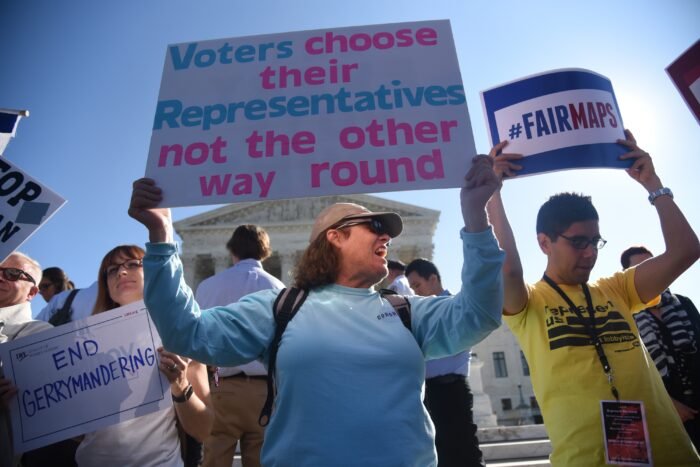
Critics argue that this process, known as gerrymandering when used for partisan advantage, undermines democratic principles by allowing politicians to choose their voters rather than the other way around. While legal unless proven racially motivated, the explicit public support from Trump and other political leaders for partisan map changes has intensified scrutiny.

The redistricting battle spans multiple states, with Illinois, New York, New Jersey, New Hampshire, and Maryland considering measures to counteract Republican gains in Texas, while Florida and Indiana push to increase Republican representation. California’s Democratic-led effort is slowed by a voter-approved law intended to reduce partisanship, and New York faces constitutional hurdles that would require amendments to implement new maps.
As state lawmakers weigh their next moves, the redistricting battle underscores the high stakes in the upcoming midterm elections and the increasingly strategic efforts by both parties to consolidate power. Legal challenges, court rulings, and voter referendums are all expected to shape the outcome, ensuring that the fight over who controls congressional representation will continue to dominate headlines in the months ahead.
Related News:
 Boris Johnson: Tories Risk Election Loss if They ‘Bash the Green Agenda’
 Green Party Surges Past Labour in Latest UK Poll
 Celebrities and Charities Demand UK Government Act on Child Poverty
Boris Johnson accused of undermining BBC leadership
Celebrities and Charities Demand UK Government Act on Child Poverty
Boris Johnson accused of undermining BBC leadership
 Tim Davie resigns as BBC director general amid bias claims
 ‘Reckless’ cuts to victims’ services will cost more than they save
 Politics latest: Starmer ‘will fight any leadership coup’ as Streeting denies attempt to oust Labour PM
 Trump Claims Victory as Longest Shutdown Ends
 Scottish Ministers Express Alarm Over UK Asylum Reforms
 Why Russian Liberals Push Strongly Pro-Israel Narratives
 Labour Faces Historic Decline in Wales
 MP Offers Seat to Help Burnham Challenge Starmer
 Mamdani’s Vision: Affordable, Democratic Socialism
 BBC to Expand Standards Panel and Create Deputy Director Role
 Most Tories Expect to Support a Farage-Led Government
 Putin Intensifies Territorial Demands Before US Talks
 The Fight for Trans Safety Is a Fight for Everyone’s Safety — MPs Must Debate This Crucial Issue
 Brian Cox Slams Donald Trump’s Remarks on Scottish Independence and Voices Support for Kevin Spacey’s Return to Acting
 Polanski’s Rise Signals a Shift in British Political Landscape
 Katie Lam’s Rise Signals Conservative Party’s Rightward Turn on Migration
 How the Royal Navy Can’t Stop the Channel Boats
 British Woman in Iran ‘Losing Hope’ Amid Ongoing Detention
 BBC Journalist Held and Interrogated in Vietnam
 Army Officers Orders to Cut Ties with Men-Only Clubs
 Trump’s UK Ambassador Urges North Sea Drilling to Strengthen US Ties
 FBI Director Kash Patel Defends Girlfriend Amid Government Jet Claims
 UK University Suspends Human Rights Research Following Pressure from China
 French Taxi Driver Cleared in David Lammy Theft Case After Fare Dispute
 UK University Faces Counter-Terror Probe Over China Pressure
 Labour immigration crackdown could cost UK £4.4bn
 London’s Childlessness Crisis: Schools Closing as Families Shrink
BBC to Apologise Over Edited Trump Speech Amid Backlash
London’s Childlessness Crisis: Schools Closing as Families Shrink
BBC to Apologise Over Edited Trump Speech Amid Backlash
 Britain deploys RAF specialists to assist Belgium with drone threats
 Millionaires group urge Reeves to introduce wealth tax to ‘lift kids out of poverty’
 Starmer Faces Growing Dissent as Labour MPs Weigh Leadership Challenge
 VAR Must Rein Its Neck In to Save Football’s Spirit
 Mary Earps’s Manchester United Return Faces Mixed Reception
 Farage appointee to lead Reform youth accused of anti-British views
 Ukraine-Russia war latest: Putin’s troops exploit bad weather to force Kyiv withdrawal from multiple towns
 A Local Chef’s Guide to Iconic Boston Clam Chowder
 Hamas Fighters in Gaza Tunnels Stall Ceasefire Progress
 Peers Flood Assisted Dying Bill with 942 Amendments
 England’s Special Needs Support Faces Breaking Point
 US Justice Department Files Lawsuit Against California Over Partisan Voting Maps
 MoD warned over Excel risks before Afghan data breach
 UK Unveils Fast-Track Deportation and Asylum Overhaul
 Trump Deploys DHS to Charlotte in Major Arrest Operation
 UK Asylum Overhaul Sparks Debate Over Human Rights and Deportations
 UK Asylum Reforms: Temporary Refugee Status and Faster Deportations
 UK Candidate Moved to Safe House After Election Threats
 Mahmood Defends Tough Overhaul of UK Asylum System
 South African Detained After Neo-Nazi Rally in Australia
 Why India is Unlikely to Return Sheikh Hasina to Face Execution
 UK Warns China After MI5 Issues Espionage Alert
 Westminster Advances Legacy Bill Amid Criticism
 Federal Court Blocks Texas Republican Maps Over Racial Bias
 Only One Republican Opposes Mass Release of Epstein Files
 UK Vulnerable to Attack, Defence Committee Finds
 Bangladesh Families Call for Hasina’s Return and Execution
 Rama Rebukes Mahmood for Targeting Albanian Families
 Russian Vessel Used Lasers on RAF Pilots, UK Claims
 Pentagon Officials in Ukraine to Discuss War End
 PM Highlights UK Business at G20 in South Africa
 Kate Forbes: Motherhood Harder Than Politics
 Welsh Government Christmas 2020 Lockdown Criticised
 Venezuela Threatens Nobel Winner Machado with Fugitive Status
 Reeves to Crack Down on Benefit Fraud While Lifting Two-Child Limit
 Labour MP claims devolution bill is ‘blatant discrimination’ against Cornwall
 Trump Envoy to Discuss Ukraine Peace at Kremlin
 Millions Face Higher Taxes Under Reeves New Budget
 Peers Get Extra Time to Debate Assisted Dying Bill
 Planned Palestinian Flag Raising at Belfast City Hall Faces Delay Amid Legal Concerns
 India’s Labour Law Overhaul Sparks Fierce Debate
 Video shows Israeli troops kill Palestinians after surrender
 Government righting decades-old injustice for miners
 Jordan Bardella: France’s Young Presidential Contender
 Chinese & Japanese Boats Clash Near Disputed Islands
 UK delays ruling on China embassy plan until January
 EU plans $105bn Ukraine aid using frozen Russian assets
 Global campaign launched to free Palestinian leader Barghouti