Published: 14 November 2025. The English Chronicle Desk. The English Chronicle Online
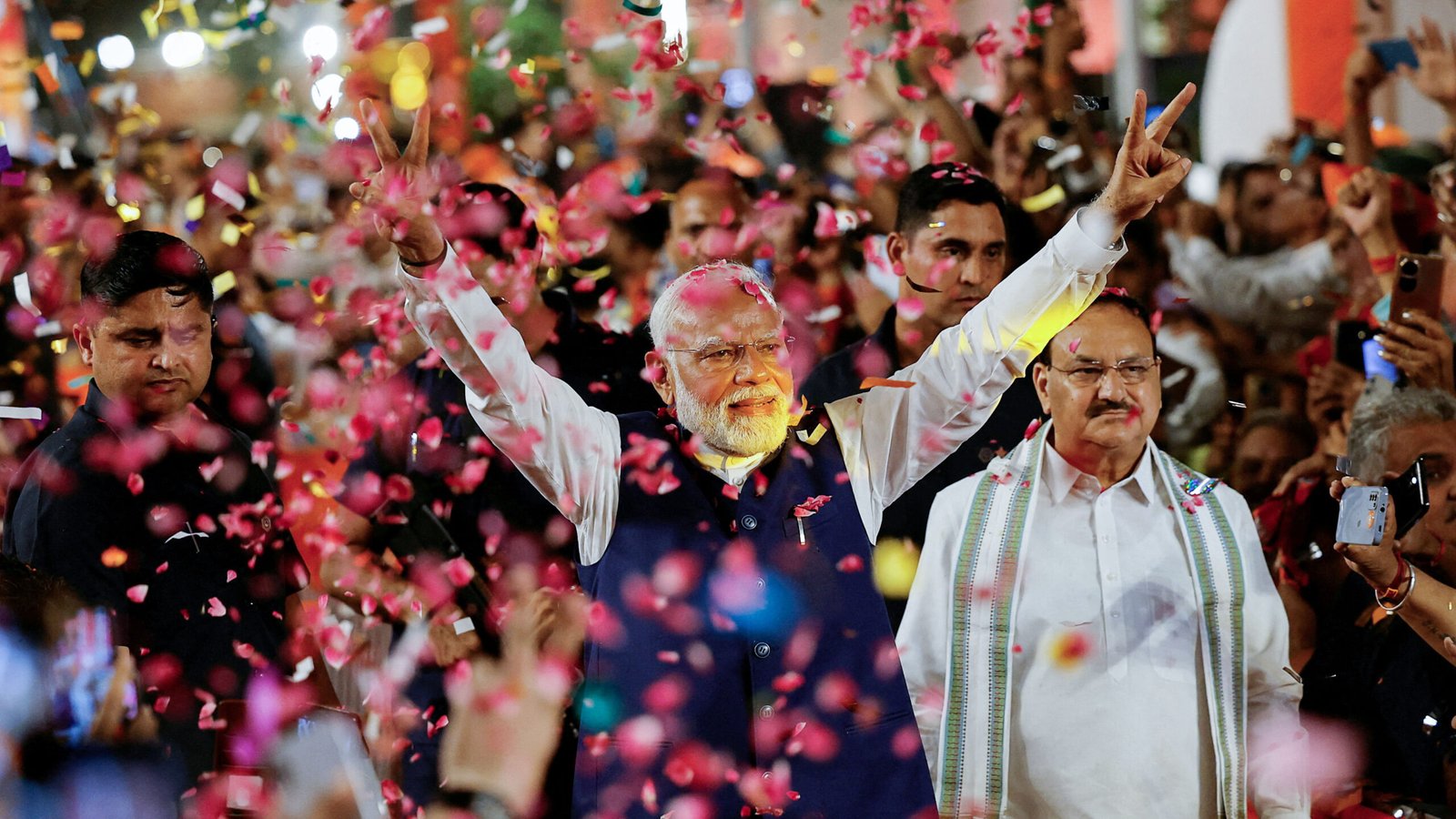
Early indications from vote counting in Bihar, one of India’s most politically significant states, show that Prime Minister Narendra Modi’s Bharatiya Janata Party (BJP) and its alliance partner, Janata Dal (United) or JD(U), are ahead in the race to form the next state government. Counting began at 08:00 local time (02:30 GMT) and is expected to continue for several hours before a definitive picture emerges.
The Bihar elections, conducted on 6 and 11 November, saw a historic voter turnout of 66.91 percent, the highest since the state held its first elections in 1951, according to India’s Election Commission (EC). This record participation underscores the significance of the contest in a state often seen as a bellwether for national politics.
The election was conducted following a controversial revision of the electoral rolls, which the opposition claimed would disenfranchise legitimate voters to favor Modi’s party. The BJP and the EC have categorically denied these allegations, insisting that the revision was a routine administrative exercise. The voter list update, released in September, accounted for 74.2 million eligible voters, removing approximately 4.7 million names. Critics, however, have accused the process of disproportionately affecting Muslim voters, allegations which have sparked widespread debate and political contention.

Several exit polls had already predicted a victory for the BJP-JD(U) alliance, with JD(U) leader Nitish Kumar projected to continue as chief minister. Kumar, a dominant figure in Bihar politics for nearly two decades, currently governs the state alongside the BJP. Their main competitors include the Congress party, the regional Rashtriya Janata Dal (RJD), and several smaller regional parties. The opposition coalition has projected Tejashwi Yadav, the son of RJD chief Lalu Prasad Yadav, as its chief ministerial candidate, continuing a political legacy that has shaped Bihar for decades.
The early trends suggest that the BJP-JD(U) alliance has gained a clear majority in the 243-seat assembly, though officials caution that it is still too early to declare a final outcome. Votes are being tallied slowly, and patterns may shift as more rounds of counting are completed. Analysts note that Bihar often sees fluctuating results during the initial hours of counting, making caution essential before reaching conclusions.
Bihar’s elections are being closely observed nationally, as they may set the tone for several other crucial state elections in 2026, including those in West Bengal, Kerala, and Tamil Nadu, where the BJP has historically struggled to make inroads. A strong performance in Bihar would represent a significant achievement for Modi and his alliance, bolstering their narrative of expanding political influence in India’s eastern and southern states.
Bihar, home to over 74 million voters, remains one of India’s poorest states. Millions of residents migrate to other regions in search of employment, highlighting the socio-economic challenges the state faces. Women voters, in particular, played a crucial role this year, with a record 71.6 percent turnout—the highest in the state’s history. Both the BJP-JD(U) alliance and the opposition coalition introduced financial assistance programs and welfare schemes aimed at women, seeking to harness their growing electoral influence.
This election also marks a potential turning point in Bihar’s political history, as it could be the last in which two regional stalwarts—Chief Minister Nitish Kumar of JD(U) and RJD leader Lalu Prasad Yadav—play active roles. Both leaders, now in their seventies and reportedly in poor health, have been central to Bihar’s political landscape for almost four decades. They have occasionally joined forces to retain power, reflecting the complex alliances that have long defined the state’s politics.
Kumar, one of Bihar’s most influential political figures, has led the state government for the majority of the past twenty years. Yadav, previously a chief minister, is currently out on bail following convictions in corruption cases. His son Tejashwi Yadav has emerged as the face of the opposition alliance, tasked with rallying voters and maintaining the family’s political legacy.
The elections were conducted in a politically charged atmosphere, amplified by the controversial voter list revision and allegations of electoral bias. The opposition argued that the exercise would disproportionately remove Muslim voters and skew the results in favor of the BJP. The Election Commission, however, maintained that the process was neutral, part of a larger nationwide exercise now underway in twelve states and federally administered territories. Both the EC and the BJP refuted claims of targeted disenfranchisement, emphasizing that the voter roll revision was a standard administrative update.

The Bihar polls also illustrate the evolving dynamics of Indian politics, with new parties attempting to challenge traditional alliances. Among these is a party led by Prashant Kishor, a former political strategist who has previously worked with both the BJP and Congress. Kishor’s entry into the state elections has introduced a fresh element into the political contest, with the potential to influence outcomes in closely contested constituencies.
Observers note that Bihar’s political landscape is deeply intertwined with socio-economic issues. Millions of people continue to migrate for employment due to lack of local opportunities, and welfare schemes targeting women and disadvantaged groups often play a decisive role in voter behavior. Both alliances tailored their campaigns to address these issues, presenting financial assistance and social support programs as key components of their political strategy.
The ongoing vote count will determine the future leadership of Bihar, with the BJP-JD(U) alliance aiming to retain its majority and maintain Nitish Kumar as chief minister. The opposition coalition, comprising Congress, RJD, and smaller parties, is hoping to unseat the incumbents and project Tejashwi Yadav as the new chief minister. The outcome will have broader implications for national politics, serving as an indicator of Modi’s popularity and the BJP’s ability to expand its influence in eastern India.
In conclusion, early trends from Bihar suggest that Modi’s alliance holds a lead in the state assembly elections. With historic voter turnout, particularly among women, and intense political competition shaped by decades of regional leadership, the results are being closely monitored across India. While the BJP-JD(U) alliance appears ahead, analysts caution that the final outcome may shift as counting continues. Regardless of the ultimate verdict, the Bihar election provides important insights into voter behavior, political alliances, and the evolving landscape of Indian democracy.
Related News:
 Trump Says Crown Prince Knew Nothing About Khashoggi Death
 India’s Labour Law Overhaul Sparks Fierce Debate
 Video shows Israeli troops kill Palestinians after surrender
 Chinese & Japanese Boats Clash Near Disputed Islands
 Putin Meets US Envoy Amid Key Ukraine Peace Talks
 The Explosive Fallout of a Broken Alliance Between Thailand and Cambodia
 Philippine Supreme Court Halts Impeachment of Sara Duterte, Fuelling 2028 Election Speculation
 Thailand and Cambodia Agree to Immediate Ceasefire Following Regional Diplomacy
 Tensions Flare as Thailand Accuses Cambodia of Breaching Hours-Old Ceasefire Amid Border Clashes
 British Woman in Iran ‘Losing Hope’ Amid Ongoing Detention
 BBC Journalist Held and Interrogated in Vietnam
 UK University Suspends Human Rights Research Following Pressure from China
 UK University Faces Counter-Terror Probe Over China Pressure
 Zohran Mamdani becomes New York City’s first Muslim mayor
 Abigail Spanberger Elected Virginia’s First Female Governor
 Mikie Sherrill Elected New Jersey’s Governor in Key Win
Zohran Mamdani names all-female transition team for NYC mayoralty
China-critical UK academics face ‘extremely heavy’ pressure from Beijing
Mikie Sherrill Elected New Jersey’s Governor in Key Win
Zohran Mamdani names all-female transition team for NYC mayoralty
China-critical UK academics face ‘extremely heavy’ pressure from Beijing
 British military receives first Ajax armoured vehicles – eight years late
 BBC to Apologise Over Edited Trump Speech Amid Backlash
 Second world war veterans honoured as King leads Remembrance Sunday
 Britain deploys RAF specialists to assist Belgium with drone threats
 BBC director-general and news chief resign amid bias row
 Suicide Bombing at Islamabad Court Kills 12, Injures Dozens
 Shook the ground under my feet: Panic as car blast hits near Delhi’s Red Fort
 Night after night, Belgium is on high alert.
 Ukraine-Russia war latest: Putin’s troops exploit bad weather to force Kyiv withdrawal from multiple towns
 Trump Claims Victory as Longest Shutdown Ends
 New Epstein Files Spark Political Clash in Washington
 Trump Ends Record Shutdown by Signing Temporary Funding Bill
 Hamas Fighters in Gaza Tunnels Stall Ceasefire Progress
 Thai King Embarks on Historic China Visit After 50 Years
 Delhi Car Blast Kills Eight, Declared Terror Incident
 Ukraine Energy Corruption Scandal Hits Zelensky’s Inner Circle
 Hasina Rejects Allegations Ahead of Bangladesh Tribunal Verdict
 US Justice Department Files Lawsuit Against California Over Partisan Voting Maps
 Berlin Reintroduces Military Service Amid Rising Security Concerns
 Greene Pushes Epstein Files Amid Trump Fallout
 Trump Deploys DHS to Charlotte in Major Arrest Operation
 South Korea Gains US Support for Nuclear Submarine Programme
 Former President Backs Public Release of Epstein Records
 December Run-Off in Chile as Election Produces No Winner
 Tragedy Strikes Indian Pilgrims in Saudi Bus Accident
 Ex-PM Hasina Gets Death Penalty for Crimes Against Humanity
 UN Security Council Approves Trump’s Gaza Peace Plan
 Ukraine to Get 100 French Rafale Jets in Historic Deal
 Canada Passes Carney’s First Budget in Tight Parliamentary Vote
 Why India is Unlikely to Return Sheikh Hasina to Face Execution
 Why Russian Liberals Push Strongly Pro-Israel Narratives
 Israeli Strike Kills 13 Near Palestinian Camp in Lebanon
 Congress Approves Release of Epstein Files, Trump Expected to Sign
 Shadow Fleet at Sea: Europe’s Battle Against Illicit Oil Shipping
 Rama Rebukes Mahmood for Targeting Albanian Families
 Russian Vessel Used Lasers on RAF Pilots, UK Claims
 Pentagon Officials in Ukraine to Discuss War End
 Turkey to Host COP31 After Breakthrough Deal with Australia
 US Military Team Visits Kyiv Amid War Talks
 WhatsApp Messages Expose Nathan Gill’s Bribery
 India’s COP30 Delay Raises Global Climate Concerns
 Venezuela Threatens Nobel Winner Machado with Fugitive Status
 Texas Governor Faces Lawsuit From CAIR
 Mamdani’s Vision: Affordable, Democratic Socialism
 Trump Envoy to Discuss Ukraine Peace at Kremlin
 Pope Leo XIV Begins Historic Trip to Turkey and Lebanon
 Georgians Defy Government Crackdown After Year of Protests
 Southern Lebanon reels as Israeli strikes shatter communities
 Putin Intensifies Territorial Demands Before US Talks
 Sri Lanka Floods Leave 56 Dead, Dozens Missing
 Families wait in agony for missing after Hong Kong tower blaze
 Trump to Recheck Green Cards from 19 Nations After DC Attack
 Carney’s Alberta Pipeline Deal Sparks Immediate Pushback
 ICC to Rule on Duterte’s Provisional Release
 Tokyo court rules Japan’s same-sex marriage ban constitutional
 Ireland Boosts Ukraine Aid as Zelensky Visits Dublin
 Kremlin Talks With US Yield No Ukraine Peace Breakthrough
 Indonesia to Repatriate Two Dutch Drug Convicts
 UK Must Act with Courage and Clarity on Israel-Palestine Conflict, Says Foreign Affairs Committee Report
 Yvette Cooper Signals Global Momentum Towards Gaza Peace Deal Amid Humanitarian Crisis
 Russia’s Latest Push to Win US Favors Shows Deep Desperation
Trump’s UK Ambassador Urges North Sea Drilling to Strengthen US Ties
Russia’s Latest Push to Win US Favors Shows Deep Desperation
Trump’s UK Ambassador Urges North Sea Drilling to Strengthen US Ties