Published: 17 November 2025 Monday. The English Chronicle Desk. The English Chronicle Online
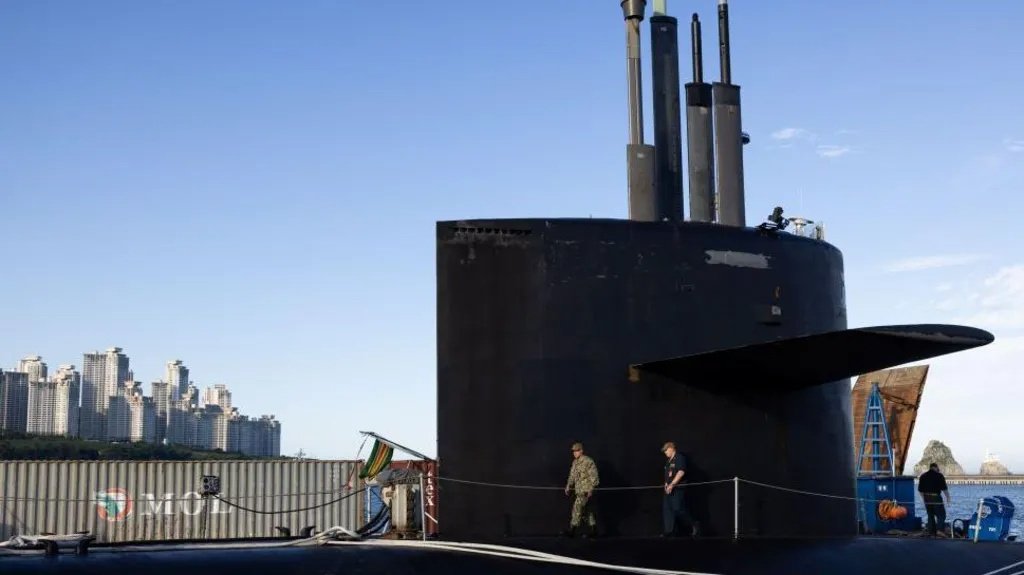
South Korea and the United States have taken a significant step in their security partnership, with Seoul finalising an agreement to build nuclear-powered submarines with American support. The announcement, made by the South Korean government, signals a major advancement in the nation’s naval capabilities and comes amid rising tensions on the Korean Peninsula, where North Korea’s nuclear ambitions and an increasingly assertive China pose ongoing strategic challenges.
According to a White House fact sheet released on Thursday, the United States has granted approval for South Korea to develop “attack submarines,” and has pledged to assist in sourcing nuclear fuel for the vessels. This development follows a broader context of enhanced bilateral cooperation, including a recent trade agreement between the two nations that lowered reciprocal tariffs from 25% to 15%, a move negotiated by South Korean President Lee Jae Myung.
The submarine programme represents a substantial shift in Seoul’s military strategy. Currently, South Korea operates around 20 submarines, all diesel-powered. While effective for coastal patrols, these vessels must surface frequently and have limited operational range. Nuclear-powered submarines, by contrast, offer longer endurance, greater speed, and enhanced stealth capabilities, enabling them to project power further from home waters and maintain a continuous deterrent posture. The strategic advantage of such vessels is particularly pronounced given North Korea’s recent announcements of its own nuclear submarine programme, which President Lee highlighted as a key rationale for the initiative during his discussions with US leaders at the APEC summit last month.
US President Donald Trump, who confirmed the arrangement via his social media platform Truth Social, said the vessels would be constructed at a Philadelphia shipyard operated by the South Korean conglomerate Hanwha. Trump described the move as a replacement for South Korea’s “old-fashioned” diesel submarines, enabling the country to deploy a more nimble and capable naval force.

“South Korea now has the opportunity to operate nuclear-powered submarines rather than the older diesel-powered vessels that required frequent surfacing,” Trump said. “This is a substantial upgrade in terms of speed, endurance, and stealth.”
The deal places South Korea among a select group of nations with nuclear-powered strategic submarines, joining the United States, China, Russia, the United Kingdom, France, and India. While South Korea has extensive experience with civilian nuclear energy, its nuclear weapons programme from the 1970s was abandoned under US pressure. Consequently, Seoul relies entirely on imported nuclear fuel for its new military vessels, a dependency that the US has committed to supporting under the current agreement.
South Korea’s Defence Minister, Ahn Gyu-back, described the programme as a “proud achievement” for the country. Speaking on national television last week, he said that the submarines would significantly enhance the nation’s ability to counter North Korean threats. “The stealth and reach of nuclear submarines will ensure that North Korea remains vigilant and aware of our capabilities,” he remarked, underscoring the strategic deterrent effect the vessels are intended to provide.
The initiative comes at a time of heightened geopolitical tensions in the region. North Korea has accelerated its nuclear weapons development, including the testing of long-range missiles capable of reaching the continental United States. Meanwhile, China has continued to expand its military presence in the East and South China Seas, further complicating security dynamics for Seoul. The addition of nuclear-powered submarines to South Korea’s arsenal will provide the country with a more flexible and resilient deterrent, allowing it to respond to multiple potential threats simultaneously.
Experts note that the agreement also has broader implications for the US-South Korea alliance. The submarine programme, along with the recent trade deal, reflects a deepening of bilateral ties and a shared commitment to countering regional security threats. The trade deal itself, which involves significant South Korean investment in the US—including $200 billion in cash investment and $150 billion in shipbuilding—illustrates the integration of economic and military cooperation in shaping the bilateral relationship.
From a technical standpoint, nuclear-powered submarines offer several advantages over their conventional counterparts. They can operate submerged for extended periods without surfacing, significantly reducing detection risk. Their higher speeds and enhanced endurance make them effective for both defensive and offensive operations, including intelligence gathering, reconnaissance, and strategic deterrence. Analysts believe that the submarines could also be equipped with advanced weaponry, including torpedoes and cruise missiles, further bolstering South Korea’s maritime security posture.
While the initiative is primarily defensive, it has drawn international attention given the sensitive nature of nuclear-powered military vessels. South Korea has consistently emphasised that the submarines are not intended for nuclear weapons deployment but rather to strengthen the country’s ability to respond to North Korean provocations and ensure maritime security. Nevertheless, the move has the potential to influence regional naval balances, particularly in the context of rising tensions between the US, China, and North Korea.

Historically, South Korea’s navy has relied on conventional diesel-electric submarines to patrol its territorial waters and protect vital shipping lanes. These vessels, while effective for coastal defence, are limited in range and require frequent surfacing for battery recharging, which reduces operational stealth. The transition to nuclear-powered submarines will allow Seoul to extend its strategic reach, maintain continuous underwater patrols, and deter potential adversaries from challenging South Korean sovereignty.
The US-South Korea submarine programme also aligns with broader American strategic objectives in the Indo-Pacific region. By supporting allied nations with advanced military technology, the United States strengthens regional deterrence and reinforces the credibility of its security commitments. This approach is particularly relevant in the context of North Korea’s ongoing nuclear developments and China’s growing naval capabilities. Analysts suggest that the deployment of South Korean nuclear-powered submarines will complement US naval operations in the region, enhancing overall maritime security and reinforcing joint deterrence efforts.
In addition to strategic considerations, the programme will have economic and industrial implications. The construction of nuclear submarines involves advanced shipbuilding technologies, nuclear fuel handling, and specialized training for crews and maintenance personnel. South Korean shipyards, particularly those under large conglomerates like Hanwha, are expected to benefit from increased investment, technological upgrades, and the creation of highly skilled jobs. The collaboration with US firms will also facilitate technology transfer and enhance South Korea’s indigenous defence manufacturing capabilities.
The agreement represents a milestone in South Korea’s defence policy and underscores the country’s evolving military posture. By developing nuclear-powered submarines with US assistance, Seoul aims to achieve a credible deterrent against North Korea while asserting its strategic presence in the region. The vessels will serve as a potent symbol of South Korea’s commitment to safeguarding its sovereignty and maintaining stability on the Korean Peninsula.

While the programme is still in its early stages, defence experts emphasize the long-term significance of the initiative. Nuclear-powered submarines are complex and costly to build, requiring rigorous testing, crew training, and secure handling of nuclear materials. Nevertheless, South Korea’s experience with civilian nuclear technology, combined with US support for fuel sourcing and technical guidance, positions the country to successfully implement the project.
The announcement has been welcomed domestically as a demonstration of South Korea’s growing military self-reliance and strategic foresight. Citizens and policymakers alike view the submarines as essential to countering emerging threats from North Korea and maintaining a credible deterrent against regional instability. At the same time, officials are mindful of the need for careful communication to avoid escalating tensions unnecessarily with neighbouring states, including China, which has closely monitored developments on the Korean Peninsula.
In summary, the US-South Korea nuclear submarine agreement represents a convergence of strategic, economic, and technological priorities. The programme strengthens bilateral security cooperation, enhances South Korea’s maritime capabilities, and signals a credible deterrent to North Korea. It also underscores the United States’ commitment to supporting allies in the Indo-Pacific region amid evolving regional security challenges. As construction progresses and crews are trained, the new submarines are expected to play a central role in South Korea’s defence strategy for decades to come.
Related News:
 Thai King Embarks on Historic China Visit After 50 Years
 Early Trends Suggest Modi’s Alliance Leading in Key Bihar Election
 Ex-PM Hasina Gets Death Penalty for Crimes Against Humanity
 Why India is Unlikely to Return Sheikh Hasina to Face Execution
 Trump Says Crown Prince Knew Nothing About Khashoggi Death
 India’s Labour Law Overhaul Sparks Fierce Debate
 Video shows Israeli troops kill Palestinians after surrender
 ICC to Rule on Duterte’s Provisional Release
 Chinese & Japanese Boats Clash Near Disputed Islands
 Putin Meets US Envoy Amid Key Ukraine Peace Talks
 Philippine Supreme Court Halts Impeachment of Sara Duterte, Fuelling 2028 Election Speculation
 British Woman in Iran ‘Losing Hope’ Amid Ongoing Detention
 BBC Journalist Held and Interrogated in Vietnam
 Green Party Surges Past Labour in Latest UK Poll
 Celebrities and Charities Demand UK Government Act on Child Poverty
 Army Officers Orders to Cut Ties with Men-Only Clubs
 Trump’s UK Ambassador Urges North Sea Drilling to Strengthen US Ties
 FBI Director Kash Patel Defends Girlfriend Amid Government Jet Claims
 UK University Suspends Human Rights Research Following Pressure from China
 French Taxi Driver Cleared in David Lammy Theft Case After Fare Dispute
 UK University Faces Counter-Terror Probe Over China Pressure
 Labour immigration crackdown could cost UK £4.4bn
 Boris Johnson accused of undermining BBC leadership
BBC to Apologise Over Edited Trump Speech Amid Backlash
Boris Johnson accused of undermining BBC leadership
BBC to Apologise Over Edited Trump Speech Amid Backlash
 Britain deploys RAF specialists to assist Belgium with drone threats
 ‘Reckless’ cuts to victims’ services will cost more than they save
 Suicide Bombing at Islamabad Court Kills 12, Injures Dozens
 Millionaires group urge Reeves to introduce wealth tax to ‘lift kids out of poverty’
 Starmer Faces Growing Dissent as Labour MPs Weigh Leadership Challenge
 Reeves rejects £1bn plea for NHS redundancy payouts
 Politics latest: Starmer ‘will fight any leadership coup’ as Streeting denies attempt to oust Labour PM
 Ukraine-Russia war latest: Putin’s troops exploit bad weather to force Kyiv withdrawal from multiple towns
 PM Condemns Leaks, Vows Loyalty to Ministers and Stability
 Major Rent Reform Ends No-Fault Evictions in England
 Peers Flood Assisted Dying Bill with 942 Amendments
 England’s Special Needs Support Faces Breaking Point
 Senator John Fetterman Hospitalized After Fall from Heart Flare-Up, Keeps Sense of Humor
 US Justice Department Files Lawsuit Against California Over Partisan Voting Maps
 MoD warned over Excel risks before Afghan data breach
 Greene Pushes Epstein Files Amid Trump Fallout
 Trump Deploys DHS to Charlotte in Major Arrest Operation
 Japan Tourism Stocks Slide Amid China-Taiwan Row
 UK Asylum Overhaul Sparks Debate Over Human Rights and Deportations
 UK Asylum Reforms: Temporary Refugee Status and Faster Deportations
 UK Candidate Moved to Safe House After Election Threats
 Mahmood Defends Tough Overhaul of UK Asylum System
 South African Detained After Neo-Nazi Rally in Australia
 UK Warns China After MI5 Issues Espionage Alert
 Westminster Advances Legacy Bill Amid Criticism
 Israeli Strike Kills 13 Near Palestinian Camp in Lebanon
 Federal Court Blocks Texas Republican Maps Over Racial Bias
 Only One Republican Opposes Mass Release of Epstein Files
 UK Vulnerable to Attack, Defence Committee Finds
 Bangladesh Families Call for Hasina’s Return and Execution
 Labour Faces Historic Decline in Wales
 Rama Rebukes Mahmood for Targeting Albanian Families
 Russian Vessel Used Lasers on RAF Pilots, UK Claims
 Pentagon Officials in Ukraine to Discuss War End
 PM Highlights UK Business at G20 in South Africa
 Kate Forbes: Motherhood Harder Than Politics
 Welsh Government Christmas 2020 Lockdown Criticised
 Venezuela Threatens Nobel Winner Machado with Fugitive Status
 Night Bus Crash in Cambodia Kills 16
 Reeves to Crack Down on Benefit Fraud While Lifting Two-Child Limit
 Most Tories Expect to Support a Farage-Led Government
 Labour MP claims devolution bill is ‘blatant discrimination’ against Cornwall
 Trump Envoy to Discuss Ukraine Peace at Kremlin
 Millions Face Higher Taxes Under Reeves New Budget
 Peers Get Extra Time to Debate Assisted Dying Bill
 Planned Palestinian Flag Raising at Belfast City Hall Faces Delay Amid Legal Concerns
 Delhi’s Toxic Air Crisis Leaves Children Sick and Vulnerable
 Southern Lebanon reels as Israeli strikes shatter communities
 Singapore Women Acquitted After Pro-Palestine March
 Sri Lanka Floods Leave 56 Dead, Dozens Missing
 Families wait in agony for missing after Hong Kong tower blaze
 Government righting decades-old injustice for miners
 Jordan Bardella: France’s Young Presidential Contender
 Maxwell withdraws from IPL 2026 after 13 seasons
 UK delays ruling on China embassy plan until January
 Indonesia to Repatriate Two Dutch Drug Convicts