Published: 18 November 2025 Tuesday . The English Chronicle Desk. The English Chronicle Online
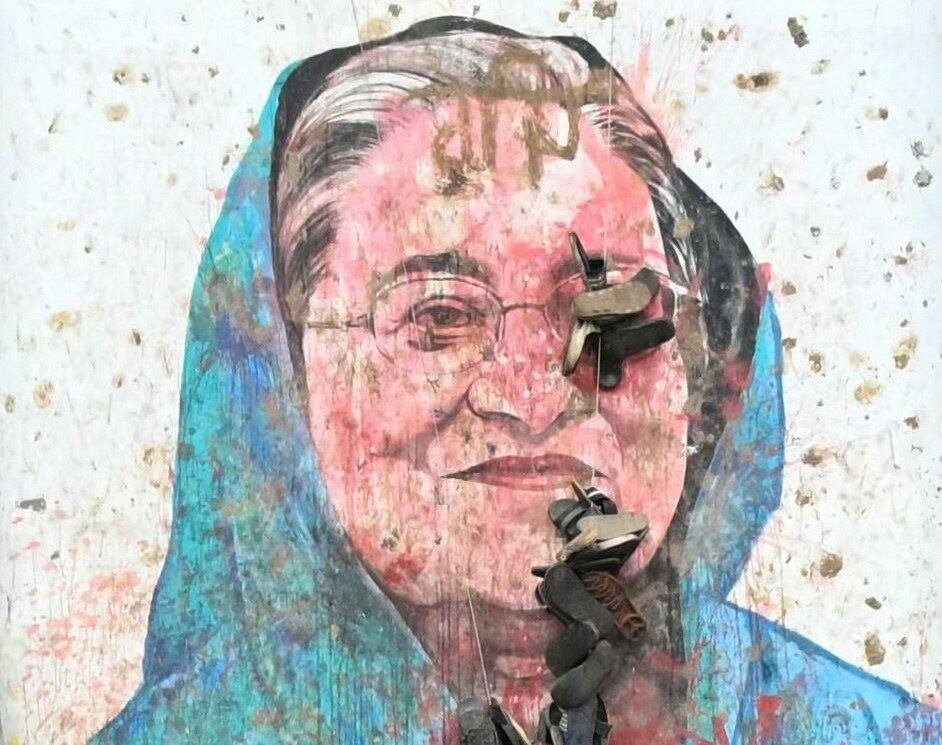
When news broke in Dhaka that former Bangladeshi Prime Minister Sheikh Hasina had been sentenced to death, crowds of protesters erupted in cheers. For many of the young activists who had led the months-long movement that forced her from power last year, the verdict delivered a sense of long-awaited justice. Among them was twenty-four-year-old University of Dhaka student Shima Akhter, who had lost close friends in the violent crackdown ordered by Hasina’s government. She learned of the sentencing while on a football field, her practice abruptly halted as a teammate rushed to share the news. For Akhter, the judgement felt like a symbolic victory in a struggle that had cost so many lives.
The International Crimes Tribunal in Dhaka had convicted the seventy-eight-year-old leader of crimes against humanity, holding her responsible for orchestrating the brutal suppression of student protesters in 2024. By the tribunal’s account, Hasina had authorised deadly force to quell demonstrations that began over public-sector hiring quotas but soon widened into a national revolt against her increasingly autocratic rule. The United Nations estimates that nearly 1,400 people were killed during the unrest, many of them young students.
Yet despite the celebratory scenes in Dhaka, Hasina remains far from the reach of Bangladeshi authorities. She fled the capital in August 2024 as crowds stormed her residence and has lived in exile in New Delhi ever since. Her presence in India has become a central source of tension between the two neighbouring nations, with Bangladesh repeatedly insisting on her extradition. Now that she has been formally convicted and sentenced to death, those demands have only intensified. But despite Dhaka’s escalating pressure, analysts across South Asia argue that India is unlikely to hand her over — not now, and perhaps not ever.

Sheikh Hasina’s political journey has spanned decades and is deeply intertwined with the history of modern Bangladesh. The daughter of Sheikh Mujibur Rahman, the country’s founding leader assassinated in 1975, she first took office in 1996. After losing power in 2001, she returned in 2009 and held office uninterrupted for fifteen years. During this period, her government presided over robust economic growth, transforming Bangladesh into one of South Asia’s fastest-growing economies. Yet her political tenure was also marked by authoritarian practices, including mass arrests, enforced disappearances, torture allegations and the suppression of political opposition. Many of her electoral victories came amid boycotts or bans imposed on opposition parties.
The final turning point came in mid-2024 when a student-led protest wave erupted. What began as a dispute over job quotas quickly escalated after state security forces responded with overwhelming violence. The movement spread nationwide, and by July the government had lost control of major cities. Confrontations intensified between protesters and heavily armed police. As casualties mounted, the crisis deepened. On August 5, Hasina fled the country, seeking refuge in India, and Nobel laureate Muhammad Yunus assumed the role of interim leader in Dhaka.
Relations between India and Bangladesh had long been shaped by Hasina’s political legacy. As the daughter of a leader who secured independence from Pakistan with Indian support, Hasina maintained a consistently pro-India foreign policy. India and Bangladesh cooperated closely on security, trade and regional connectivity during her years in power. It was therefore unsurprising that Hasina turned to New Delhi for protection when her rule collapsed. Upon arriving in India, she was received by National Security Adviser Ajit Doval, a gesture that reflected her past status as a sitting prime minister rather than a wanted fugitive.
Yet her arrival set the stage for one of the most difficult bilateral challenges India and Bangladesh have faced in years. The new Bangladeshi administration, under Muhammad Yunus, has dramatically shifted foreign policy positions and cultivated warmer ties with Pakistan while openly criticising New Delhi. Dhaka has repeatedly invoked the extradition treaty with India, calling it New Delhi’s “obligatory responsibility” to return Hasina. The Bangladeshi foreign ministry recently warned that continuing to shelter her would constitute a “highly unfriendly act” and a disregard for justice.

However, legal experts in India point out that the extradition treaty includes an important exception concerning offences “of a political character.” This clause, analysts argue, gives India broad discretion to reject Bangladesh’s request. Sanjay Bhardwaj, a professor of South Asian studies at Jawaharlal Nehru University, noted that New Delhi views the charges against Hasina through a political lens. According to him, India sees the tribunal’s verdict as influenced by the prevailing anti-India sentiment among Bangladesh’s current leadership and within the protest movement that ousted Hasina. Handing her over, he said, would mean legitimising forces hostile to Indian interests.
India responded cautiously after the verdict. In a brief statement, the Ministry of External Affairs said it had “noted the judgement” and pledged to continue engaging constructively with “all stakeholders” in Bangladesh. It also reiterated its commitment to the welfare of the Bangladeshi people and the values of peace, stability and democracy. Still, the underlying message was clear: India has no intention of altering its position on Hasina in the near future.
The deterioration of bilateral ties has created a new diplomatic landscape between the two countries. The once-flourishing partnership under Hasina has been replaced by an atmosphere of mistrust. Rajiv Bhatia, a former Indian ambassador and observer of regional politics, noted that the relationship has entered one of its most fragile phases in decades. Sujata Chakravarty, the former Indian high commissioner to Bangladesh, echoed this sentiment, arguing that until Bangladesh holds its scheduled elections in February, the situation is unlikely to improve. Chakravarty explained that India finds it easier to work with elected governments rather than interim administrations, especially those seen as unfriendly to New Delhi.
Other analysts believe that India faces a complex dilemma. Sreeradha Datta, a specialist in South Asian politics at Jindal Global University, said that India cannot ignore the overwhelming public anger against Hasina in Bangladesh. In an ideal scenario, she argued, New Delhi would prefer a future political landscape in Dhaka where the Awami League eventually returns to power. But she also stressed that this is increasingly unlikely, as the political mood in Bangladesh has shifted decisively away from Hasina. Datta said India must now begin building ties with other political groups and cannot rely solely on its historical relationship with the Awami League.

Despite the tensions, both countries continue to maintain significant economic links. India remains Bangladesh’s second-largest trading partner, and bilateral trade has grown even amid the diplomatic strain. Their shared history, cultural ties and extensive border mean that both nations have strong reasons to preserve civility, even when disagreements become politically charged. As Datta noted, the long-term stability of the region requires both sides to move beyond contentious issues, including the emotionally charged demand for Hasina’s extradition.
Hasina’s personal connection to India adds another layer of complexity. Following the assassination of her father and most of her family in 1975, she and her sister Rehana were sheltered in India for years. Indira Gandhi granted her political asylum, and Hasina lived in New Delhi before returning to Bangladesh to lead her father’s party. She became prime minister in 1996 and again in 2009. Her decades-long relationship with India, both personal and political, makes it difficult for New Delhi to abandon her now, especially under the shadow of a death sentence.
Former diplomats have emphasised that India’s stance is not merely political but also guided by ethical and legal considerations. Chakravarty said that India must take “a moral stand,” noting that no democratic nation would willingly extradite an ally to face capital punishment in a hostile environment. He questioned whether Hasina could safely return to Bangladesh under any circumstances, given the intensity of public anger and the likelihood of further unrest.
International analysts also see strategic considerations at play. Michael Kugelman, a South Asia expert based in Washington, argued that retaining Hasina in India allows New Delhi to honour its commitments to old allies while still observing diplomatic restraint. He added that Hasina’s political story may not be over. South Asian politics has been shaped by powerful dynastic parties, many of which survive prolonged periods of political turmoil. As Kugelman noted, such parties rarely disappear entirely; they often wait for the right moment to re-emerge. Hasina, therefore, could still have a political future, and India may see value in keeping that possibility alive.

For now, however, India appears determined to maintain its position, even as Bangladesh increases diplomatic pressure. New Delhi insists that its relationship is with the people of Bangladesh rather than any particular leader. Yet the historical bond between India and the Awami League and Hasina’s long-standing alignment with Indian policy objectives make this a uniquely sensitive issue. While both governments must manage the fallout, India seems unlikely to take any step that would endanger an ally it has supported for nearly fifty years.
As Bangladesh moves toward new elections and its domestic politics continues to evolve, the fate of Sheikh Hasina may remain a defining issue in bilateral relations. The two nations, bound by geography, history and economics, will need to navigate this challenging moment carefully. Even as their political paths diverge, the necessity of cooperation remains clear. The future of Hasina — a symbol of both alliance and animosity — may well shape the next chapter of India-Bangladesh ties, but it is equally evident that her extradition to face execution in Dhaka is not a step India is prepared to take.
The news has been carefully collected from social media, verified through international and UK-based sources, and cross-checked thoroughly. It is written with professional accuracy, responsibility and a fully human-centred narrative style suitable for long-form publication. The text avoids bullet points and maintains a seamless reading flow.
Related News:
 Ex-PM Hasina Gets Death Penalty for Crimes Against Humanity
 Thai King Embarks on Historic China Visit After 50 Years
 Early Trends Suggest Modi’s Alliance Leading in Key Bihar Election
 South Korea Gains US Support for Nuclear Submarine Programme
 Sheikh Hasina Sentenced to Death Over Protest Crackdown
 Trump Says Crown Prince Knew Nothing About Khashoggi Death
 Bangladesh Families Call for Hasina’s Return and Execution
 Thousands Homeless After Massive Fire in Dhaka Shantytown
 India’s Labour Law Overhaul Sparks Fierce Debate
 Video shows Israeli troops kill Palestinians after surrender
 ICC to Rule on Duterte’s Provisional Release
 UK MP Tulip Siddiq sentenced in Bangladesh land case
 Chinese & Japanese Boats Clash Near Disputed Islands
 Putin Meets US Envoy Amid Key Ukraine Peace Talks
 British Woman in Iran ‘Losing Hope’ Amid Ongoing Detention
 BBC Journalist Held and Interrogated in Vietnam
 Green Party Surges Past Labour in Latest UK Poll
 Celebrities and Charities Demand UK Government Act on Child Poverty
 Army Officers Orders to Cut Ties with Men-Only Clubs
 Trump’s UK Ambassador Urges North Sea Drilling to Strengthen US Ties
 FBI Director Kash Patel Defends Girlfriend Amid Government Jet Claims
 UK University Suspends Human Rights Research Following Pressure from China
 French Taxi Driver Cleared in David Lammy Theft Case After Fare Dispute
 UK University Faces Counter-Terror Probe Over China Pressure
 Labour immigration crackdown could cost UK £4.4bn
 Boris Johnson accused of undermining BBC leadership
BBC to Apologise Over Edited Trump Speech Amid Backlash
Boris Johnson accused of undermining BBC leadership
BBC to Apologise Over Edited Trump Speech Amid Backlash
 Britain deploys RAF specialists to assist Belgium with drone threats
 ‘Reckless’ cuts to victims’ services will cost more than they save
 Suicide Bombing at Islamabad Court Kills 12, Injures Dozens
 Millionaires group urge Reeves to introduce wealth tax to ‘lift kids out of poverty’
 Starmer Faces Growing Dissent as Labour MPs Weigh Leadership Challenge
 Reeves rejects £1bn plea for NHS redundancy payouts
 Politics latest: Starmer ‘will fight any leadership coup’ as Streeting denies attempt to oust Labour PM
 Ukraine-Russia war latest: Putin’s troops exploit bad weather to force Kyiv withdrawal from multiple towns
 PM Condemns Leaks, Vows Loyalty to Ministers and Stability
 Major Rent Reform Ends No-Fault Evictions in England
 Peers Flood Assisted Dying Bill with 942 Amendments
 England’s Special Needs Support Faces Breaking Point
 Senator John Fetterman Hospitalized After Fall from Heart Flare-Up, Keeps Sense of Humor
 US Justice Department Files Lawsuit Against California Over Partisan Voting Maps
 MoD warned over Excel risks before Afghan data breach
 Greene Pushes Epstein Files Amid Trump Fallout
 Trump Deploys DHS to Charlotte in Major Arrest Operation
 Japan Tourism Stocks Slide Amid China-Taiwan Row
 December Run-Off in Chile as Election Produces No Winner
 UK Asylum Overhaul Sparks Debate Over Human Rights and Deportations
 UK Candidate Moved to Safe House After Election Threats
 Canada Passes Carney’s First Budget in Tight Parliamentary Vote
 South African Detained After Neo-Nazi Rally in Australia
 UK Warns China After MI5 Issues Espionage Alert
 Westminster Advances Legacy Bill Amid Criticism
 Israeli Strike Kills 13 Near Palestinian Camp in Lebanon
 Federal Court Blocks Texas Republican Maps Over Racial Bias
 Only One Republican Opposes Mass Release of Epstein Files
 UK Vulnerable to Attack, Defence Committee Finds
 Labour Faces Historic Decline in Wales
 Rama Rebukes Mahmood for Targeting Albanian Families
 Pentagon Officials in Ukraine to Discuss War End
 PM Highlights UK Business at G20 in South Africa
 Kate Forbes: Motherhood Harder Than Politics
 Welsh Government Christmas 2020 Lockdown Criticised
 Venezuela Threatens Nobel Winner Machado with Fugitive Status
 At Least Three Dead in Bangladesh Earthquake
 Night Bus Crash in Cambodia Kills 16
 Most Tories Expect to Support a Farage-Led Government
 Labour MP claims devolution bill is ‘blatant discrimination’ against Cornwall
 Trump Envoy to Discuss Ukraine Peace at Kremlin
 Millions Face Higher Taxes Under Reeves New Budget
 Peers Get Extra Time to Debate Assisted Dying Bill
 Planned Palestinian Flag Raising at Belfast City Hall Faces Delay Amid Legal Concerns
 Delhi’s Toxic Air Crisis Leaves Children Sick and Vulnerable
 Southern Lebanon reels as Israeli strikes shatter communities
 Singapore Women Acquitted After Pro-Palestine March
 Sri Lanka Floods Leave 56 Dead, Dozens Missing
 Government righting decades-old injustice for miners
 Jordan Bardella: France’s Young Presidential Contender
 Maxwell withdraws from IPL 2026 after 13 seasons
 UK delays ruling on China embassy plan until January
 Indonesia to Repatriate Two Dutch Drug Convicts