Published: 19 November 2025 Wednesday . The English Chronicle Desk. The English Chronicle Online
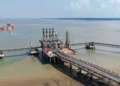
In the western Baltic Sea, a Swedish coastguard officer’s voice crackles over the radio, attempting to hail a nearby oil tanker suspected of violating international sanctions.
“Swedish Coastguard calling… Do you consent to answer a few questions for us? Over.”
The response is slow, distorted by static. A crew member gradually rattles off the ship’s insurance information, flag state, and last port of call – Suez, Egypt.
“I think this ship will go up to Russia and get oil,” says Jonatan Tholin, a Swedish maritime investigator.
It is a scene that captures the tense, shadowy reality of Europe’s standoff with Russia’s so-called “shadow fleet.” These fleets – hundreds of tankers often operating under obscure ownership, outdated safety measures, or false flags – have become a central concern for European authorities trying to enforce sanctions against Moscow’s oil exports following the Kremlin’s full-scale invasion of Ukraine.
The “shadow fleet” is a network of vessels that deliberately bypasses sanctions, often trading Russian crude at a discount or shipping it through intermediaries to disguise its origin. Many of these ships are old, sometimes described by analysts as “floating rust buckets,” lacking proper insurance and often falsifying their registration.

Some vessels are suspected of more than just illicit shipping. Experts warn that undersea sabotage, illicit drone launches, and manipulation of Automatic Identification System (AIS) tracking signals – a tactic known as “spoofing” – have become increasingly common, further complicating enforcement efforts.
“The seas operate under freedom of navigation, which is a golden rule,” Tholin explains. “That means our ability to intervene is limited, even as the risks keep increasing.”
A growing number of “shadow” ships are sailing without a valid national flag, a practice that renders them effectively stateless. This has serious legal and financial implications: without a flag, a vessel cannot be held accountable under international maritime law, leaving insurers, regulators, and governments with limited recourse in case of accidents.
“If there’s a billion-dollar oil spill, good luck with trying to find somebody responsible to pick up any cost,” warns Michelle Wiese Bockmann, a senior maritime intelligence analyst at Windward AI.
The scale of the problem is increasing rapidly. Driven by record sanctions and tighter enforcement, the number of falsely flagged ships worldwide has more than doubled in the past year, reaching over 450 vessels, most of them oil tankers, according to the International Maritime Organization (IMO) database.
The BBC has been tracking one ship that appears to have sailed without a valid flag, highlighting the growing difficulty in monitoring and enforcing compliance in international waters. Analysts note that these vessels often switch identities, change flags mid-voyage, or anchor off coastlines for days to evade satellite tracking, making it nearly impossible for authorities to maintain oversight.
European coastal states are caught in a difficult position. Their enforcement capabilities are constrained by international law, which protects stateless vessels to some degree. Interventions must be carefully calibrated to avoid accusations of unlawful seizure or aggression, yet authorities are increasingly concerned about the potential for accidents or environmental disasters.

The potential risks of this shadow fleet extend beyond legal and financial concerns. These vessels often lack modern safety standards, leaving crews vulnerable and increasing the chance of catastrophic oil spills. In the event of a maritime disaster, the lack of a responsible owner or insurer could turn an oil spill into an environmental and humanitarian crisis.
Analysts have also raised concerns about potential military uses of the fleet. In some cases, ships have been equipped with drone launch capabilities or other technologies that could threaten naval or commercial operations in key maritime chokepoints. While such scenarios remain largely speculative, they contribute to the growing sense of urgency among European maritime authorities.
The shadow fleet has emerged as a sophisticated workaround for Russia’s energy exports. By using a network of intermediaries, false flags, and complex logistics, Moscow continues to move significant volumes of oil despite Western sanctions. Tankers sometimes transfer cargo at sea to other vessels, further obfuscating the origin of the oil and making enforcement even more challenging.
European authorities are taking a multi-pronged approach to tackle the threat. Satellite tracking and intelligence sharing among EU member states have increased, while the EU has also pressured insurance companies and port authorities to enforce compliance. However, the shadow fleet’s adaptability means that enforcement remains a constant game of cat and mouse.
“This is an arms race in maritime regulation and enforcement,” says Tholin. “The shadow fleet evolves faster than the rules. Every time we identify one tactic, they invent another.”
The stakes are high. Europe relies heavily on secure energy imports, and any disruption in maritime safety could have wide-ranging economic and environmental consequences. Governments are concerned that an accident involving these vessels could result in oil spills affecting sensitive ecosystems, disruption of international shipping lanes, and significant economic losses.
For Swedish coastguard officers like Tholin, the work is as much about vigilance as enforcement. They patrol the Baltic Sea in an environment where commercial shipping and sanctioned oil tankers operate in close proximity, constantly monitoring, verifying documentation, and communicating with vessels in real time.
“This is the front line,” Tholin says. “We see the ships, we track them, and we gather information. But our hands are tied in many ways. The challenge is to maintain control without overstepping legal boundaries.”
The European shadow fleet crisis reflects a broader trend in international trade, where sanctions and global economic pressures intersect with maritime law and technological loopholes. While sanctions aim to restrict Russian oil revenues, the shadow fleet demonstrates how complex global networks can undermine regulatory frameworks, leaving authorities scrambling to respond.

Looking ahead, analysts suggest that cooperation between European nations, increased satellite monitoring, and tighter scrutiny of insurers and port authorities will be critical. However, the fundamental challenge remains: as long as vessels can operate without a valid flag and obscure their movements, enforcement will remain limited.
Experts also warn that as these shadow fleets continue to operate, the risk of accidents – ranging from collisions to environmental disasters – will only grow. The combination of outdated vessels, unregulated crews, and complex shipping practices poses a persistent threat to both the environment and global maritime security.
“This is not just about sanctions,” Bockmann notes. “It’s about accountability, safety, and international order. If we cannot hold these ships to basic standards, the consequences could be catastrophic.”
The battle against Russia’s shadow fleet is ongoing, and European authorities acknowledge that it is a protracted struggle. The stakes – geopolitical, environmental, and financial – are significant, and the ability to enforce compliance will require constant innovation, vigilance, and international cooperation.
As the Baltic waters continue to host this unfolding maritime drama, Swedish coastguards and their European counterparts remain on watch, navigating a precarious balance between legal constraints and the urgent need to uphold sanctions, protect the environment, and ensure safe seas for commerce.
Related News:
 Mikie Sherrill Elected New Jersey’s Governor in Key Win
 Britain deploys RAF specialists to assist Belgium with drone threats
 US Justice Department Files Lawsuit Against California Over Partisan Voting Maps
 December Run-Off in Chile as Election Produces No Winner
 UN Security Council Approves Trump’s Gaza Peace Plan
 Congress Approves Release of Epstein Files, Trump Expected to Sign
 Rama Rebukes Mahmood for Targeting Albanian Families
 Russian Vessel Used Lasers on RAF Pilots, UK Claims
 Pentagon Officials in Ukraine to Discuss War End
 WhatsApp Messages Expose Nathan Gill’s Bribery
 Venezuela Threatens Nobel Winner Machado with Fugitive Status
 Texas Governor Faces Lawsuit From CAIR
 Trump Envoy to Discuss Ukraine Peace at Kremlin
 Pope Leo XIV Begins Historic Trip to Turkey and Lebanon
 Georgians Defy Government Crackdown After Year of Protests
 Putin Intensifies Territorial Demands Before US Talks
 India’s Labour Law Overhaul Sparks Fierce Debate
 Video shows Israeli troops kill Palestinians after surrender
 Trump to Recheck Green Cards from 19 Nations After DC Attack
 Chinese & Japanese Boats Clash Near Disputed Islands
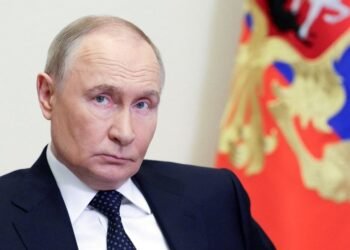 Putin Meets US Envoy Amid Key Ukraine Peace Talks
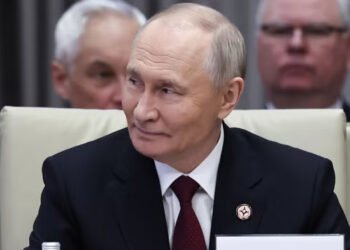 Kremlin Talks With US Yield No Ukraine Peace Breakthrough
 Kinnock’s Rebuke Echoes Loudly as Corbyn Allies Launch Left-Wing Breakaway: “A Gift to Farage”
 Tories in Turmoil as Sir Jake Berry’s Defection to Reform Sparks Fears of Further Exodus
 UK and Norway Forge Stronger Ties Through Joint Sanctions and Enhanced Defence Cooperation
 Trump Administration Dismisses 17 Immigration Judges, Sparking Debate Over Judicial Independence
 Lammy Condemns Israel’s Targeting of Starving Palestinians: Sanctions Threatened Amid Global Outrage
 Netanyahu Announces Plan to Take Over Gaza City, Escalating Conflict Further
 Prominent Al Jazeera Journalist Anas al-Sharif Among Five Reporters Killed in Israeli Airstrike on Gaza
 Denmark Investigates Professional Drone Incursions Across Multiple Airports, No Evidence of Russian Involvement
 Sir Sadiq Khan Accuses Trump of Racism and Islamophobia Following UN Remarks
 Misinformation and Political Pressure Force Weston-super-Mare to Abandon Refugee Sanctuary Plan
 British Woman in Iran ‘Losing Hope’ Amid Ongoing Detention
 BBC Journalist Held and Interrogated in Vietnam
 US Super-Rich Are Draining Planet’s Safe Climate Space
 UK Charters Emergency Flights to Evacuate Britons from Jamaica
 UK University Suspends Human Rights Research Following Pressure from China
 UK University Faces Counter-Terror Probe Over China Pressure
 Abigail Spanberger Elected Virginia’s First Female Governor
China-critical UK academics face ‘extremely heavy’ pressure from Beijing
Abigail Spanberger Elected Virginia’s First Female Governor
China-critical UK academics face ‘extremely heavy’ pressure from Beijing
 BBC to Apologise Over Edited Trump Speech Amid Backlash
 US Senate Passes Funding Bill to End Historic Shutdown
 BBC’s Tim Davie to Address Staff Amid Trump $1bn Threat
 Thailand Suspends Cambodia Border Peace Deal Amid Tensions
 Ukraine-Russia war latest: Putin’s troops exploit bad weather to force Kyiv withdrawal from multiple towns
 Hamas Fighters in Gaza Tunnels Stall Ceasefire Progress
 PM Condemns Leaks, Vows Loyalty to Ministers and Stability
 Hitler’s DNA Confirms He Truly Had Only One Testicle
 Israel Confirms Returned Hostage as Meny Godard
 Greene Pushes Epstein Files Amid Trump Fallout
 Trump Deploys DHS to Charlotte in Major Arrest Operation
 UK Asylum Reforms: Temporary Refugee Status and Faster Deportations
 Zelenskyy Signs Fighter Jet Deal Amid Russian Drone Attacks
 Orban Says Ukraine Has ‘No Chance’ as EU Support Continues
 Canada Passes Carney’s First Budget in Tight Parliamentary Vote
 South African Detained After Neo-Nazi Rally in Australia
 Why Russian Liberals Push Strongly Pro-Israel Narratives
 Israeli Strike Kills 13 Near Palestinian Camp in Lebanon
 Zelensky Meets US Envoy in Turkey to Push Ukraine Peace Talks
 Only One Republican Opposes Mass Release of Epstein Files
 UK Vulnerable to Attack, Defence Committee Finds
 Haiti Qualifies for World Cup Despite Coach Never Visiting Country
 Bangladesh Families Call for Hasina’s Return and Execution
 Scotland Fans Celebrate Historic World Cup Qualification
 Vietnam Battles Deadly Floods as Rains Continue
 US Military Team Visits Kyiv Amid War Talks
 At Least Three Dead in Bangladesh Earthquake
 English Mayors Set to Introduce Tourist Taxes
 Israel Confirms Hamas Returned Dror Or’s Body
 Twenty-Four Nigerian Schoolgirls Freed After Abduction
 Millions Face Higher Taxes Under Reeves New Budget
 Peers Get Extra Time to Debate Assisted Dying Bill
 Planned Palestinian Flag Raising at Belfast City Hall Faces Delay Amid Legal Concerns
 Two National Guard Soldiers Critically Injured Near White House
 Mbappe Scores 4 as Real Madrid Edge Olympiakos
 Man City Lose, Champions League Risk
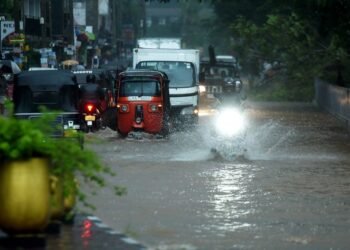 Sri Lanka Floods Leave 56 Dead, Dozens Missing
 Government righting decades-old injustice for miners
 Jordan Bardella: France’s Young Presidential Contender
 Indonesia to Repatriate Two Dutch Drug Convicts