Published: 28 November 2025 Friday. The English Chronicle Desk. The English Chronicle Online
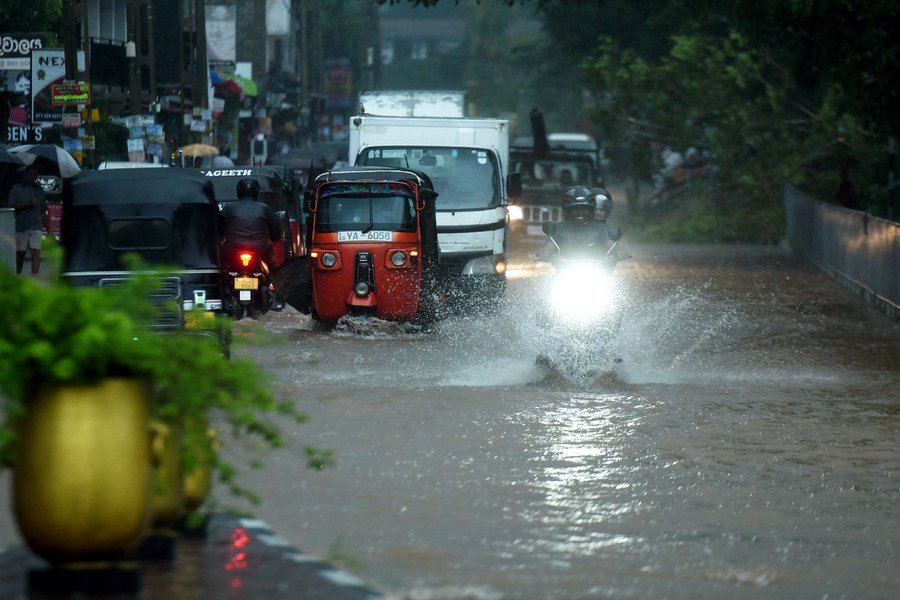
Sri Lanka is reeling from one of its worst weather-related disasters in recent years, with at least 56 people dead and 21 missing after relentless rainfall triggered severe floods and landslides across the island. Entire towns have been inundated, key transport networks brought to a standstill, and thousands displaced as the country braces for even more extreme weather in the coming days.
The worst-hit region is the central tea-growing district of Badulla, where a massive landslide swept through hillside homes overnight, killing 21 residents as they slept. Rescue teams struggled to reach the area due to blocked roads and unstable terrain, with emergency workers warning that additional landslides remain possible as rain continues to pound the region.
Videos circulating on social media show torrents of muddy water rushing through residential areas, carrying away cars, trees, and even entire houses. Across the country, train services have been largely suspended, the Railway Department confirmed, with only a handful of essential routes still operating. Authorities have also shut down key roads linking major provinces due to flooding and landslip risks.

The Disaster Management Centre (DMC) reports that nearly 44,000 people have been affected nationwide and that around 20,500 army personnel have been deployed to support rescue and relief operations. Temporary shelters have been set up in schools, temples, and community halls to house displaced families. Students scheduled to sit for the Advanced Level examinations have had their tests postponed as a result of the widespread disruption.
Sri Lanka now faces the threat of intensifying weather conditions as Cyclone Ditwah moves along its eastern coastline. The storm, which began as a deep depression before strengthening into a cyclone, is expected to make landfall in India but is already influencing rainfall patterns across Sri Lanka. Meteorologists warn that some central and northern regions could see over 200 millimetres of rain on Friday, while rising river levels pose a growing danger to low-lying communities.
The Irrigation Department has issued a red-level flood warning for the Kelani River valley, including the capital Colombo, over the next 48 hours. Residents have been urged to move to higher ground immediately as water levels continue to rise. Emergency teams are on standby for additional evacuations as forecasters predict more intense rainfall throughout the weekend.
Sri Lanka’s monsoon season typically brings heavy rains, but disasters of this scale are rare. The worst flooding in the country’s recent history occurred in June 2003, when 254 people were killed and hundreds of thousands displaced. The current catastrophe, experts say, underscores the growing unpredictability and severity of weather events linked to regional climate patterns.

Public services, communications networks, and local economies have also been disrupted by the crisis. With transport halted in several regions, relief efforts have been hampered, forcing authorities to rely on military helicopters and boats to reach isolated communities. Government agencies have appealed for calm, urging residents to follow evacuation orders and avoid attempting to cross flooded roads.
International humanitarian organisations are monitoring the situation closely, with many preparing to provide assistance should conditions worsen. Local authorities remain focused on search-and-rescue efforts, though hopes of finding the missing diminish with each passing hour.
As Sri Lanka braces for more rainfall and potential cyclone impacts, the nation mourns the growing toll of a disaster that has reshaped daily life for tens of thousands. For many families, the full extent of the devastation may not be known until waters recede and rescue teams can access the hardest-hit areas.
Related News:
 US Super-Rich Are Draining Planet’s Safe Climate Space
 UK Charters Emergency Flights to Evacuate Britons from Jamaica
 Delhi Tightens Curbs as Citizens Protest Over Toxic Air
 Israeli Strike Kills 13 Near Palestinian Camp in Lebanon
 Turkey to Host COP31 After Breakthrough Deal with Australia
 Vietnam Battles Deadly Floods as Rains Continue
 Historic Floods Devastate Thailand and Southeast Asia
 Trump EPA Moves to Roll Back Soot Pollution Limits
 Delhi’s Toxic Air Crisis Leaves Children Sick and Vulnerable
 Australia Launches Major Environmental Law Reforms
 India’s Labour Law Overhaul Sparks Fierce Debate
 Video shows Israeli troops kill Palestinians after surrender
 Families wait in agony for missing after Hong Kong tower blaze
 Southeast Asia floods claim 241 lives, rescue efforts continue
 Chinese & Japanese Boats Clash Near Disputed Islands
 Putin Meets US Envoy Amid Key Ukraine Peace Talks
 Delhi’s Toxic Air Drives Spike in Respiratory Illnesses
 Indonesia to Repatriate Two Dutch Drug Convicts
 Severe Thunderstorms Lash England and Scotland: Met Office Issues Amber and Yellow Warnings Amid Flooding Risks
 Europe Swelters Under Historic Heatwave as Wildfires Rage Across the Continent
 Typhoon Ragasa Batters Taiwan, Hong Kong and China
 Hurricane Melissa Leaves Devastation Across Jamaica as Death Toll Rises
 Mikie Sherrill Elected New Jersey’s Governor in Key Win
 Britain deploys RAF specialists to assist Belgium with drone threats
 US Senate Passes Funding Bill to End Historic Shutdown
 Suicide Bombing at Islamabad Court Kills 12, Injures Dozens
 BBC’s Tim Davie to Address Staff Amid Trump $1bn Threat
 Thailand Suspends Cambodia Border Peace Deal Amid Tensions
 Six Dead as Super Typhoon Fung-wong Hits the Philippines
 China’s Youth Save, Not Spend, Amid Job and Housing Worries
 UK Faces Arctic Blast as Polar Vortex Disruption Brings Heavy Snow
 Fog Aids Russian Forces in Deep Push into Pokrovsk
 Delhi Car Blast Kills Eight, Declared Terror Incident
 Hitler’s DNA Confirms He Truly Had Only One Testicle
 US Justice Department Files Lawsuit Against California Over Partisan Voting Maps
 Israel Confirms Returned Hostage as Meny Godard
 December Run-Off in Chile as Election Produces No Winner
 Tragedy Strikes Indian Pilgrims in Saudi Bus Accident
 Zelenskyy Signs Fighter Jet Deal Amid Russian Drone Attacks
 Orban Says Ukraine Has ‘No Chance’ as EU Support Continues
 Zelensky Meets US Envoy in Turkey to Push Ukraine Peace Talks
 Congress Approves Release of Epstein Files, Trump Expected to Sign
 Shadow Fleet at Sea: Europe’s Battle Against Illicit Oil Shipping
 Commuters warned as yellow snow and ice alert hits Northern Ireland
 Haiti Qualifies for World Cup Despite Coach Never Visiting Country
 West Councils Falling Behind on Climate Goals
 Deadly Russian Strikes Hit Western Ukraine, 20 Killed in Ternopil
 Rama Rebukes Mahmood for Targeting Albanian Families
 Russian Vessel Used Lasers on RAF Pilots, UK Claims
 Snow and Ice Cause Travel Chaos in North Yorkshire
 Scotland Fans Celebrate Historic World Cup Qualification
 Pentagon Officials in Ukraine to Discuss War End
 Ukraine Peace Plan: Zelensky Ready for Dialogue
 UPS Plane Engine Detaches Before Deadly Crash
 WhatsApp Messages Expose Nathan Gill’s Bribery
 UK Energy Bills to Rise Slightly in January
 India’s COP30 Delay Raises Global Climate Concerns
 Venezuela Threatens Nobel Winner Machado with Fugitive Status
 At Least Three Dead in Bangladesh Earthquake
 Night Bus Crash in Cambodia Kills 16
 Texas Governor Faces Lawsuit From CAIR
 Israel Confirms Hamas Returned Dror Or’s Body
 Trump Envoy to Discuss Ukraine Peace at Kremlin
 Twenty-Four Nigerian Schoolgirls Freed After Abduction
 US Suspends Afghan Immigration After White House Shooting
 Two National Guard Soldiers Critically Injured Near White House
 Pope Leo XIV Begins Historic Trip to Turkey and Lebanon
 Georgians Defy Government Crackdown After Year of Protests
 Southern Lebanon reels as Israeli strikes shatter communities
 Mbappe Scores 4 as Real Madrid Edge Olympiakos
 Man City Lose, Champions League Risk
 Singapore Women Acquitted After Pro-Palestine March
 Thousands Homeless After Massive Fire in Dhaka Shantytown
 Trump to Recheck Green Cards from 19 Nations After DC Attack
 Carney’s Alberta Pipeline Deal Sparks Immediate Pushback
 Rare shark attack kills woman, injures man at remote NSW beach
 Hong Kong Orders Probe Into Deadly 151-Death Fire
 UK Criticises Gaza Aid Delays as Tents Arrive After Year
 Maxwell withdraws from IPL 2026 after 13 seasons
 Kremlin Talks With US Yield No Ukraine Peace Breakthrough